We suggest two practical itineraries to discover Havana: a one‑day plan and a three‑day one.
The first focuses on Old Havana and the Malecón. The second extends the route with the Capitolio, the Museum of the Revolution and the Morro‑Cabaña complex.
What to see in Havana in 1 or 3 days (weekend getaway)?
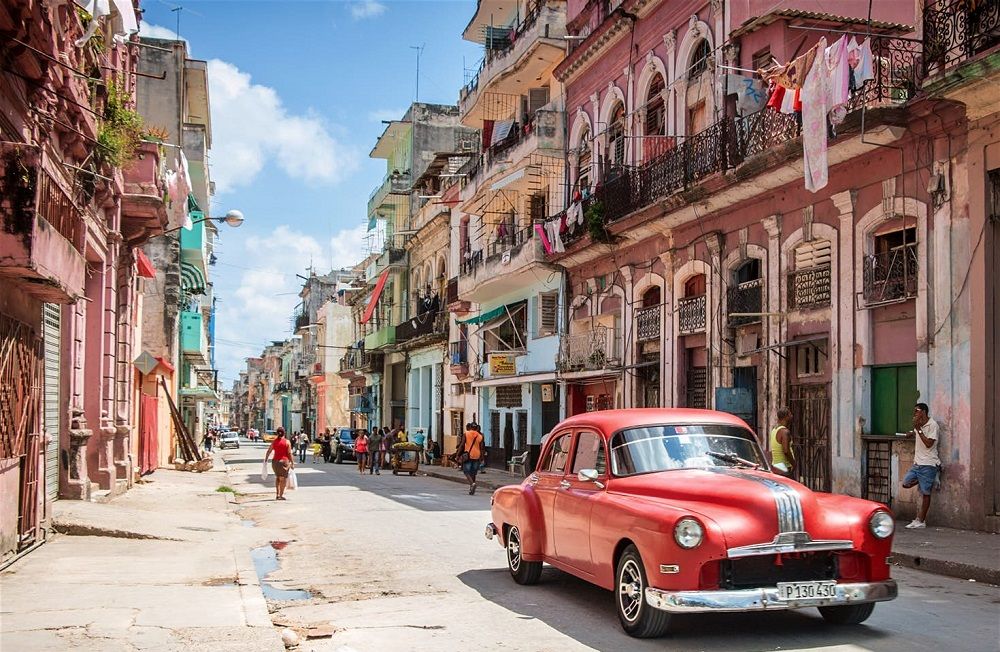
The Cuban capital deserves an unhurried visit to explore its neighborhoods, but even on a short break it’s possible to grasp its colonial and contemporary character. Here are two itinerary ideas tailored both to travelers with only a single day and to those who can spend a full weekend.
Havana in one day: immersion in the colonial heart
When time is short, the priority should be Old Havana (Habana Vieja), a UNESCO World Heritage district that concentrates the essence of the city. The day can start early in majestic Cathedral Square (Plaza de la Catedral), when the morning light flatters the ensemble. The walk continues along cobbled streets to Plaza Vieja, a space that brings together centuries of architecture where traditional Cuban music enlivens the atmosphere.
At midday, take a break at La Bodeguita del Medio, where Hemingway’s spirit still lingers. This legendary spot is famous for its mojitos and walls covered with signatures of illustrious visitors. The afternoon can be reserved for a stroll along the Havana Malecón, that urban balcony overlooking the Caribbean. The highlight comes at sunset, when the sky turns warm shades of color.
Havana in three days: a full journey through Cuban history
Day one: Colonial splendor
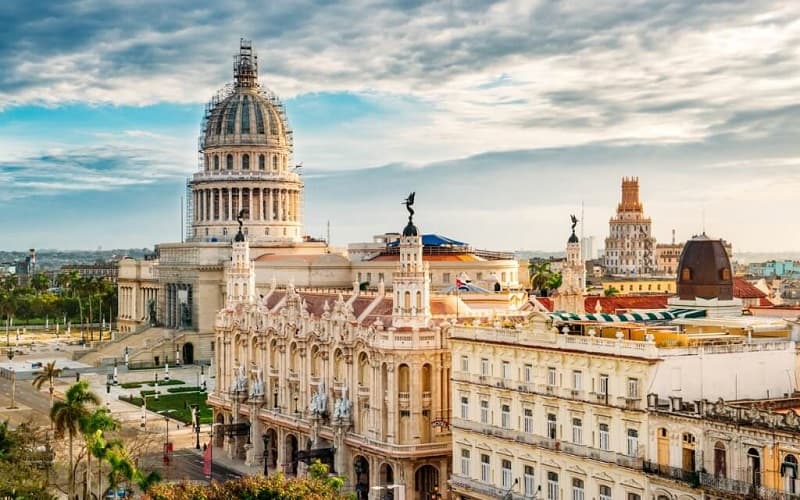
The adventure begins in Old Havana, among squares and narrow streets that preserve their original 18th‑century layout. Around midday, the majestic National Capitol Building (Capitolio Nacional) emerges as an architectural landmark. This building, inspired by the Capitol in Washington, D.C. but with its own personality, marks Cuba’s kilometer zero beneath its dome. The day ends with dinner at El Floridita, cradle of the daiquiri and a favorite haunt of Ernest Hemingway.
Day two: Revolution and fortresses
The day is devoted to understanding Cuba’s recent history at the Museum of the Revolution, located in the former Presidential Palace. Its rooms chronologically trace the country’s transformation. In the afternoon, it’s time for the imposing Castle of the Three Kings of El Morro, a 16th‑century fortress dominating the bay. Finish with an evening stroll along the Malecón.
Day three: Culture and traditions
Start at the Castle of the Royal Force, the oldest colonial fortress in the Americas, now focused on maritime heritage. In the afternoon, dive into one of Cuba’s hallmarks at the Havana Club Rum Museum, where the rum‑making process is explained inside a colonial house.
Old Havana
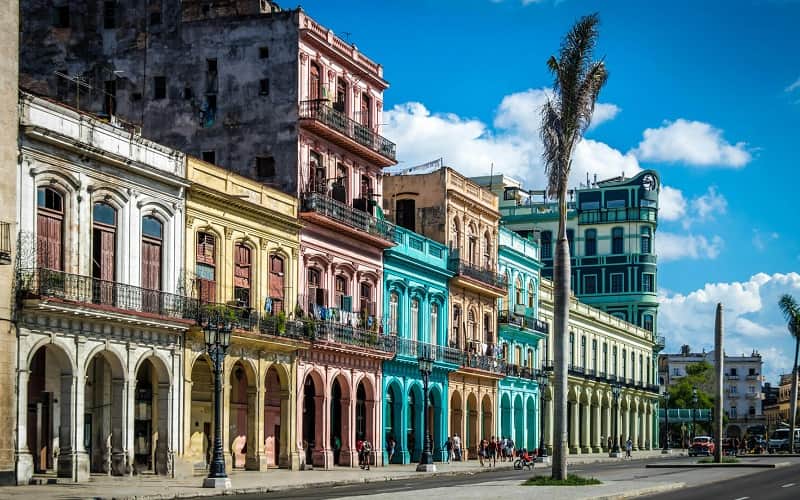
When planning a trip to Cuba, it’s worth identifying the must‑see landmarks. The country’s most important city is Havana, especially its old quarter.
Old Havana is one of the most important colonial ensembles in the Americas and the Caribbean, preserving a valuable historic center with many cultural attractions.
In 1982 the city was declared a UNESCO World Heritage Site, and since then restoration work has been carried out to recover its splendor. The historic atmosphere can be felt in buildings that clearly convey their past.
Many of the historic quarter’s highlights are clustered around Obispo and Mercaderes streets and the main squares.
Top must‑see places in Havana
Another essential walk is to stroll along Obispo Street. Very close by are Cathedral Square (Plaza de la Catedral), Plaza de Armas and the Castle of the Royal Force. You’ll also find two famous restaurants: La Bodeguita del Medio and El Floridita.
As you walk you can visit the Museum of the City, the Museum of Colonial Art, Casa de la Obra Pía, Casa de África and El Templete.
The area also includes the Central Railway Station, the Alameda de Paula promenade and the Church of Paula. Don’t miss the José Martí Birthplace Museum, a walk along the bay, the Christ of Havana, the Palacio de la Artesanía (Crafts Palace), the Fortress of San Carlos de la Cabaña and the Castle of the Three Kings of El Morro.
You can also choose horse‑drawn carriage rides in the area. Many drivers act as local guides and can suggest bars and restaurants where you can try a mojito and listen to Cuban music.
Havana Malecón
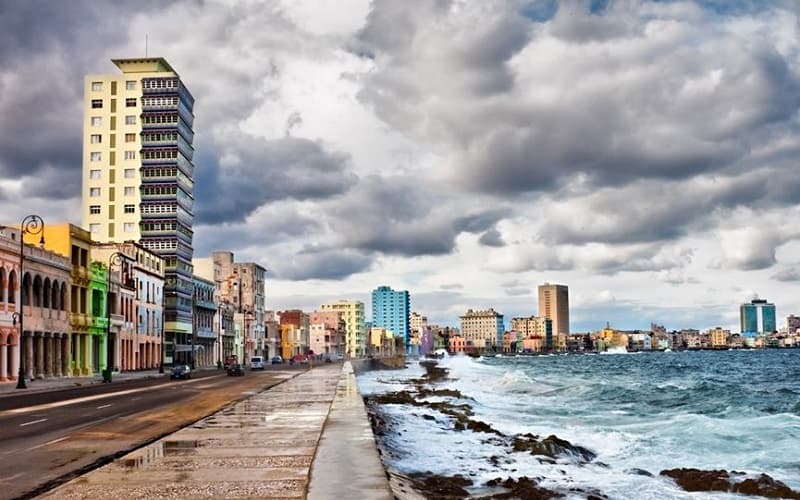
The Havana Malecón is one of the must‑see places in the city. It is a promenade of about eight kilometers where locals and visitors sit on the seawall to gaze at the sea. The best thing to do is stop, look at the horizon and let time drift by.
Originally known as the Avenida del Golfo, the Malecón was built in stages from 1901, mainly to protect the city from the force of the sea. Today it connects the bay with the mouth of the Almendares River.
Tips for visiting the Malecón
- 🌅 Best time: Sunset offers spectacular views.
- 🎵 Atmosphere: Evenings are perfect for listening to live music.
- 🌊 Weather: Avoid days with heavy swell, when the waves crash over the seawall.
- 📸 Photography: Sunrise and sunset provide the best light.
Today the Malecón is a meeting point for fishermen and groups of friends. Its buildings display a mix of eclectic and neoclassical styles, with touches of art nouveau.
If your trip coincides with carnival, the Malecón fills with floats and dance troupes, with rhythms ranging from salsa to Cuban son.
On a stretch near the U.S. Embassy you’ll find the Anti‑Imperialist Tribune and the Mount of the Flags, a usual setting for civic events.
National Capitol Building of Cuba
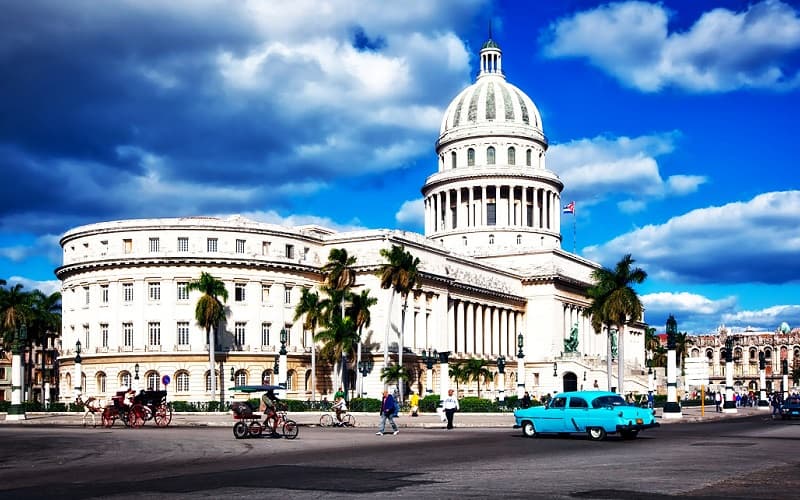
Among Havana’s most iconic buildings, the National Capitol Building (Capitolio Nacional) stands out, similar in concept to its counterpart in Washington, D.C. It is located in the Centro Habana municipality and construction began in 1926 during the government of Gerardo Machado.
Important information about the Capitolio
- 🏛️ Current function: Seat of the National Assembly of People’s Power (Parliament).
- 🏗️ Architecture: Granite and limestone; monumental interiors.
- 🗼 Dome: 91.73 m high; gilding restored in 2019 with Russian support.
- 💎 Curiosity: Under the dome, kilometer zero is marked by a replica of a 25‑carat diamond (the original was stolen in 1946 and replaced in 1973).
Today the building houses the institutional seat of the Cuban Parliament. At the entrance you’ll see two bronze sculptures by Angelo Zanelli. Inside, the highlights are the Hall of Lost Steps and the Statue of the Republic, cast in Rome, 14.60 m tall and weighing over thirty tons.
The Capitolio offers guided tours according to schedule. Some areas may be closed for conservation work. Check opening times and availability at the ticket office on the day of your visit.
Museum of the Revolution
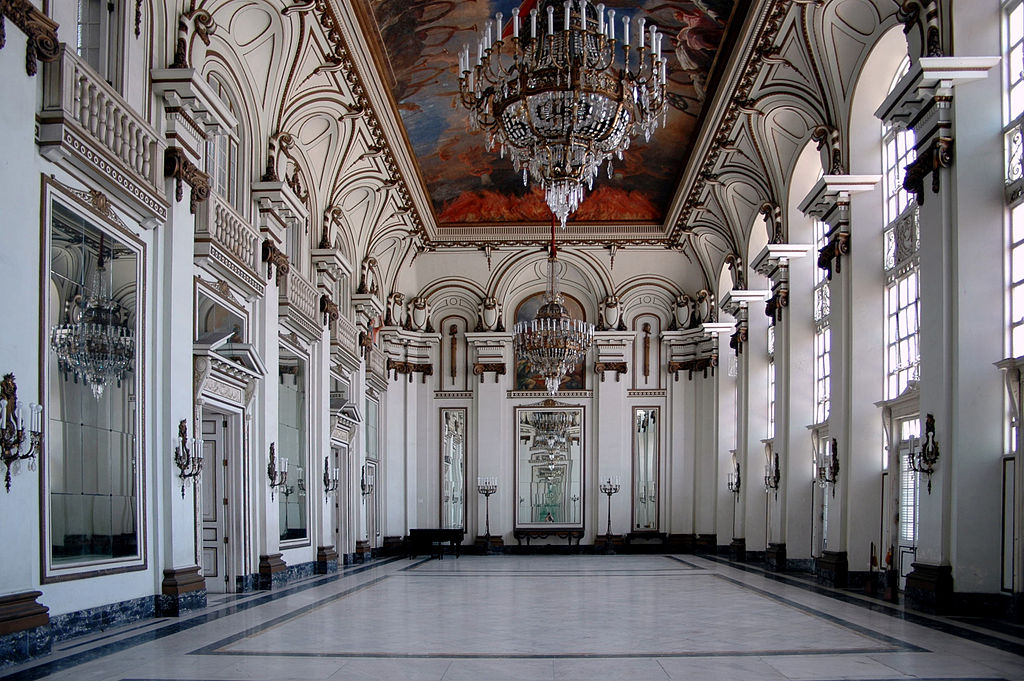
The Museum of the Revolution was built between 1913 and 1920 by Rodolfo Maruri and Paul Belau as the Presidential Palace. After 1959 it was given its current function.
Highlights of the museum
- 📍 Location: Calle Refugio 1, between Monserrate and Zulueta (near Av. Bélgica/Egido).
- 🏛️ History: Former Presidential Palace converted into a museum.
- 🖼️ Main exhibitions:
- Assault on the Moncada Barracks (1953)
- Life of Ernesto “Che” Guevara
- Granma Memorial Pavilion
- ⏰ Recommended visit time: 2–3 hours to see all the rooms.
The museum reviews Cuba’s history in chronological order. At the entrance, fragments of the old city wall and a combat vehicle associated with the defense of the Revolution are preserved. Behind the building is the Granma Memorial Pavilion, which houses the yacht that carried the revolutionaries from Tuxpan (Mexico) to Cuba in 1956.
Castle of the Three Kings of El Morro
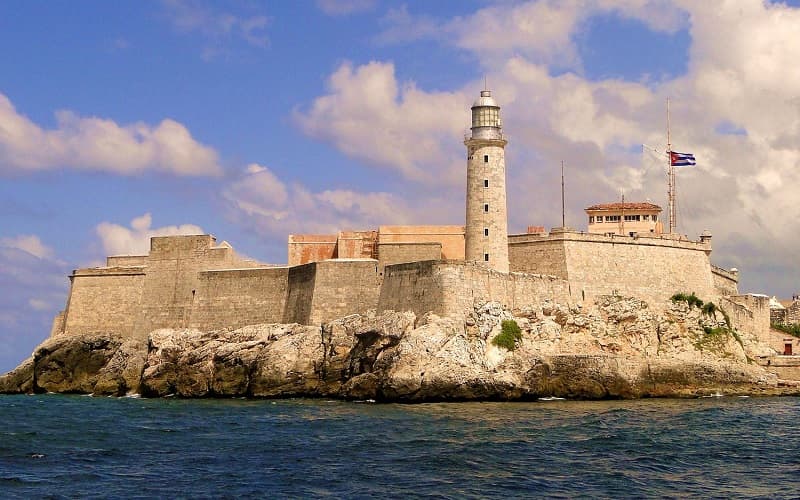
Information for your visit
- 🏰 Construction: Between 1589 and 1630.
- 🎯 Original purpose: To defend the entrance to the harbor.
- 🌅 Views: Panoramic vistas over the city and the sea.
- 🏛️ Today: Part of the Morro‑Cabaña Military Historical Park; lighthouse and viewpoints open to visitors.
The Castle of the Three Kings of El Morro was built to protect Havana’s harbor. The work was directed by Juan Bautista Antonelli on a rocky outcrop at the entrance to the bay.
The fortress preserves its military layout and offers exceptional panoramic views over the city and coastline.
Every day at 9:00 p.m. the “Cañonazo” (cannon shot) ceremony takes place at the nearby Fortress of San Carlos de la Cabaña. Arrive early to avoid queues and check for possible changes due to special events.
La Bodeguita del Medio
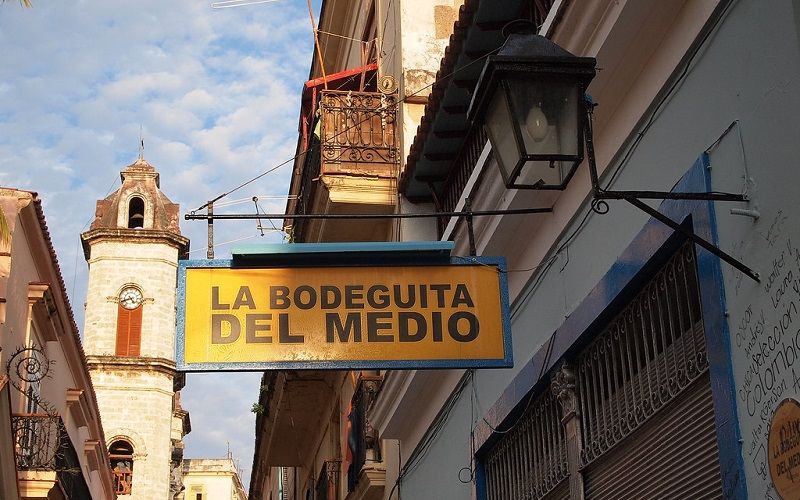
Many Havana shops used to be on street corners; this venue, formerly a grocery store located halfway along the street, kept the name by which customers knew it.
What you shouldn’t miss
- 🍹 Specialty: Traditional mojitos.
- 🎵 Atmosphere: Live Cuban music.
- 📸 History: Signatures and photographs covering the walls.
- 👨🍳 Food: Traditional Cuban dishes.
Cathedral Square, Havana
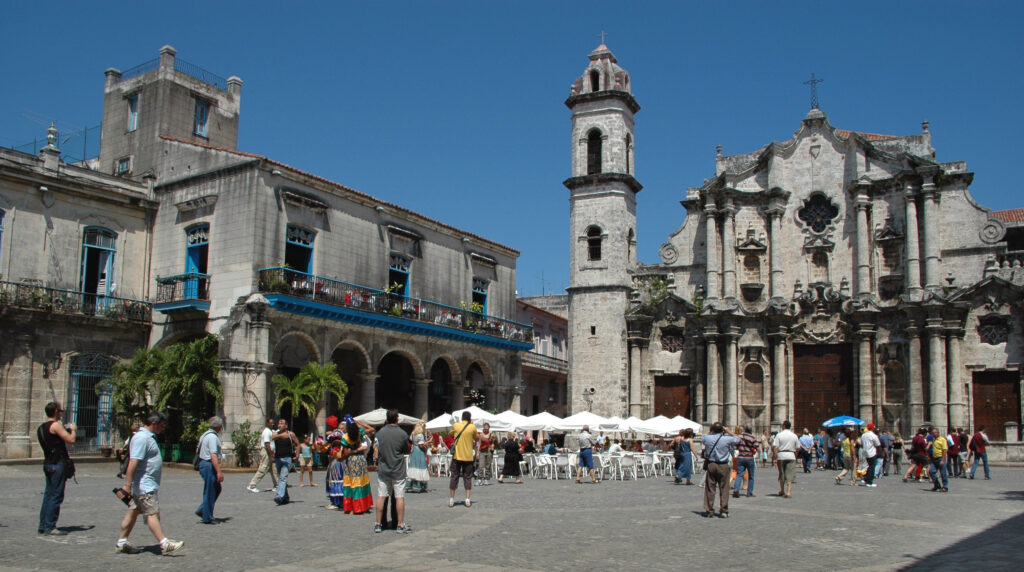
Havana Cathedral and its square form one of the city’s most recognizable ensembles, right in the Historic Center.
One of the most important churches on the island, built more than 200 years ago. Inside, the image of Saint Christopher, the city’s patron saint, is venerated.
Interesting historical facts
- 🏛️ Origin: Built on formerly swampy land in the 16th century.
- ⛪ Architecture: Asymmetrical bell towers.
- 💧 Callejón del Chorro: Former end point of the Zanja Real, the first aqueduct.
- 🕰️ History: More than two centuries of worship and art.
Plaza Vieja, one of the must‑see places in Havana
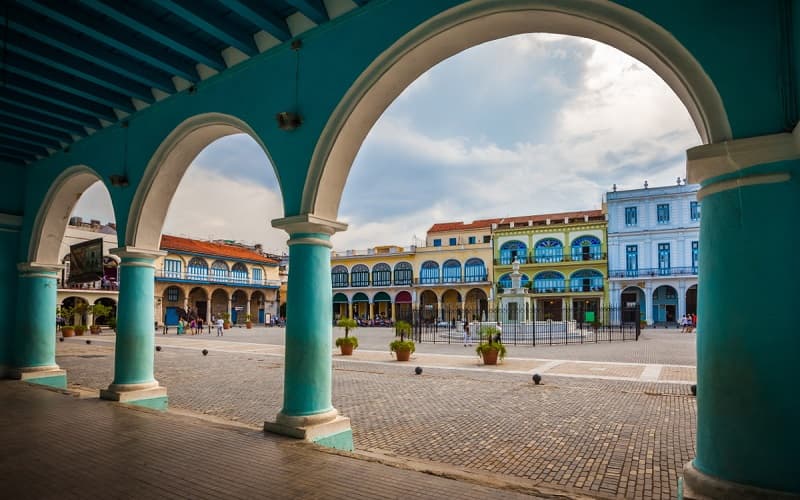
Plaza Vieja is a must to soak up the colonial atmosphere of Old Havana.
It is distinctive for its irregular layout. It is bounded by San Ignacio, Muralla, Mercaderes and Teniente Rey streets. It is the only one of the main squares that does not have a church.
Curiosities about Plaza Vieja
- 📅 Foundation: 1559; its current configuration was consolidated in 1587.
- 🏛️ History: It was originally known as “Plaza Nueva” (New Square).
- 🎭 Historical uses: Street cries, theater, carnivals, bullfights and public events.
- 🏛️ Today: Home to cultural institutions such as the Fototeca de Cuba (Photography Archive of Cuba).
Castle of the Royal Force of Havana
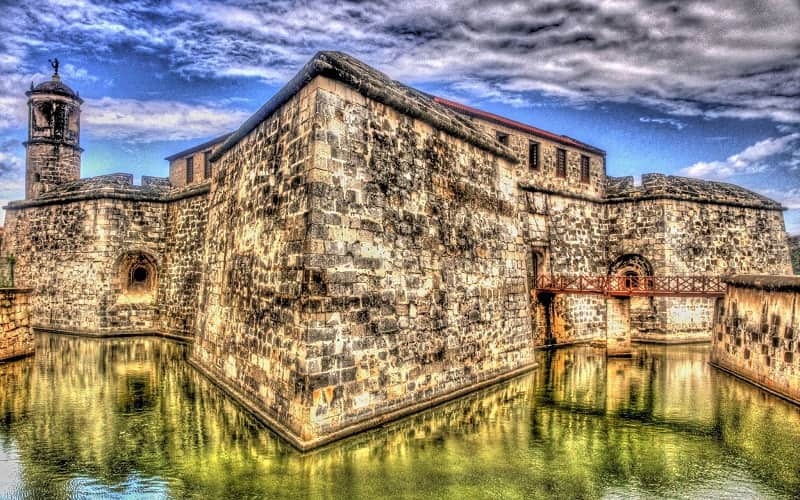
Standing in the heart of Old Havana, the Castle of the Royal Force represents the first great Spanish military engineering work in the New World. Construction began in 1558.
Key historical facts
- 🏗️ Construction: 1558–1577.
- 👷♂️ Architects: Bartolomé Sánchez and Francisco de Calona.
- 🏰 Style: Renaissance military architecture.
- 🎯 Original purpose: Defense against pirates and privateers.
Its square plan with bastions at the corners and surrounding moat gave it strong defensive capabilities. At the top flies La Giraldilla, a bronze weather vane that has become a symbol of the city.
Today it houses an exhibition focusing on navigation and maritime heritage, with pieces of cartography, ship models and underwater archaeology.
Tips for your visit
A guided tour makes the visit much more rewarding. The best photos are taken early in the morning, when the light highlights the details of the facade.
Rum Museum: Havana Club
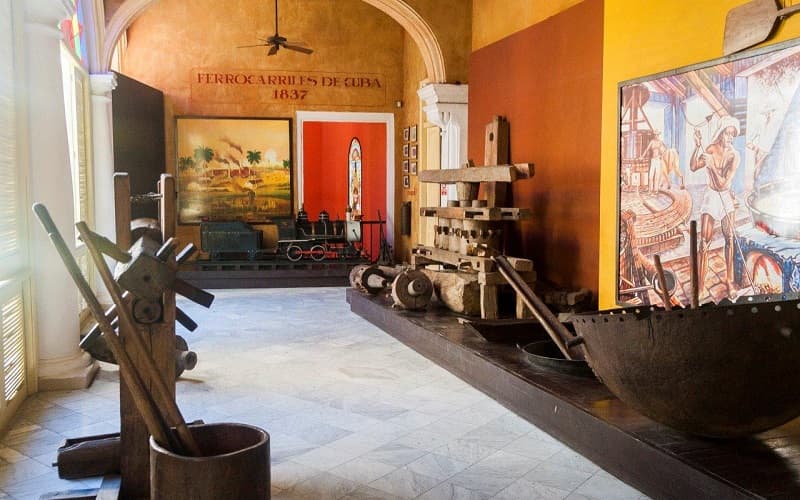
Among Havana’s must‑see sights is the Havana Club Museum, located on Avenida del Puerto, where the old city meets the sea. Here the Cuban rum‑making process is explained and its industrial heritage is preserved.
Museum highlights
- 🏛️ Building: 18th‑century colonial house.
- 🌾 Tour: From sugarcane fields to the distillery.
- 🛠️ Exhibitions:
- Cooper’s workshop
- Traditional sugar mill
- Scale steam locomotive
- ⏱️ Duration: Guided visit of just over an hour.
El Floridita: iconic bar‑restaurant
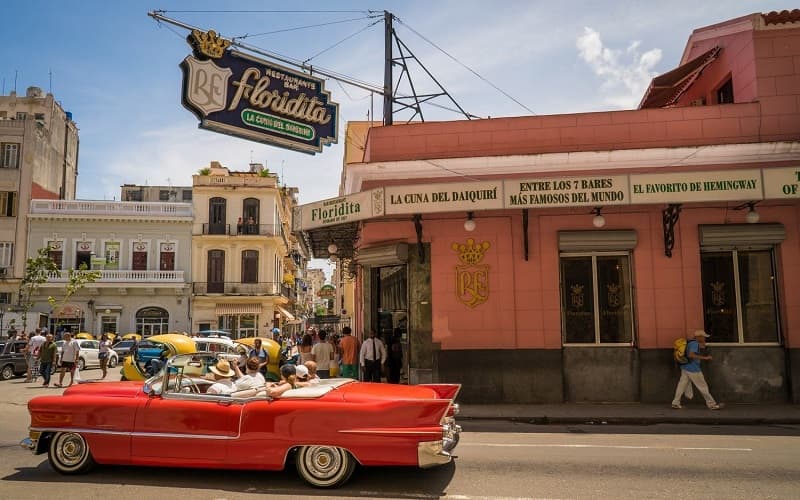
On the corner of Obispo and Monserrate, El Floridita has been a sanctuary of international cocktail culture since 1817 (then called La Piña de Plata). Its golden age came with Constantino Ribalaigua, “The King of the Daiquiri”, whose cocktail captivated Ernest Hemingway, now remembered with a statue at the bar.
The interior preserves a classic elegance, with a mahogany bar and historic photos. The kitchen focuses on fish and seafood prepared with traditional recipes.
Visitor recommendations:
Go in the early afternoon to avoid peak crowds. The must‑try is a daiquiri at the bar and a photo next to Hemingway’s statue. For dinner, book in advance during high season.
How to get to Havana
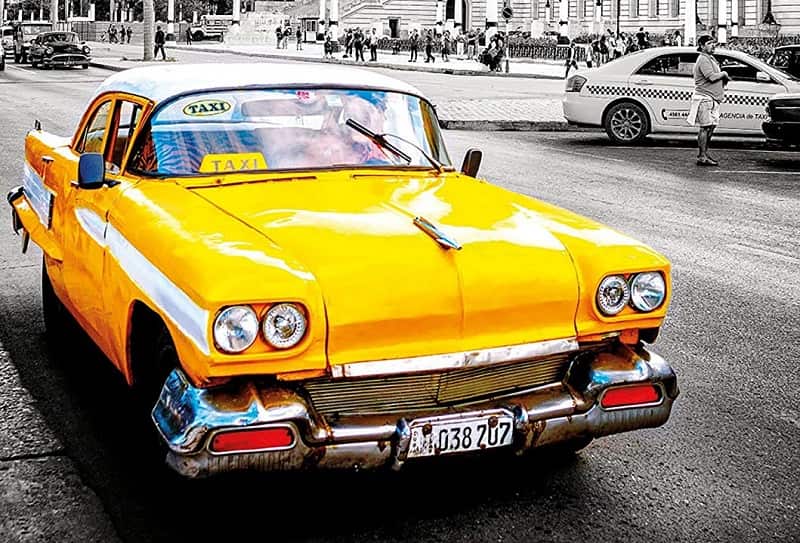
The usual way to reach Havana is by plane. There are no regular passenger ferries, and cruise ship calls are occasional and subject to regulatory changes.
Arriving in Cuba by plane
Cuba has several airports. The main ones are José Martí International Airport (Havana) and Antonio Maceo (in Santiago de Cuba). Varadero, Holguín, Cayo Coco, Camagüey, Ciego de Ávila, Manzanillo, Cayo Largo, Cienfuegos, Santa Clara and Guantánamo also receive flights.
Important information for travelers:
- ✈️ Main airport: José Martí International Airport.
- 🚕 Transport: Official or private taxis and hotel/agency transfers; there is no Uber. There are local buses from Terminal 1 (less practical with luggage).
- ⏱️ Time to the center: 30–40 minutes depending on traffic.
- 🌍 Direct flights: From several capitals in the Americas and Europe.
Arriving in Cuba by boat
Arrivals by sea are limited to cruise ship calls and occasional operations. There are no regular passenger ferry services.
Why visit Havana at least once in your life?
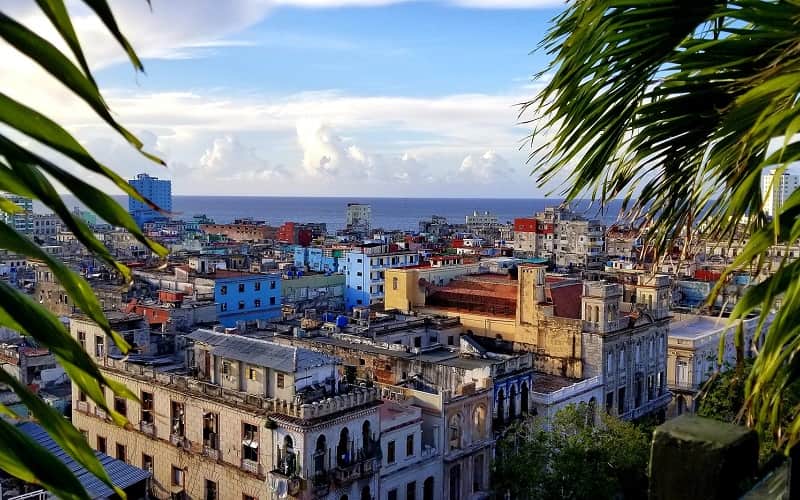
Havana maintains high tourist demand with a varied calendar of fairs and cultural festivals throughout the year.
The city preserves architectural ensembles from various periods and historic fortresses such as the Castle of El Morro, the Castle of the Royal Force and the Fortress of San Carlos de la Cabaña. Spanish heritage is visible in churches, squares, theaters and 19th‑century buildings.
Best Free Tours
A different free tour in Old Havana!!! Since we are going to mix sections that are not so touristic with…

🌟 Free Tour of Old Havana – The city where every corner has a soul 🇨🇺 Welcome to Old Havana!…

The turning point that the Revolution represented in Cuban history began a …

I invite you to visit the beautiful Cuban capital on a free tour through the historic center of the city,…

After we pick up our bikes, we'll start our tour pedalling along the harbour through the southern part of Old…

At the designated time, we'll meet up at the Fuente de la India in front of the Saratoga Hotel, ready…
We'll begin this free tour of the Casablanca neighborhood at Aracelio Iglesias Park , where we'll meet at the …
Frequently Asked Questions when traveling to Havana
¿Cuál es la mejor época para visitar La Habana?
La mejor época para visitar La Habana es entre noviembre y abril, cuando el clima es más agradable y hay menos probabilidad de lluvias. Los meses de diciembre a febrero son especialmente populares por sus temperaturas más suaves.
¿Es seguro visitar La Habana?
La Habana es generalmente una ciudad segura para los turistas. Como en cualquier destino turístico, es recomendable tomar precauciones básicas y estar atento a tus pertenencias, especialmente en zonas muy concurridas.
¿Qué tipo de transporte es recomendable usar en La Habana?
Los taxis colectivos (almendrones), bicitaxis y el transporte público son opciones populares. Para distancias cortas, caminar es la mejor manera de explorar el casco histórico y disfrutar de la arquitectura colonial.
* The information on opening hours and access conditions is current as of December 2025 according to official sources. This data may change due to holidays, construction work or regulatory changes. Always check official channels before your visit.