



Plan a walkable Porto route linking São Bento, Sé Cathedral, Ribeira, Dom Luís I Bridge and Gaia, with itineraries for three days.
 Belén Rivas
GuruWalk
·
Updated 27 Aug 2026
Belén Rivas
GuruWalk
·
Updated 27 Aug 2026This guide brings together the main things to do in Porto, a walkable route through the historic centre, practical transport advice and ideas for planning one, two or three days. Travelers can begin with Porto free walking tours, then use the sections below to choose attractions and organize independent exploration.
Last verified: August 2026 — Prices, opening hours, and reservation requirements checked against official sources. GuruWalk’s Porto gurus reviewed the practical recommendations.
A free tour is a practical way to start exploring the city, understand its steep layout and identify places to revisit independently. Compare the available Porto free walking tours and choose a route that matches your interests and schedule.
🏆 This tour has been awarded as the best free tour in the world at the I GuruWalk Awards !…

Discover the Soul of Porto with Our Ultimate Free Walking Tour – in a comfortable sized group ! 🚶♀️

Delve with us into the darkest Porto so that, as night falls, we discover the legends that its inhabitants tell,…

Embark on the Essential Porto Free Tour, a journey that weaves through the fabric of time, revealing the soul of…

Join us and discover the corners of the magnificent city of Porto with the best guides in the city !…
Porto is one of the oldest cities in Portugal and the one that gave the country (and its world-famous wine)…

Guided Tour Through Free Museums! How can you enjoy a trip to Porto without visiting the most impo…

Ribeira and the Dom Luís I Bridge form the most useful sightseeing axis for a first visit. From Sé Cathedral, walk downhill through the old lanes to the Ribeira riverfront, follow the Douro to the bridge and cross into Vila Nova de Gaia.
Choose the lower deck for the most direct connection between Ribeira and Gaia’s waterfront. The upper deck offers wider views and connects the higher parts of Porto and Gaia, but reaching it involves steeper approaches and can be uncomfortable for travelers affected by heights or limited mobility. The lower route still includes cobbles and gradients, so allow extra time where needed.
A practical walking sequence is Sé Cathedral → Ribeira → lower bridge deck → Gaia riverfront. Travelers prioritizing viewpoints can instead reach the upper deck and descend in Gaia afterward. Continue to the wine-cellar area only if enough time remains for a booked visit.
| Time available | Suggested sequence | Approximate visit blocks |
|---|---|---|
| 1 day | São Bento → Sé Cathedral → Ribeira → Dom Luís I Bridge → Gaia | Historic-centre walk: 3–4 hours; Ribeira and bridge: 1–2 hours; Gaia: 2–3 hours |
| 2 days | Day 1 route above; day 2 for Clérigos, Mercado do Bolhão, Lello and Palácio da Bolsa | Allow 60–90 minutes for each major paid-entry stop, plus walking time |
| 3 days | Add Boavista, Casa da Música, Serralves or Foz according to your interests | Reserve at least half a day for attractions outside the historic centre |
For one walkable historic-centre route, start at São Bento Station, climb to the cathedral, descend to Ribeira and cross to Gaia. Clérigos and Mercado do Bolhão fit better before the cathedral or on a second day, avoiding repeated climbs across the centre.

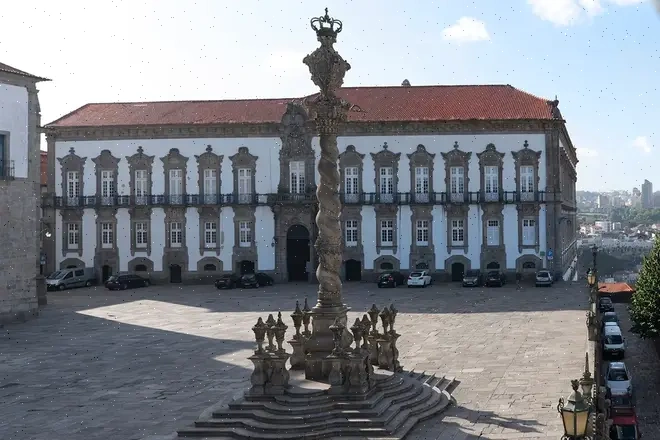
Porto Cathedral stands in the upper part of the city, in the Batalha area near sections of the old defensive walls. Its elevated position makes it a useful starting point for a downhill walk toward Ribeira.
Construction began in the 12th century, and later building campaigns introduced several architectural styles. Much of the church retains a Romanesque structure, while the cloister is Gothic and later chapels contain Baroque decoration.
Large columns define the relatively narrow interior. The main surfaces are restrained compared with the decorated Baroque chapels and main altar.

The cloister is accessed from inside the cathedral through a door on the right-hand side. It dates from the 14th century and is decorated with tiles depicting religious scenes. From here, visitors can also access the Casa do Cabido and its collection of religious metalwork. Consult current availability before planning access to paid areas.

The Clérigos Church was built between 1735 and 1748. It has an 18th-century Baroque style and is crowned by another of Porto’s recognizable monuments, the Clérigos Tower.
The monumental complex dates from the 18th century and was commissioned by the brotherhood of the Poor Clerics of the city’s old quarter. It is located on what was known as “the hill of the hanged”, where people who had been executed were once buried.
The 76-metre Clérigos Tower has 225 steps leading to a panoramic viewpoint. On the way up, visitors pass 49 bells forming a carillon. The confined stairway and number of steps should be considered by travelers with reduced mobility; consult current admission availability before visiting.
Mercado do Bolhão, opened in 1914, is a useful stop for seeing everyday food retail while exploring tours and activities in Porto. Its stalls sell products including meat, fish, fruit and flowers.
It is laid out over several floors, with shops arranged around a central courtyard. Traditional food businesses operate alongside the restored market spaces.
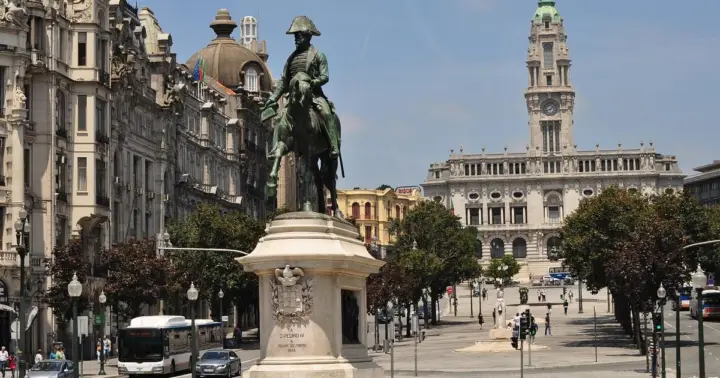
The market is close to Avenida dos Aliados. After extensive refurbishment, it reopened in September 2022 and again became a working market with stalls and restaurants.
The market has been fully operating again since 2022. Before your visit, check the official opening hours and current offering on the Bolhão website.

The Porto–São Bento Railway Station was built at the beginning of the 20th century on the remains of the former São Bento de Avé-Maria convent. It was inaugurated on 5 October 1916.
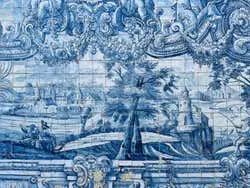
Its façade is stately, but the main point of interest is the entrance hall, whose walls depict episodes from Portuguese history with more than 20,000 tiles.
The station is in the city centre, in Praça de Almeida Garrett, and fits naturally at the start of a walk toward the cathedral. Trains also leave from here for destinations including Braga, Guimarães, Viana do Castelo and parts of the wine-growing region; check current rail schedules before departure.
The headquarters of Porto’s Commercial Association occupy this palace in the historic centre. The Palácio da Bolsa was built on the ruins of a Franciscan convent after it was destroyed by fire. Construction began in 1842, and the building was inaugurated in 1891.
Its Neoclassical interior includes the Courtyard of the Nations, a large central courtyard covered by a glass structure that brings daylight into the palace.
A marble and granite staircase leads to the second floor, where rooms include the wood-lined General Assembly Hall, the gold-leaf Golden Room and the 300-square-metre Arab Room. Visits may depend on guided-entry arrangements, so consult current availability rather than relying on a fixed schedule.
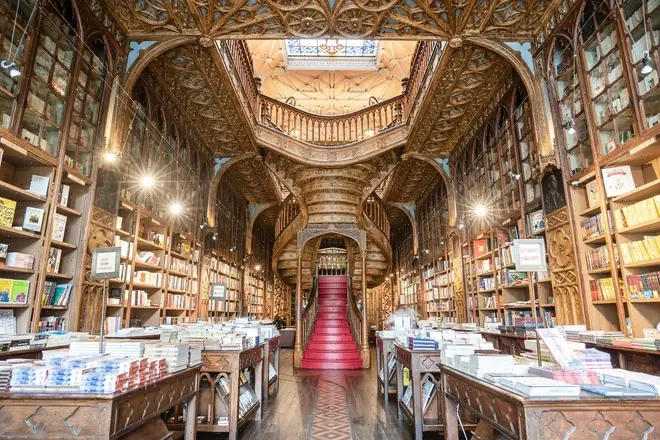
Very close to the Clérigos Tower, Lello e Irmão Bookshop occupies a Neo-Gothic building dating from 1906. Its interior retains carved woodwork, tall shelves and period architectural details.
The wooden shelves reach toward the ceiling, while a central staircase and stained-glass skylight define the main room. The claim that J.K. Rowling drew inspiration from the bookshop has circulated widely, but the author publicly denied it in 2020. Entry arrangements can change, so check current availability before including it in a timed route.
If the cathedral is part of the same central walk, use the live listing below to consult current Porto Cathedral tour and admission availability instead of relying on a fixed price.

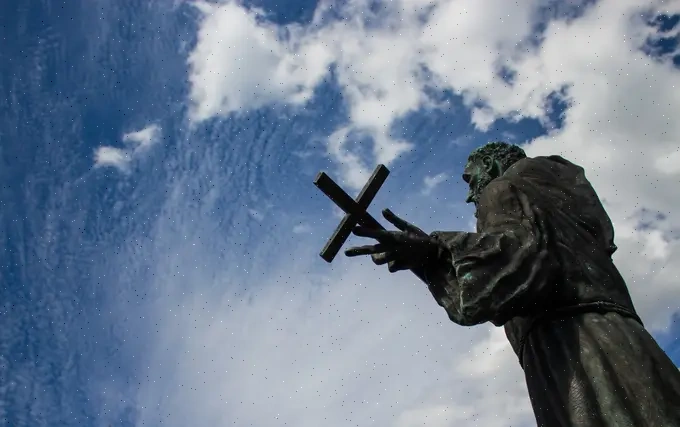
The Franciscans settled in Porto in the 13th century and built a first church in 1245; the current Gothic church was built between 1383 and 1410. After a fire destroyed the cloister in 1832, it had to be rebuilt.
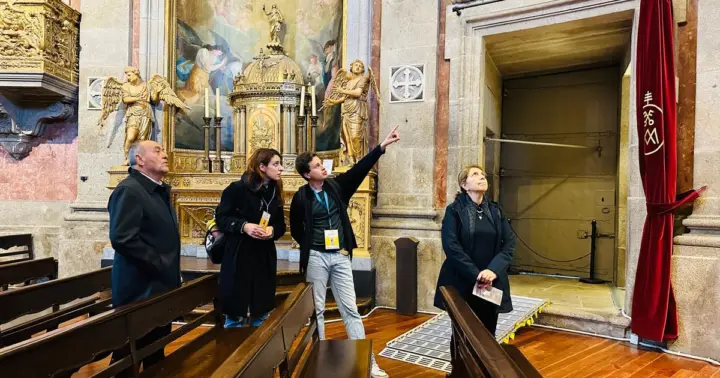
Although its structure is Gothic, the interior was covered with Baroque decoration. Inside are three naves lined with gilded carvings. The contrast between this decoration and the surrounding area became part of the church’s historical narrative.
One of the main works in the left aisle is the Tree of Jesse, a polychrome wooden sculpture. Check current access arrangements if you plan to enter the church and associated museum spaces.

Next to Praça de Mouzinho de Albuquerque (Rotunda da Boavista), Casa da Música was designed by architect Rem Koolhaas. Construction began in 1999 as part of the “Porto 2001: European Capital of Culture” project, although the building was completed in 2005.
PLANNING NOTE

Check the official programme before your visit. Guided visits, concerts and cultural events have separate schedules and reservation requirements.

This park was laid out at the end of the 19th century. It occupies an elevated part of Porto and provides views over the Douro toward the Atlantic. The gardens include themed areas for medicinal plants, aromatic plants, roses and woodland.

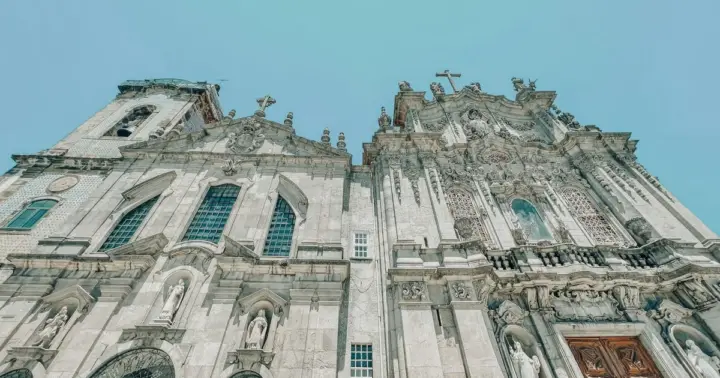
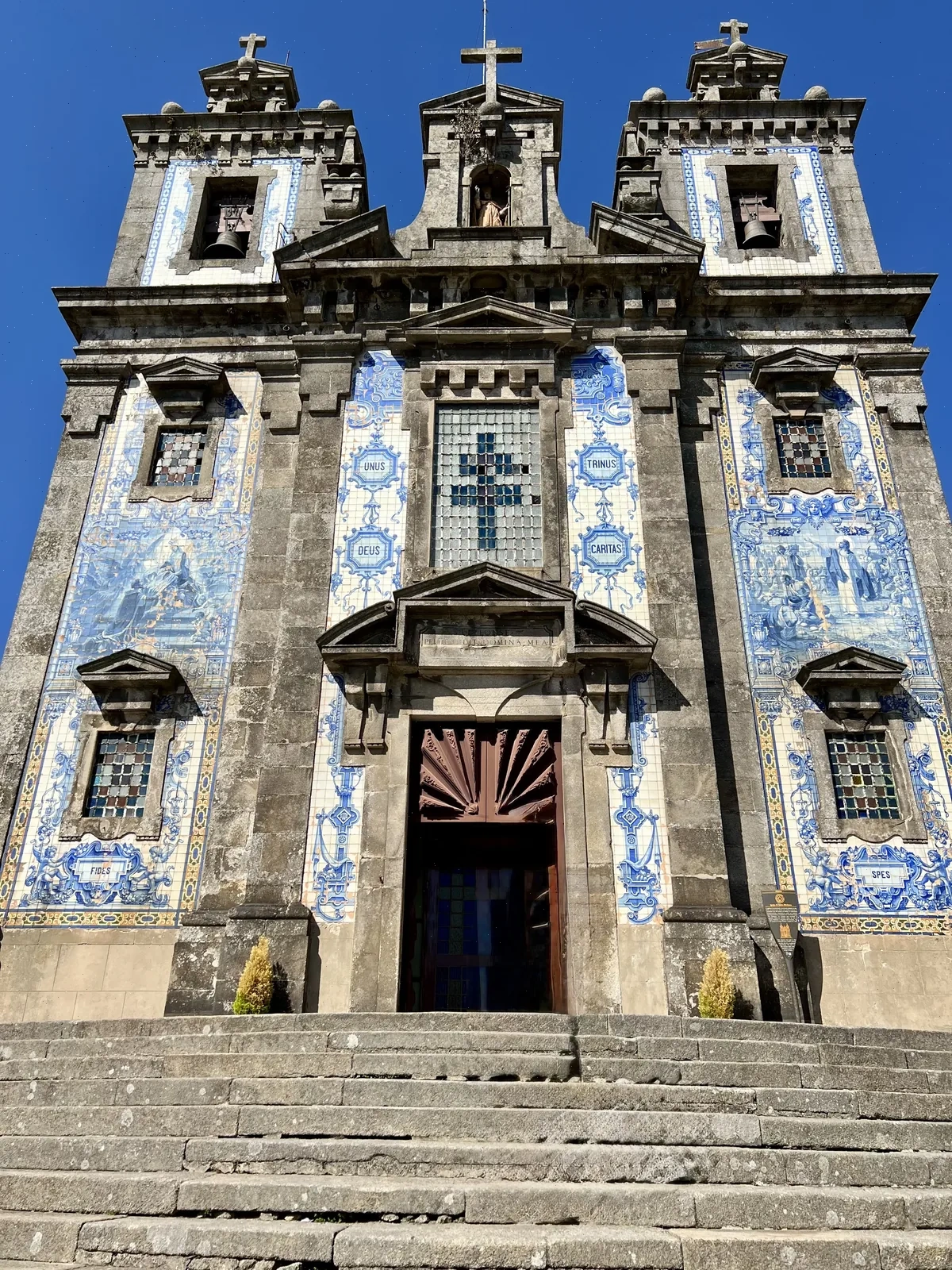
Construction of this church began in the 16th century but was not completed until the 18th century. Its exposed stonework and relatively restrained interior distinguish it from Porto churches with extensive gilded decoration.
A wooden door provides access to the Museum of Sacred Art and Archaeology of Porto. Its upper-floor rooms display statues of saints, liturgical objects and religious metalwork. Consult current access information before planning a museum visit.
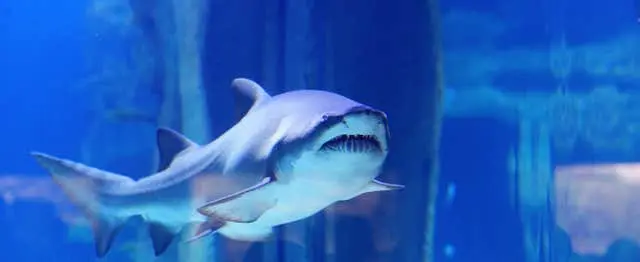
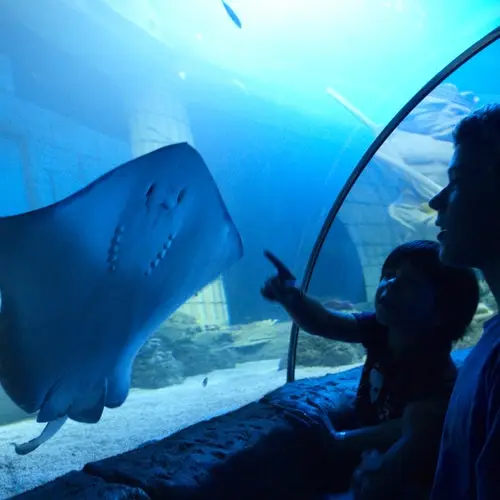
The aquarium has an underwater tunnel and 31 tanks, including a main tank holding 500,000 litres. Its displays include penguins, sharks, turtles and stingrays.
The aquarium is next to City Park, making it possible to combine both places on a family day outside the historic centre. The underwater tunnel and penguin area are two of its principal exhibits. Consult current admission availability and visitor information before traveling to the site.
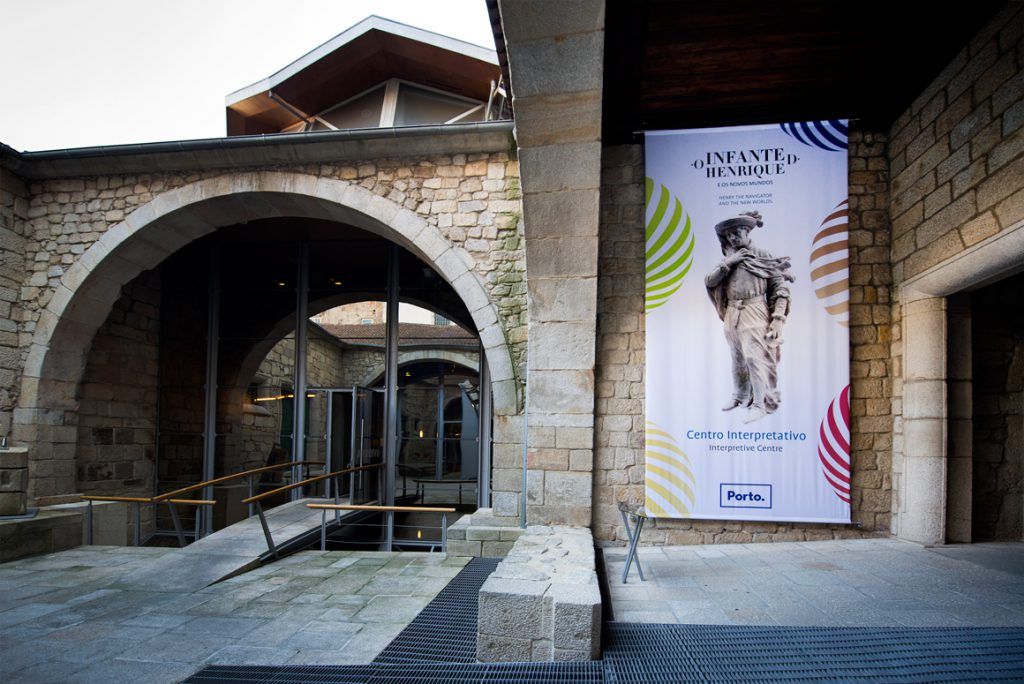
The original building dates to 1325 and takes its name from its association with the birthplace of Henry the Navigator, a prominent figure in the Age of Discoveries.
The residence was used to accommodate official visitors of the Royal Household. Today it is a small museum displaying archaeological remains and sections of floors that once formed part of the building.

With more than 200 years of history, it is Portugal’s oldest public museum. Its collections include ceramics, prints, furniture and glassware, with particular emphasis on sculpture and painting. Works by Portuguese sculptor António Soares dos Reis are central to the collection.
The Palácio dos Carrancas houses the museum. The palace was used as a private residence from the late 18th century and accommodated figures including the Duke of Wellington, General Soult and Dom Pedro IV.

The Serralves Foundation promotes contemporary art and includes the Museum of Contemporary Art, Serralves House, an auditorium and the Manoel de Oliveira Cinema House. The art museum opened in 1999 and hosts temporary exhibitions.
Its gardens cover 18 hectares around the museum. Exhibitions and seasonal events change, so review the current programme and availability before choosing a visit date.

Many cellars where Port wine is aged are in Vila Nova de Gaia. During production, grape spirit is added to interrupt fermentation, retaining residual sweetness while increasing the wine’s alcohol content.
Cellar visits commonly explain the production and aging process and may include a tasting. Formats, inclusions and reservation requirements differ, so consult current availability before crossing the river for a timed visit.
Adriano Ramos Pinto founded the company in 1880. Its museum preserves objects and documents related to the early history of the business.
Travelers interested in commercial history may find the museum as relevant as the cellar itself. Check the current visit format and availability before arrival.

The emblem of this cellar is Don Sandeman, a character created in 1928 and recognizable by a Spanish hat and Portuguese black cape. The image is closely associated with the company’s visitor experience.
The company was founded by a young Scotsman in 1790. Several visit formats may be available, so compare current inclusions and reservation requirements rather than relying on a fixed price.
This cellar occupies part of an old convent. Visits focus on its storage spaces and the types of Port produced there. Consult current tour formats and availability before including it in a fixed itinerary.
Cálem was founded in 1859 and stands close to the Luís I Bridge. Its caravel logo refers to the company’s historical wine trade with Brazil. Its riverfront location makes it straightforward to combine with the lower-deck walking route from Ribeira.
Walking is the most direct option within the historic centre, but Porto’s cobbles, slopes and stairways make short distances slower than they appear on a map. Travelers with reduced mobility should plan routes by elevation, allow additional time and avoid assuming that every viewpoint or old lane has step-free access.

You can reach Porto in several ways, depending on your departure point and preferred transport:
May to October generally brings milder conditions for outdoor sightseeing, while July and August tend to be busier and warmer. Spring and autumn can provide comfortable walking weather, but rain remains possible.
Three days allow time for the historic centre, Ribeira and Gaia, plus a half-day in Boavista, Serralves or Foz. A one-day visit should focus on the walk from São Bento and Sé Cathedral to Ribeira and Gaia.
Porto has a warm-summer Mediterranean climate (Csb) with Atlantic influence, generally bringing mild summers and wetter winters.
Travel marketing specialist with extensive experience in the travel sector. At companies such as Despegar and GuruWalk, she has led traveler-focused digital acquisition strategies. Now, from the GuruWalk blog, she combines her expertise with her passion for discovering and sharing unique destinations.
Local guides, pay-what-you-want and no credit card to book. That is how you understand a city.
Explore free tours on guruwalk.com