



Explore Naples through Spaccanapoli, the Spanish Quarter, historic churches, underground passages, Neapolitan pizza and a day trip to Pompeii.
 Belén Rivas
GuruWalk
·
Updated 27 Aug 2026
Belén Rivas
GuruWalk
·
Updated 27 Aug 2026This guide brings together the main things to do in Naples, from Spaccanapoli and the Spanish Quarter to historic churches, underground passages, Neapolitan pizza and a day trip to Pompeii. Use it to plan independent sightseeing, choose where to continue after a free walking tour and check which attractions require advance planning.
Last verified: August 2026 — Prices, opening hours, and reservation requirements checked against official sources. GuruWalk’s Naples gurus reviewed the practical recommendations.
Starting with one of the Naples free walking tours is a practical way to understand the historic center before exploring independently. Routes may cover areas such as Spaccanapoli, Piazza del Plebiscito or the Spanish Quarter, depending on the tour selected.
Discover the true soul of Neapolitan street food with a walking food tour of about 2 hours , in the…

The Best of Naples walk is a Free Walking Tour that covers the Royal Naples , taking you through …

Great exploratory experience with a special focus on coffee that combines the history of the Italian coffee culture with the…

"Tell me what you eat and I'll tell you who you are" said Jean Anthelme Brillat-Savarin, French gastronome and politic…

n Naples, every corner tells a story, every face holds a craft, every workshop is a small universe waiting to…
Discover Naples with Licensed Tour Guides! – If you have any special requests or would prefer a private …

🇮🇹 Feel like a local. Eat like a local. Smell like a local.

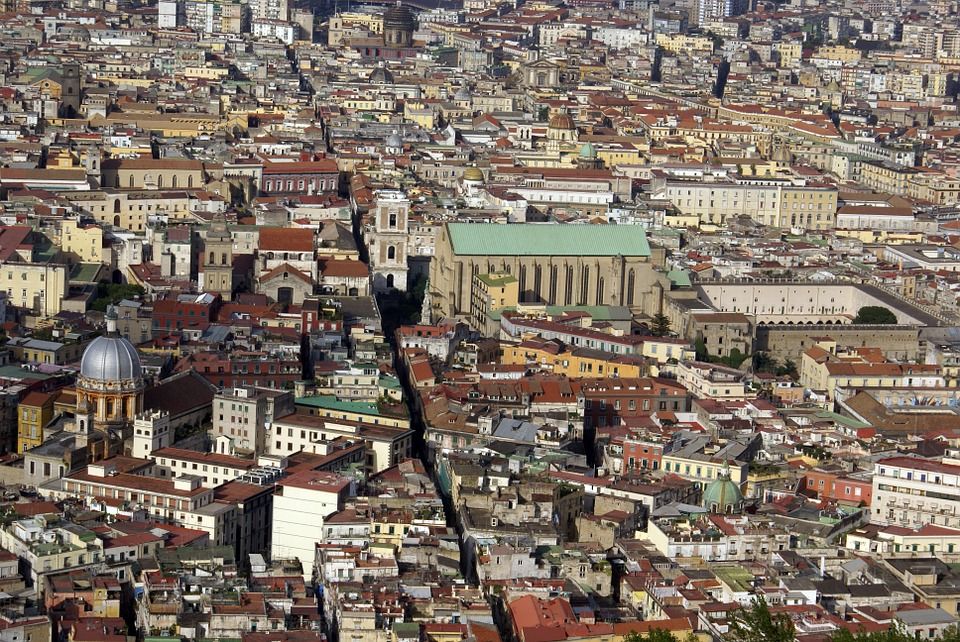
Spaccanapoli, whose name literally means “the street that splits Naples”, runs through the historic center of the city. This main artery, whose layout dates back to the Greco-Roman period (more than 2,400 years ago), follows a straight line through the old town, dividing the city between north and south.
During the Middle Ages and up to the 19th century, this area was home to important convents and residences of the most powerful families. The Renaissance brought significant changes, transforming many of the original Gothic buildings into the structures visible today.
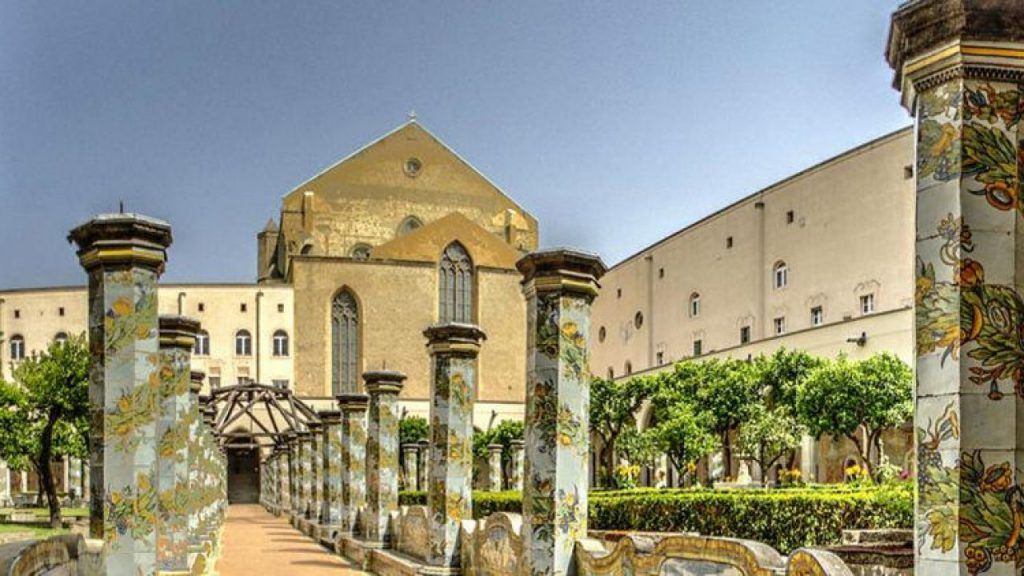
Built between 1310 and 1340, the Basilica of Santa Chiara is the largest Gothic church in Naples. This religious complex was erected over ancient Roman baths by order of King Robert I of Anjou and his wife, with the purpose of creating a Franciscan citadel that would serve both as a residence for the Poor Clares and as a royal mausoleum.
The complex has survived numerous wars, earthquakes and floods, preserving artistic works and the tombs of the Bourbon dynasty within its walls. The majolica cloister is distinguished by its painted tiles, columns and gardens.
Natural light reveals the colors and individual scenes painted on the majolica tiles. Photography for private use is permitted in the cloister, subject to any instructions displayed during the visit.

Naples Cathedral, also known as the Duomo di San Gennaro, is the main Catholic church in the city. Inaugurated in 1314, it was built on the foundations of an ancient temple dedicated to Apollo and displays a mix of styles that includes Gothic, Baroque and Neo-Gothic elements.

Piazza del Plebiscito is one of the principal public spaces in Naples. The square takes its name from the plebiscite of 1860, which decided on the annexation of the Kingdom of the Two Sicilies to the new Kingdom of Italy under the House of Savoy. It remains a setting for Neapolitan cultural and public life.
The square is dominated by two monumental buildings: the Royal Palace to the east and the Basilica of San Francesco di Paola to the west. On either side stand the equestrian statues of Charles III (Antonio Canova) and Ferdinand I (completed by Antonio Calì from a model by Canova).
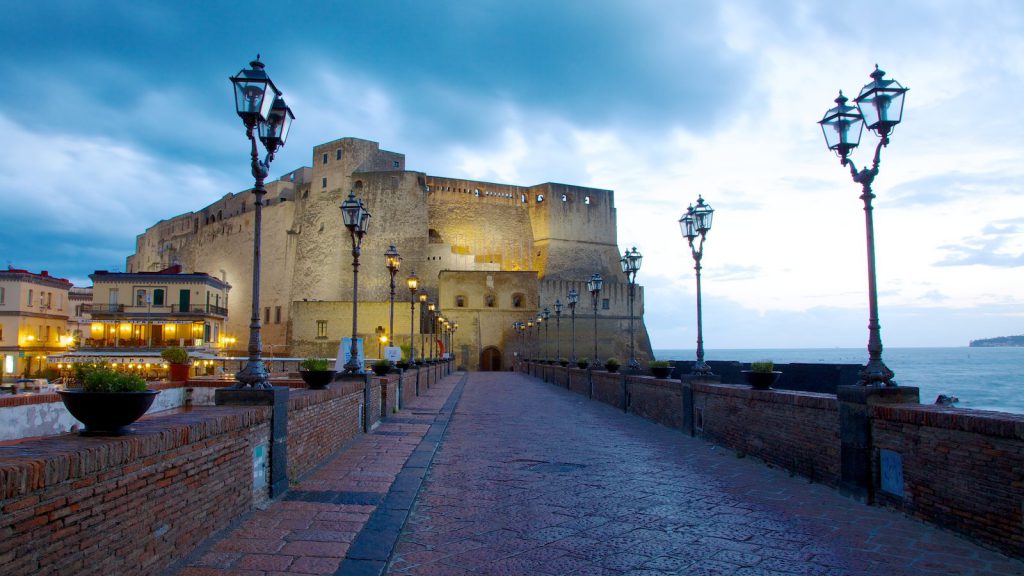
Castel dell’Ovo, whose name means “Egg Castle”, stands on a small peninsula in the Gulf of Naples. This medieval castle is the oldest in the city and owes its name to a legend according to which the poet Virgil hid a magic egg in its foundations.
Located in the historic Borgo Marinari, the castle overlooks the Gulf of Naples, Mount Vesuvius and the city. Its position also makes the surrounding waterfront a useful connection between the castle and Santa Lucia.
Renovation work can affect access to Castel dell’Ovo. Confirm its current opening status before setting out and keep the waterfront walk as an alternative if the interior remains unavailable.

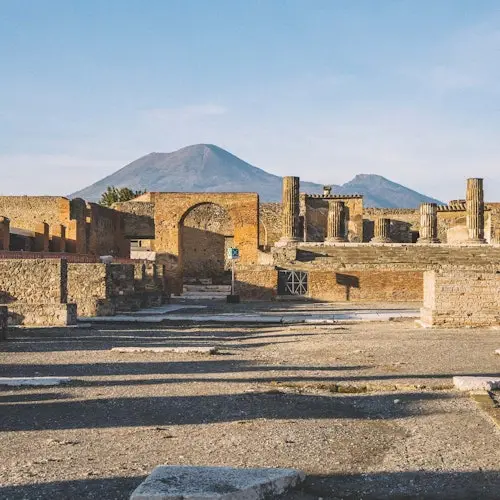
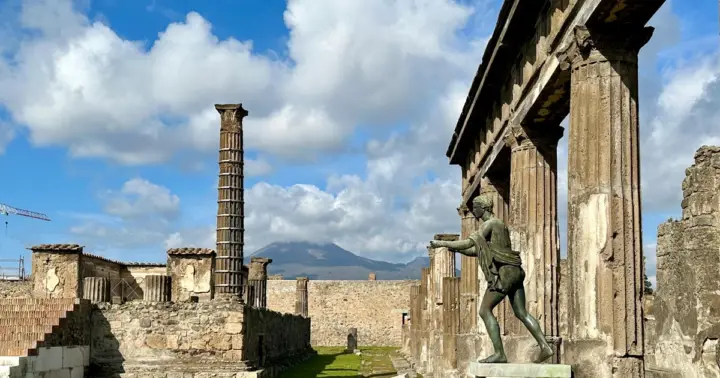
Just 25 kilometers from Naples lies the Pompeii archaeological site. This ancient Roman city was preserved beneath ash after the eruption of Vesuvius in 79 AD, leaving extensive evidence of daily life in the Roman Empire.
The excavations have revealed a city with streets, houses, temples, shops, theaters and an amphitheater. Visitors can follow the ancient street plan, examine surviving frescoes and see the plaster casts associated with victims of the eruption.
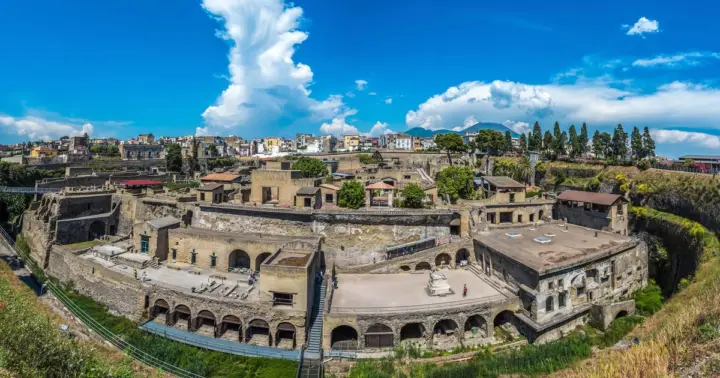
Pompeii and Herculaneum require more planning than central Naples. Compare the transport, entry and guided options below, and check current availability rather than relying on static prices.



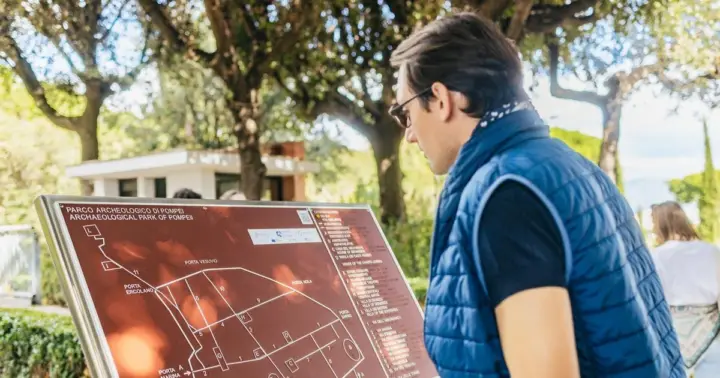



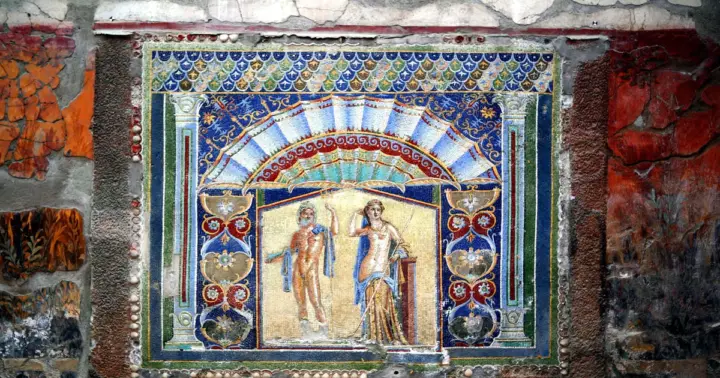

The art of the Neapolitan pizzaiuolo has been recognized by UNESCO as Intangible Cultural Heritage of Humanity since 2017. Its history includes the 18th-century work of Vincenzo Corrado, who documented the use of tomato on pizzas and maccheroni in his gastronomic treatise.
Neapolitan pizza is characterized by its soft, thin center and raised crust, traditionally baked in a wood-fired oven. Two established varieties are Marinara (tomato, garlic, oregano and olive oil) and Margherita (tomato, mozzarella, basil and olive oil), the latter associated by tradition with Queen Margherita of Savoy in 1889.
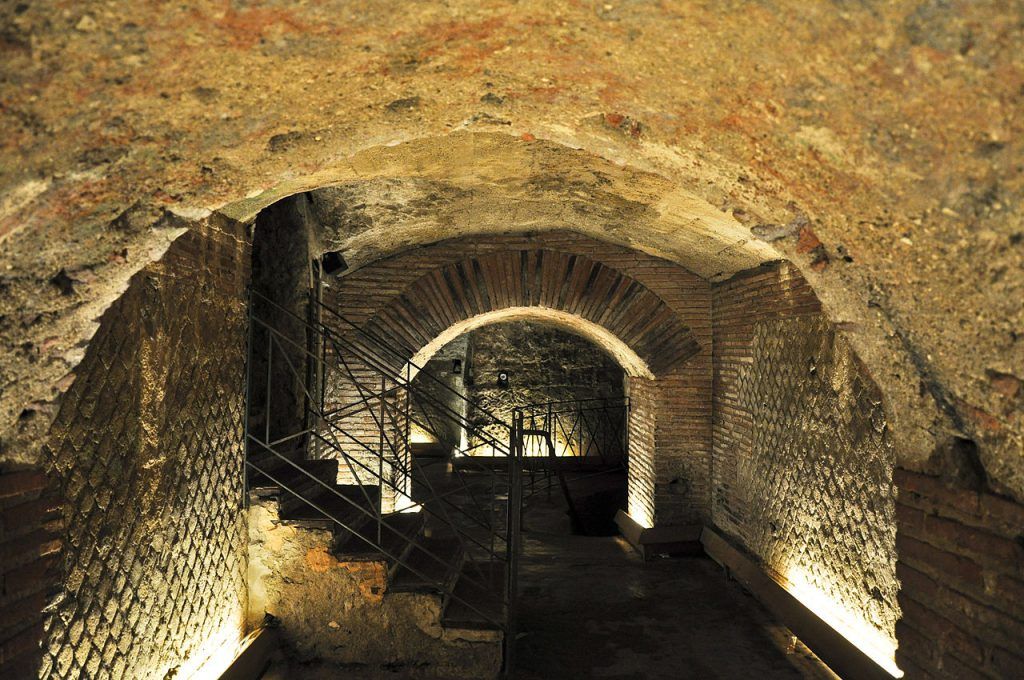
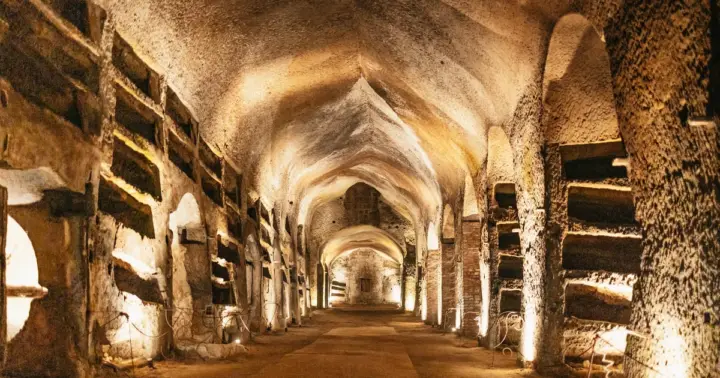
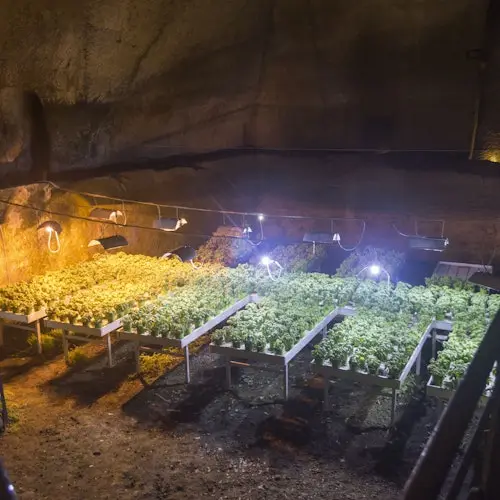
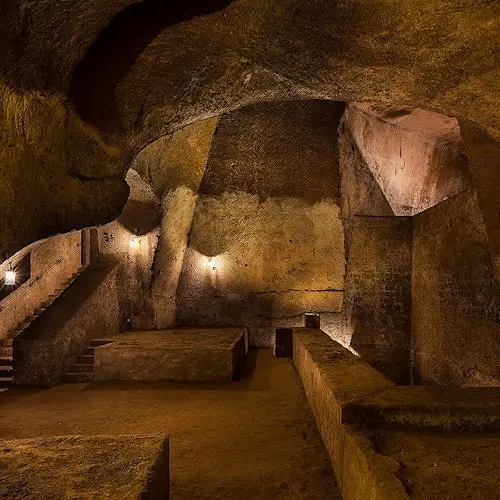
Forty meters beneath the historic center is an underground network with more than 2,400 years of history. Its tunnels and galleries illustrate how the spaces beneath Naples changed alongside the city above.
Originally excavated by the Greeks as quarries and water reservoirs, these tunnels were expanded by the Romans and later used as air-raid shelters during the Second World War. Visits may include ancient cisterns, parts of Roman theaters and other archaeological remains, depending on the route selected.
Guided access is required for many underground routes. Wear secure shoes and bring a light layer because conditions below ground differ from street level. Check current duration, accessibility and reservation requirements before booking.
Several underground and catacomb experiences operate in Naples, so compare the route, access conditions and language before choosing one.
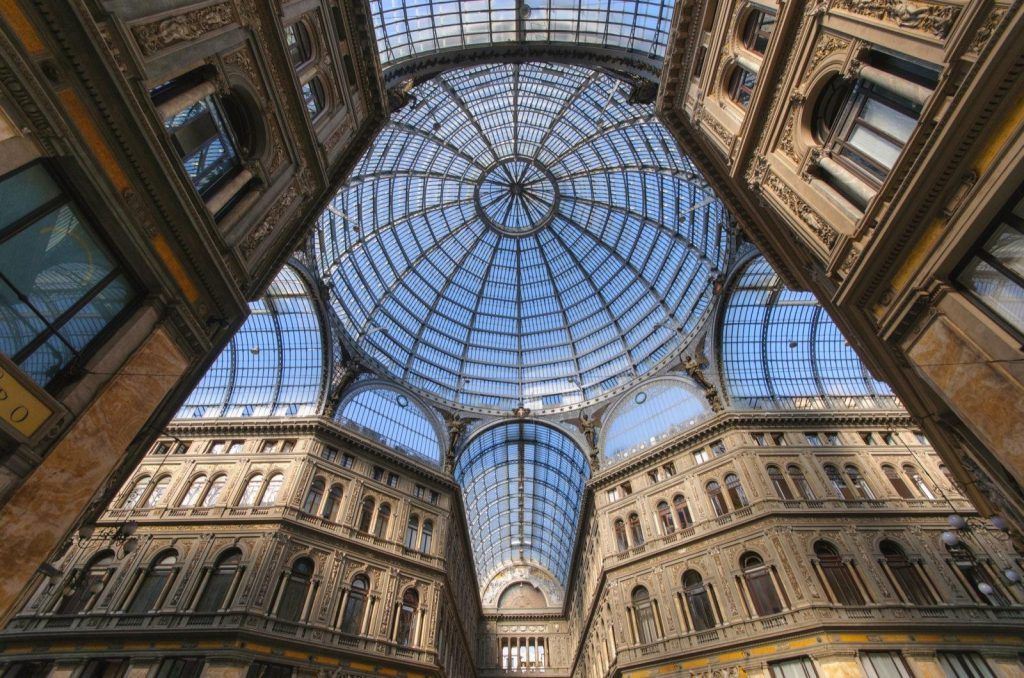
Built between 1887 and 1890, the Galleria Umberto I is an example of 19th-century commercial architecture. Its principal features include a glass and iron dome, arches and a mosaic floor associated with the period of the Neapolitan Risanamento.
The building, inspired by the Galleria Vittorio Emanuele II in Milan, takes its name from King Umberto I and connects Via Toledo with Via San Carlo, opposite the Teatro di San Carlo.
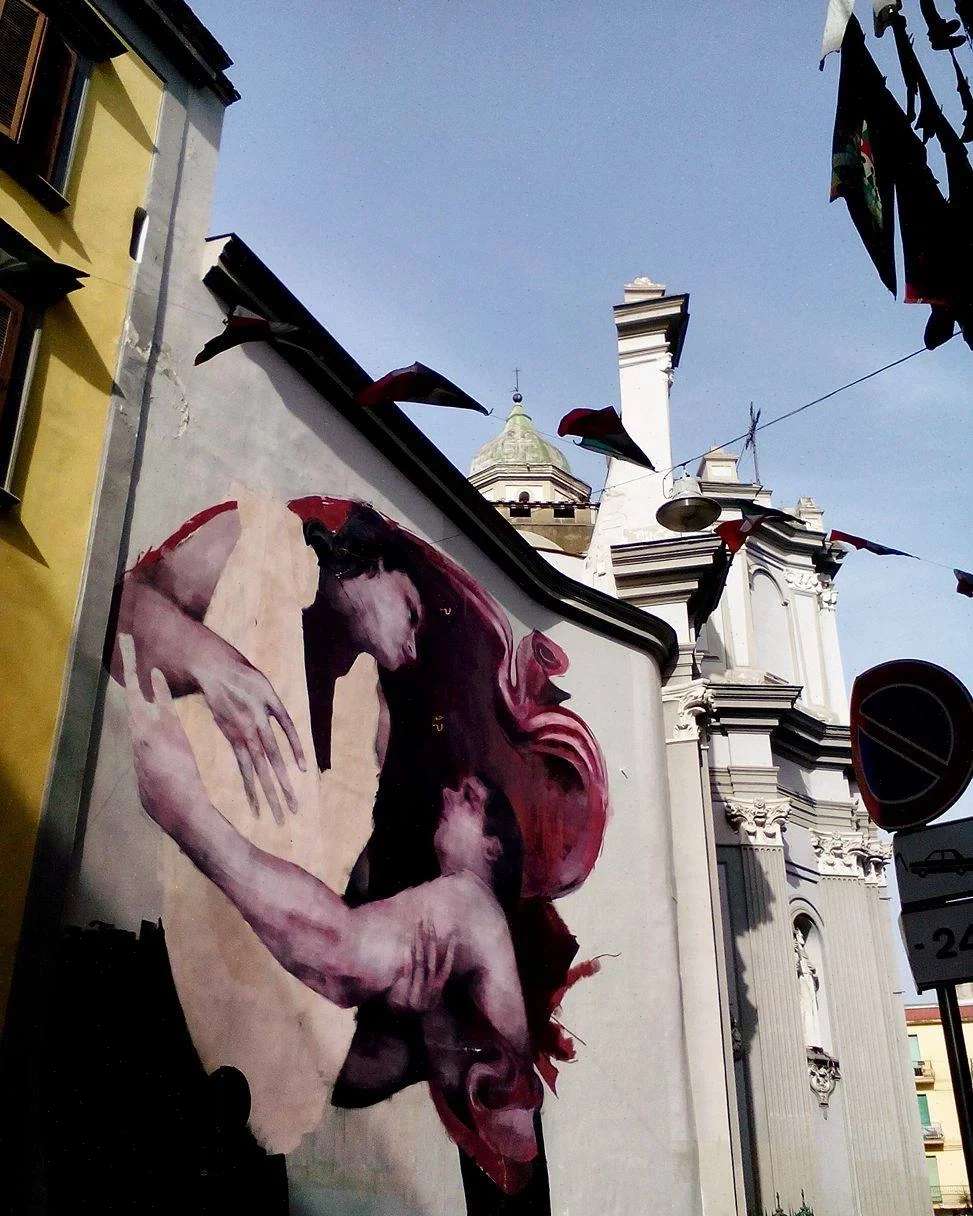
The Spanish Quarter, or Quartieri Spagnoli, was built in the 16th century during the Spanish viceroyalty. Its network of narrow alleys and tall buildings was originally designed to house the Spanish troops who kept order in the city.
Today, the neighborhood is known for colorful murals, clotheslines strung between buildings, small traditional shops and active street life. The area stretches between Via Toledo and Corso Vittorio Emanuele, on the hillside that climbs toward the Certosa di San Martino and Castel Sant’Elmo.
A first visit can combine Spaccanapoli, Santa Chiara, Naples Cathedral, Piazza del Plebiscito, Castel dell’Ovo, Naples Underground and the Spanish Quarter. Leave additional time for Neapolitan pizza and a separate Pompeii excursion.
Yes. A free walking tour can provide an initial overview of the historic center and help identify places to revisit independently. Confirm the meeting point, route and duration in the booking details.
Yes. Pompeii is about 25 kilometers from Naples and is connected by the Circumvesuviana train. Allow at least 3–4 hours for the archaeological site and check current transport and reservation information before departure.
Comfortable shoes and water are useful for the old town’s streets. Bring a light layer for underground visits, clothing that covers shoulders and knees for churches, and cash if joining a tip-based free tour.
After choosing the main stops, compare additional tours and activities in Naples for underground sites, museums and excursions. Check current availability and access requirements before finalizing the itinerary.
Travel marketing specialist with extensive experience in the travel sector. At companies such as Despegar and GuruWalk, she has led traveler-focused digital acquisition strategies. Now, from the GuruWalk blog, she combines her expertise with her passion for discovering and sharing unique destinations.
Local guides, pay-what-you-want and no credit card to book. That is how you understand a city.
Explore free tours on guruwalk.com