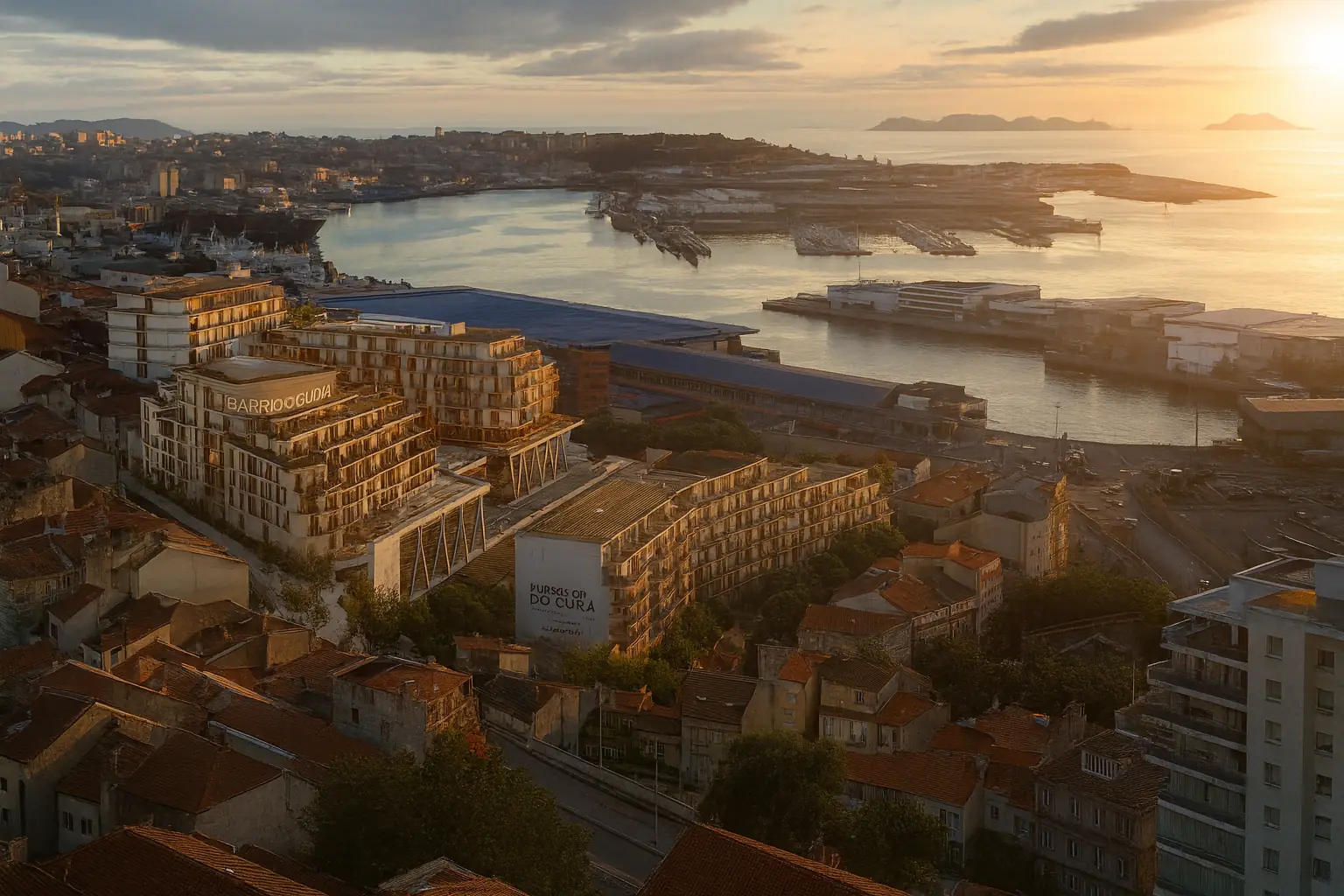
Vigo, the urban heart of the Rías Baixas, combines the energy of the most populated city in Galicia with the authenticity of a legendary Atlantic port. Discover the must-see places and plan your visit to make the most of it.
What to see in Vigo in one day
If you only have one day to explore Vigo, here’s an itinerary that will let you see the city’s main highlights. The best way to make the most of your time is to start your visit early at Porta do Sol, the heart of the city, where you can admire the famous Sireno statue and the quirky Dinoseto.
From here, head into the Casco Vello, where you can stroll along its cobbled alleyways and discover the historic soul of Vigo. Don’t miss the Praza da Constitución and the Praza da Pedra. Late in the morning, it’s the perfect time to stop at the Calle de las Ostras, where you can taste the famous freshly opened Arcade oysters.
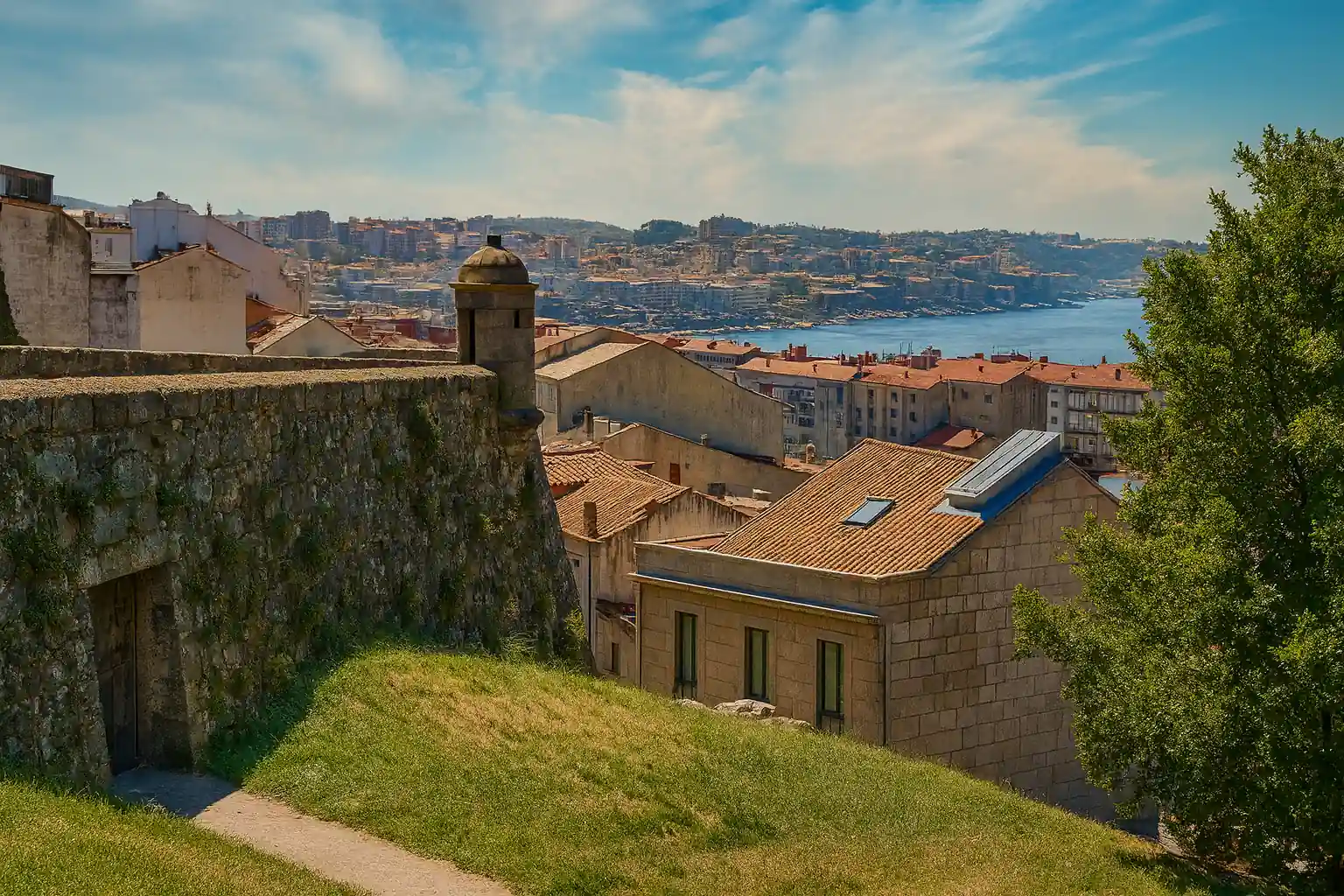
At lunchtime, head to the fishing port, where you’ll find plenty of restaurants serving the best local cuisine. After your meal, take a taxi or bus up to Monte de O Castro, from where you can enjoy the best panoramic views of the city and the estuary, as well as visit its historic fortress and gardens.
In the afternoon, if the weather is good, spend a few hours at Samil Beach, the most important urban beach in Vigo, where you can walk along its lively seafront promenade and relax by the sea. As an alternative on rainy days, you can visit the Museo del Mar de Galicia, which will help you understand the city’s deep relationship with the ocean.
Casco Vello de Vigo
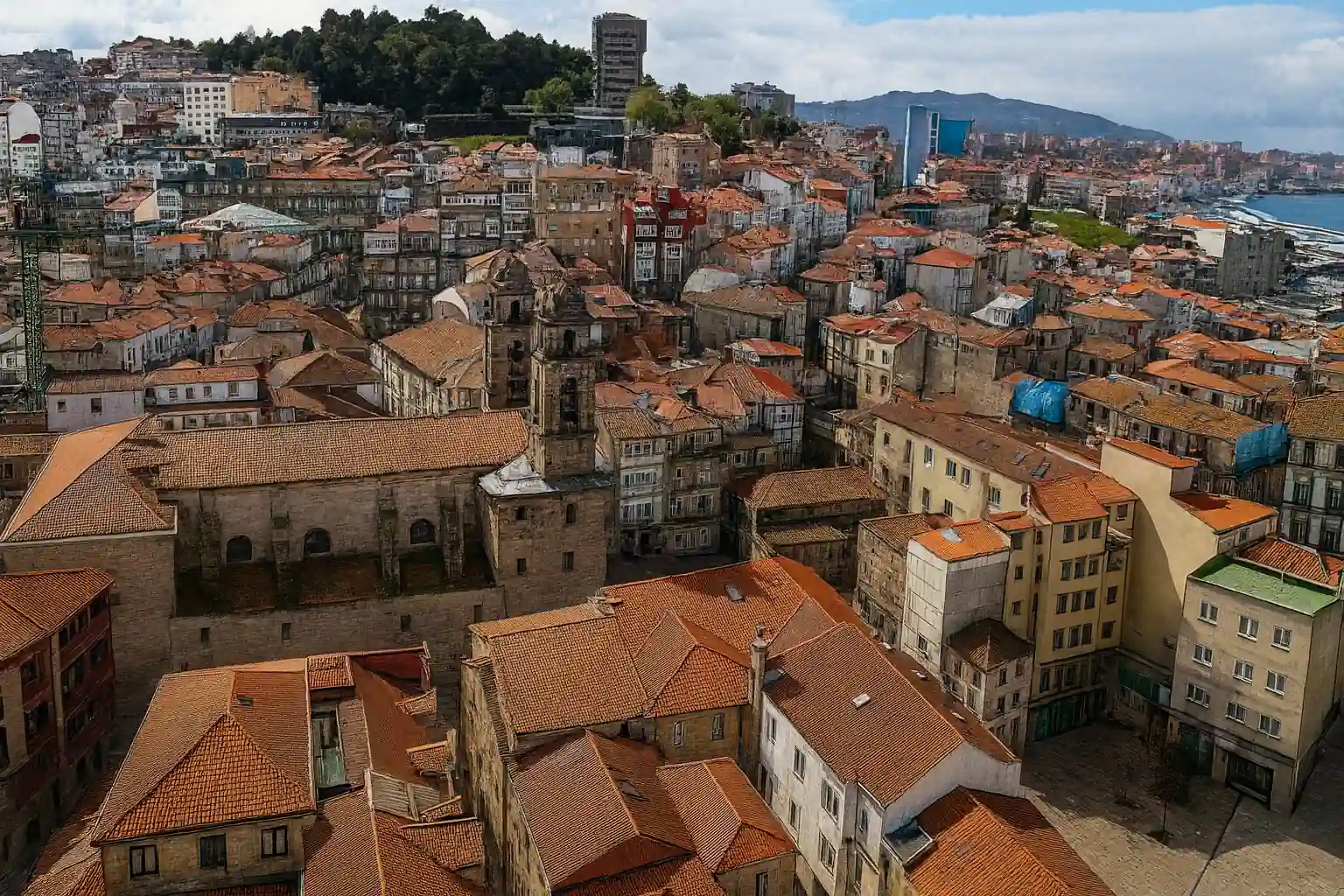
The Casco Vello (old town), one of the best things to see in Vigo, represents the historic soul of the city and is an essential stop for any visitor. This centuries-old quarter, with its narrow cobbled streets, is a living testimony to Vigo’s rich maritime and commercial history, offering a unique experience among its carefully restored 18th- and 19th-century buildings.
Architectural gems and historic corners
The Praza da Constitución is the beating heart of the neighborhood, a meeting point where locals and visitors come together among beautifully restored 18th- and 19th-century buildings.
A few steps away, the historic Praza da Pedra keeps alive the memory of the old fish market, standing out for its characteristic arcades that have witnessed centuries of maritime trade.
The majestic Church of Santa María, a 16th-century architectural gem, dominates the urban landscape, while the picturesque Rúas dos Cesteiros and das Ostras captivate visitors with their craft shops and lively tapas bars.
Unique experiences in the historic quarter
Food lovers will find paradise in the traditional taverns and restaurants, where the flavors of the sea blend with traditional Galician cuisine. Guided tours unravel the history and legends of the neighborhood, while art galleries and local craft shops showcase Vigo’s creativity. At nightfall, the district comes to life again with its lively bars, where tradition mixes with modernity.
Tips for your visit
- 🛍️ Discover the craft shops where you’ll find silver jewelry and local crafts (ceramics, leather, shell and mother-of-pearl jewelry).
- 🍽️ The best time to enjoy tapas is between 12:30 and 15:30, or from 20:00 onwards.
- ⏰ The neighborhood really comes alive in the afternoons and evenings, especially from Thursday to Sunday, when restaurants and bars offer Vigo’s best gastronomic and social atmosphere.
Calle de las Ostras (Oyster Street)
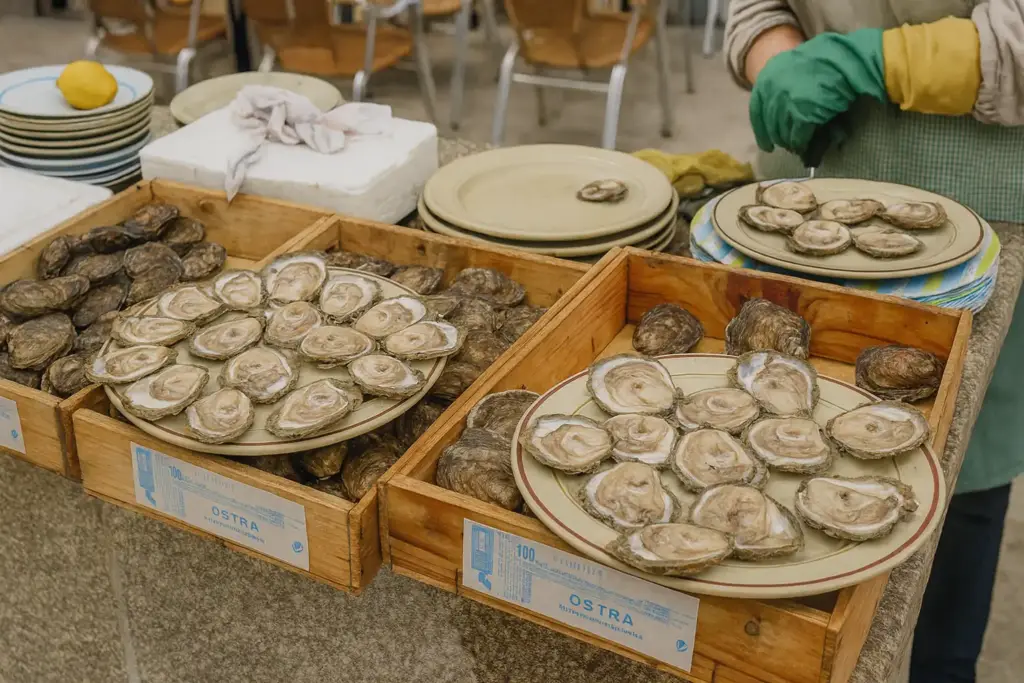
It’s in the lower part of the city, next to Rúa Pescadería, in the area of A Pedra and the Avenidas (Montero Ríos gardens), just a few minutes from the Monument to Jules Verne. It is a pedestrian street with numerous stalls where oysters – some of the best in the world – are opened and sold, prepared for you on the spot. Several stalls, mostly run by women, sell them for tasting.
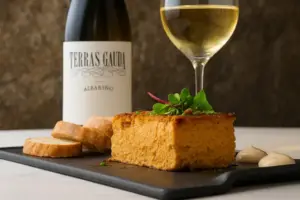
These oysters are one of the city’s gastronomic marvels, farmed in Arcade and brought directly every morning to Calle Pescadería or Calle de las Ostras. They have been produced and eaten in the estuary for centuries and today several oyster stalls offer them to be enjoyed on the spot or in nearby bars and restaurants, usually accompanied by a glass of albariño.
In this old area, very close to the marina and right next to Calle de las Ostras, where there are many seafood restaurants, you’ll find the Mercado de A Pedra. Today, it mainly serves as a fashion and souvenir outlet. The sale of counterfeit goods or contraband tobacco is prosecuted by law; what you’ll find are legal shops and seafood restaurants in the surrounding streets.
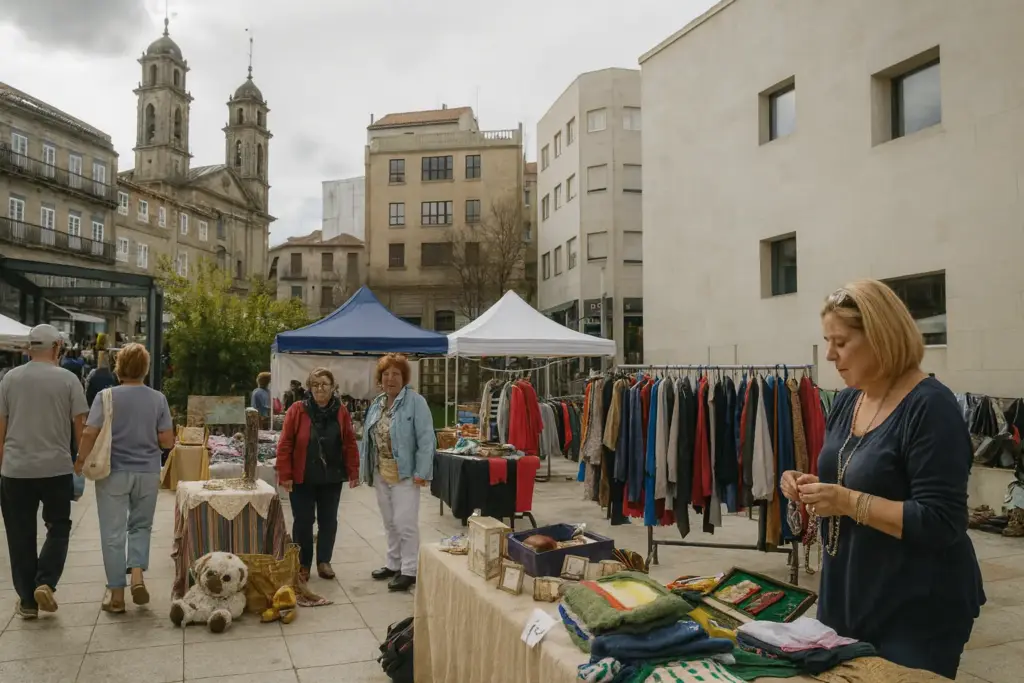
The quality of the clothing seems fairly good and the imitations are well made, they’re just not original or authentic brands. Here you need patience: to deal with the crowds, the noise, and the narrow stalls that are hard to get close to. You need to arrive with a clear idea of what you’re looking for so you can go straight for it.
Samil Beach
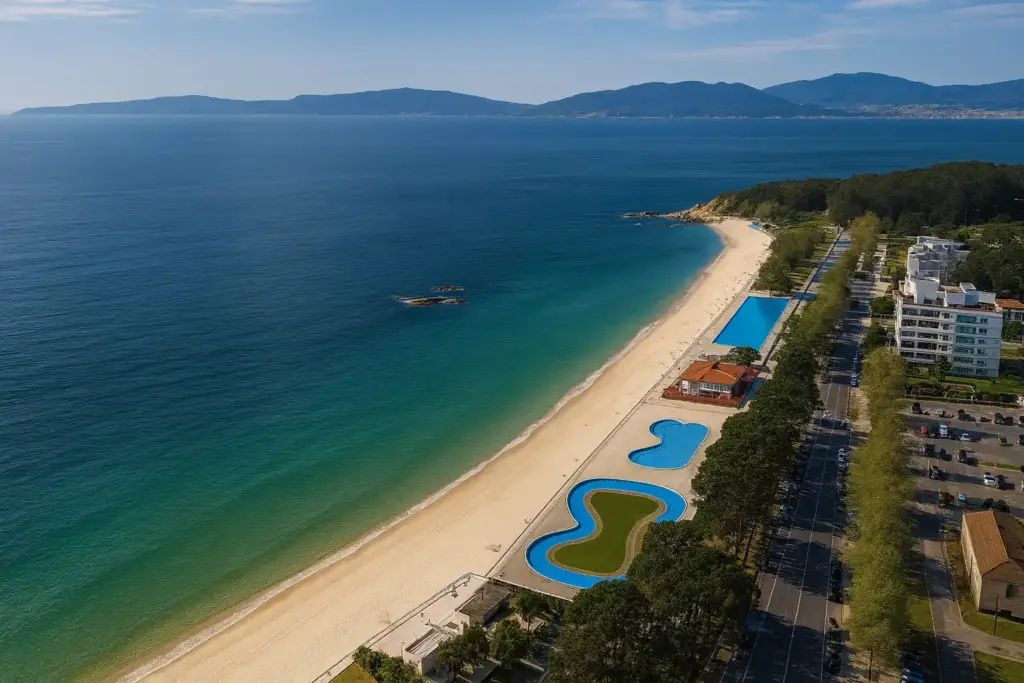
This is a beach located to the west of Vigo, with fine sand and a length of over 1 km (≈1.2 km). It is the largest urban beach in Vigo and one of the busiest in the Rías Baixas, thanks to its beauty and the wide range of facilities and amenities it offers.

It has lifeguard services, a seafront promenade, showers, a basketball court, skating area, slide, three swimming pools, green areas, loudspeakers, foot showers, etc. In the surrounding area there are restaurants, hotels, a campsite and nightclubs, as well as a sports complex with a football pitch, three padel courts and twelve tennis courts.
Access is via the Vigo–Baiona road, with large car parks along Avenida de Samil, and there is also a city bus service. According to some visitors, the water is rather cold, usually between 16 and 18 °C, depending on currents and winds in the Rías Baixas.
The quietest corner of Samil is usually at its northern end, where at low tide natural pools form among the rocks, ideal for families with children. To get there, walk past the last beach bar and follow the rocky path for about 5 minutes. Best times: two hours before low tide and at sunset, when the light is softer.
Viewpoint of Monte de O Castro
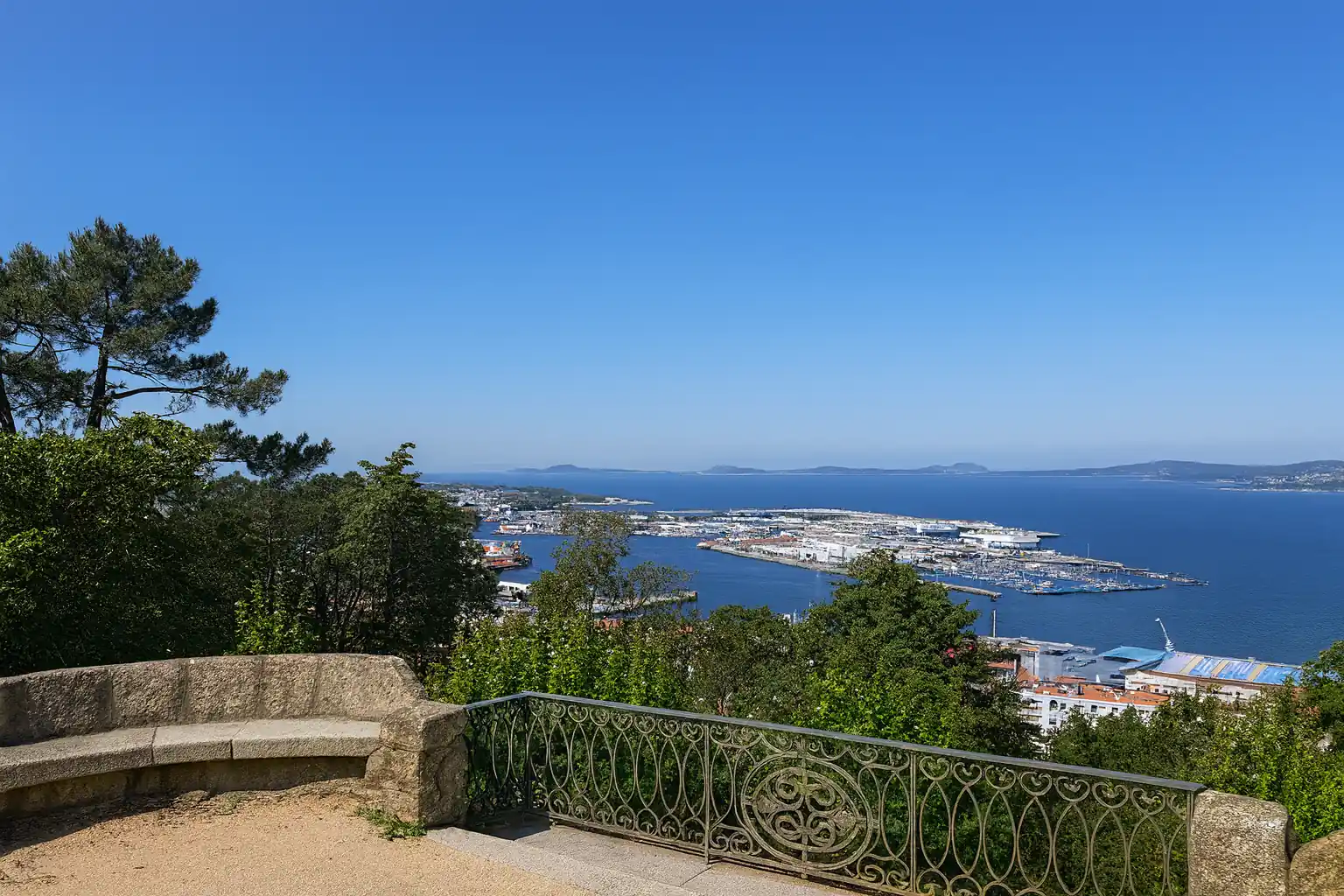
This is a hill in the center of Vigo from which you can overlook the city and the Vigo estuary, rising to 149 m. From there you get the best views of Vigo and its estuary. It is the largest park in the city center. The first settlers of the city lived here, and on the lower slope you can visit the castro archaeological site to see how people lived between the 3rd and 1st centuries BC. Today three circular stone dwellings have been reconstructed.
You can walk up the hill from the Plaza de España or Avenida das Camelias. There is also road access and parking near the walls. The climb up to O Castro is steep, but it’s worth the effort. On the way you can see the anchors that commemorate the Battle of Rande and several cannons from the War of the Spanish Succession. Here, in 1702, the Anglo-Dutch attack took place that sank several ships.
You can get close to the 17th-century walls, where the city’s best viewpoint is located. But beyond the views, the most important thing is the fortress with the O Castro castle and its gardens. Construction of the castle began in 1656 during the war with Portugal for its independence. It formed part of the city’s defensive system along with the Castle of San Sebastián. The fortress had three walled enclosures, but today only the first and part of the second remain.
The first enclosure is the fortress at the top of the hill, which today has been turned into a viewpoint. It is very well preserved, especially its sentry boxes and the calvary cross that presides over the square. From there you can enjoy a magnificent panoramic view of the Vigo estuary and its port. The enclosure is intact and entrance is free.
The Monte de O Castro can be considered a true green oasis, a space for nature and botany in all its splendor. There is a great variety of both native and exotic species. In the mid-20th century it was completely treeless, covered only with Atlantic shrubland. It was later reforested with ornamental species that today have become pines, cedars, linden trees and camellias. As for fauna, squirrels, birds and owls have been spotted here.
There are children’s play areas, skating and skate parks, a duck pond and cafés. The park is open access; the castro archaeological site has specific visiting hours. As a curious note, on the hill there is a monument to the Republican victims of the Spanish Civil War. You’ll also find the monument to the galleons of Rande, with anchors and cannons.
Cíes Islands

The Cíes Islands are an archipelago located in Pontevedra at the entrance to the Vigo estuary. It consists of three islands: the northern island or Monteagudo; the middle one, do Faro; and the southern one, San Martiño. They are about 14.5 km from the city of Vigo, and about three-quarters of an hour away by boat. They were declared a nature reserve in 1980 and have been part of the Atlantic Islands of Galicia National Park since 2002. The Rodas Beach on the northern island is considered one of the best beaches in the world.
On their western side, the three islands are mountainous, with almost vertical cliffs over a hundred meters high and numerous caves carved out by the waves. On the eastern side, however, the coastline is softer, covered with pine and eucalyptus forests and scrub. Sheltered from the Atlantic winds, beaches and dunes form here.
There are a total of nine beaches, including Figueiras Beach or Playa de los Alemanes, which has Blue Flag status and is 350 m long, where nudism is common. There is also Rodas Beach, the largest one at about 1 km long, located to the left of the Rodas pier and joining the northern island with the middle one. This beach has several services such as a campsite, restaurants, information booth, loudspeakers, lifeguards, among others.
Once you arrive on the islands, the usual thing is to head to the information office, where they can provide details on visiting the island and maps for some of its four hiking trails. The paths are signposted and very easy to follow.
To visit Cíes in high season you need a free authorization from the Xunta and a ferry ticket. A classic day plan: Rodas Beach + hike to Alto do Príncipe or to the Cíes Lighthouse. Check the tide tables if you want to enjoy quieter beaches.
For more information, check our guide to visiting the Cíes Islands
Museo del Mar de Galicia (Galician Sea Museum)
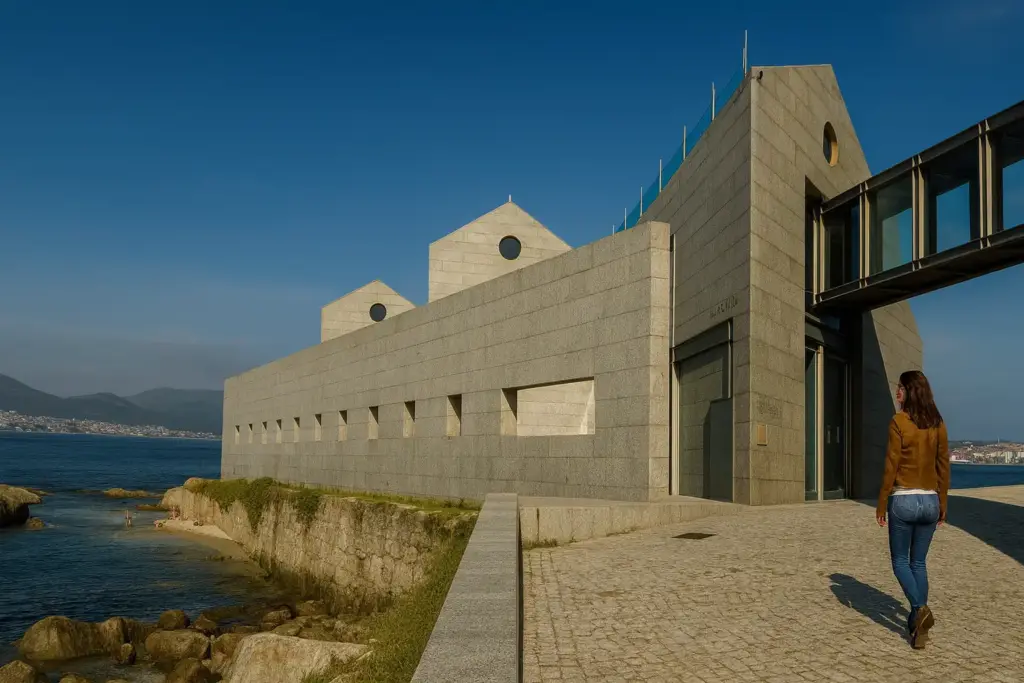
The Museo del Mar de Galicia has become a must-visit to understand the deep connection between Vigo and the ocean. Located in the former Alcabre slaughterhouse, this spectacular building was designed by Aldo Rossi and César Portela, integrating the historic structure with modern elements.
The museum is divided into four main thematic areas: traditional Galician fishing, the canning industry, marine biology and oceanographic research. Visitors can explore everything from old fishing gear to modern navigation systems, as well as a fascinating collection of preserved marine species. One of the museum’s highlights is its aquarium, which houses numerous native species from the Vigo estuary.
Among its most notable exhibits is the recreation of an old salting factory, showing the historical importance of Vigo’s canning industry, and an impressive collection of traditional Galician boats. The museum also includes interactive spaces where visitors can experiment with the physics of water and learn about marine currents.
Castrelos Park
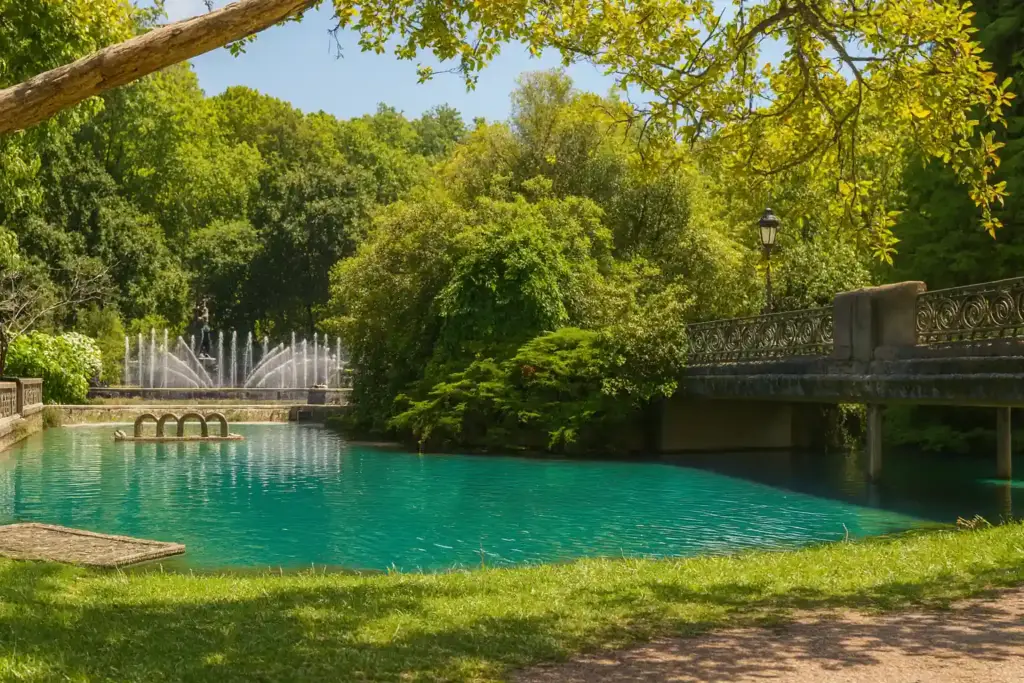
Castrelos Park is the green lung of Vigo, with more than 220,000 square meters of nature in the heart of the city. This historic space, dating back to the 19th century, masterfully combines French-style gardens, native woodland and recreational areas, making it one of the most beautiful parks in Galicia.
The park’s emblem is the majestic Pazo de Castrelos, a 17th-century manor house that currently houses the Quiñones de León Museum. This municipal museum displays an important collection of Galician art, archaeology and historic furniture. The gardens surrounding the pazo are particularly noteworthy, with their 19th-century French design, stone staircases, ornamental fountains and an impressive variety of plant species, including centuries-old camellias.
One of the park’s most popular spaces is its open-air amphitheater, with capacity for 5,000 people. During the summer months, this natural stage becomes the city’s cultural epicenter, hosting the prestigious Castrelos Festival, which offers free concerts by national and international artists.
The park also has extensive areas of native forest, paths for walking or exercising, children’s playgrounds and wide meadows perfect for picnics. A unique feature is its rose garden, with more than 70 different varieties of roses that is especially spectacular in spring.
Porta do Sol
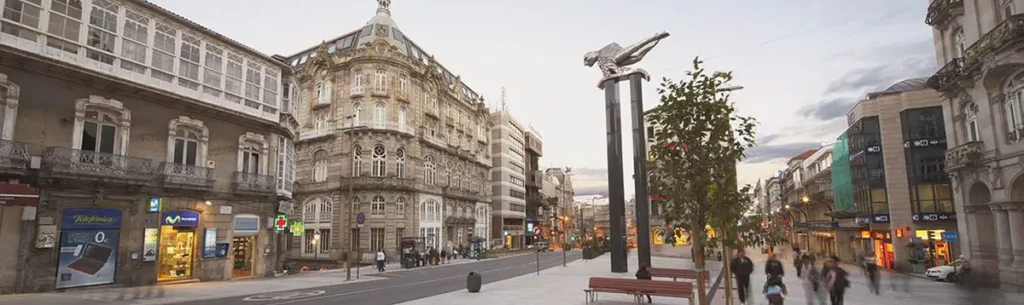
Porta do Sol is the beating heart of Vigo and one of its most emblematic landmarks. This historic square, which marks the natural border between the old town and the modern part of the city, owes its name to its strategic location: it was once one of the main entrances to the walled city, facing the rising sun.
The most recognizable feature in the square is the Sireno, an impressive bronze sculpture created in 1991 by renowned artist Francisco Leiro. This mythological figure, a hybrid between man and sea creature, has become the square’s undisputed symbol and a common meeting point for locals. Standing over 4 meters tall, the Sireno pays tribute to the city’s close relationship with the sea.
Another of the most photographed elements is the famous Dinoseto, a topiary in the shape of a dinosaur whose location has changed due to construction works (in 2024–2025 it was in the Alameda/Praza de Compostela and later moved to nurseries for restoration). It is usually decorated according to the time of year.
The square is surrounded by buildings of high architectural value, especially the Simeón building, a modernist gem from the early 20th century. Its ground floor houses numerous traditional and modern shops, cafés with terraces and restaurants that keep alive the commercial spirit that has always characterized this area.
Some of the city’s main shopping streets start from Porta do Sol, such as Calle Príncipe, the main pedestrian shopping area, and Calle Urzáiz. It is also the perfect starting point to delve into Vigo’s old town, explore its historic alleyways or head down towards the port. During the Christmas season, the square is transformed by spectacular lighting that makes it one of the most visited spots in the city.
Bouzas Neighborhood
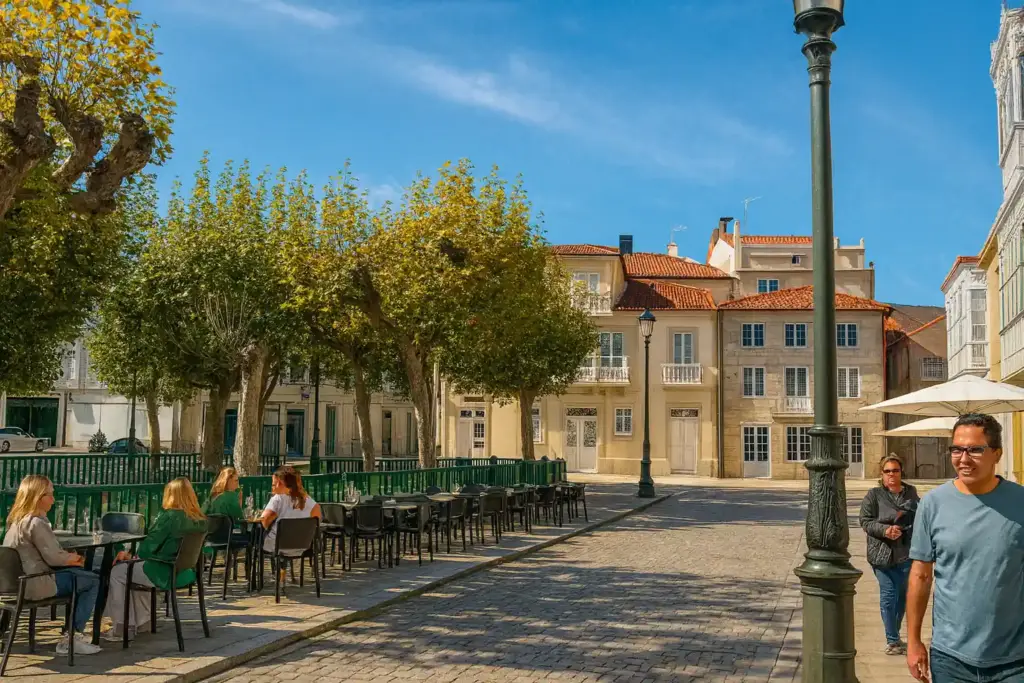
The Bouzas Neighborhood represents Vigo’s seafaring essence at its purest. This picturesque district, which remained independent until 1904, preserves the charm and authenticity of an old fishing village, offering visitors a unique experience that combines history, gastronomy and maritime tradition.
The historic heart of Bouzas is centered around the Parish Church of San Miguel, an architectural gem from 1697 that survived attacks by Drake’s fleet. Next to it, the alameda (tree-lined promenade) and the old town hall form a historic ensemble that transports visitors to another era. The cobbled streets and fishermen’s houses, many with characteristic wrought-iron balconies, preserve the soul of the old fishing village.
One of the main attractions is the Sunday Street Market, which turns the neighborhood streets into a bustling commercial space where you’ll find everything from fresh seafood to local crafts (Sundays, approx. 9:00–14:00). This market, with more than 100 years of history, is one of the oldest and most authentic in the city.
The gastronomy of Bouzas deserves special mention. Its many restaurants and traditional taverns offer some of the best tapas in the city. Particularly noteworthy are their preparations of fresh fish and seafood, brought directly from the local fish market. A tapas route through its streets is an unmissable culinary experience.
The Fiestas del Cristo de los Afligidos, held in July, are the most spectacular time to visit Bouzas. For a week, the neighborhood comes alive with musical performances, maritime processions, sports competitions and famous fireworks over the estuary, attracting thousands of visitors each year.
Vigo at Christmas
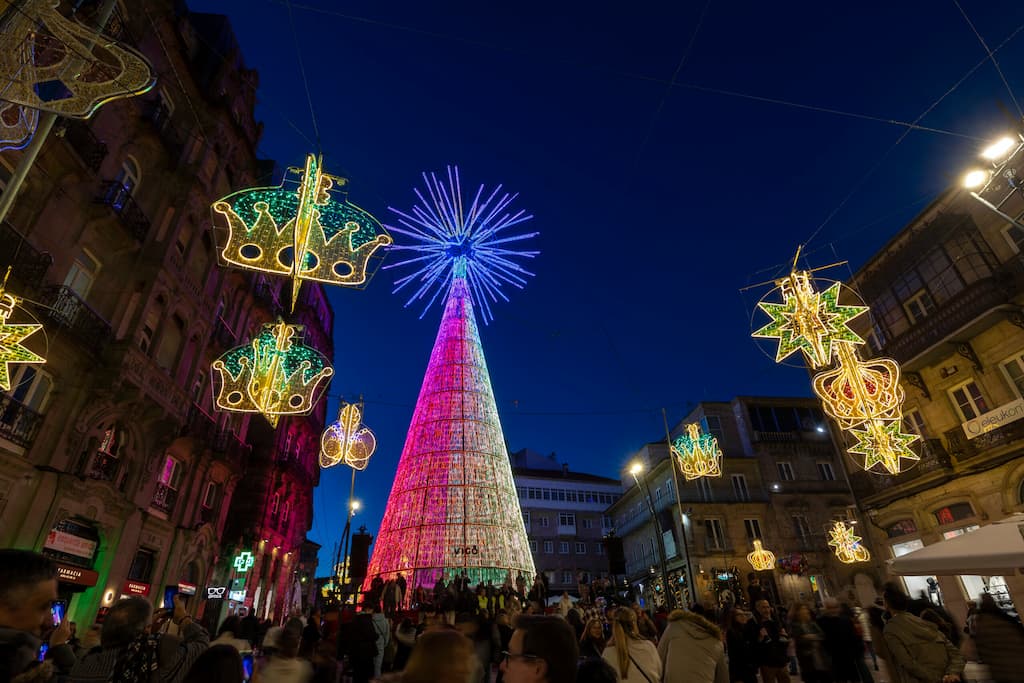
During the Christmas season, Vigo is transformed into a true winter wonderland, with spectacular lights, Christmas markets and a varied cultural program. Porta do Sol and Calle del Príncipe are decked out with lights and decorations that create a magical atmosphere, perfect for strolling and enjoying the festivities.
Christmas lights up the streets of Vigo
The Christmas magic comes to life in Vigo’s streets with a spectacular program that turns the city into a must-visit destination during the holidays. The Christmas Market in Porta do Sol stands as the heart of the celebrations, offering visitors and residents a carefully curated selection of crafts and local products that capture the spirit of the season. The aromas of traditional cuisine mingle with the festive atmosphere, creating a unique sensory experience.
Shows and events that light up the city
The cultural program reaches its peak with a series of concerts and shows at the prestigious Auditorio Mar de Vigo and other emblematic venues. Children have their own spaces in numerous craft workshops and play areas, where the visit of Santa Claus becomes the most eagerly awaited moment. The Vigo sky is regularly lit up by spectacular fireworks that mark the most special moments of the Christmas season.
Magical corners of Christmas in Vigo
The Plaza de la Constitución is adorned with a majestic Christmas tree that presides over lively markets. Porta do Sol shines especially brightly, becoming one of the most photographed spots in the city. The emblematic Calle del Príncipe invites you to stroll and do your Christmas shopping among lights and decorations that transform the urban landscape.
The traditional Mercado de A Pedra complements its usual offer with stalls dedicated especially to Christmas products, while Samil Beach provides a unique alternative for those who want to combine the festive spirit with the beauty of the sea, creating a striking contrast between the holiday lights and the maritime landscape.
Check our full guide on what to see in Vigo at Christmas, with the best plans.
Viewpoints in Vigo
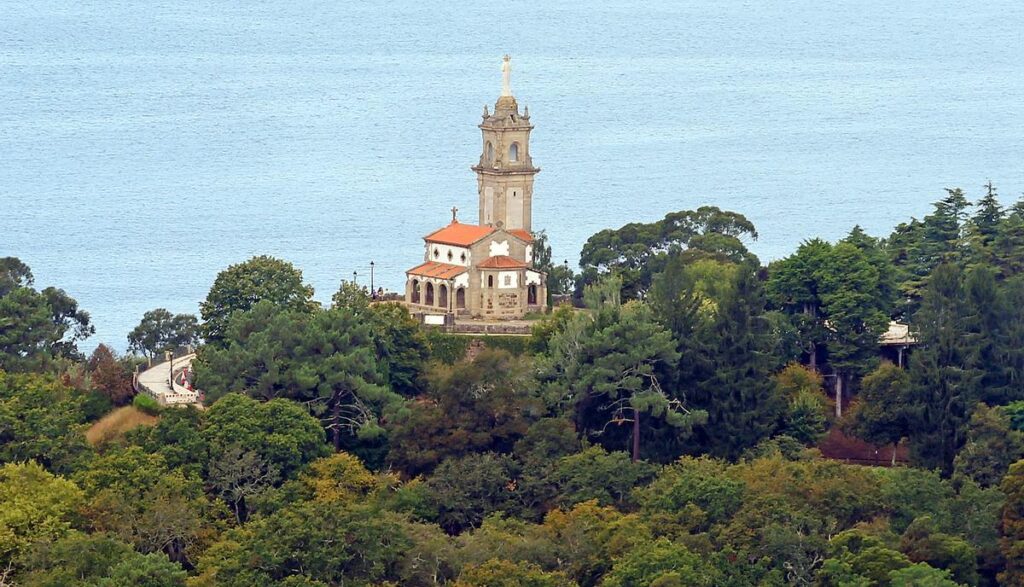
Vigo offers a variety of viewpoints from which you can enjoy the best views of the city and its surroundings. Whether you’re looking for a panoramic view of the port, the estuary or Galicia’s natural landscapes, you’ll find the perfect viewpoint for you.
Windows into Vigo’s soul: the most iconic viewpoints
Monte de O Castro rises majestically above the city, offering one of the most spectacular viewpoints in Vigo. From its privileged position, visitors can admire a full panoramic view that stretches from the bustling port to the farthest corners of the estuary. The O Castro Viewpoint, located on the same hill, has become a landmark for photographers and lovers of urban vistas.
Monte da Guía, in turn, offers a unique perspective on the port’s constant activity, where ships coming and going create an ever-changing spectacle. The historic Castle of San Sebastián, close to the city center, combines the charm of heritage with views that transport visitors through centuries of Vigo’s history.
To complete the panoramas, Monte dos Pozos and Monte Alba also stand out, allowing you to take in both the estuary and the city skyline in a single glance.
The art of contemplating Vigo
The best experiences at Vigo’s viewpoints are enjoyed at sunset, when the golden light bathes the city and the estuary. Accessibility varies from viewpoint to viewpoint: some are easy to reach on foot, while others require public transport or a private vehicle. During the winter season, it’s advisable to check the opening hours of nearby facilities when planning your visit.
Mirador de Vigo
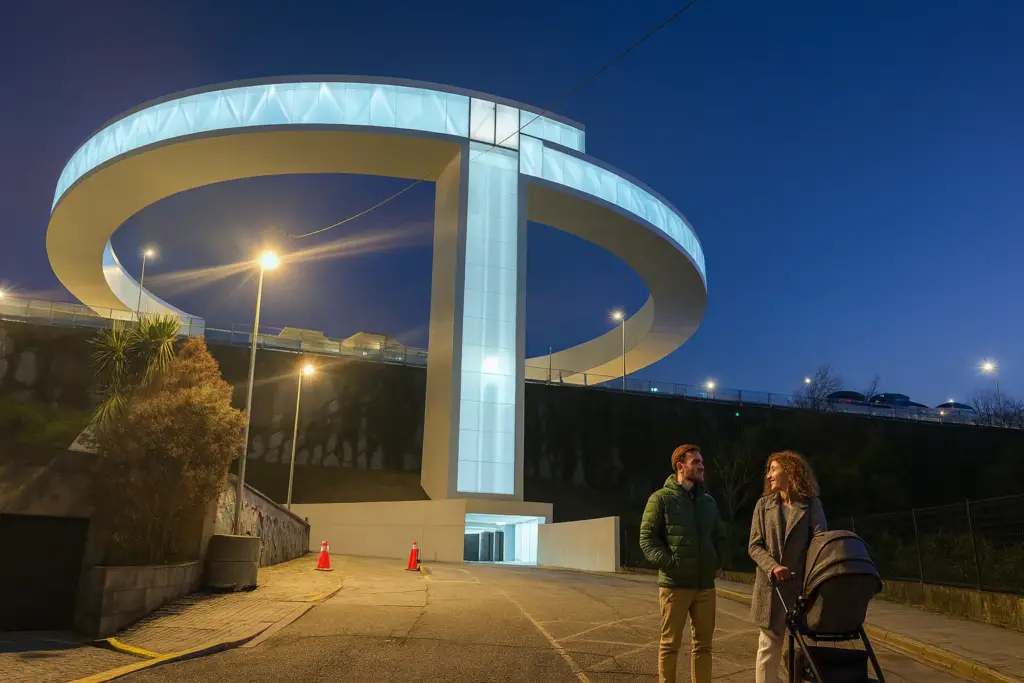
The Mirador de Vigo is one of the city’s most iconic spots for enjoying panoramic views. Located on Monte da Guía (Teis), this viewpoint offers a unique perspective over the Vigo estuary, the port and the surrounding landscape.
A privileged balcony over the estuary
From the heights of the viewpoint, the city unfolds in all its splendor, offering a majestic view that encompasses the Vigo estuary and its busy port. The urban landscape of the Casco Vello is outlined between the waters and the mountains, allowing you to admire the rich architecture of its historic buildings.
The daily spectacle of fishing boats and other vessels coming and going adds dynamism to the scene, while the urban beaches and natural surroundings that embrace the city complete a panorama that enchants both locals and visitors.
The perfect experience at the viewpoint
The early hours of the morning reward early birds with a city waking up in golden light. Meanwhile, sunsets turn the viewpoint into a privileged spot to watch the sun go down, painting the sky in spectacular colors. A visit is even better when combined with walks through nearby green areas or a picnic. Look for clear days to enjoy the full panorama and don’t forget your camera.
Recommended restaurants in Vigo
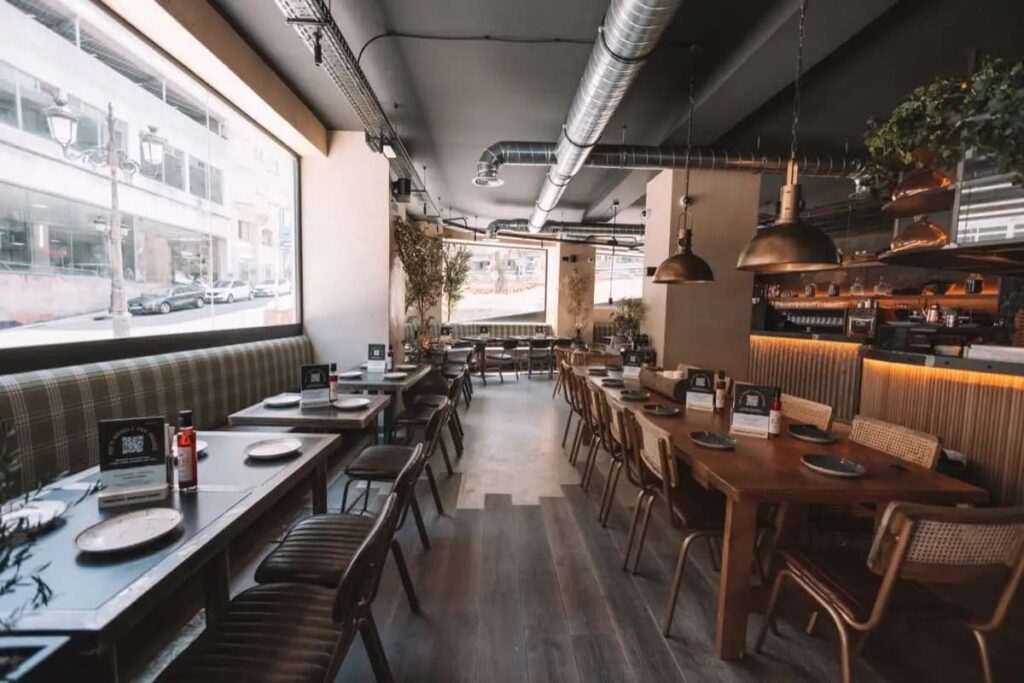
Vigo is a city with a wide range of dining options for all tastes and budgets. From traditional seafood restaurants to charming contemporary eateries, there’s something for every visitor.
Vigo’s fine dining
Taberna A Pedra offers an informal yet memorable experience, with local tapas and dishes served in an authentic setting. Restaurante Los Galeones specializes in fresh fish and seafood.
Accessible cuisine in the heart of Vigo
The emblematic Calle de las Ostras concentrates numerous establishments where you can enjoy fresh seafood at reasonable prices. The bustling Mercado de A Pedra complements its commercial offer with food stalls serving local cuisine at competitive prices. Bar Puerto keeps the tradition of affordable daily menus alive without sacrificing quality.
The charm of local cuisine
Casa Vella, located in the heart of the Casco Vello, masterfully blends tradition and modernity in its culinary proposals. Restaurante El Temporal Vigo surprises with its contemporary atmosphere and a menu that reinvents traditional flavors.
Without a doubt, the best empanada in Vigo is at Panadería La Seyolca, on Rúa do Doutor Carracido, 121. As a local guide, I recommend going early and ordering in advance, especially the seafood varieties. Their pastry has a unique crunchy touch thanks to the fact that they only use natural ingredients and their own sourdough.
Restaurants in Redondela

Redondela, located just a few kilometers from Vigo, offers an excellent selection of restaurants where you can enjoy Galician cuisine in a charming setting. From traditional seafood restaurants to modern tapas bars, Redondela is an ideal destination for food lovers.
Authentic flavors in the heart of Redondela
The center of Redondela features a varied offer that caters to all tastes and budgets, with a particular focus on fresh fish and seafood and traditional Galician recipes.
From the historic center to your table
Among its cobbled streets you’ll find cozy venues that combine good products with a friendly atmosphere, ideal for a leisurely meal after a stroll through the old town.
The tapas revolution
For a more informal experience, there are plenty of tapas bars whose menus update traditional recipes at affordable prices in a lively atmosphere.
If you want more information, we recommend our Guide on where to eat in Vigo.
Camino de Santiago from Vigo

Vigo is one of the starting points of the Camino de Santiago along the Portuguese Coastal Way, an official route that connects with Redondela and continues towards Santiago. You can also follow the Senda Litoral variant, which runs close to the sea and also joins the main route.
Routes from Vigo
The most popular option is the Portuguese Coastal Way, with well-marked stages and services. The Senda Litoral variant adds sections right by the ocean. From Redondela, both routes merge with the main Portuguese Way towards Pontevedra.
Essential guide for pilgrims
Careful preparation makes all the difference: book accommodation in high season, wear suitable footwear and take care of your hydration and diet. Respect the environment and, if you’re looking for company, consider joining an organized group.
For more information, check our guide on the Camino de Santiago from Vigo
Camping Playa Samil
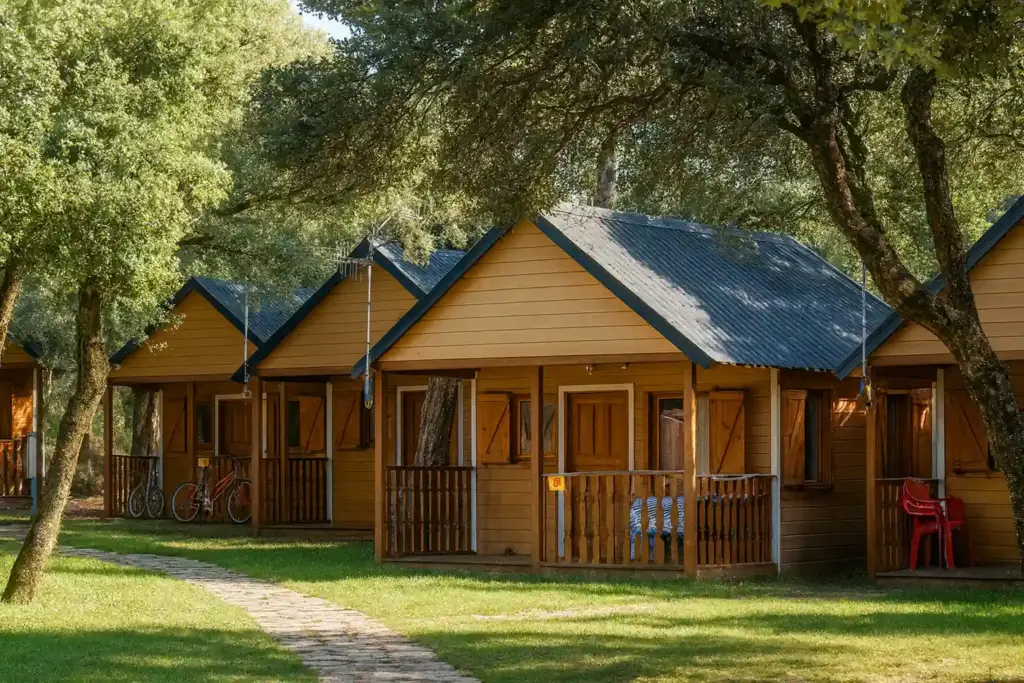
Camping Playa Samil is an excellent option for those seeking an outdoor experience in Vigo. Located next to Samil Beach, it offers pitches for tents, caravans and motorhomes, as well as services such as a swimming pool, picnic areas and direct access to the seafront promenade.
An oasis of nature and comfort
The campsite stands out for its full range of services that guarantee a comfortable stay in the heart of nature. Its facilities include large pitches and specific areas for caravans and motorhomes. The outdoor pool is complemented by children’s play areas.
The communal areas are designed for families, with picnic spots and barbecue areas. Its main advantage is the direct access to Samil Beach, combining the camping experience with the enjoyment of the coast. There is an on-site shop with basic equipment for hire, as well as modern toilets and showers.
Tips for visiting Vigo
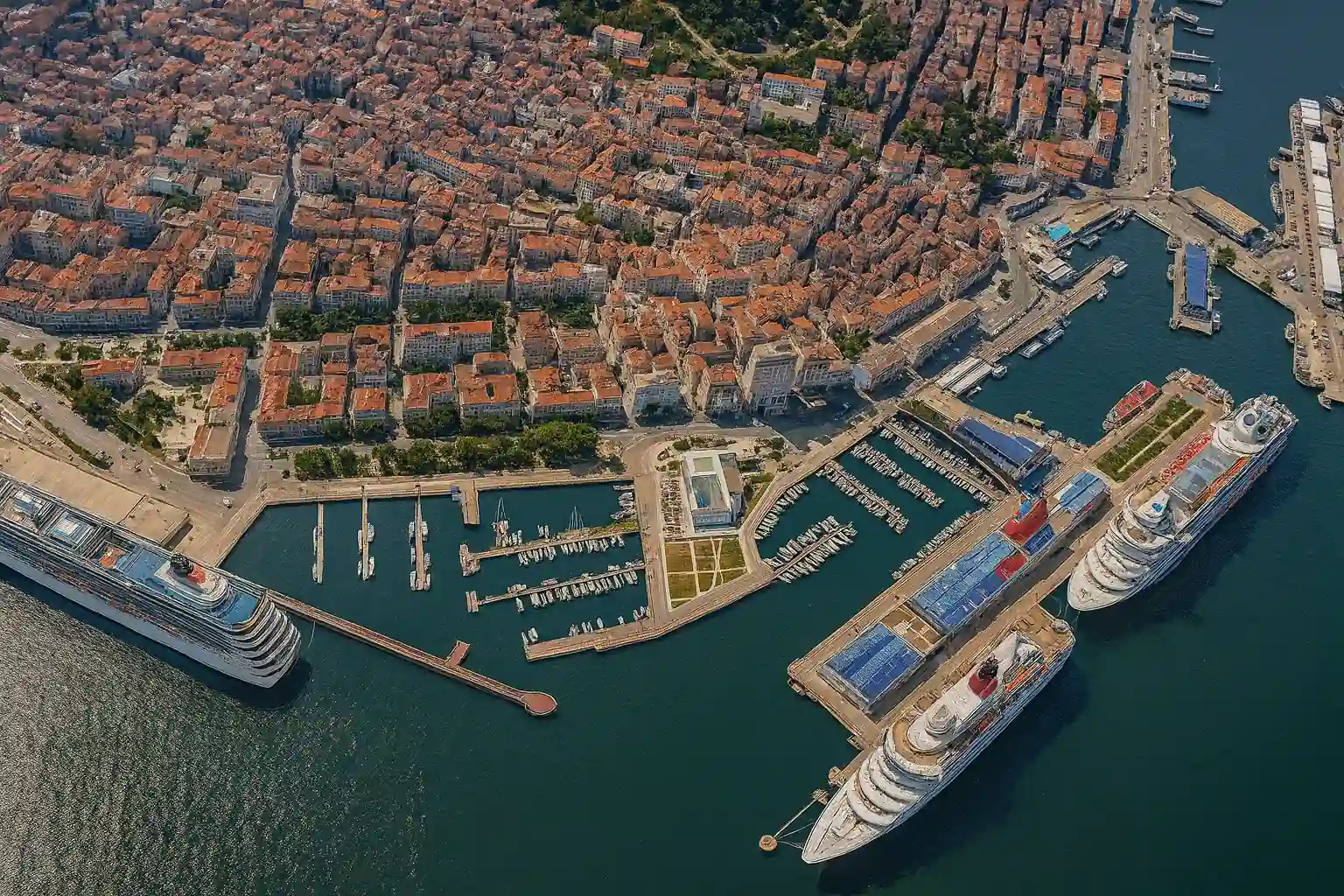
Vigo, the port jewel of Galicia, is a destination that perfectly combines history, nature and modernity. To make your trip unforgettable, here’s a series of tips to help you enjoy everything this vibrant city has to offer.
General tips
To get around Vigo easily, it’s highly recommended to get a transport card. This card gives you access to the efficient city bus network, allowing you to explore without worries and save on daily journeys. In addition, due to the region’s changeable weather, it’s essential to always carry a light jacket or raincoat. Rain can be unpredictable, and being prepared will make your walks far more comfortable.
You can’t visit Vigo without trying its exquisite local cuisine. Fresh seafood is a specialty, and pairing it with a good albariño, the region’s characteristic white wine, will elevate your culinary experience. Restaurants like Taberna A Pedra and Restaurante El Temporal Vigo are excellent options for sampling traditional dishes in a cozy atmosphere.
For a complete experience, we suggest you explore both the Casco Vello and the city’s modern areas. The Casco Vello, with its cobbled streets and historic architecture, takes you back in time, while the contemporary districts show you the vibrant rhythm of modern life in Vigo. Using tourist maps or local guides will help you avoid missing any must-see attractions and discover hidden corners full of charm.
Shopping tips
Walking along Calle del Príncipe and Calle Urzáiz is an excellent way to enjoy a varied shopping experience in Vigo. These major shopping streets are home to a mix of fashion stores, exclusive boutiques and department stores, perfect for those looking for both the latest trends and unique pieces.
For those looking for branded clothing at affordable prices, the Mercado de A Pedra is a must-visit. This market is known for its wide range of products and is ideal for refreshing your wardrobe without overspending. You also shouldn’t miss the chance to pick up local handicrafts in the Casco Vello and on Calle de las Ostras. These areas are perfect for finding unique souvenirs and taking home an authentic piece of Galicia.
The boutiques and design galleries in downtown Vigo offer fashion and exclusive pieces that you won’t find anywhere else. Exploring these shops will allow you to discover original items and support local designers. Keep in mind that many establishments open late, especially at weekends, so it’s wise to plan your shopping with that in mind to make the most of your time.
Weather in Vigo
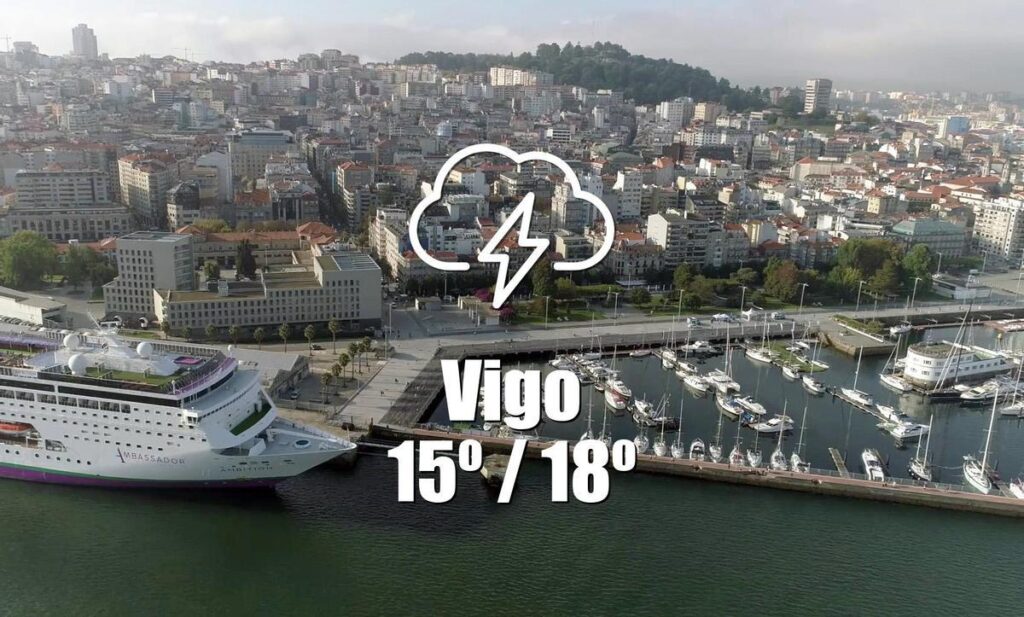
Vigo has an oceanic climate, characterized by mild winters and cool summers. Average winter temperatures are around 10°C, while in summer they usually range between 20°C and 25°C. The city experiences high humidity and rainfall spread throughout the year, with autumn and winter being the wettest seasons.
To plan your visit, it’s useful to check the 10-day weather forecast for Vigo. You can check the weather in Vigo for today or tomorrow on specialized sites such as AccuWeather or Weather.com.
Brief history of Vigo
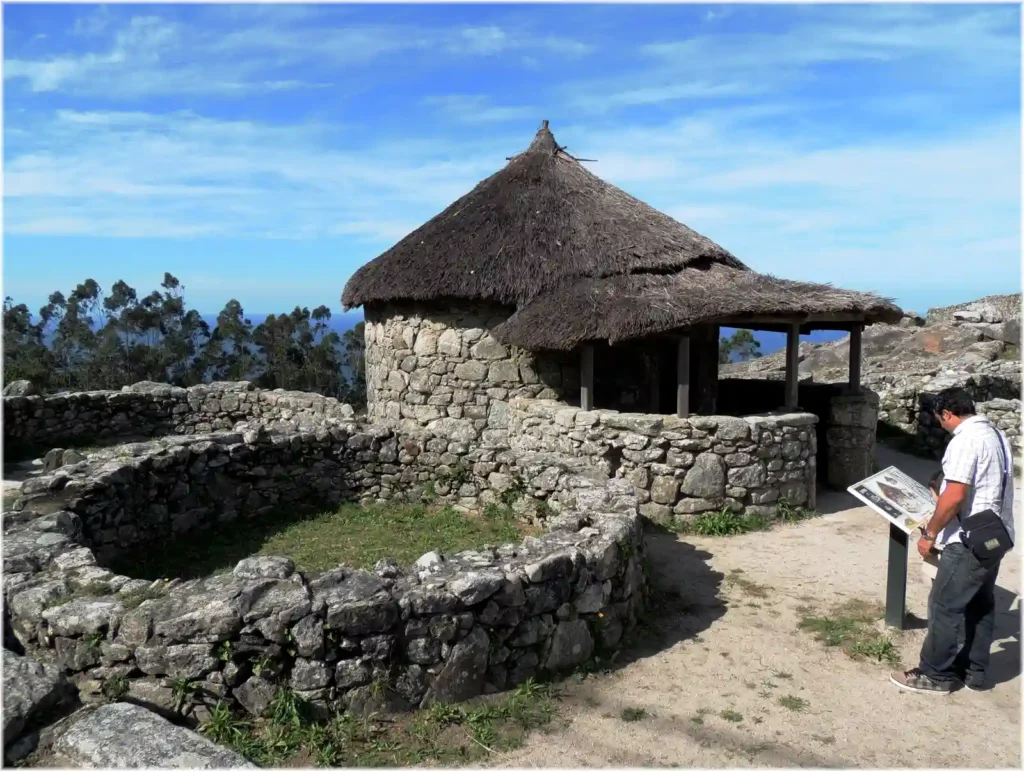
The history of Vigo goes back to prehistoric times, with the castro culture standing out during the Iron Age. This culture developed from the 8th century BC to the 1st century AD, and remains such as the one on Monte de O Castro can still be visited. Later, during the Roman period, Vigo was a busy commercial port, as evidenced by remains of salting factories and roads from that time.
In the Middle Ages, Vigo suffered raids by pirates and peoples from northern Europe, which forced its inhabitants to seek refuge inland. Over the centuries, the city grew as a center of crafts, fishing and trade, standing out for its sardine fishing and frequent defenses against pirate attacks, including those of English privateer Francis Drake.
One of the most notable events was the Battle of Rande in 1702, when the Spanish fleet was attacked by Anglo-Dutch forces, leaving treasure-laden ships sunk in the estuary. Throughout the 18th century, the opening of trade with the Americas brought an economic boom that continued during the 19th and 20th centuries, when Vigo became a major departure point for emigrants heading to the Americas.
During the Spanish Civil War, Vigo served as a supply base for the Nationalist side. After 1950, the city experienced remarkable economic growth, marked by the arrival of industries such as Citroën and the creation of shipyards. Although the industrial crisis of 1975–1985 temporarily affected its economy, Vigo has continued to evolve, becoming more densely populated and improving its urban infrastructure in the 21st century.
Best free tours in Vigo
Explore Vigo with local historians with years of experience as Free Tour guides. With us, you'll discover the city's origins,…

You will be surprised at how much Vigo and its legendary bay have to offer. In the end, you will…

Galicia is a magical place, and Vigo and its legendary bay hide how it could not be otherwise a multitude…
Discover the old town of Vigo with us on this two-hour tour, starting from the bustling Puerta del Sol. We…

On this night tour of Vigo , we will explore the city's vibrant nightlife and enjoy its illuminated beauty. I…

We'll begin our tour in the beautiful Port of Vigo, one of Spain's most prominent ports. We love strolling along…
Frequently asked questions about Vigo
What can you see in Vigo in 3 days?
Day 1: historic center — Porta do Sol, Casco Vello, Calle de las Ostras and sunset at Monte de O Castro or a walk along Samil. Day 2: nature — trip to the Cíes Islands (if it rains: Museo del Mar + Castrelos Park). Day 3: neighborhoods and views — Bouzas, route of viewpoints and final dinner at recommended restaurants.
Is Vigo worth visiting?
Yes: it combines urban icons such as Porta do Sol and the Casco Vello with beaches (Samil), viewpoints (O Castro) and getaways to the Cíes Islands; at Christmas the city shines even more.
What is the most beautiful thing in Vigo?
The views from Monte de O Castro, the sand and sunsets at Samil, the seafaring atmosphere of Bouzas, the gardens of Castrelos Park, the charm of the Casco Vello and the trip to the Cíes Islands.
How much time do you need to see Vigo?
In 1 day you can cover the essentials; 2 days let you add museums or parks; with 3 days you can include the Cíes Islands. Ideally: 2–3 days.
What can you do in Vigo over a weekend?
Saturday: Porta do Sol, Casco Vello, Oyster Street and O Castro. Sunday: street market in Bouzas, walk through Castrelos or visit the Museo del Mar; if the weather is good, beach at Samil or trip to the Cíes Islands. Consider a free tour.
What can you do in Vigo on a Sunday?
Browse the Bouzas street market, stroll through Castrelos, visit the Museo del Mar and finish with sunset at Samil or at one of the viewpoints.
What is considered the center of Vigo?
The urban heart is Porta do Sol, the meeting point between the Casco Vello and the modern area, and the start of main arteries such as Príncipe and Urzáiz.
What is the main shopping street in Vigo?
The pedestrian Calle Príncipe, just a few steps from Porta do Sol, concentrates the main shops and connects with other key streets like Urzáiz.
What are some pretty towns near Vigo?
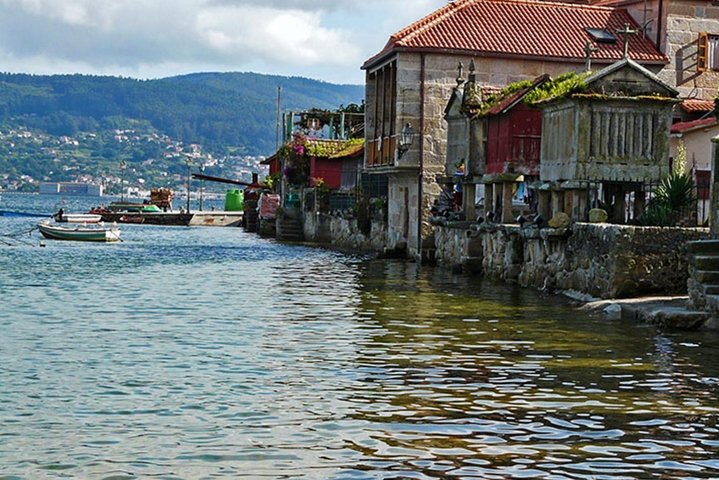
Cangas (across the estuary), Baiona (fortified town with seafront promenade), Combarro (granaries by the sea), Tui (medieval historic center) and Redondela (bridges and traditional town center).
How can I get to the Cíes Islands?
In season, take a ferry from Vigo’s port (Estación Marítima) and request the free authorization from the Xunta; it’s best to book in advance. On arrival, get information at the pier and follow the signposted routes; see Cíes Islands for more details.
How much time do you need to see the Cíes Islands?
One day is enough to enjoy a beach and a hiking route; if you want to explore more and relax, plan 2 days. Organize your visit with the Cíes Islands guide.
* The information on prices, opening hours and access conditions is current as of November 2025 according to official sources. These details may change at any time due to holidays, works or regulatory changes. Always check the official websites or phone numbers of each place before your visit.