

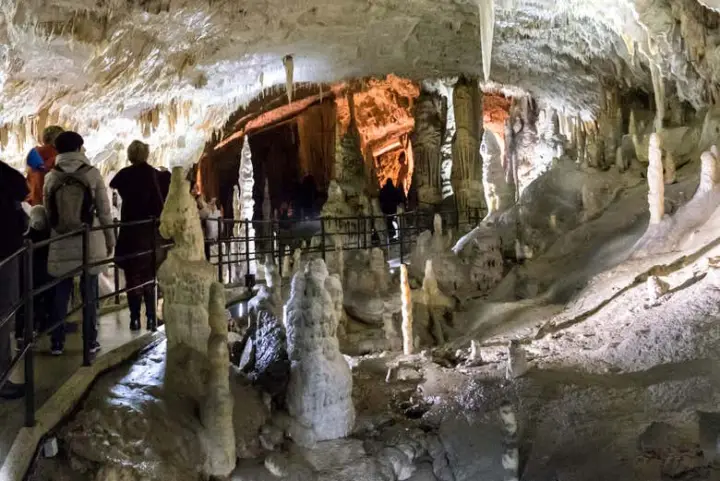
Ljubljana brings together a hilltop castle, bridges shaped by Jože Plečnik, riverside markets and a largely pedestrian centre. Slovenia’s capital is compact—its main Old Town stages sit within an easy walk—yet its squares, columns and embankments make more sense as parts of one urban plan. We use a free tour in Ljubljana as the practical starting point. There is no credit card needed, and the walk helps you decide where to spend the rest of your time.
Last verified: August 2026 — Prices, opening hours, and reservation requirements checked against official sources. GuruWalk’s Ljubljana guides reviewed the practical recommendations.
The best free tours in Ljubljana for your first morning
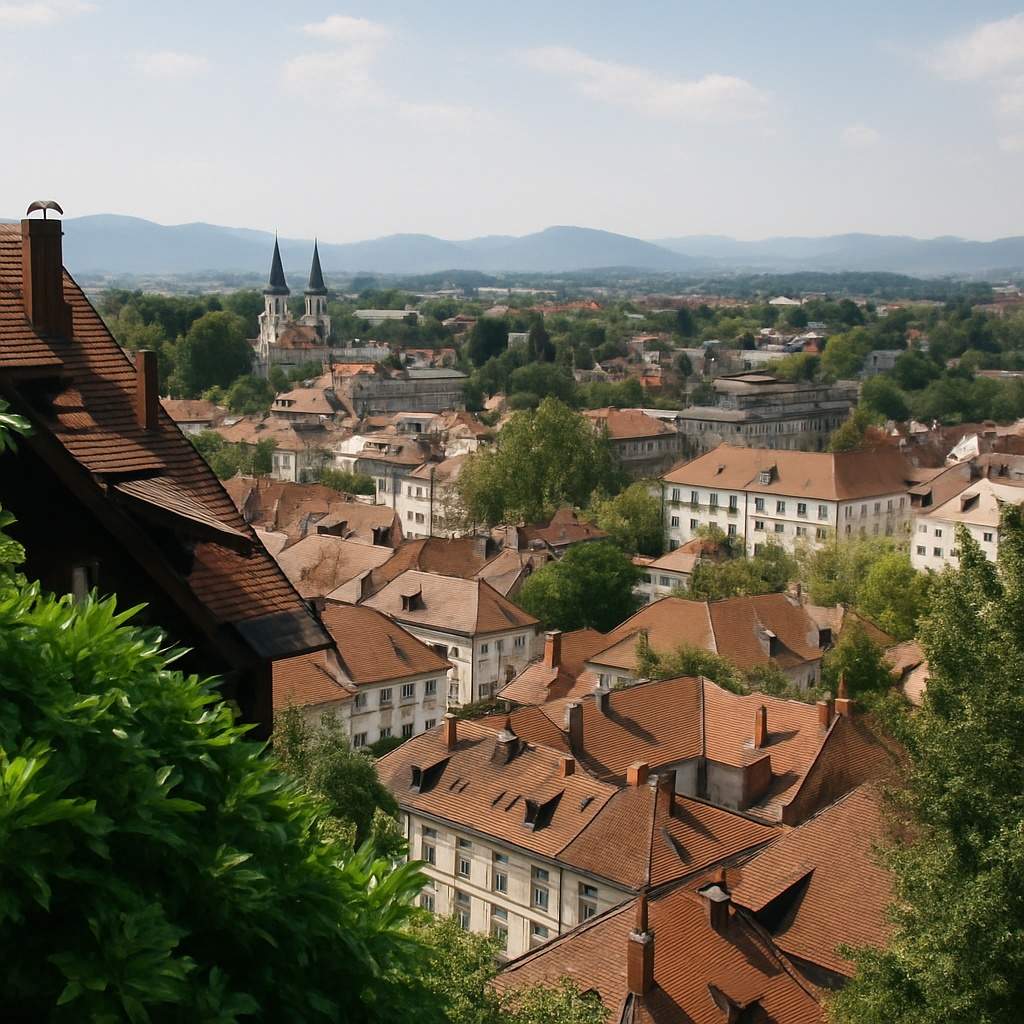
An introductory walk normally links Prešeren Square, Triple Bridge, Central Market, the cathedral and Dragon Bridge. This route gives you a clear mental map before you climb to the castle or enter a museum. GuruWalk’s gurus also explain Plečnik’s work, the Habsburg period and the rebuilding that followed the 1895 earthquake, so each stop has context.
A free tour has no fixed ticket price. At the end, each guest gives the guru what they consider fair; the usual guidance is €10–20 per person, rising to €50 for small groups or exceptional gurus. We suggest an early departure if you only have one day. You can then reserve the afternoon for the castle or Tivoli Park without retracing the same streets.
Tour Overview: Embark on a mesmerizing walk through Ljubljana's old town, where stories come alive at eve…

See all of Ljubljana’s top sights and taste it too – with our team of licensed local guides. This tour…

If you're visiting Ljubljana for the first time, you shouldn't miss this essential tour. We'll talk about how …

This Grand Tour "Snacking Love Walk" is unique experience held in "Small groups", maximum 10 people. The most common o…

SEE, FEEL & TASTE Positive Vibes, People, Places, Food, Art… This locally guided boat & walkin…

Dear tourists in Ljubljana, I'm Aleksandra, a local guide who wants to give you the pleasure of experiencing the local…

💚 Discover the heart of Ljubljana: a journey through history, curiosities, and hidden treasures Are you ready…

1. Prešeren Square and Triple Bridge
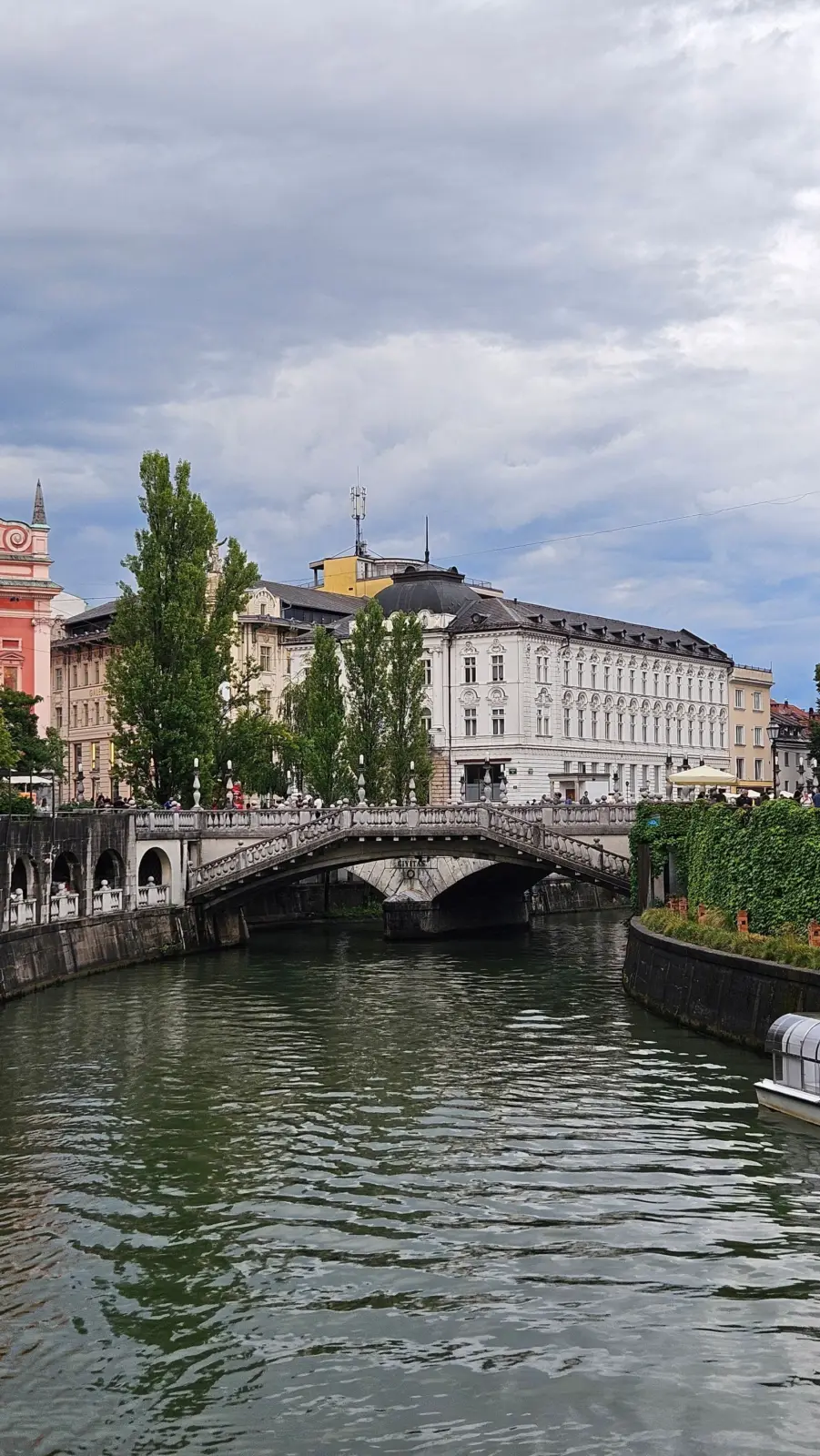
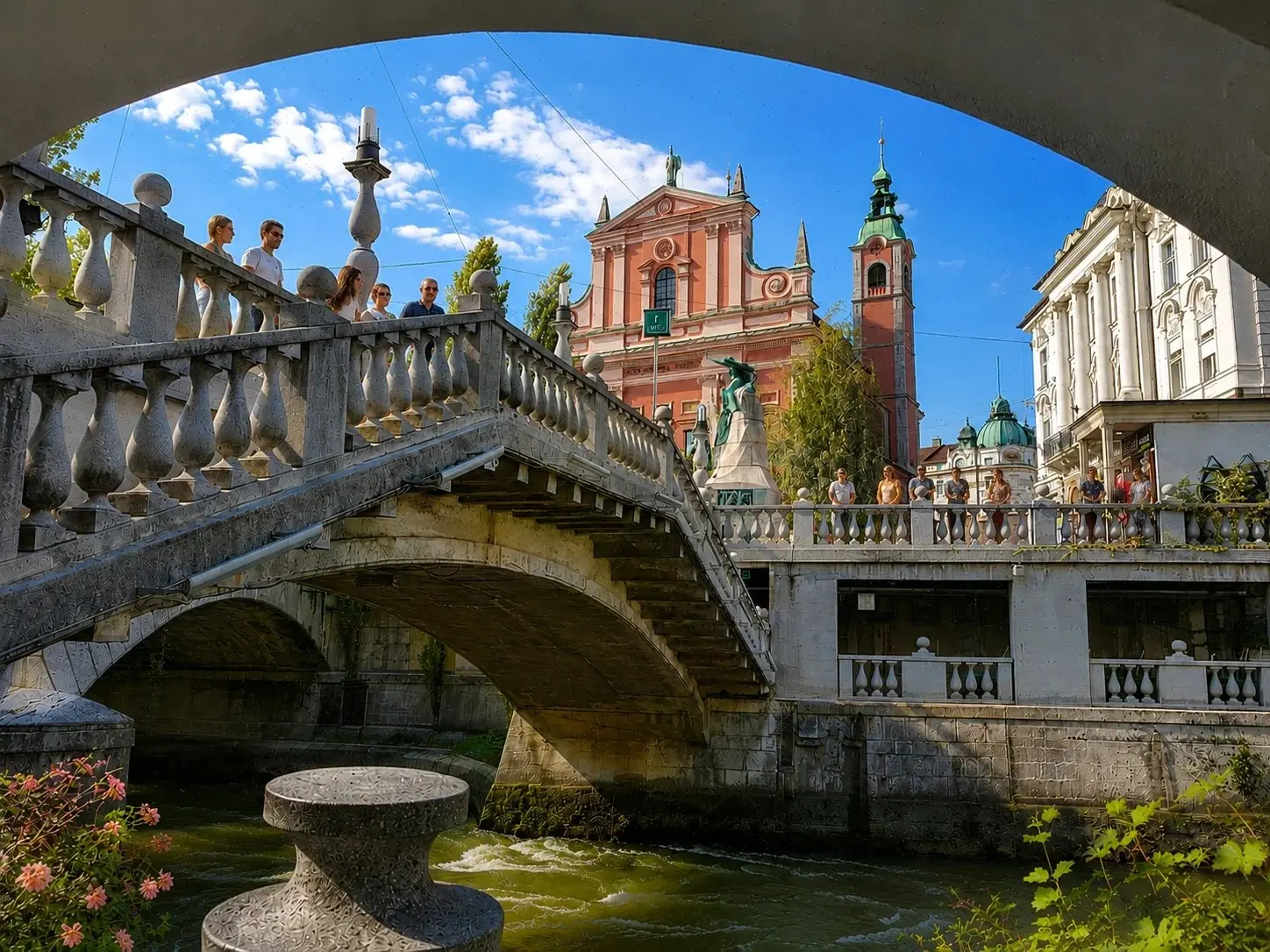
Prešeren Square is the natural entrance to the Old Town. The pink Franciscan church stands on one side, with the Ljubljanica River on the other. Triple Bridge joins the banks through a central stone span and two additions—purpose-built pedestrian paths that open the view. The central bridge has occupied this crossing since 1842. Plečnik added the flanking paths in the early 1930s.
Look at the stone balustrades, lamps and stairways leading down towards river-level terraces. They are not separate decorations. Plečnik used the crossing to connect the river axis with the route between Rožnik Hill and Castle Hill. Walk across one side bridge and return on the other. The view changes in less than five minutes.
2. The Ljubljanica, Cobblers’ Bridge and Dragon Bridge
The Ljubljanica served as an important trade and supply route from Roman times until the railway arrived in the 19th century. Today it sets the pace of a visit. “The city’s lounge,” is how Ljubljana Tourism described the riverbanks in its official river overview. From Triple Bridge, follow the embankment to Cobblers’ Bridge, identified by columns of different heights. Then turn back past the market to Dragon Bridge.
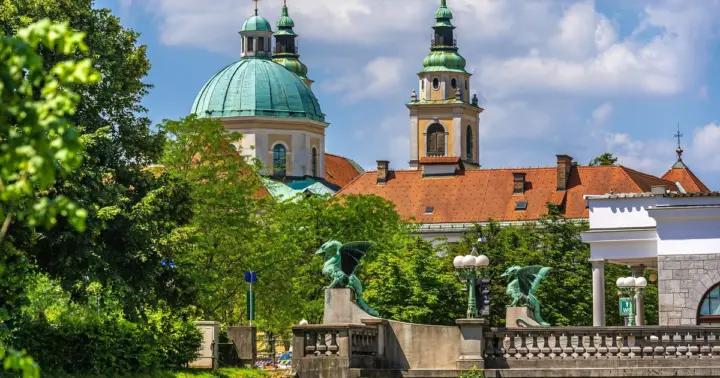
Dragon Bridge was built in 1900–1901. It was Ljubljana’s first reinforced-concrete structure and one of the largest bridges of its type in Europe at that time. Four copper dragons stand at its corners. Triple Bridge and Dragon Bridge are roughly 500 metres apart, so both fit into the same morning circuit.
3. Central Market and St Nicholas’ Cathedral
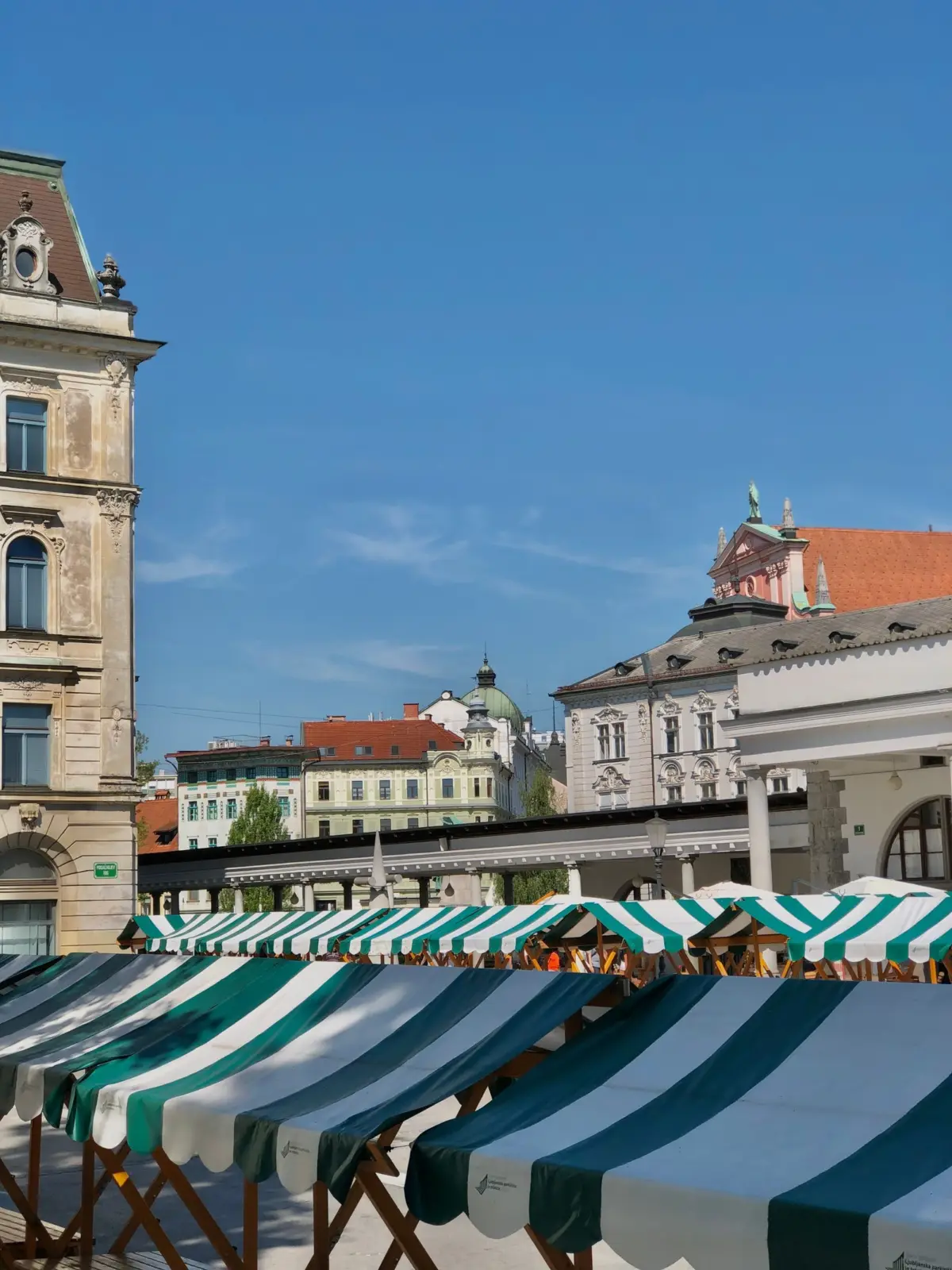
Central Market spreads across Vodnikov trg and Pogačarjev trg, as well as the colonnade beside the river. It includes outdoor stalls, covered areas and small shops. Plečnik designed the riverside market halls between 1940 and 1944. That makes the market both a place to buy fruit or cheese and a useful stop for understanding the city’s architecture.
We recommend the morning. The outdoor market runs from Monday to Saturday and closes on Sundays and public holidays, with seasonal hours. On Fridays from mid-March to late October, Pogačarjev trg hosts the Open Kitchen food market when weather permits. St Nicholas’ Cathedral is a few steps away. Rebuilt as a Baroque church between 1701 and 1706, it rewards a close look at its modern doors before you turn towards the dome.
4. Ljubljana Castle and views over the city
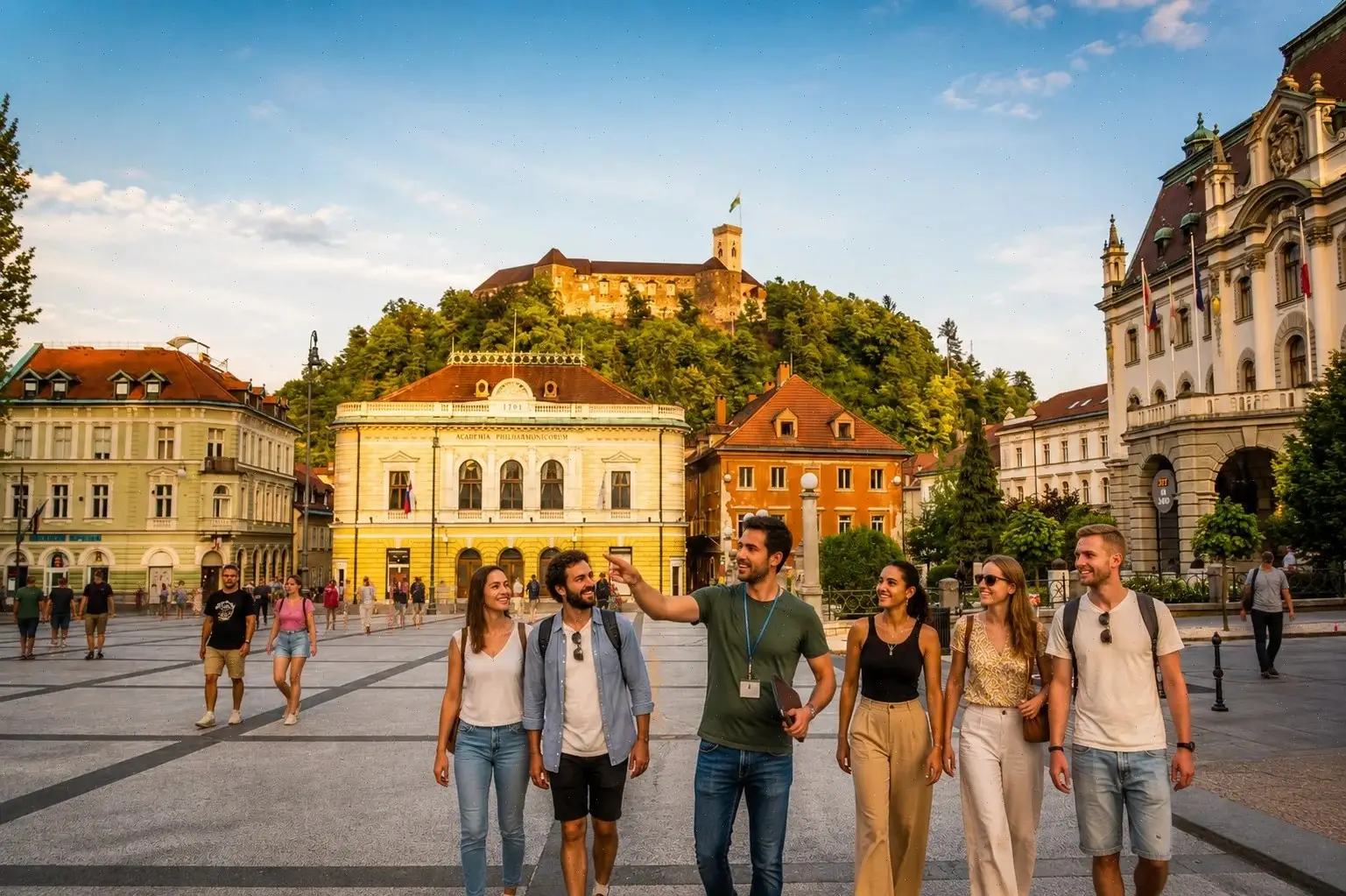
Above the Old Town, Ljubljana Castle occupies the wooded hill. You can climb from Mestni trg—the only sustained uphill stretch in this route—or take the funicular from Krekov trg. Its courtyard is a useful pause even without a ticket; the viewing tower, Slovenian History Exhibition, Virtual Castle and Museum of Puppetry are included in the castle ticket.
In August, the castle is open from 9:00 to 20:00, while the funicular runs from 9:00 to 22:00. The final ticket purchase is available up to one hour before closing. The official Ljubljana Castle price list gives the adult castle ticket as €15 and the combined castle-and-funicular ticket as €19. If you enjoy walking, climb on foot and save the funicular for the descent.
5. Follow Jože Plečnik’s Ljubljana
Plečnik did not leave one isolated landmark. He reshaped bridges, markets, squares, libraries, cemeteries and riverbanks; the result is an urban network rather than a checklist. His Ljubljana works joined UNESCO’s World Heritage List in 2021. Build your route through Triple Bridge, the covered market, Cobblers’ Bridge and the National and University Library to see how those interventions fit together.
Finish at Plečnik House, at Karunova 4–6. Access to the architect’s original home requires a guided tour, with public groups limited to seven people and departures every hour. Tuesday-to-Sunday opening is 10:00–18:00; Mondays are closed. The adult price—covering the home tour and permanent exhibition—is €12. Book a time through the official Plečnik House visitor page, as capacity is deliberately small.


6. Tivoli Park and Rožnik Hill
Tivoli begins west of the centre and links the urban area with the protected woodland around Rožnik and Šiška hills. It takes about 15 minutes to walk there from Prešeren Square. Formal paths, gardens and forest trails change the scenery without requiring public transport. Use it for your final afternoon or as a quiet counterpoint to a morning of streets and museums.
Allow at least an hour for Tivoli, plus another if you continue towards Rožnik. Entry is free. Shoes with a firm sole help after rain because the woodland paths can remain damp. With limited time, walk as far as the Jakopič Promenade and return to the centre along Cankarjeva cesta.
7. Metelkova and contemporary Ljubljana
Metelkova occupies former Austro-Hungarian military barracks built in the late 19th century. In 1993, around 200 volunteers occupied the northern part of the complex to prevent its demolition. It now brings together artist interventions, concert venues, clubs and exhibition spaces. Daylight is best for reading the façades and sculptures; the site takes on a different purpose after dark.
Metelkova is about ten minutes on foot from the main railway station. Do not confuse the autonomous cultural centre with the state museums nearby, which have separate entrances and opening hours. Pair the area with the Museum of Contemporary Art Metelkova if you want a museum visit. For the exterior alone, 30 minutes is enough.
Things to do in Ljubljana in one or two days
One-day Ljubljana itinerary
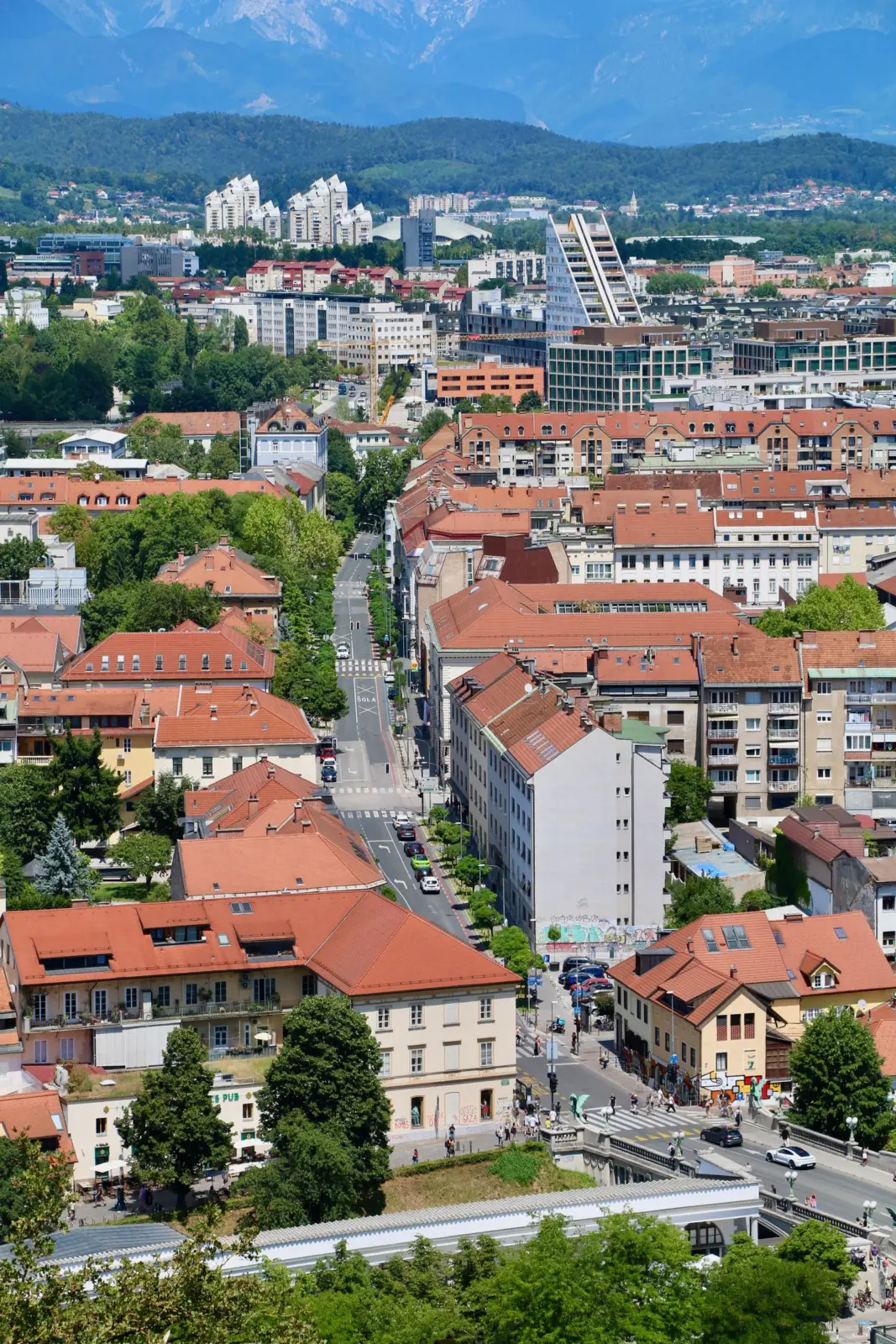
Start with a free tour through the historic centre. Continue through Central Market, the cathedral and Dragon Bridge. After lunch, climb to the castle and descend on foot or by funicular. Finish beside the Ljubljanica or at Metelkova, depending on the atmosphere you prefer and how much walking remains in your day.
Two-day Ljubljana itinerary
Use the route above for day one. On the second day, follow Plečnik’s works towards Trnovo, visit his house at your reserved time and return along the river. Spend the afternoon in Tivoli and continue towards Rožnik if you still want a longer walk. This split avoids putting Castle Hill and the park’s woodland slopes into the same day.
Getting around and planning your visit
Ljubljana’s centre is pedestrian-friendly and the main distances are short. Triple Bridge and the castle are less than one kilometre apart, although the climb adds time. City buses help with Tivoli, Trnovo and accommodation farther from the centre. The Urbana card supports cash-free payment and free transfers for 90 minutes after the first validation, according to the official LPP Urbana information.
You do not need a car for this itinerary. Pack a light rain layer and separate ticketed visits from free walks. Central Market works best in the morning, while the castle has longer afternoon opening in summer. If you book Plečnik House, arrange the day around that time because the guided groups are very small.
Frequently asked questions about Ljubljana
How many days do you need in Ljubljana?
One day covers the centre, bridges, market and castle. Two days let you add Plečnik House, Tivoli, Rožnik and Metelkova without compressing every visit into a tight schedule.
Can you see Ljubljana on foot?
Yes. The historic centre is pedestrianised and its main bridges are only minutes apart. A bus is useful when your accommodation is farther away, you want to shorten the Tivoli journey or you plan to visit outer districts.
Is Ljubljana Castle worth visiting?
It is a strong choice for views and an introduction to Slovenian history. The courtyard and hill paths already make a useful visit; the ticket adds value when you also want the viewing tower and exhibitions.
What can you do in Ljubljana for free?
Prešeren Square, the bridges, the outdoor market, riverside walks, Tivoli and Metelkova’s exterior are free. On a free tour, you choose the tip after the walk rather than buying a fixed-price ticket in advance.
Do you need a credit card to book a free tour?
No. There is no credit card needed to reserve with GuruWalk. Choose a departure, confirm your place and give the tip directly to your guru once the tour has finished.
Plan your Ljubljana route
Begin in the centre to understand the connection between the river, bridges and castle. Then choose a second layer: Plečnik, green spaces, contemporary art or food. Check official hours before fixing ticketed visits, and browse activities and experiences in Ljubljana to fill the remaining gaps in your itinerary.
If you still need a starting point, compare the free tours in Ljubljana and reserve the departure that matches your arrival. No credit card is needed, and you decide the value of the walk at the end.

GuruWalk
Travel marketing specialist with extensive experience in the travel sector. At companies such as Despegar and GuruWalk, she has led traveler-focused digital acquisition strategies. Now, from the GuruWalk blog, she combines her expertise with her passion for discovering and sharing unique destinations.