

Plan the best things to do in Kotor with 1-to-3-day routes, the Old Town, city walls, bay and verified prices.
 Belén Rivas
GuruWalk
·
Updated 3 Sep 2026
Belén Rivas
GuruWalk
·
Updated 3 Sep 2026A walled town, mountain-framed bay and hillside fortress all meet in Kotor. Distance is not the hard part; choosing what to visit inside the walls and what to save for the bay is. Starting with a free tour in Kotor helps place the three gates, main squares and historic buildings before the climb to the viewpoints. No credit card needed.
Last verified: August 2026 — Prices, opening hours, and reservation requirements checked against official sources. GuruWalk’s Kotor guides reviewed the practical recommendations.
Current GuruWalk listings last between 1 hour 15 minutes and 1 hour 30 minutes. Morning and afternoon departures are available. Routes focus on the Old Town: Sea Gate, Square of Arms, Clock Tower, palaces, churches and the lanes between them.
There is no fixed ticket price. At the end, each walker tips the guru according to the experience; €10-20 per person is the usual guideline, rising to €50 for small groups or exceptional gurus. Taking the walk early in the trip gives useful context for Kotor’s Venetian architecture, maritime trade and long religious history.
A tip based walking tour told by a local guide who was born and grew up in Kotor . We…

Welcome to Kotor! Set sail trough the cobblestone paved roads of the old town of and learn the history, fo…

Discover the UNESCO -listed ,, World Natural and Historical Heritage Site “ with a

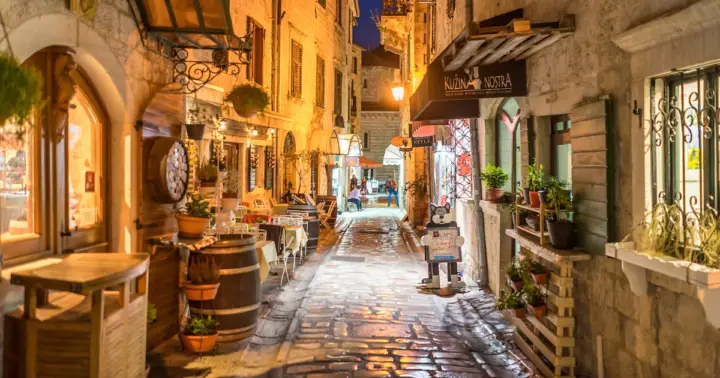
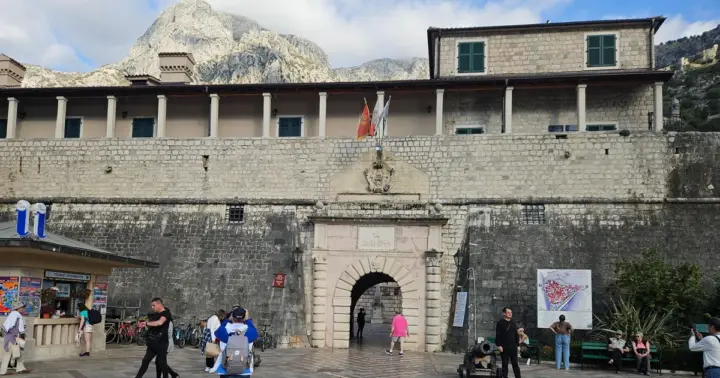
Kotor’s Old Town forms an irregular triangle: two sides follow the water and the third climbs towards St John Hill. Three historic entrances lead inside. The Sea Gate faces the port and opens directly onto the Square of Arms; the River Gate crosses the Škurda on the north side, while Gurdić Gate connects the southern end with the bastion of the same name.
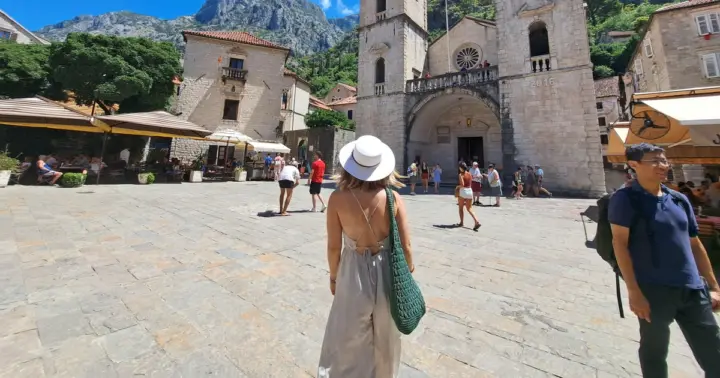
Built in 1555, the Sea Gate opens onto the Square of Arms, the largest open space inside the walls.
Work on the Clock Tower began in 1602, and the structure took its current form during reconstruction after the 1667 earthquake. A stone pyramid at its base served as a public pillory.
From the square, wander through Flour Square, St Tryphon Square and St Luke’s Square without forcing a rigid route. Distances are short, but the façades change at every turn. The official Port of Kotor visitor brochure maps the gates, churches, palaces and museums clearly.
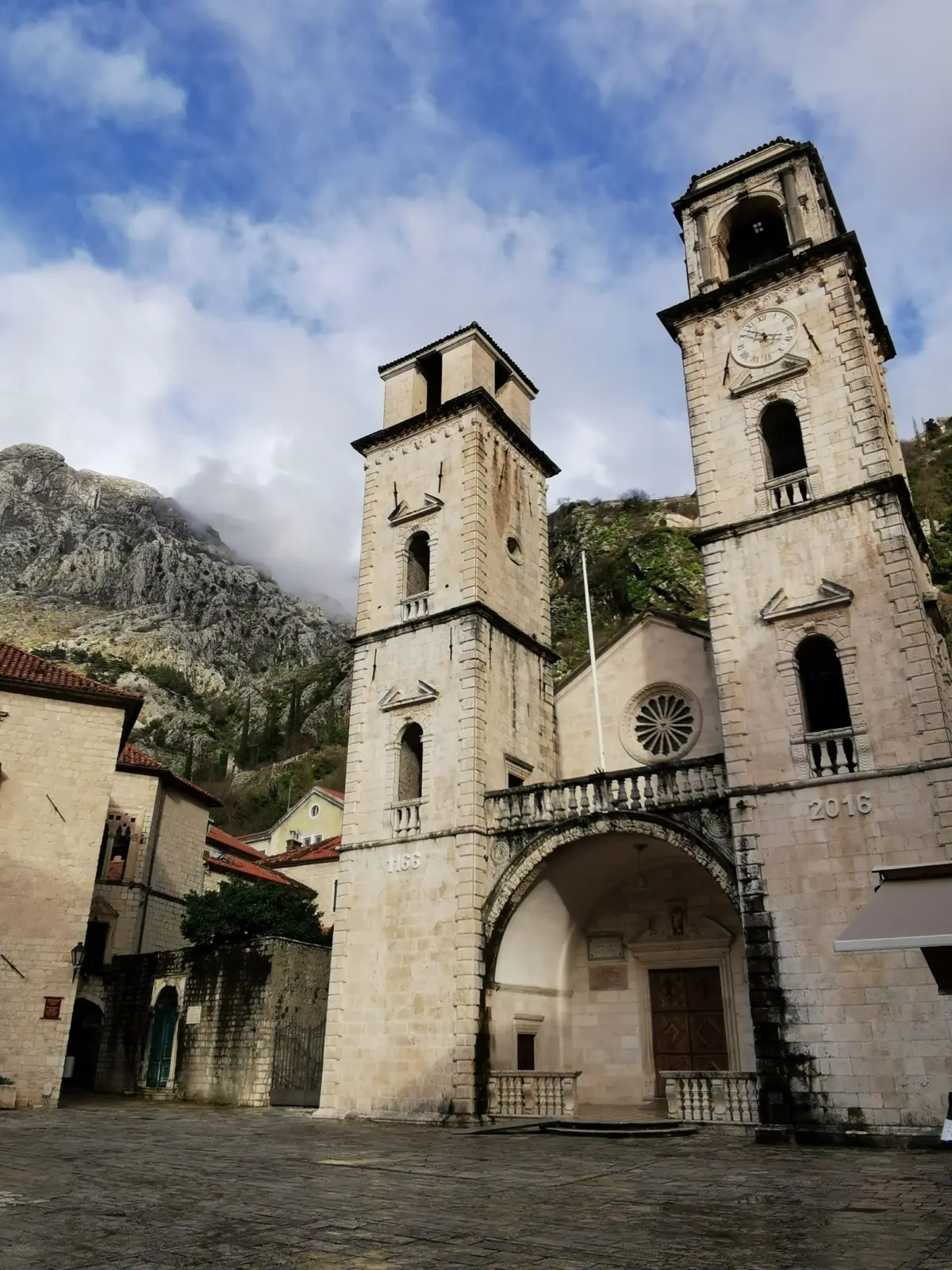
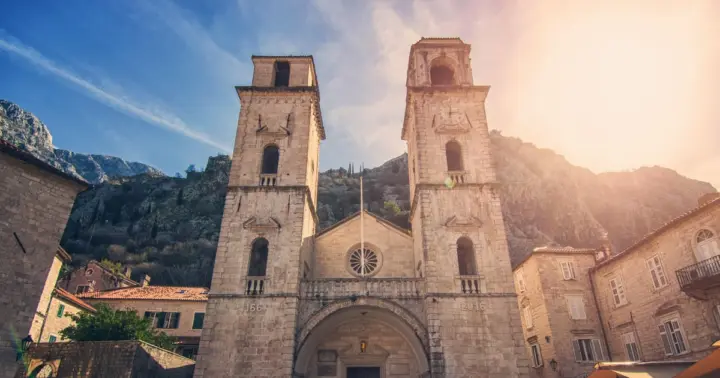
St Tryphon Cathedral anchors one of Kotor’s main squares. Construction began in 1124 and finished in 1166, although earthquakes later altered parts of the building. The two façade towers were rebuilt after a later earthquake.
Inside are goldsmith work, stone altars and fragments of 13th- and 14th-century frescoes.
A few minutes away, St Luke’s Church dates from 1195. The building passed from Catholic to Orthodox use centuries later, while a Catholic altar remained until the 19th century. That history says more about Kotor’s mixed religious past than a label can.
On the same square, St Nicholas is much newer, built between 1902 and 1909 over the remains of an earlier church.
Consecrated in 1221, St Mary’s Church rounds out a compact religious architecture route. These four churches sit among small squares and former palaces rather than along broad avenues. If only one morning is available, St Tryphon and St Luke’s provide the clearest contrast in scale and history.
The Maritime Museum occupies Grgurina Palace, a Baroque building in the centre of the Old Town. Its collection grew from a seafarers’ fraternity founded around 1880 and first opened to the public in 1900. Maps, town plans, portraits and naval objects explain why Kotor was an Adriatic trading centre, not simply a fortified town.
Grgurina Palace retains a Venetian layout, with rooms arranged around a central hall. Pima, Bizanti, Drago and Beskuća palaces stand nearby. Many are not museums, so the value lies in reading their balconies, coats of arms and courtyards from the surrounding squares. Pair the museum with the cathedral; the two are only minutes apart.
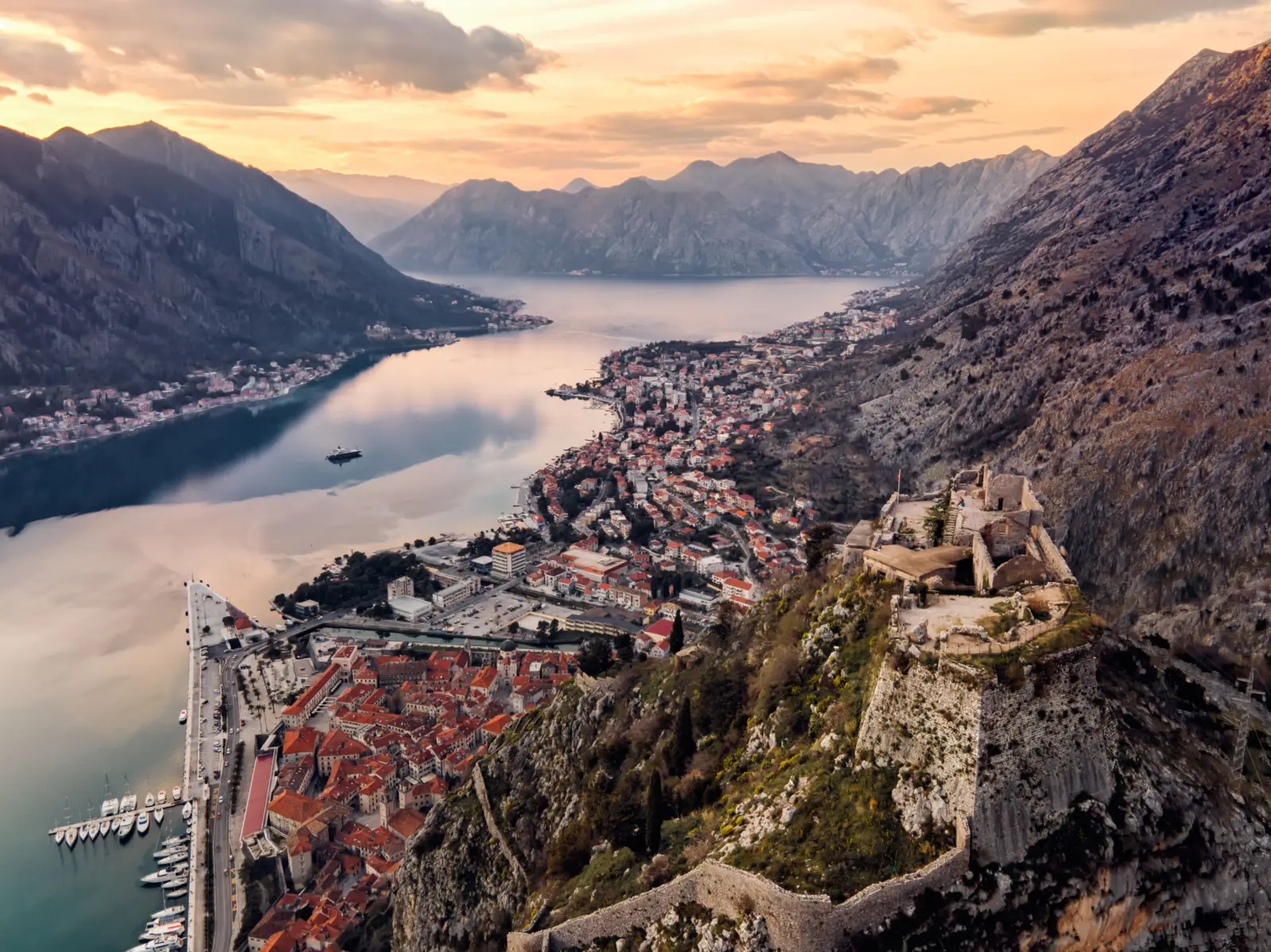
Defensive walls around Kotor were built and expanded between the 9th and 19th centuries. From the Old Town, stone steps rise past bastions and the Church of Our Lady of Remedy towards the upper positions on St John Hill. Each level changes the view: first the red roofs dominate, then the port, Dobrota and the full curve of the bay appear.
Allow the ascent its own part of the day. Avoid squeezing it between two timed indoor visits. With one day, take the free tour in the morning, visit St Tryphon next and keep the afternoon for the hillside. Fortress and cable car are separate experiences: the first starts on foot from the centre, while the second departs outside the Old Town.
For a boat trip, panoramic outing or another experience beyond the walls, browse the activities and experiences in Kotor. Booking this part after planning the land route makes it easier to avoid duplicating the same stretch of the bay.
Outside the walls, the waterfront brings a different pace. Dobrota extends for 7 kilometres along the coast, with former seafaring houses, small jetties and churches. There is no need to cover all of it. The first section gives a view back towards Kotor from beyond the port and shows how the historic centre relates to the bay’s other settlements.
Beside the walls and port, the produce market has occupied this area for more than a century, according to the Port of Kotor. It makes a natural pause before continuing towards Dobrota. On the return, River Gate provides another way into the centre without repeating the main entrance.
Kotor-Lovćen cable car links the coast with the mountain in 11 minutes. As of 25 August 2026, an adult return ticket costs €25 and a ticket for children aged 2-12 costs €7; one-way fares are €14 and €4 respectively. The official Kotor-Lovćen cable car shop shows current tickets and operating status.
This option fits best on a second day. The gondola reveals the scale of the bay and the mountain barrier around it, while St John Fortress provides a closer relationship with the defensive walls. On a two-day stay, the two viewpoints complement each other rather than compete.
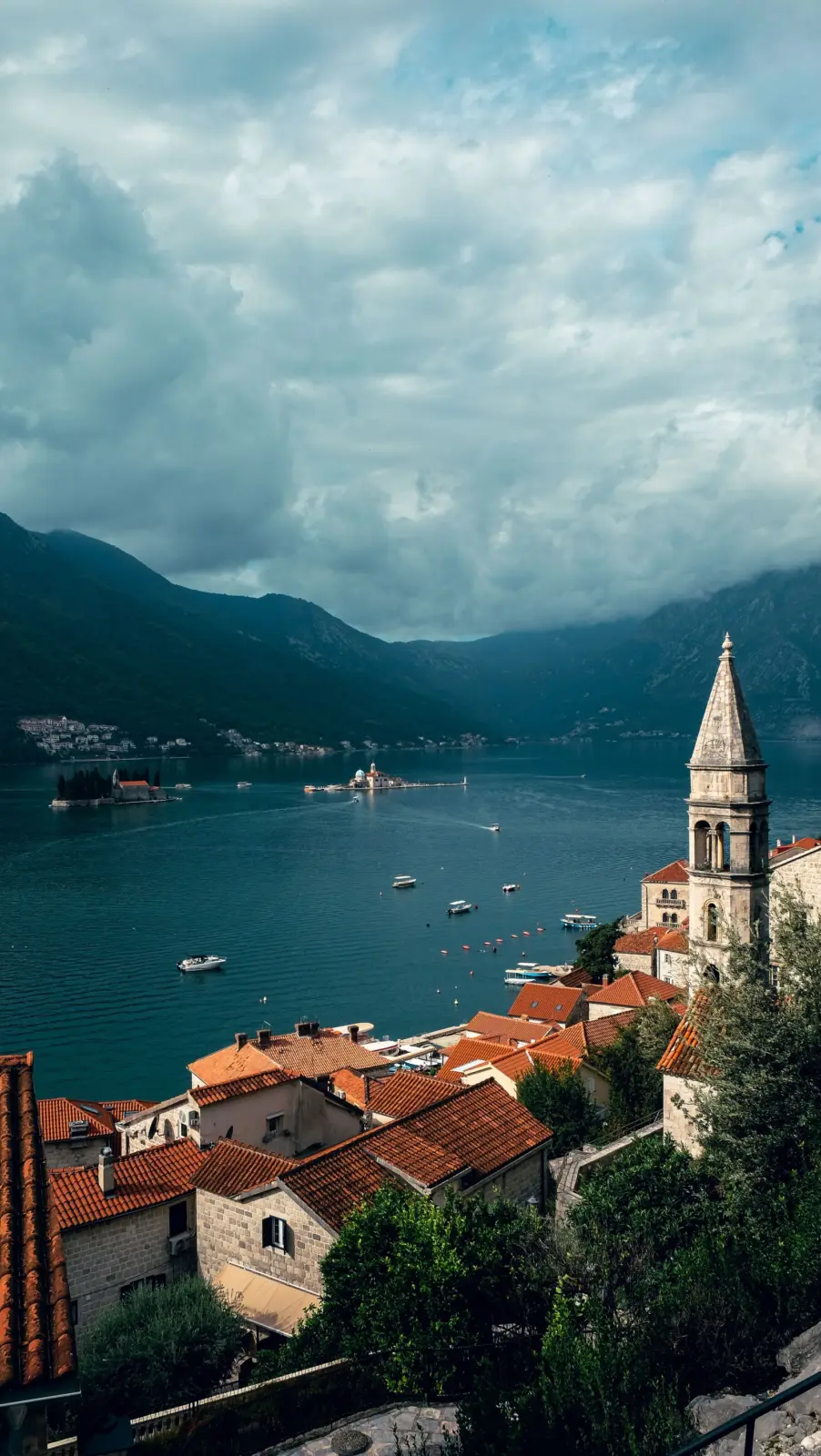
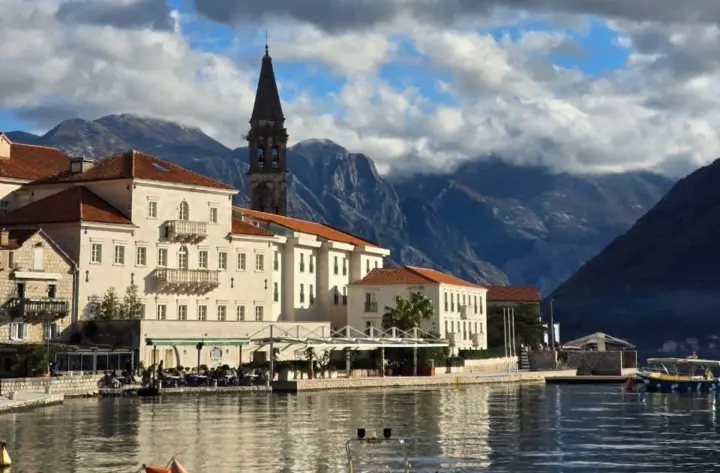
Perast belongs to the same protected cultural landscape. UNESCO inscribed the Natural and Culturo-Historical Region of Kotor in 1979; the property covers 14,600 hectares and brings together fortified towns, coastal settlements, palaces and monastic ensembles. Kotor and Perast sit within two inner bays framed by mountains that rise to nearly 1,500 metres.
Perast works as an extension, not a substitute for Kotor’s Old Town. Its waterfront, captains’ palaces and views towards the islets need at least half a day. The official UNESCO page for the Kotor region explains how the two towns form a historical unit connected by the sea.
Keep the first day for the Old Town and fortress. On day two, combine the Kotor-Lovćen cable car with the waterfront, or give half a day to Perast. This order avoids two climbs back to back and leaves enough room for the Maritime Museum.
With a third day, separate Perast from the cable car. The extra time also allows a longer section of Dobrota and another Old Town visit after many short excursions have left. Each day then has a clear focus: medieval town, mountain and bay.
One full day covers the essentials. Two days work better when the plan also includes the cable car or Perast, without cutting time inside the walls. Three is slower: town, mountain and bay can each have their own day.
Yes. The walled centre is pedestrian and compact. Its three gates, squares, churches and Maritime Museum sit close together; the fortress climb needs a separate time block.
There is no fixed price. A €10-20 tip per person is the usual guideline, rising to €50 for small groups or exceptional gurus. No credit card is needed to reserve.
St John Fortress is part of the defensive walls and starts on foot from the Old Town. The cable car gives a broader view of the terrain and reaches Lovćen in 11 minutes. With two days, both are worthwhile.
Yes, when the stay lasts at least two days. Perast offers a different urban scale and a closer relationship with the waterfront. Allow half a day instead of treating it as a quick photo stop.
GuruWalk is the platform for finding and booking free tours with local guides and activities in cities around the world. Browse the free tours in Kotor, choose a departure near the start of your stay, then plan the fortress, cable car and bay. No credit card needed.
Travel marketing specialist with extensive experience in the travel sector. At companies such as Despegar and GuruWalk, she has led traveler-focused digital acquisition strategies. Now, from the GuruWalk blog, she combines her expertise with her passion for discovering and sharing unique destinations.
Local guides, pay-what-you-want and no credit card to book. That is how you understand a city.
Explore free tours on guruwalk.com