

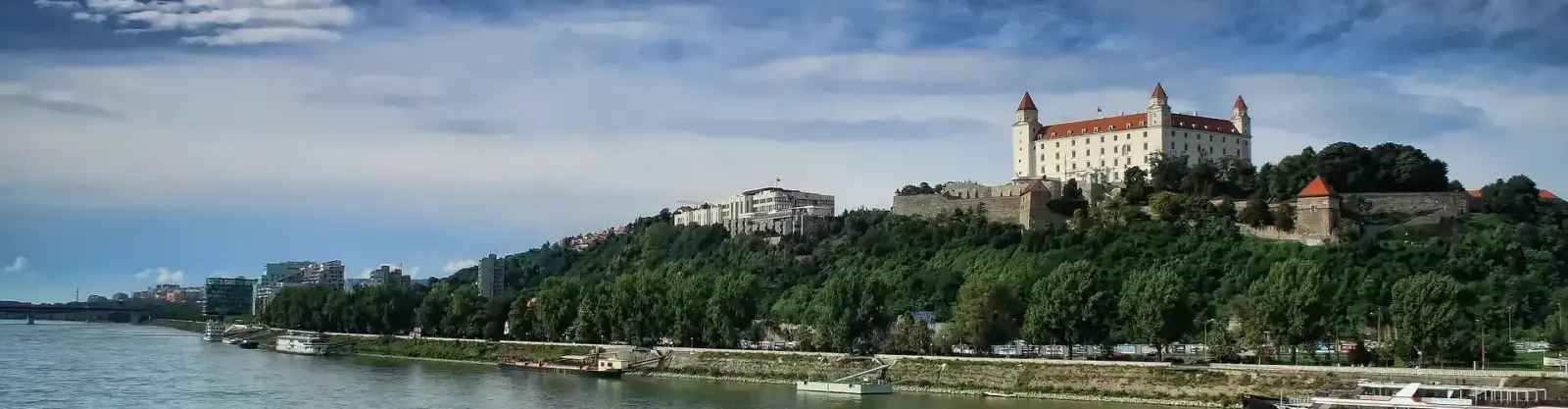
Bratislava is easy to cover on foot: the Old Town, cathedral and Danube sit close together, while the castle marks the skyline above them. We have organised the main things to do in Bratislava into realistic one- and two-day routes, with options for a longer stay. A free tour in Bratislava works well on the first morning because it supplies the context that façades alone cannot; no credit card is needed to book.
Last verified: August 2026 — Prices, opening hours, and reservation requirements checked against official sources. GuruWalk’s Bratislava guides reviewed the practical recommendations.
The best free tours in Bratislava
The historic centre is compact, yet its streets combine medieval walls, Baroque palaces, Habsburg history and 20th-century landmarks. A local walk makes those layers legible. It also helps you decide which interiors deserve time later—the City History Museum, St Martin’s Cathedral or the castle exhibitions—rather than buying tickets before the route makes sense.
Free tours use advance reservations and a voluntary contribution at the end. A useful reference is €10-20 per person, rising to €50 for a small group or an exceptional guru. We suggest an early departure on day one; you will still have most of the afternoon for the castle and riverside.
Welcome to the most complex and essential tour of Bratislava. We will be visiting the most important landmarks and plac…

Do you want to see all the most important sites in the historic center in one single tour ?

On this tour you will explore the alternative, not so nice, history of Slovakia and Bratislava. During 50 years of…
⭐️⭐️⭐️⭐️⭐️ Let yourself enjoy the presentation by an enthusiastic guide with a walk through the city center, its interestin…

Tour description: Enjoy majestic castle walk by an enthusiastic guide with plenty of secrets, stops…
Discover the most iconic and lively places in the center of Bratislava on an unforgettable tour. We wi…

Discover the best-kept secrets and the most iconic places of Bratislava in this unique and unforgettable tour.
Explore Bratislava Old Town
Begin at Hlavné námestie, the Main Square. Maximilian Fountain stands near the Old Town Hall, a group of historic houses arranged around a courtyard. The tower gives a useful visual reference for the pedestrian lanes. Around the corner, the pale-pink Primate’s Palace remains part of Bratislava’s civic administration.
From the square, Panská and Ventúrska lead towards St Martin’s Cathedral, while Michalská runs to Michael’s Gate. It is the only surviving gate from the original city fortifications. The official Visit Bratislava two-day route links these stops with the Blue Church and castle.
Street statues appear naturally along this Bratislava circuit. Čumil, the bronze worker leaning from a manhole, stands where Panská meets Rybárska brána. There is no need for a separate statue hunt; the best-known figures lie between Main Square, Hviezdoslavovo námestie and the river. Allow one morning with a single museum visit.
Climb Michael’s Tower or the Old Town Hall
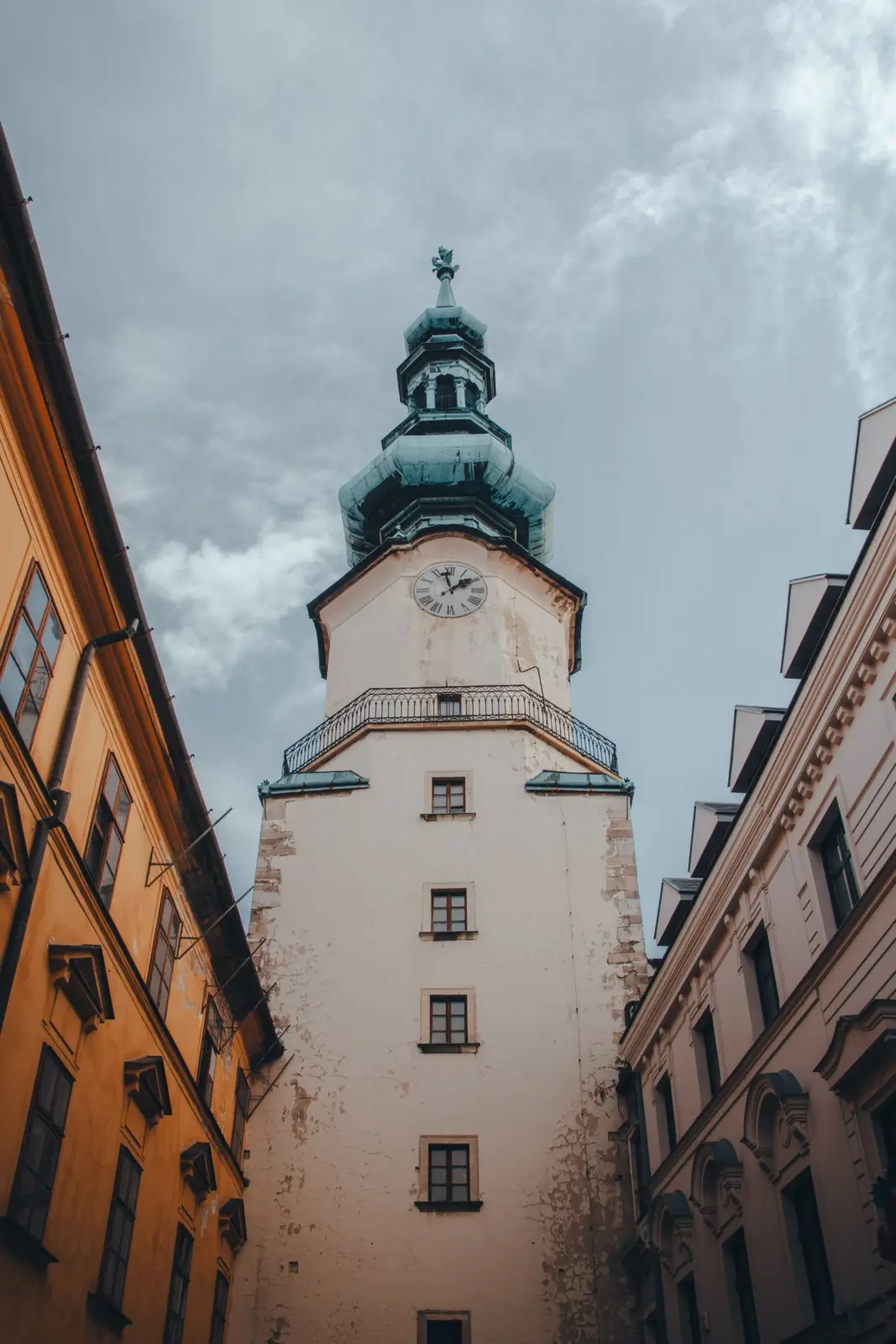
Michael’s Gate preserves the northern entrance through the old walls. Its tower terrace looks across red roofs towards Castle Hill. Tickets are sold at the nearby Pharmacy at the Red Crayfish, and the tower closes on Tuesdays. On that day, use the Old Town Hall tower or keep the visit at street level.
Inside the Old Town Hall is the City History Museum. Its courtyard takes a few minutes, whereas the rooms and tower require a longer stop. With one day available, choose one Old Town viewpoint. Two similar climbs leave less time for Bratislava Castle, whose outlook opens across the Danube and Petržalka.
Walk up to Bratislava Castle
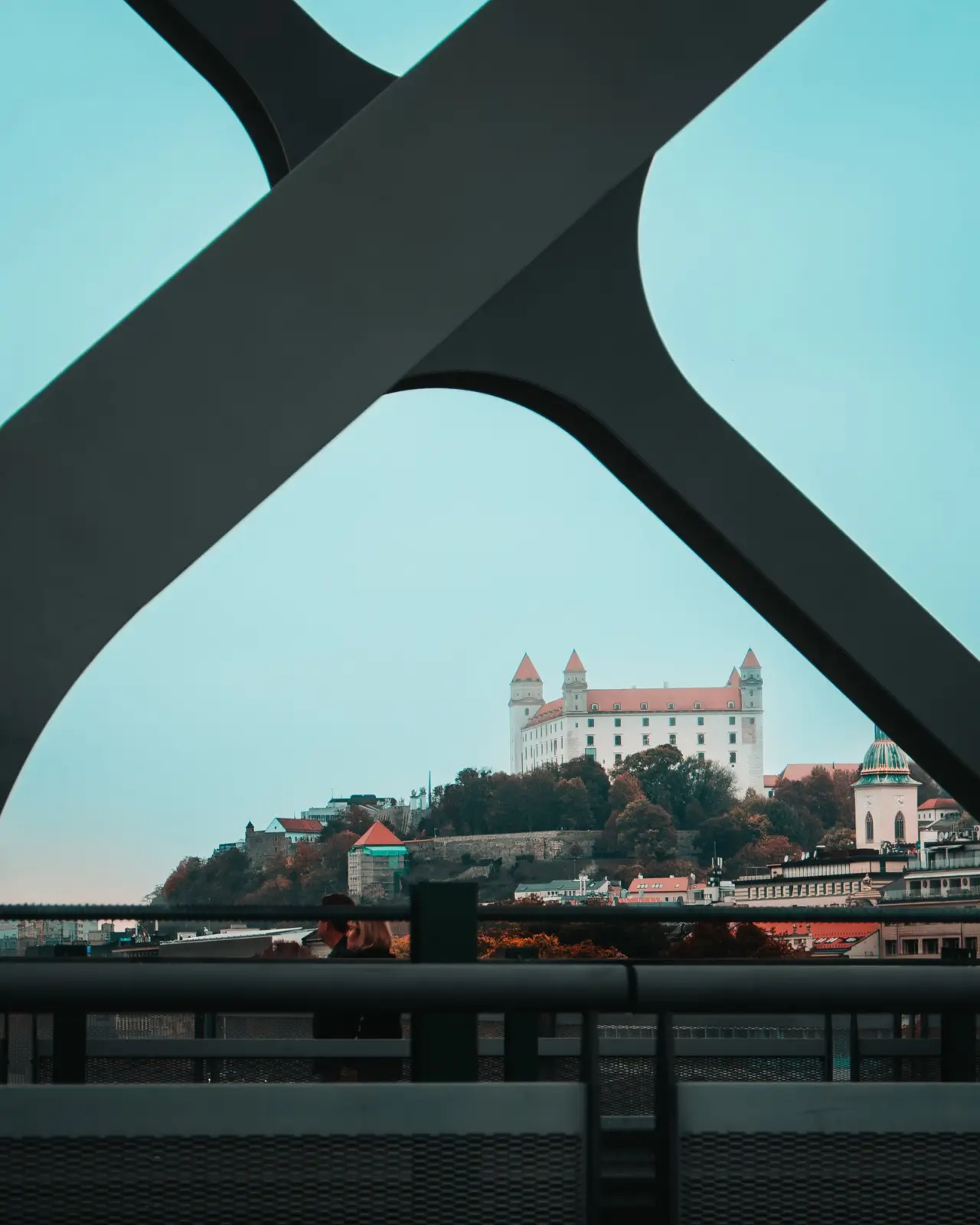
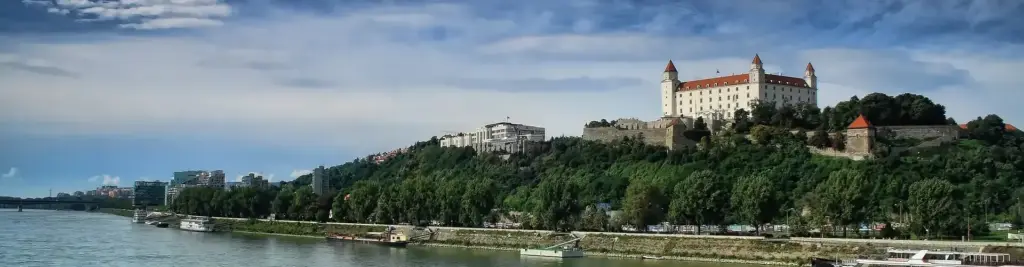
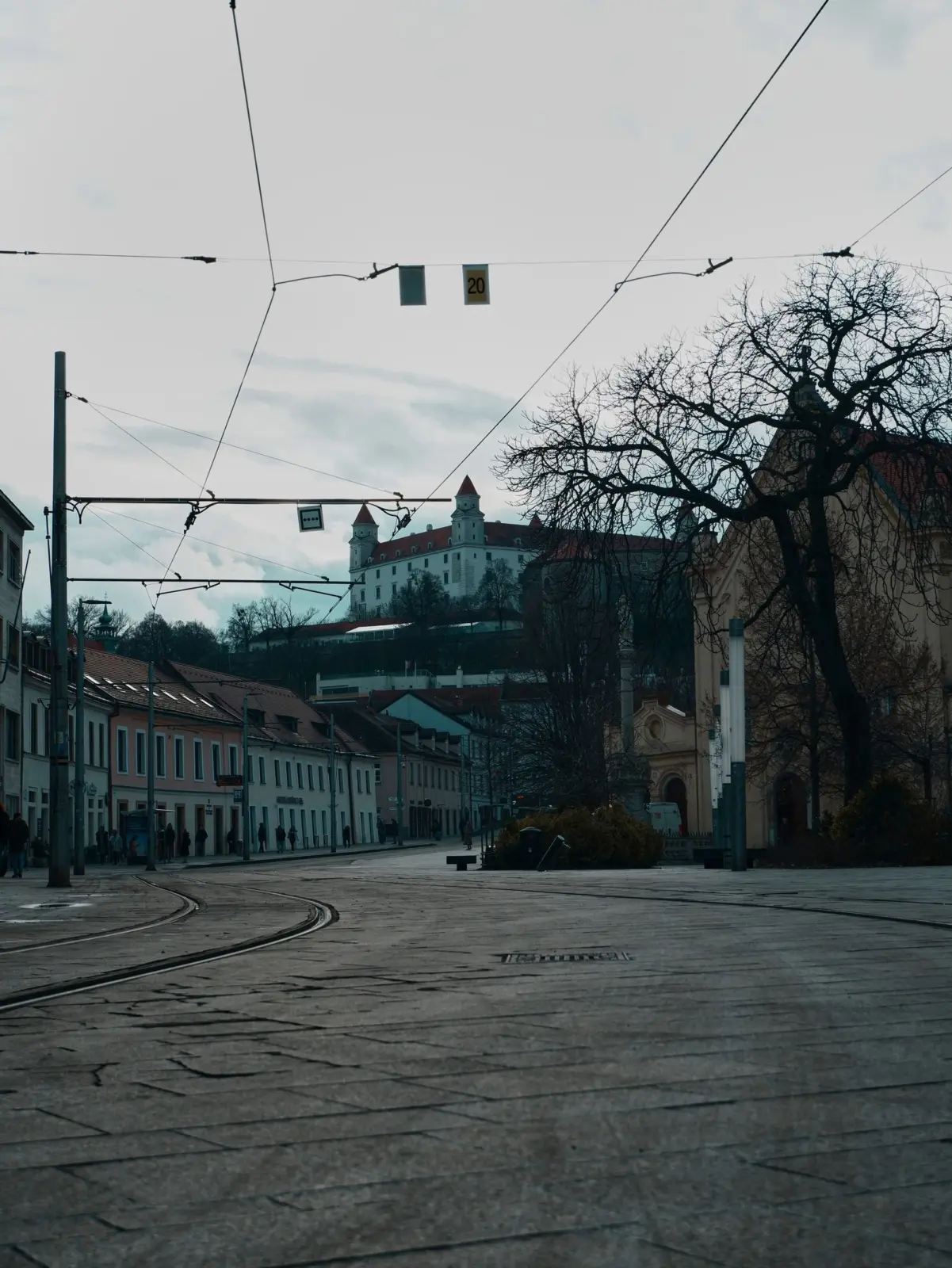
Four corner towers make Bratislava Castle easy to recognise. The pedestrian route from St Martin’s Cathedral climbs through the former settlement below the walls; it is short, but cobbles and gradients slow the final section. The main terrace gives broad views towards Petržalka, the SNP Bridge and Austria without requiring a museum ticket.
Inside the castle, the Slovak National Museum runs the Museum of History. Its official Bratislava Castle hours are 10:00 to 18:00 except Tuesday, with final entry at 17:00. Castle grounds open from 08:00 to 22:00; the Baroque Garden follows seasonal closing times.
Set aside about 2 hours for the exhibitions or 45-60 minutes for the courtyards, garden and overlooks. We use the downhill path towards the cathedral to avoid retracing the same streets. Go late for side light on the white façade.
Visit St Martin’s Cathedral and the coronation route
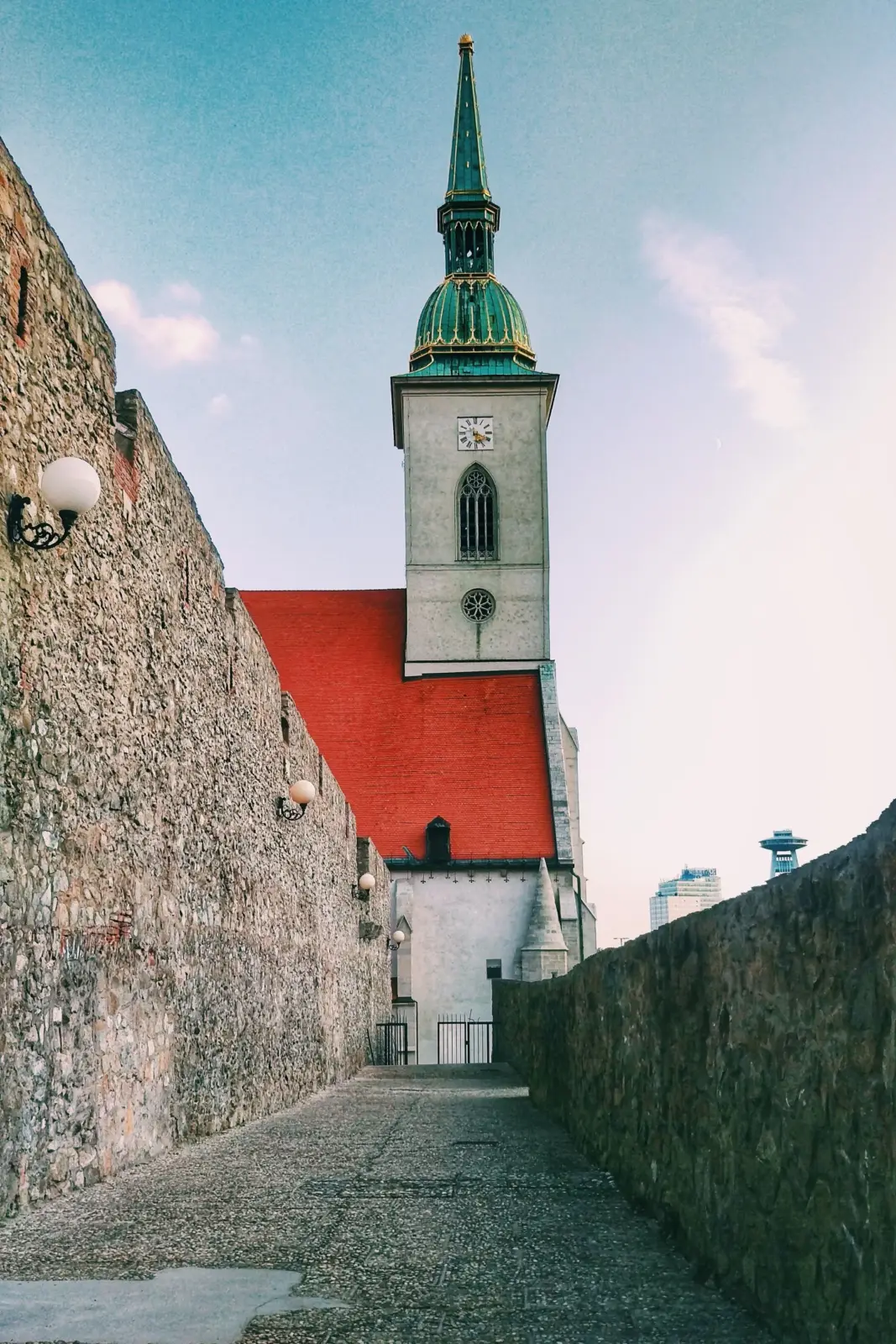
St Martin’s Cathedral stands between the surviving wall and the SNP Bridge approach. It served as a coronation church for the Kingdom of Hungary between 1563 and 1830. The parish records 11 kings and 8 queens or royal consorts crowned here; an 85-metre tower carries a gilded replica of the Hungarian crown.
According to St Martin’s Cathedral parish, tourist visits stop during liturgy or concerts. Gothic vaulting frames the nave, with a mounted statue of St Martin and several side chapels. Worship takes priority.
Small golden crowns set into Old Town streets mark parts of the historic procession route. Follow them between the cathedral, central squares and Michael’s Gate. The markers turn several separate monuments into one coherent walk—useful on a wet afternoon—without adding another transfer or paid attraction.
See the Blue Church and Danube riverfront
St Elizabeth’s Church, usually called the Blue Church, stands on Bezručova about 15 minutes from Main Square. Its pale-blue exterior, round tower and glazed tiles belong to early 20th-century Hungarian Art Nouveau. Interior access follows worship times, so treat the exterior as the dependable visit unless the doors are already open.
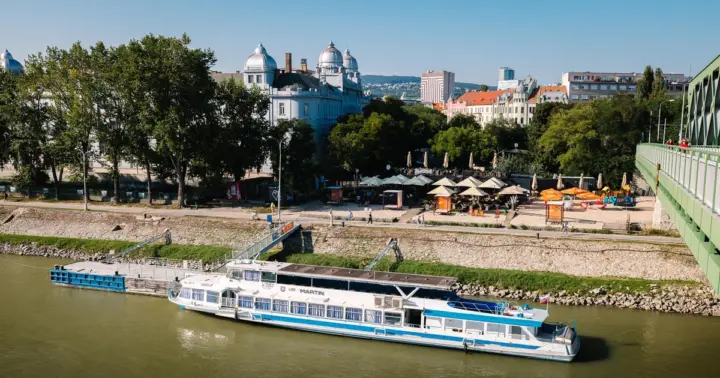
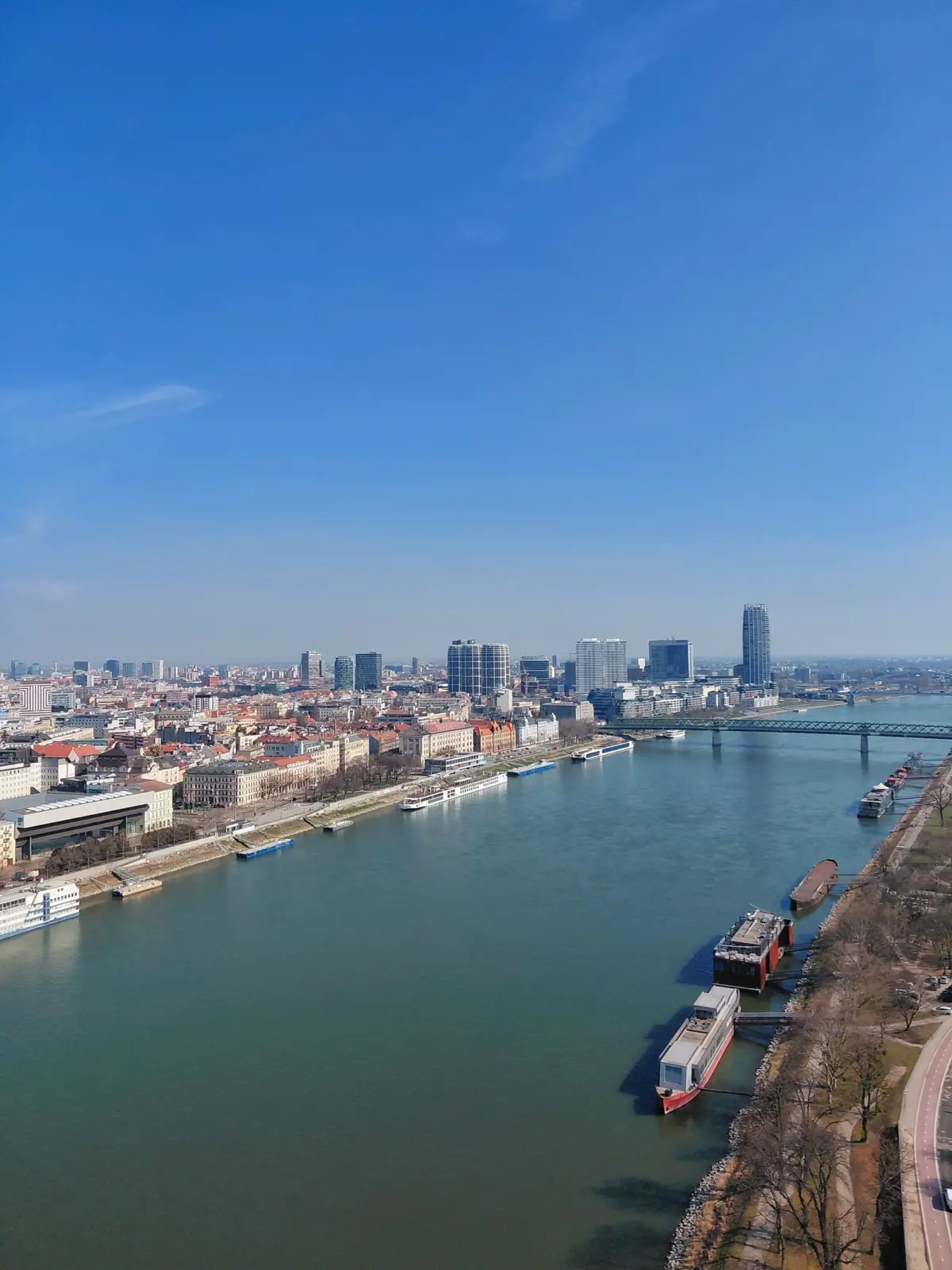
Continue via Šafárikovo námestie to the Danube. The modern Eurovea riverfront offers a flat promenade and a sharp contrast with medieval lanes. Walking west towards the SNP Bridge reveals Bratislava Castle from water level. The distance between the Blue Church and cathedral is roughly 2 kilometres, with plenty of places to pause.
Choose Slavín or the UFO viewpoint
Slavín is a military memorial and cemetery on a residential hill north of the centre. The walk is steeper than Castle Hill, but its outlook spans Bratislava, the Little Carpathians and the Danube. Allow 90 minutes from Hodžovo námestie and back.
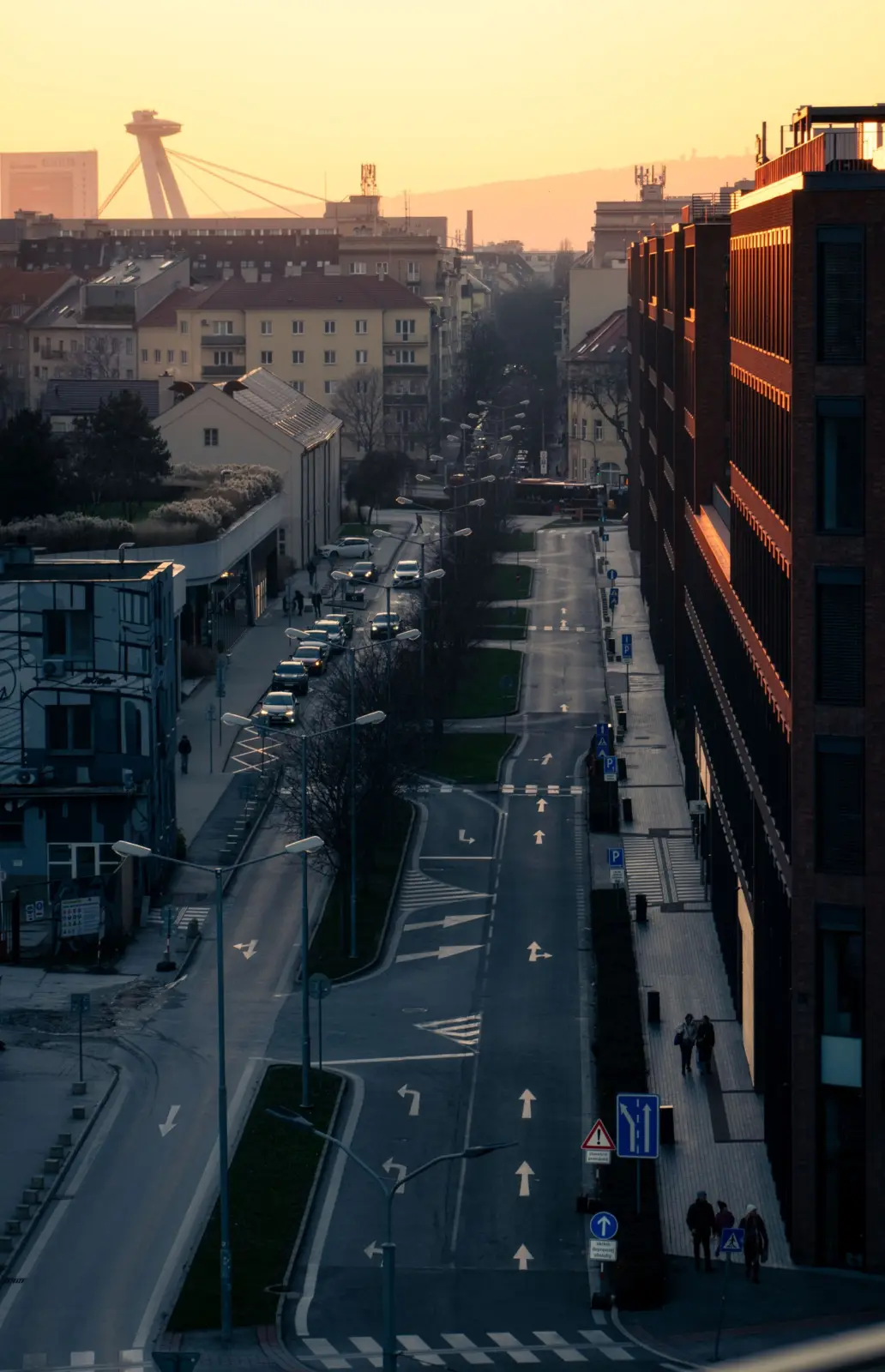
Across the river, the SNP Bridge supplies the opposite view. Its UFO observation deck—a 95-metre structure above the Danube—requires paid admission. Check current UFO opening details. For a free alternative, walk partway across the pedestrian deck and turn back towards the castle.
Things to do in Bratislava in one day
With one full day, take a morning free tour, then continue through Main Square, Michael’s Gate and St Martin’s Cathedral. After lunch, climb to Bratislava Castle and descend towards the Danube. Add the Blue Church in late afternoon if energy allows; save Slavín and Devín for another day.
This order avoids repeated hills. It also leaves one sensible indoor choice: the Castle Museum or the Old Town Hall. Attempting both, adding the UFO and travelling to Devín turns an 8-hour visit into a timetable exercise. Bratislava feels more coherent when short pauses remain between the squares.
Things to do in Bratislava in two days
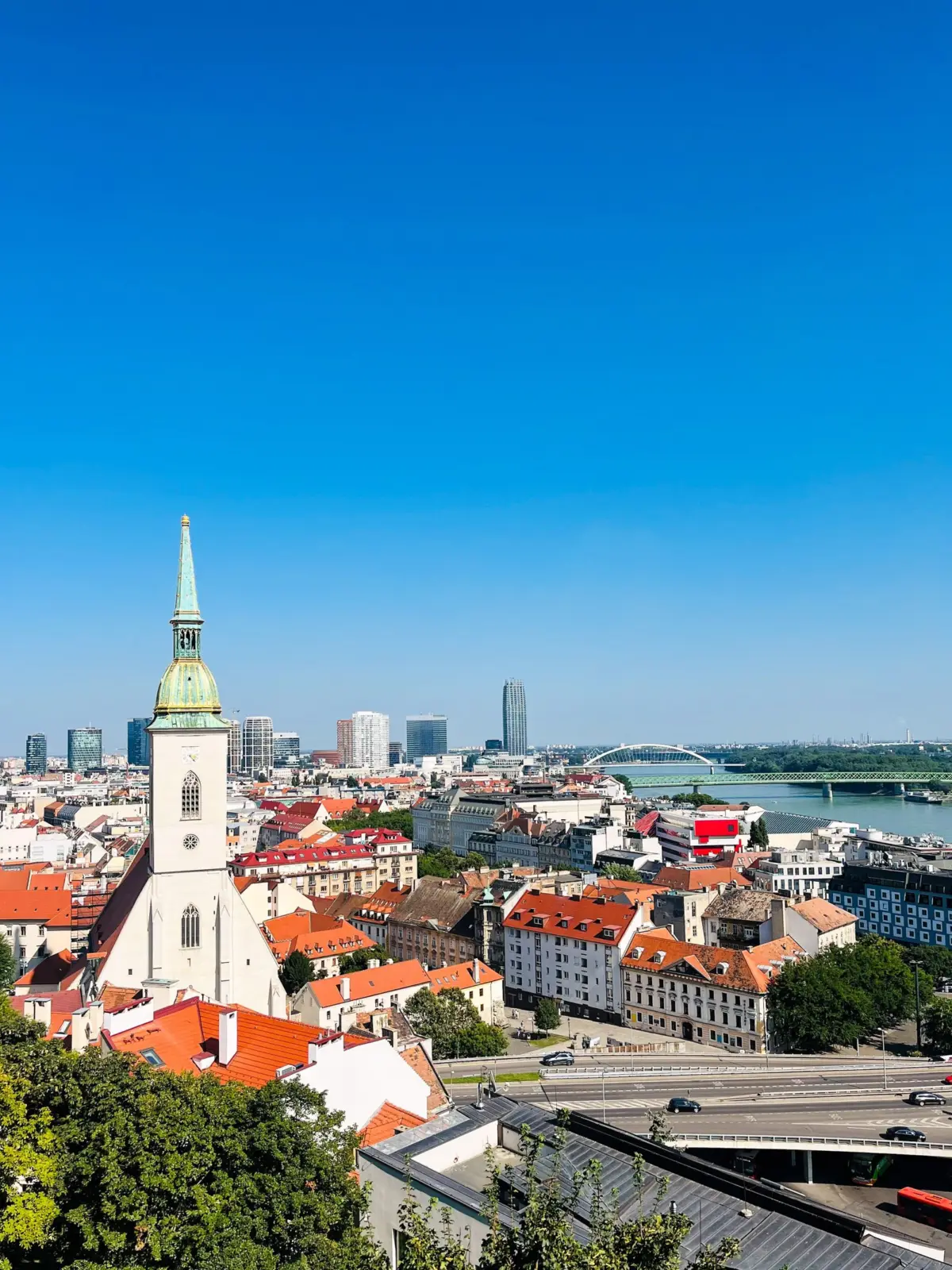
Day two lets you separate museums from viewpoints. Spend the morning inside the castle or Old Town Hall, then walk to the Blue Church. During the afternoon, choose Slavín for an urban route or Devín for archaeology and river scenery. Each takes several hours; combining them creates unnecessary cross-city travel.
Rain changes the plan without ruining it. Swap Slavín for the Primate’s Palace, Slovak National Gallery or Museum of History. Under clear skies, place indoor visits around midday and keep Castle Hill or the river for later. We keep the route flexible because most central sights sit within a walkable radius.
Bratislava: Panorama Cruise on the Danube River
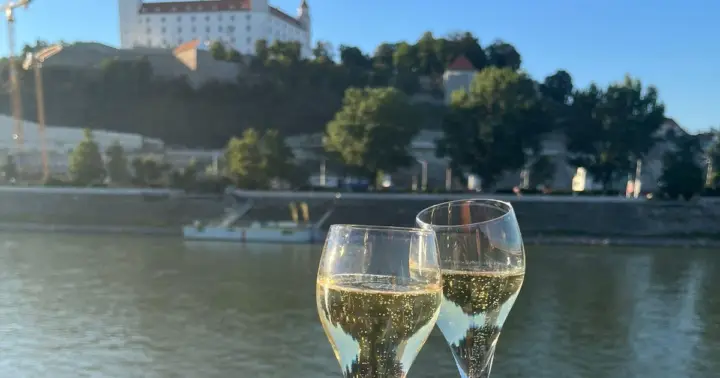
Bratislava: Panorama Cruise with Unlimited Prosecco
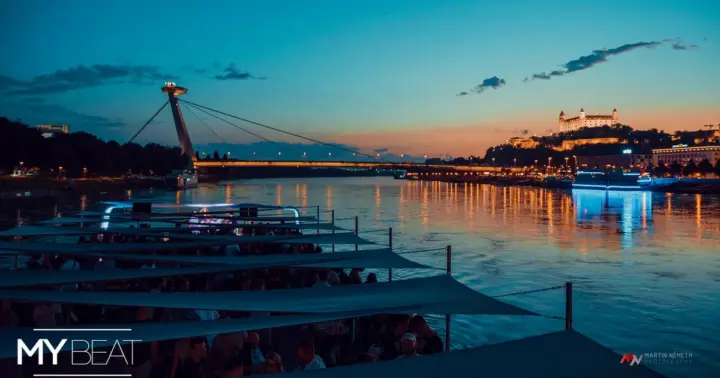

Bratislava: Legendary MyBeat Summer Cruise with DJ Cassimm
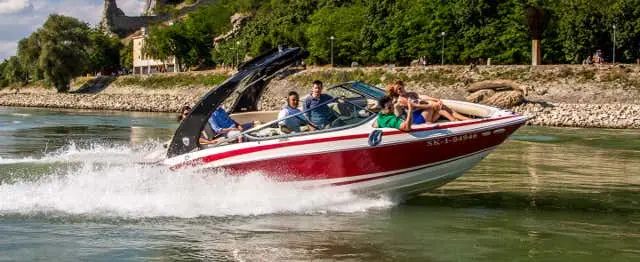
Private Speedboat Tour of Bratislava
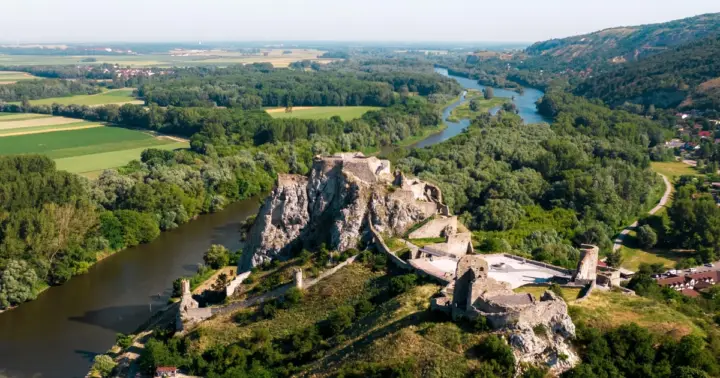
Bratislava: Cruise – Devín Castle Round Trip

Bratislava: Gourmet Goose Dinner with Cruise on Danube
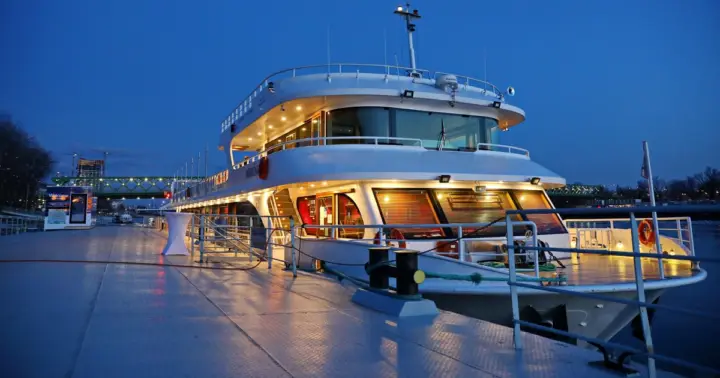
Bratislava: New Year´s Eve on the Danube River
Take a half-day trip to Devín Castle
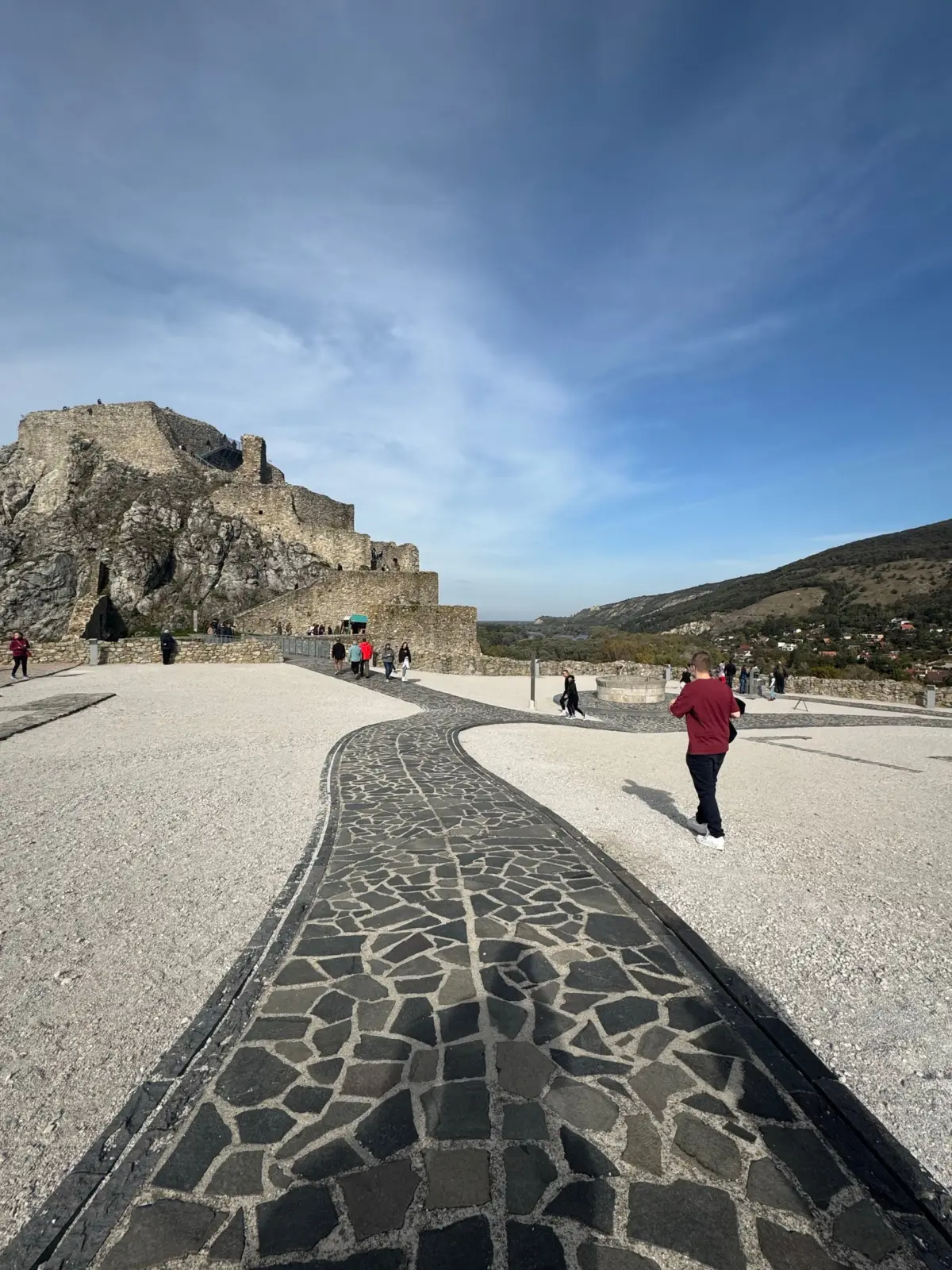
Devín lies 12 kilometres from the historic centre, above the meeting of the Danube and Morava rivers. Its 60,000-square-metre site preserves remains from Roman, Great Moravian, medieval and modern periods. The appeal comes from ruins, archaeology and border landscape rather than from another furnished royal residence.
Bratislava City Museum’s Devín page gives seasonal hours: the castle closes on Mondays and stays open later between June and August. Allow half a day with transport. Uneven paths and gradients make this a slower visit than the Old Town.
Use public transport when walking is not enough
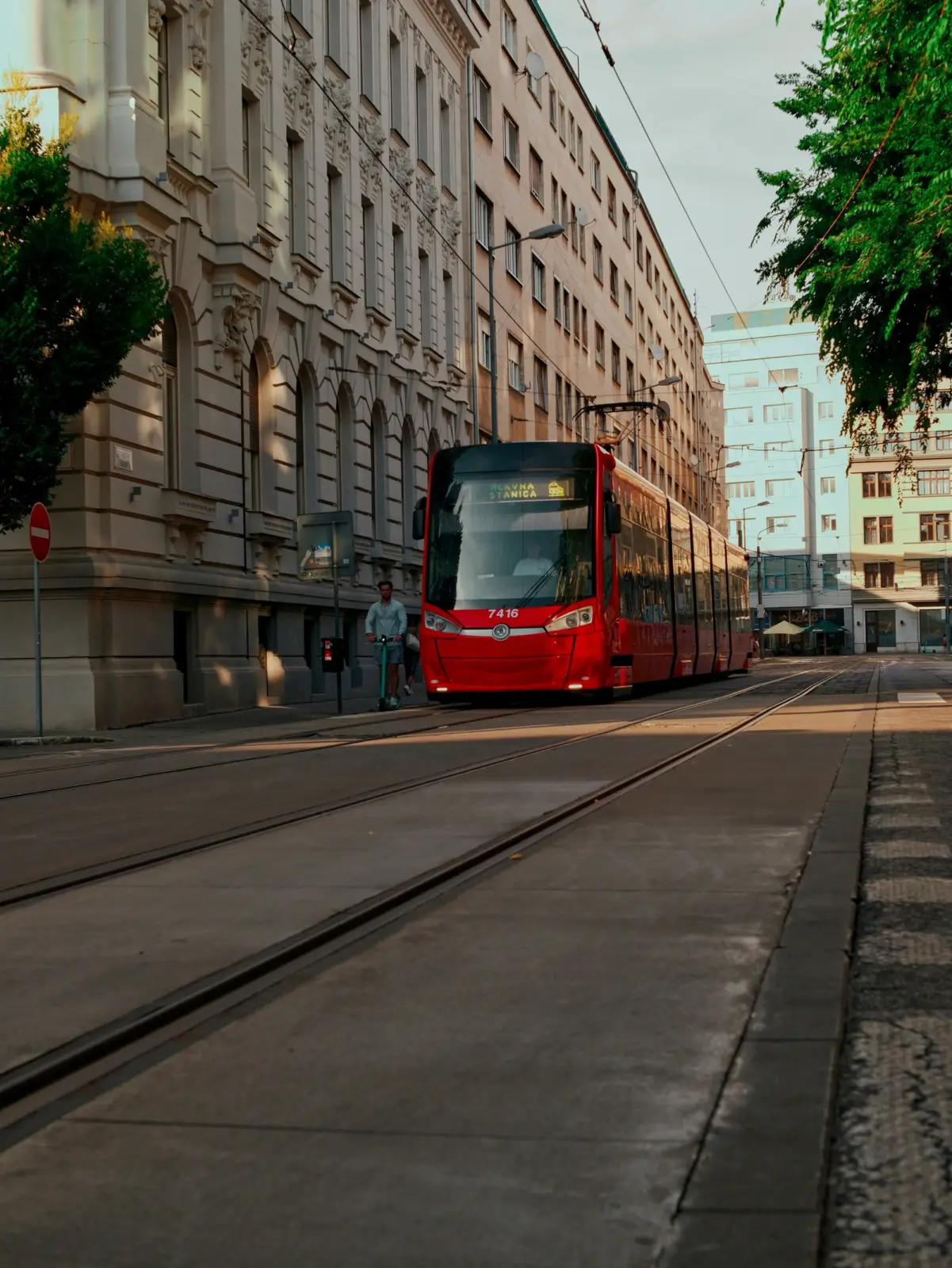
Central Bratislava is largely pedestrian. Trams, trolleybuses and buses become useful for Slavín, the railway station and outer districts. In August 2026, DPB’s official payment guide lists contactless fares of €1.09 for 30 minutes, €1.60 for 60 minutes and €4.85 for 24 hours.
Using the same bank card or device activates a €4.85 daily cap under DPB’s contactless system. Keep one payment method throughout the day. Paper tickets remain available from machines, while the IDS BK app sells mobile tickets. A route limited to Old Town and Castle Hill may require no transport at all.
Get from Bratislava Airport to the centre
M. R. Štefánik Airport lies east of Bratislava. The airport’s official transport page confirms that bus 61 connects the terminal with the main railway station; N61 serves the route at night. Urban transport continues from Hlavná stanica towards the centre.
International buses and trains also connect through Vienna, though schedules vary by date. Bratislava sits beside both Austria and Hungary—”the only capital city in the world that borders two other countries,” as Visit Bratislava described it. Leave a buffer before any timed activity when arriving across a border.
Stay somewhere that suits a walking itinerary
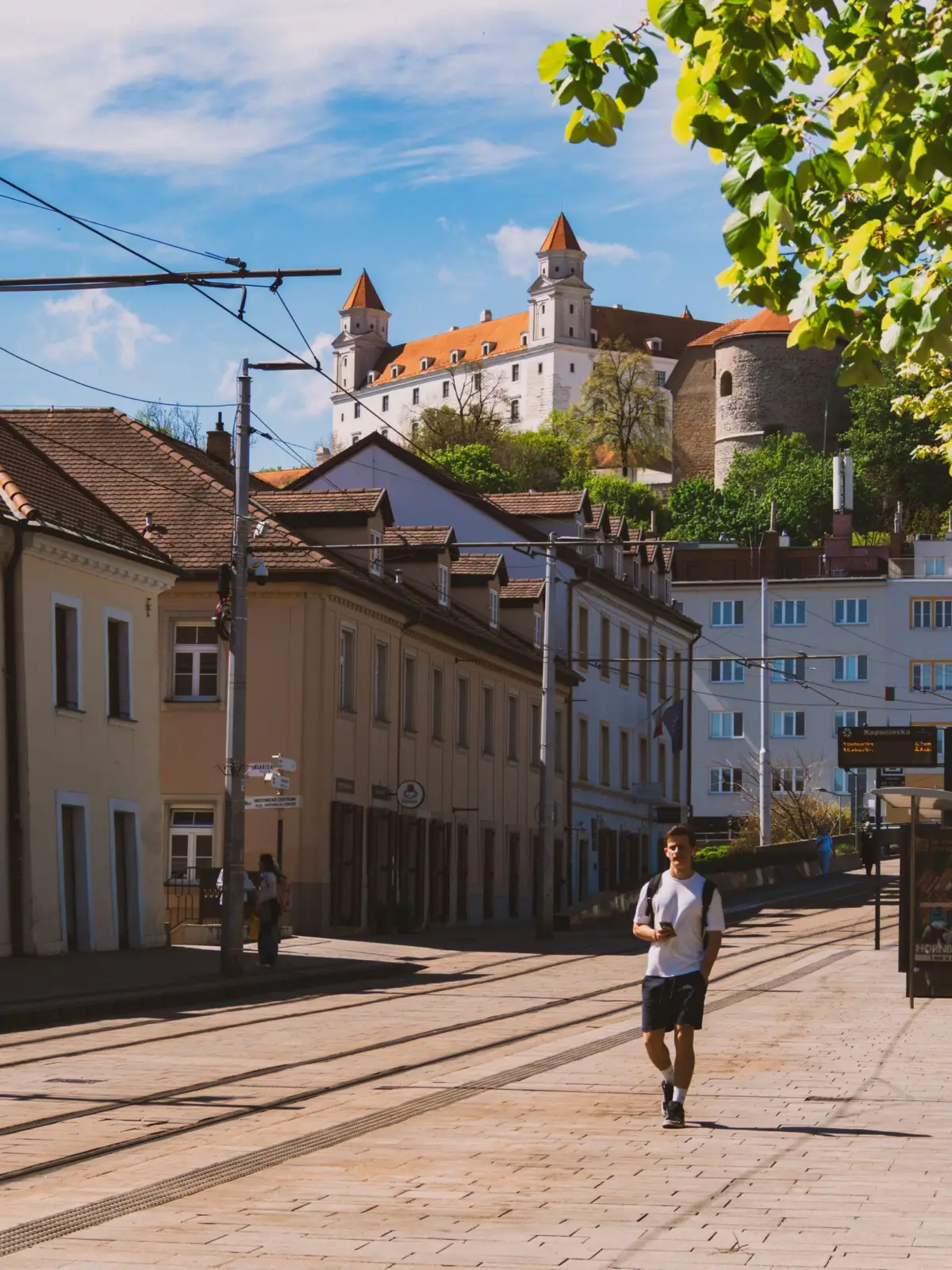
Staré Mesto is the simplest base for a first visit. Rooms around Main Square put major sights nearby, though restaurant streets can remain active at night. Blumentál offers tram links in a residential setting; Nivy works well for the bus station and newer parts of Bratislava.
Petržalka lies across the Danube and can offer good connections when accommodation sits near a direct line. Check the actual walking route to a stop, not straight-line distance. Castle Hill, bridge approaches and riverside access can make a short-looking journey longer once luggage is involved.
Bratislava travel questions
How many days do you need in Bratislava?
One day covers Old Town, St Martin’s Cathedral and Bratislava Castle. Two days allow time for the Blue Church, one museum and either Devín or Slavín.
Can you explore Bratislava on foot?
Yes. Main Square, Michael’s Gate, the cathedral and Danube form a compact walking circuit. Bratislava Castle adds a hill; Devín and the airport require transport.
Is Bratislava Castle free?
Castle grounds, courtyards and outdoor viewpoints are separate from the Museum of History. Indoor exhibitions require a ticket and follow Slovak National Museum hours.
What is the best way to start?
A morning walking tour supplies context while leaving the afternoon open. Compare current free tours in Bratislava, book with no credit card needed, then arrange interiors around weekly closing days.

GuruWalk
Travel marketing specialist with extensive experience in the travel sector. At companies such as Despegar and GuruWalk, she has led traveler-focused digital acquisition strategies. Now, from the GuruWalk blog, she combines her expertise with her passion for discovering and sharing unique destinations.