

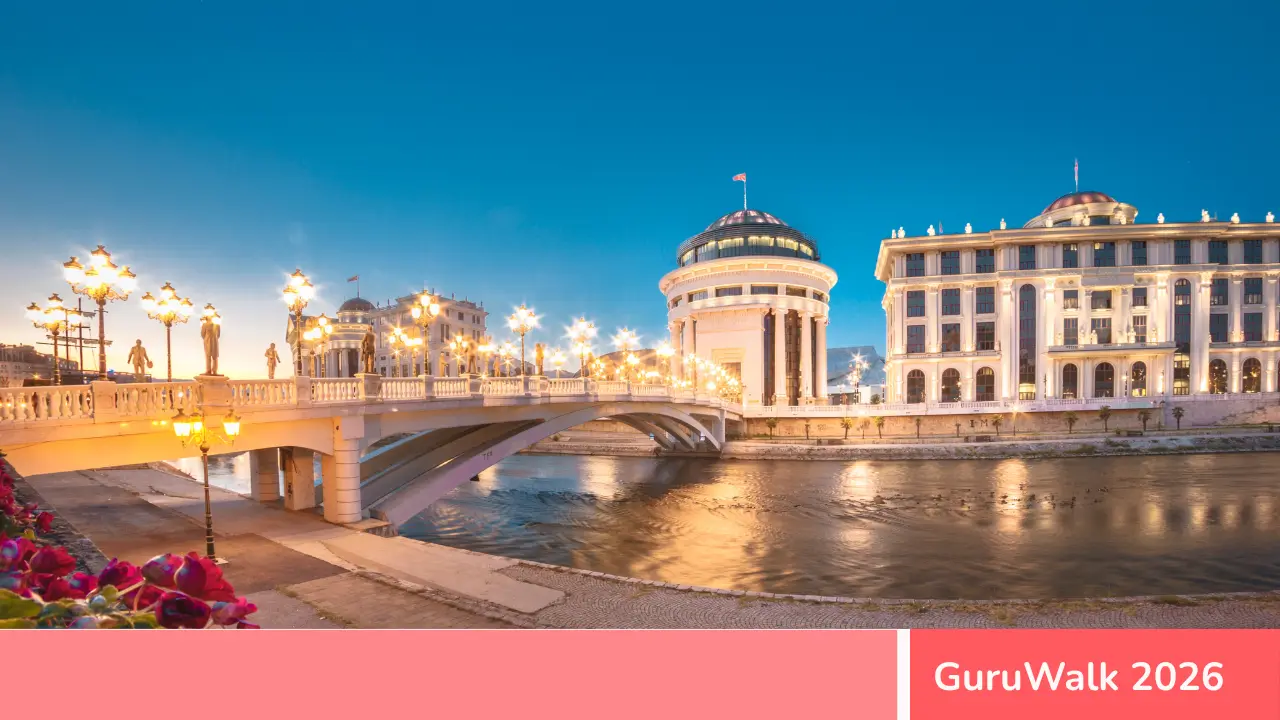
Skopje brings together the Stone Bridge, an Ottoman bazaar, a fortress above the river and a centre rebuilt after the 1963 earthquake. These layers make more sense on foot and with context. Starting with one of the free tours in Skopje helps organise the city’s history before choosing museums or day trips. It also prevents a common planning error: treating nearby landmarks as if they belonged to the same period. No credit card is needed to book.
Last verified: August 2026 — Prices, opening hours, and reservation requirements checked against official sources. GuruWalk’s Skopje guides reviewed the practical recommendations.
The best free tours in Skopje
Begin the first morning by connecting Macedonia Square, the Stone Bridge, the Old Bazaar and Kale Fortress. They stand close together but represent very different eras. A guru supplies the missing thread between Ottoman heritage, the memory of the earthquake and recent architecture in the centre. You can then return to the stops that match your interests instead of entering every museum along the route.
A free tour has no fixed ticket price. At the end, each person rewards the guru according to the experience. A usual reference is €10–20 per person, rising to €50 for a small group or exceptional work. An early booking leaves the afternoon free for a museum, Mount Vodno or a slower walk through the bazaar; it also avoids dividing the central route across two different days.
If you want to learn more about the history of our country and our hometown, you are welcome to join…

Hi everyone and welcome to Skopje: my hometown With me, in Skopje, you must try a BOZA (drink dating back…

We invite you to join us and together with us enjoy tasting some traditional and some more modern, but certai…
Born and raised in Skopje, want to present my city in best of lights and an entertaining manner . Feel…

Skopje Free Walking & Sightseeing Tour On my tour, you will find plenty of information spanning fro…

Hello and welcome! I'm Igor. I speak native American-English and have encyclopedic knowledge of Skopje in a fun way. 😀

12 top things to do in Skopje
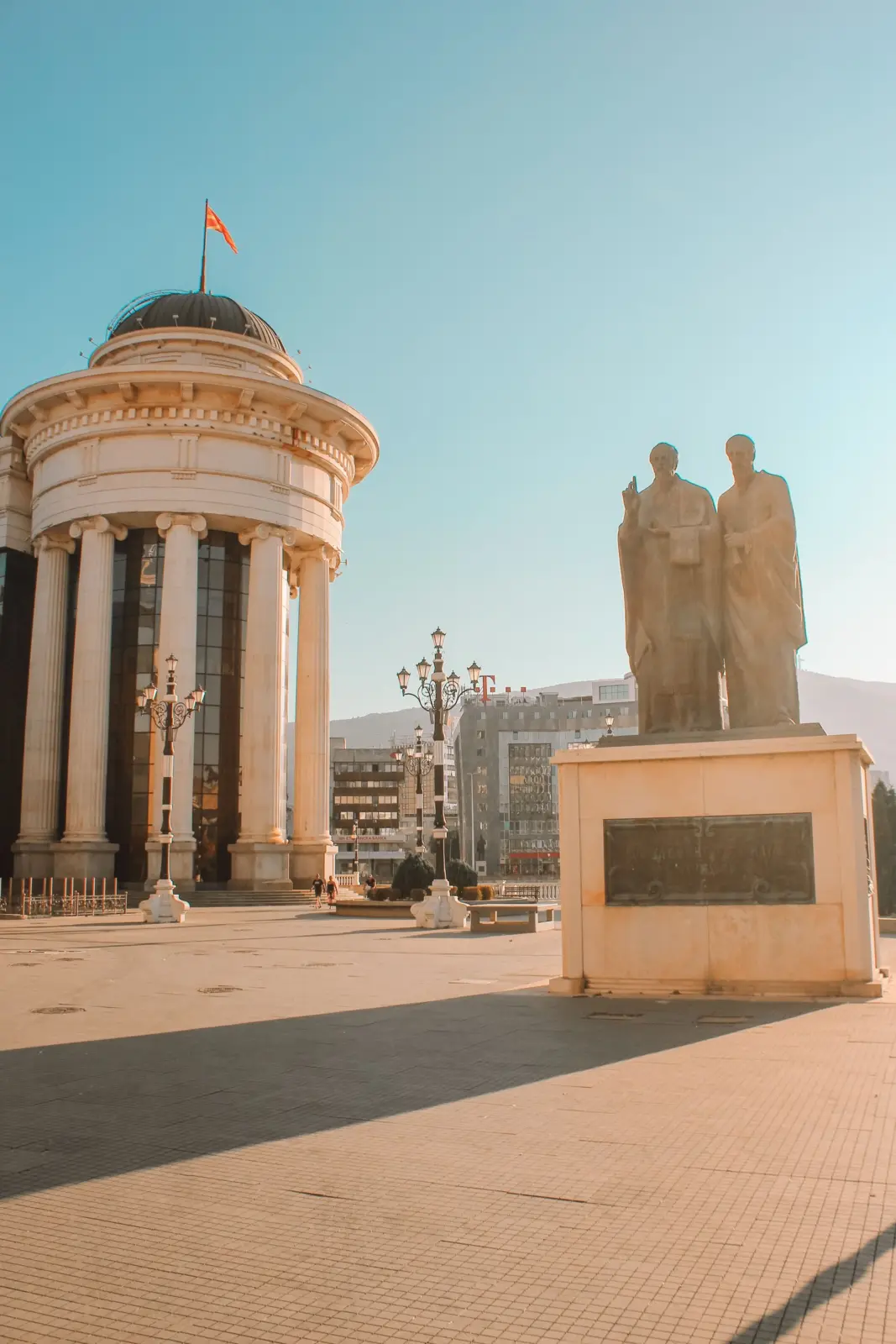
1. Start at Macedonia Square and Macedonia Street
Macedonia Square is the easiest orientation point. The pedestrian Macedonia Street, the Stone Bridge and several routes through the modern centre all begin here. Fountains, statues and monumental façades from different periods fill the square. Before crossing the river, follow the pedestrian axis to the former railway station; it shows how strongly Skopje changed after 1963. This extra stretch also places the Mother Teresa Memorial House on the same walk.
2. Cross the Stone Bridge over the Vardar
Across the Vardar, the Stone Bridge links Macedonia Square with the Old Bazaar. Kale Fortress and the river join it on the city’s official coat of arms. The crossing creates a clear transition: within minutes, the monumental centre gives way to Ottoman street patterns. The official City of Skopje facts also place Vodno’s Krstovar peak at 1,066 metres and list Matka among the area’s canyons and artificial lakes.
3. Walk through the Old Bazaar
Stara Čaršija stretches from the Stone Bridge towards Bit Pazar, passing mosques, churches, former caravanserais, workshops and small shops. Pause at the craft displays and step inside its historic courtyards. The official tourism page about Skopje groups the bazaar, Stone Bridge and Kale among the capital’s essential historic places.
4. Climb to Kale Fortress
Kale rises above the bazaar on the left bank of the Vardar. Archaeological ground and surviving walls frame the visit. The route up is short from the commercial streets below, so both places fit naturally into one walk. From the top, the river, Ottoman quarter and urban expansion towards Vodno become much easier to read; allow time to stop instead of treating the fortress as a quick photograph.
5. Visit the Mother Teresa Memorial House
Agnes Gonxha Bojaxhiu was born in Skopje on 26 August 1910. The memorial house presents photographs, documents, objects and a small chapel near Macedonia Street. Admission and guiding are free. In August 2026, it opens Monday to Friday from 9am to 8pm and at weekends from 9am to 2pm. The official Memorial House website states that groups must arrange their visit in advance.
6. Understand the city at the Museum of Skopje
Inside the former railway station, the museum occupies a building tied closely to the earthquake of 26 July 1963. More than 40,000 objects form its archaeology, history, ethnology, art and architecture collections. Opening hours run from 10am to 4.30pm between Tuesday and Saturday; Sunday ends much earlier, at 1.30pm. The official Museum of the City of Skopje website lists current exhibitions.
7. See the Archaeological Museum
The museum stands beside the Vardar. Facing the historic centre, its permanent exhibition connects prehistory and antiquity with later periods through objects found across the country. It opens Tuesday to Sunday from 10am to 6pm. Last tickets are sold at 5pm; in August 2026, individual admission for foreign visitors costs 400 MKD and the student ticket costs 200 MKD. The museum’s official visitor information explains prices and accessibility.
8. Enter Daut Pasha Hamam and the National Gallery
This former hammam from the second half of the 15th century stands at an entrance to the bazaar. It originally had separate male and female sections across about 900 square metres. The building has served as an art gallery since 1948. Its published opening hours are 10am–6pm. The official Daut Pasha Hamam page explains the conversion and its Macedonian art display.
9. Visit the Holocaust Memorial Centre
Between the Vardar and the Old Bazaar, this centre covers the history of Macedonia’s Jewish communities and their destruction during the Holocaust. Adult admission is 100 MKD; students pay 50 MKD. It opens Tuesday to Friday from 9am to 7pm and at weekends from 9am to 3pm, closing on Monday. The official Holocaust Memorial ticket page provides prices and contact details.
10. Go to the Museum of Contemporary Art
North of Kale, the museum occupies a raised site with a broad view over central Skopje. Its collection grew from the international solidarity that followed the 1963 earthquake. General admission costs 100 MKD in August 2026. It opens Tuesday to Saturday from 10am to 5pm and Sunday from 9am to 1pm. The official Museum of Contemporary Art website publishes the exhibitions currently on view.
11. Spend half a day on Vodno
Mount Vodno offers the fastest change of scale from the city centre. The mountain reaches 1,066 metres at Krstovar, where the Millennium Cross stands. Allow half a day for paths and viewpoints, especially if walking forms part of the ascent. The cable car has had temporary closures for wind and maintenance during 2026, so the day’s operating notice should shape the plan instead of a timetable saved weeks earlier. If it is unavailable, keep the museum route as a flexible central alternative.
12. Leave the centre for Matka Canyon
Matka combines the Treska River canyon, an artificial lake, walking paths and monasteries outside Skopje. It needs at least half a day because the journey breaks the compact centre route. Time works best when you choose between walking beside the water, taking a boat trip or concentrating on the religious buildings. Trying to do all three reduces the visit to transfers and queues. On a short city break, Matka makes more sense on the second or third day, when the central landmarks are already familiar.
Skopje itineraries for 1, 2 or 3 days
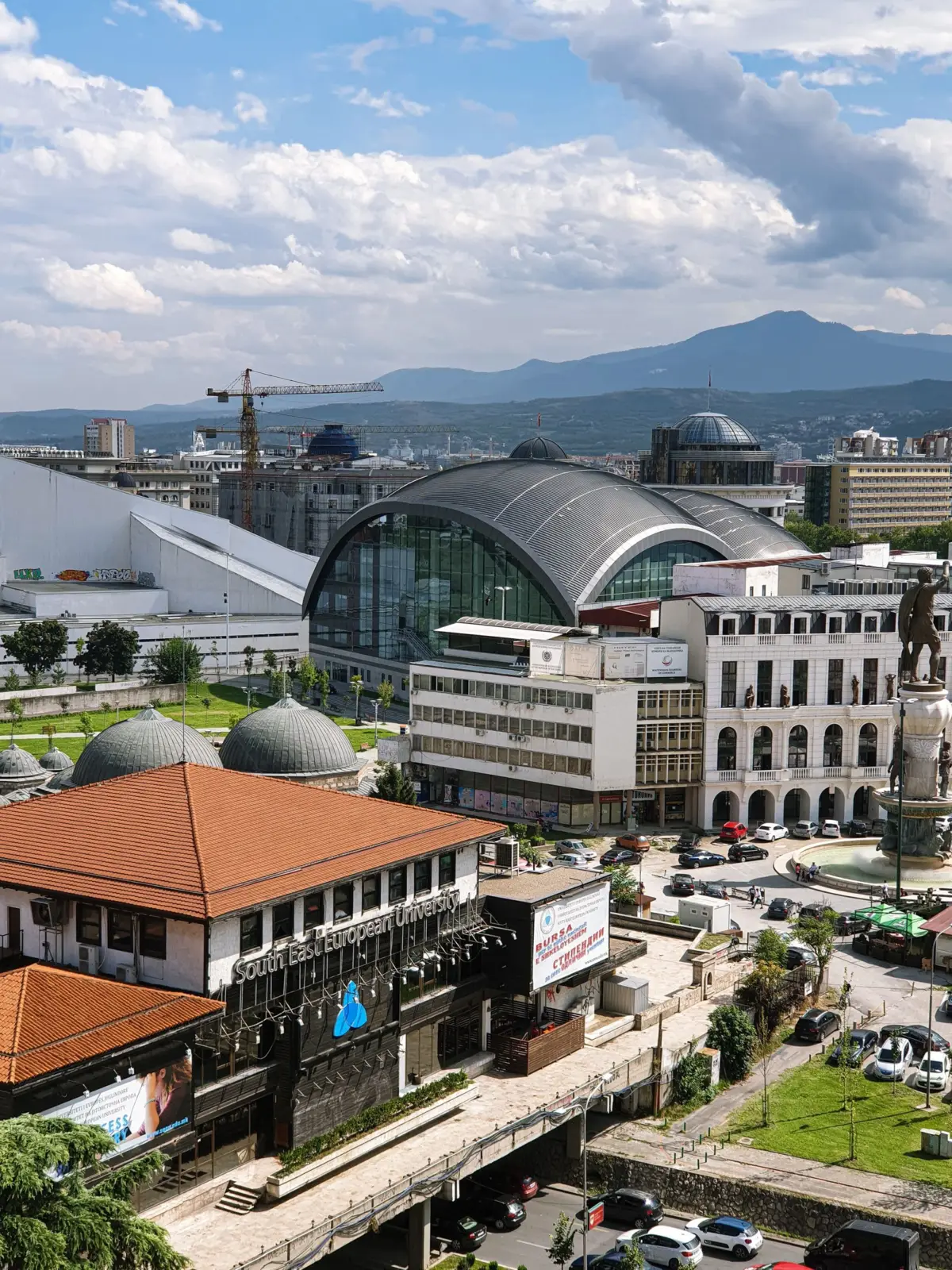
One day in Skopje
Begin with the free tour. Afterwards, cross the Stone Bridge, explore the Old Bazaar and climb to Kale. Use the afternoon for one museum only: choose the Archaeological Museum for a chronological view of the region, or pair the Memorial House with the City Museum for modern history. Finish beside the Vardar, when the centre’s bridges and monumental buildings are lit.
Two days in Skopje
Keep the central route on day one. On the second day, choose Vodno in the morning and the Museum of Contemporary Art after returning, or devote several hours to Matka. Do not force Vodno, Matka and three museums into the same day. Transport connections, paths and closing times take more time than the map suggests.
Three days in Skopje
With three days, separate nature from the city. Use the first for the Macedonia Square–Bazaar–Kale axis, the second for Matka, and the third for Vodno, Debar Maalo and any remaining museums. This order allows an unhurried meal in the bazaar and prevents a cable-car disruption from affecting the entire itinerary.
Getting around Skopje
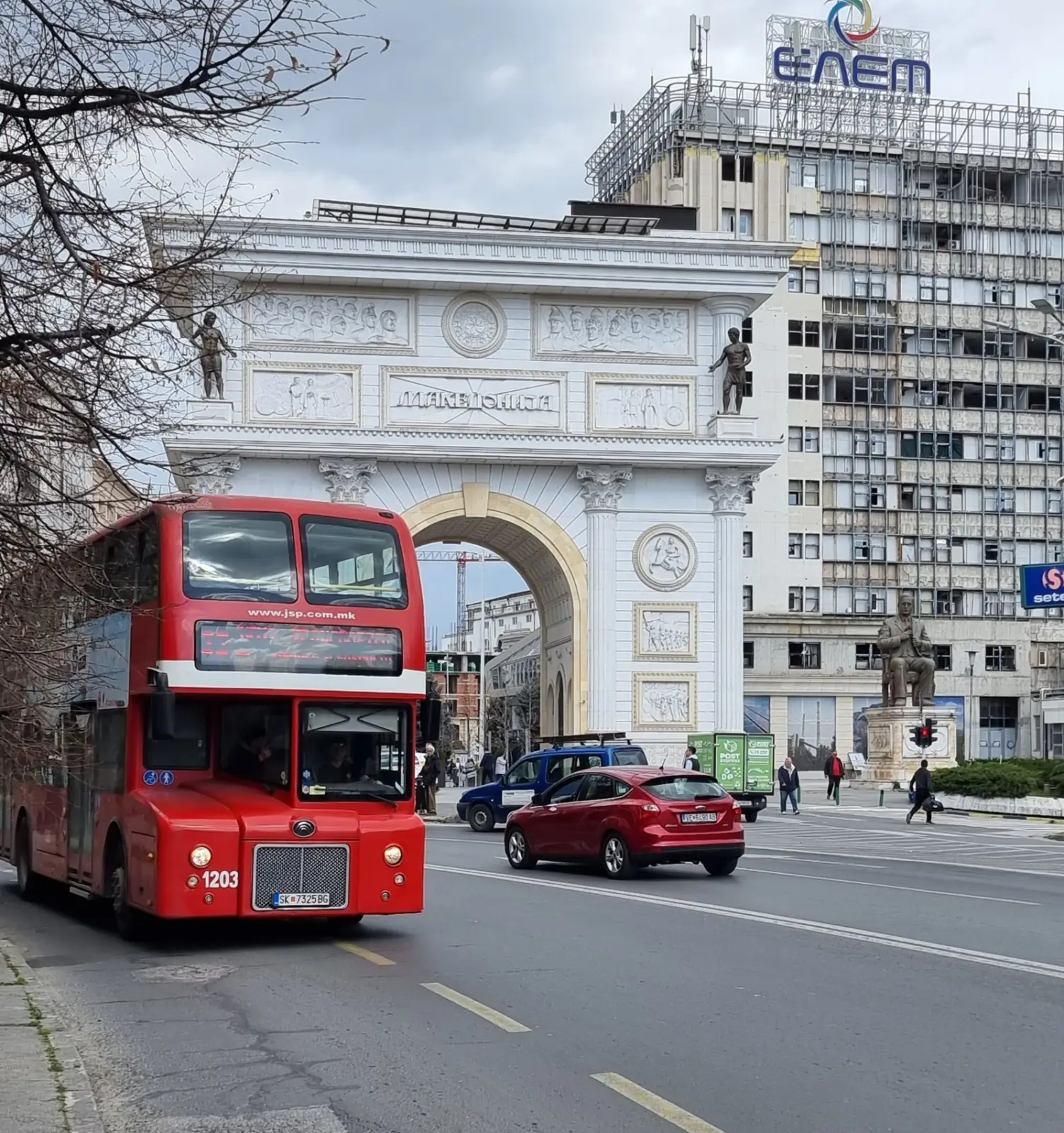
Central Skopje works on foot. Macedonia Square, the Stone Bridge, the bazaar and Kale form one continuous sequence. Buses or taxis are useful for Vodno, Matka and more distant districts. The municipal operator publishes route changes and service notices on the official JSP Skopje website. Checking on the day is more useful than keeping a screenshot of an old timetable.
Skopje International Airport is outside the centre. The official bus service connects the terminal with several urban stops and coordinates its timetable with flights. In August 2026, the published one-way fare is 199 MKD. The airport’s official bus information links to the current operator and timetable.
Frequently asked questions about Skopje
How many days do you need in Skopje?
One day covers the centre, bazaar and one museum. Two days allow time for either Vodno or Matka. With three days, you can visit both natural areas and spread the museums across the trip. Keep at least one indoor option flexible because the weather and the cable-car operation can change the order of an otherwise sensible itinerary.
What can you see for free?
Macedonia Square, the Stone Bridge, Old Bazaar, Kale’s exterior and the Vardar riverside require no admission. The Mother Teresa Memorial House is also free. Paid museums publish relatively modest prices in Macedonian denars. Combining those outdoor places with one ticketed museum creates a full central day without buying a pass or committing to several timed entries.
Is Skopje easy to explore on foot?
Yes, for the central sights. The route from the former station to Kale passes Macedonia Street, the square, Stone Bridge and the bazaar. Vodno and Matka sit outside that circuit and require transport.
Which currency is used in Skopje?
North Macedonia uses the Macedonian denar, abbreviated MKD. Official museum and transport prices are published in denars. A small amount of cash is useful for shops and services that do not rely on cards.
Plan your first morning in Skopje
Book one of the free tours in Skopje to understand its history and neighbourhoods with no credit card needed. You can then choose museums, Vodno, Matka and activities and experiences in Skopje around the time available.

Travel marketing specialist with extensive experience in the travel sector. At companies such as Despegar and GuruWalk, she has led traveler-focused digital acquisition strategies. Now, from the GuruWalk blog, she combines her expertise with her passion for discovering and sharing unique destinations.