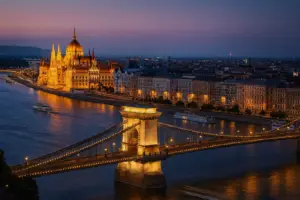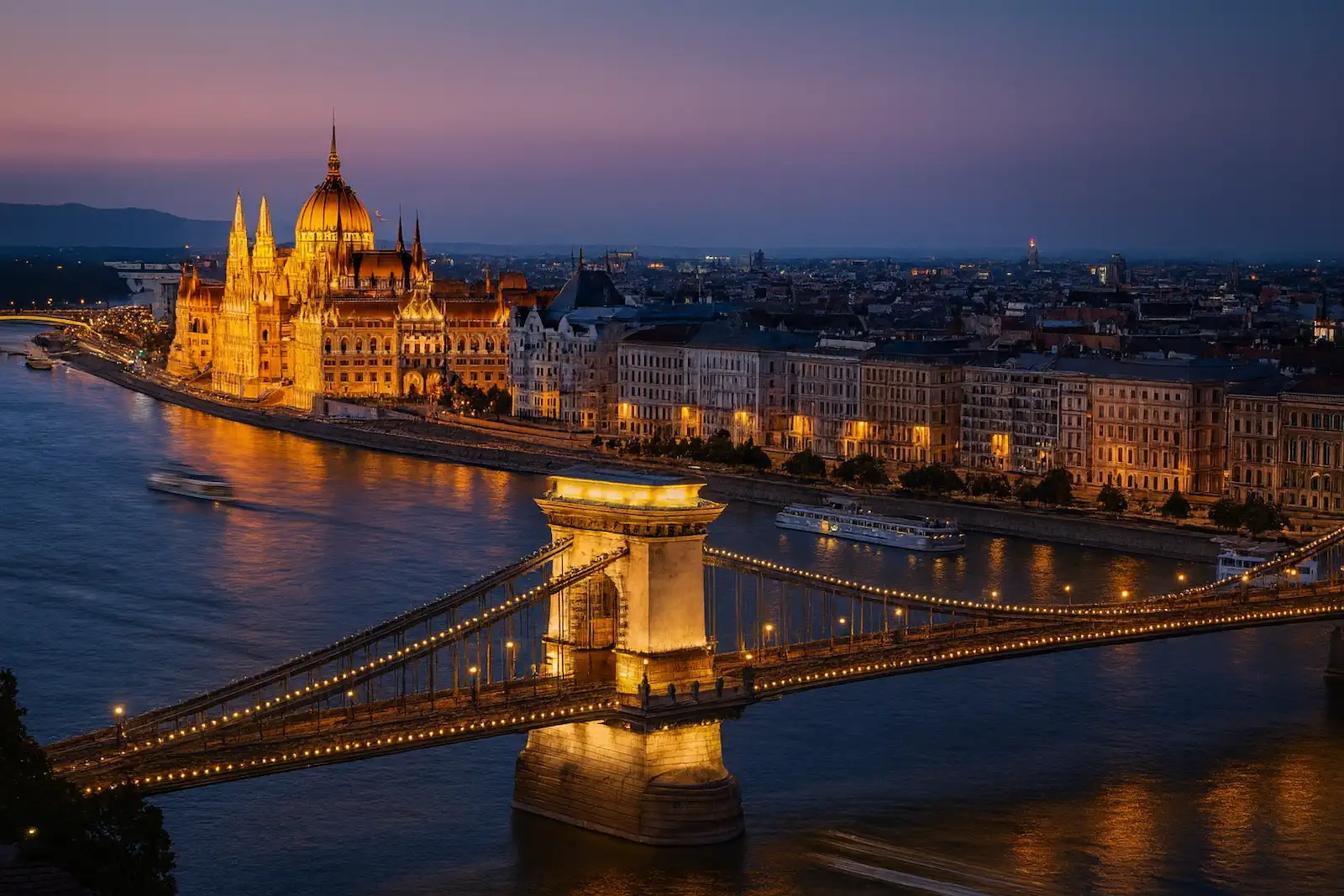
Budapest, a city divided by the majestic Danube, brings together historic Buda in the hills to the west with modern Pest on the plains to the east. This walking tour will guide you through the most iconic spots of both sides, including the imposing Parliament, Fisherman’s Bastion, the Chain Bridge and St. Stephen’s Basilica.
Enjoy amazing activities in Budapest
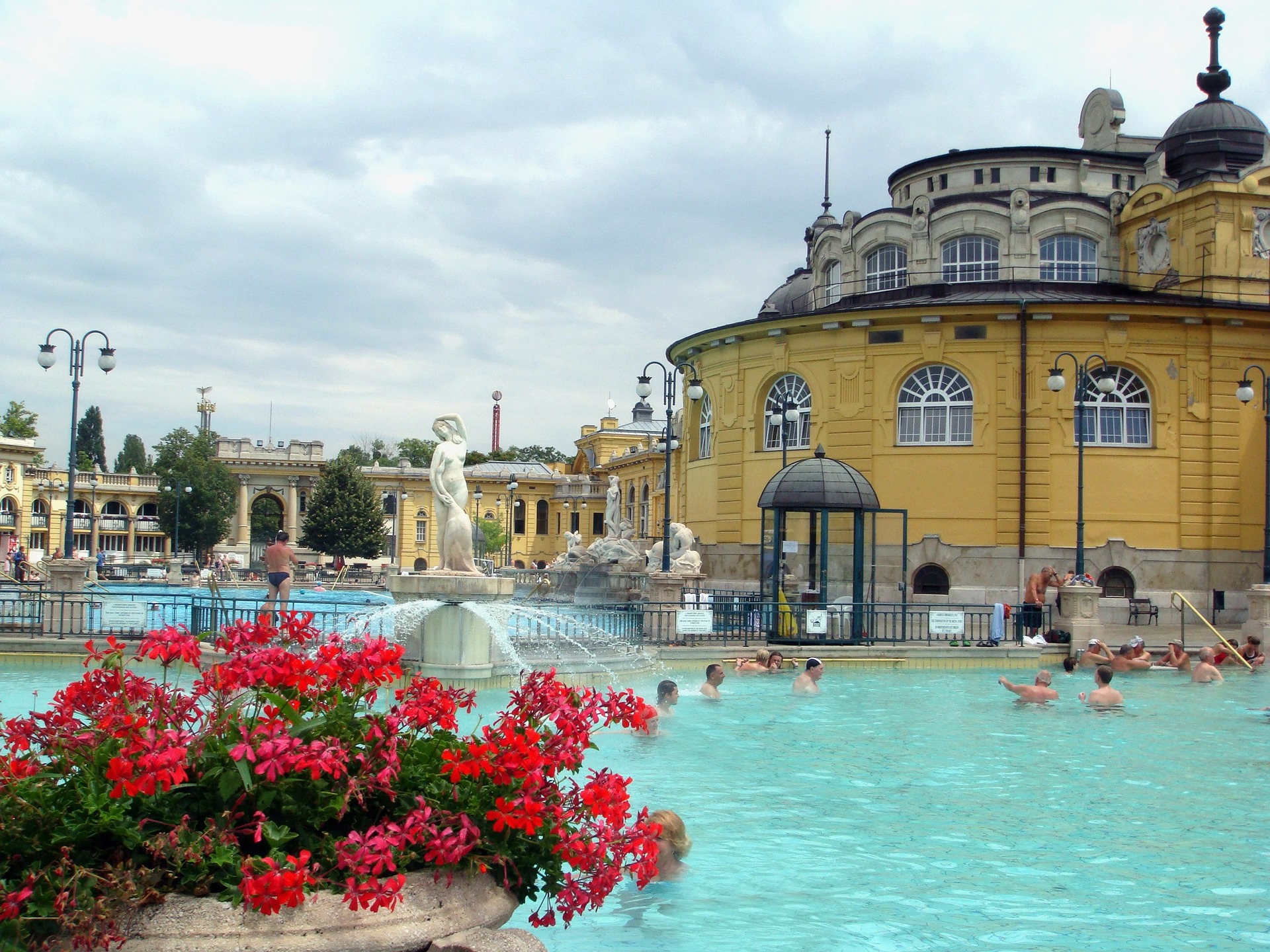
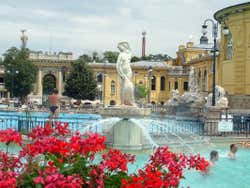
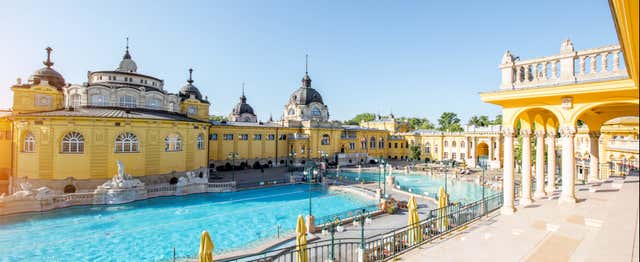
Széchenyi Spa: Full Day Entry Ticket
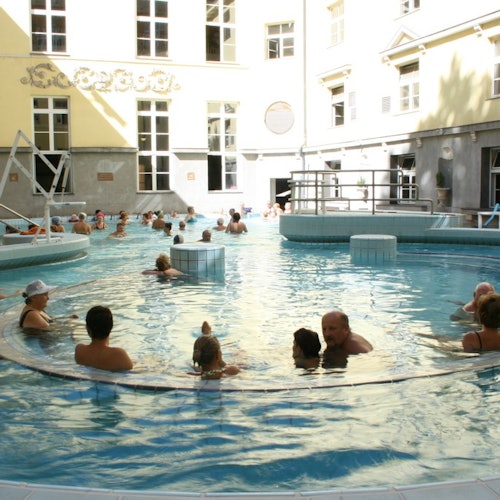
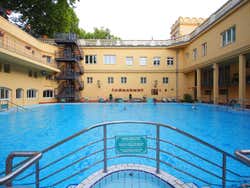
Lukács Spa: Thermal Bath Admission
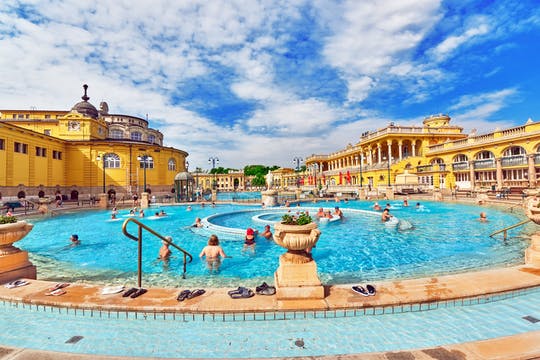
Budapest Széchenyi Thermal Bath entrance ticket

Rudas Spa Entrance and Brunch Experience in Budapest
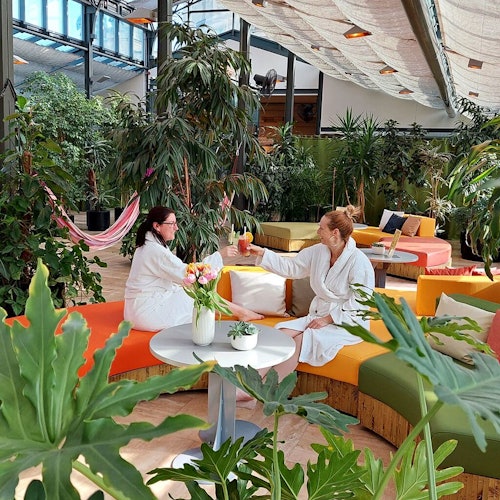
Széchenyi Spa: Entry + Palm House with Snack and Cocktail
Private Budapest city tour and Széchenyi thermal spa skip-the-line ticket

Budapest sightseeing and relax pass with walking tour and audio guides
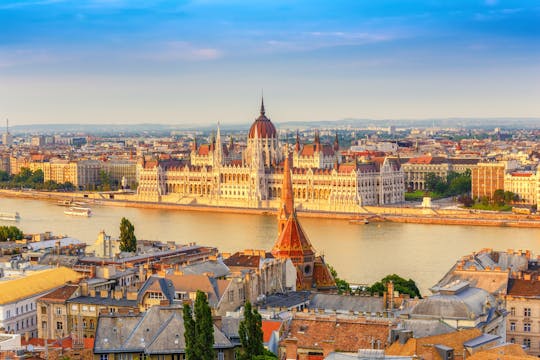
Budapest pass for spa, cruise, hop-on hop-off and walking tours
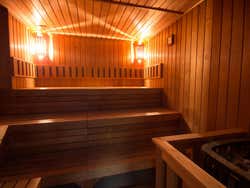
Palatinus Spa Tickets
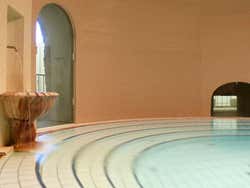
Lukács Spa Tickets
Széchenyi Spa Tickets

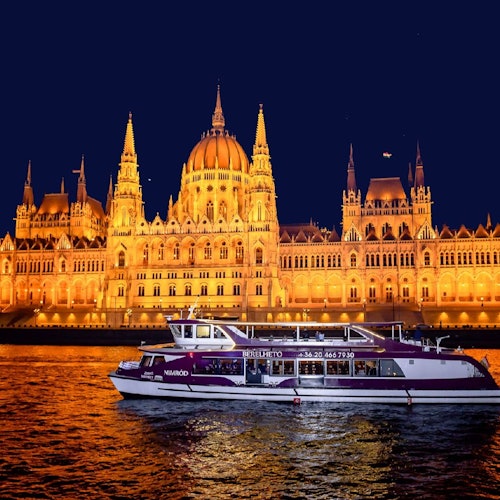
Budapest: Sightseeing Cruise From Pest
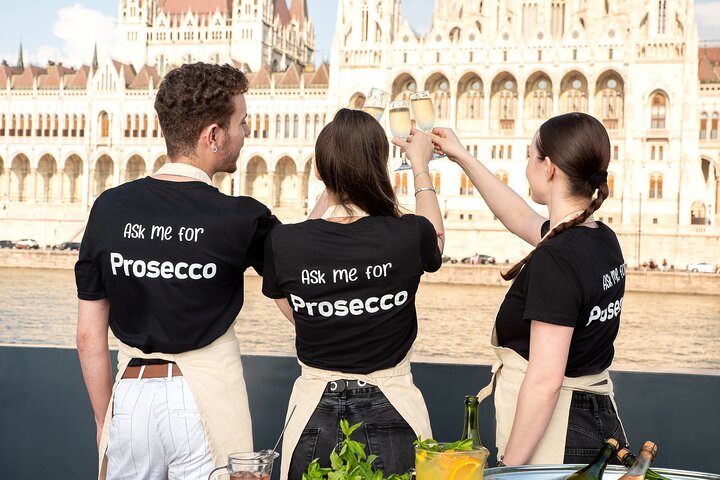

Budapest: Unlimited Prosecco, Beer & Aperol Spritz Cruise
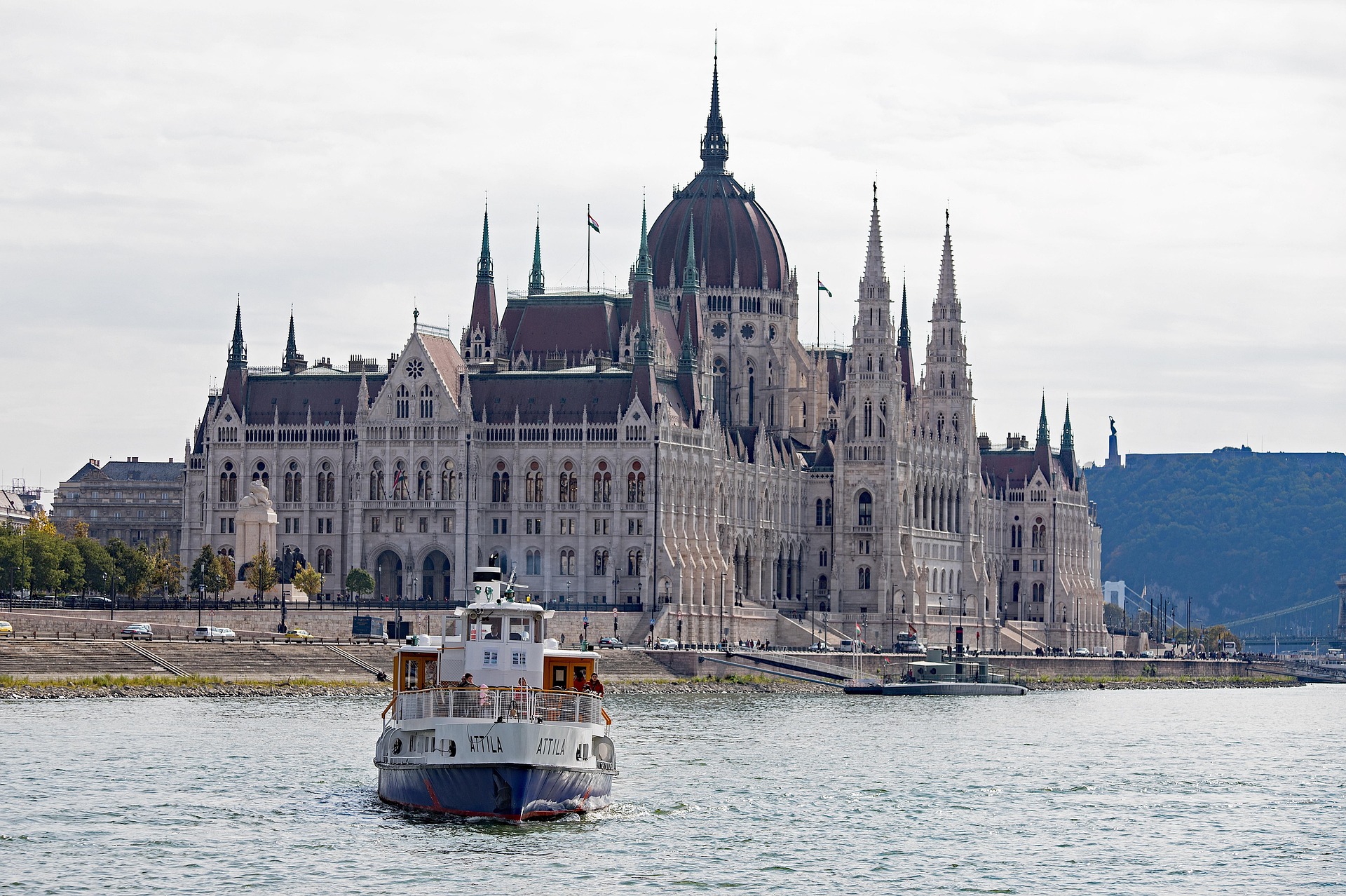
Budapest 70-minute Daytime Sightseeing Cruise Duna Bella
📍 Tour Map and Route Details

The route covers a total distance of approximately 8 kilometers. Estimated time: 4–5 hours (not including stops for indoor visits and breaks).
Suggested Route:
- Heroes’ Square
- Andrássy Avenue
- St. Stephen’s Basilica
- Parliament
- Chain Bridge
- Buda Castle
- Fisherman’s Bastion
- Matthias Church
- Central Market Hall
- Váci Street
🏛️ Attraction Details
1. Heroes’ Square
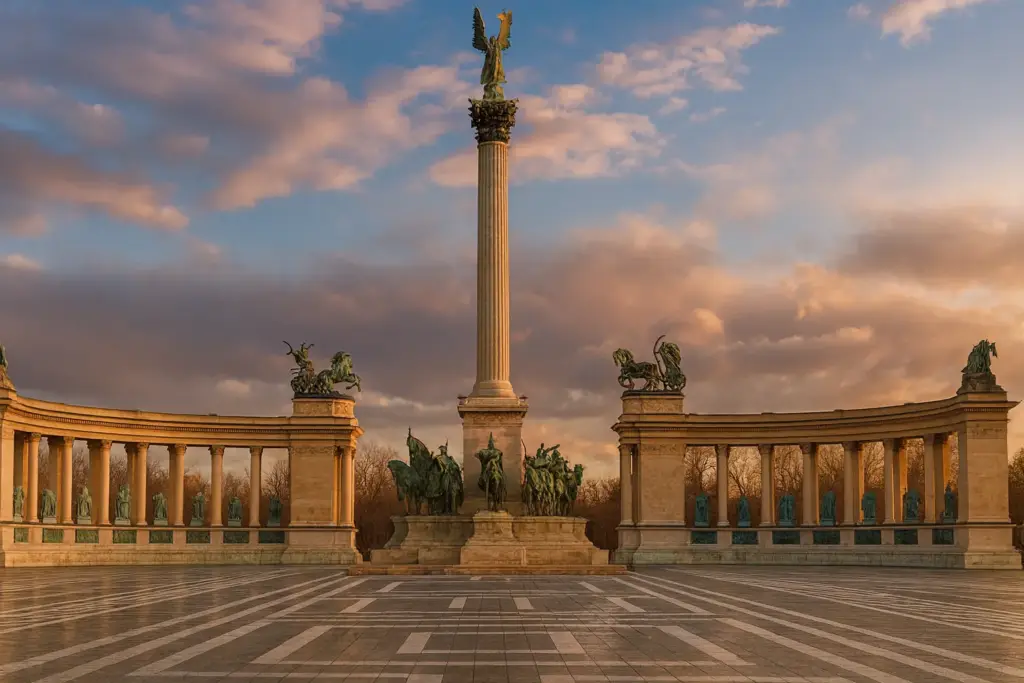
Heroes’ Square, built in 1896 to commemorate Hungary’s millennium, is one of Budapest’s most iconic open spaces. This majestic monumental complex, crowned by the column of the Archangel Gabriel, is flanked by two imposing colonnades that house the statues of the most important leaders in Hungarian history. It is the perfect starting point for our tour, connecting with City Park and historic Andrássy Avenue. For the best photos, we recommend visiting early in the morning, when the light is more favorable and there are fewer tourists.
2. Andrássy Avenue

Andrássy Avenue, declared a UNESCO World Heritage Site, is Budapest’s most important cultural artery. Along its 2.5 kilometers, this elegant boulevard is home to the Hungarian State Opera, numerous 19th-century aristocratic mansions and luxury boutiques. Walking along this street transports you to the golden age of the Hungarian capital, with its historic cafés and eclectic architecture. Underground, you’ll find Metro Line 1, the first in continental Europe, which has preserved its original charm since 1896.
3. St. Stephen’s Basilica

St. Stephen’s Basilica is much more than the most important church in Hungary: it is a 19th-century architectural landmark that combines neoclassical and neo-Renaissance styles. Inside it guards the country’s most revered relic: the mummified right hand of King Stephen, founder of the Hungarian state. The basilica is open from 9:00 to 17:00, and visitors can climb up to its dome, which offers some of the best panoramic views of Budapest. The building, which matches the Parliament in height at 96 meters, symbolizes the balance between spiritual and temporal power in the Hungarian capital.
4. Parliament

The Hungarian Parliament Building, the largest legislative building in Europe, is a masterpiece by architect Imre Steindl that combines Neo-Gothic and Neo-Baroque styles. Its construction, which lasted 17 years (1885–1902), resulted in a palace of monumental proportions with 691 rooms. The building houses the Hungarian crown jewels and offers daily guided tours between 8:00 and 18:00. It is essential to book in advance, especially during the high season.
⚠️ Important: Safe Ticket Purchase for the Parliament
According to the Spanish Ministry of Foreign Affairs, there have been reported cases of ticket scams for the Budapest Parliament. To avoid problems:
✅ Official and safe channel: The only authorized portal to buy tickets online is www.jegymester.hu. Alternatively, you can purchase them directly at the Parliament’s visitor office.
❌ Identified fraudulent sites: There have been reported scams through parlamentobudapest.com and its associated social media accounts, involving fake tickets or abusive prices.
Source: Spanish Ministry of Foreign Affairs
5. Chain Bridge
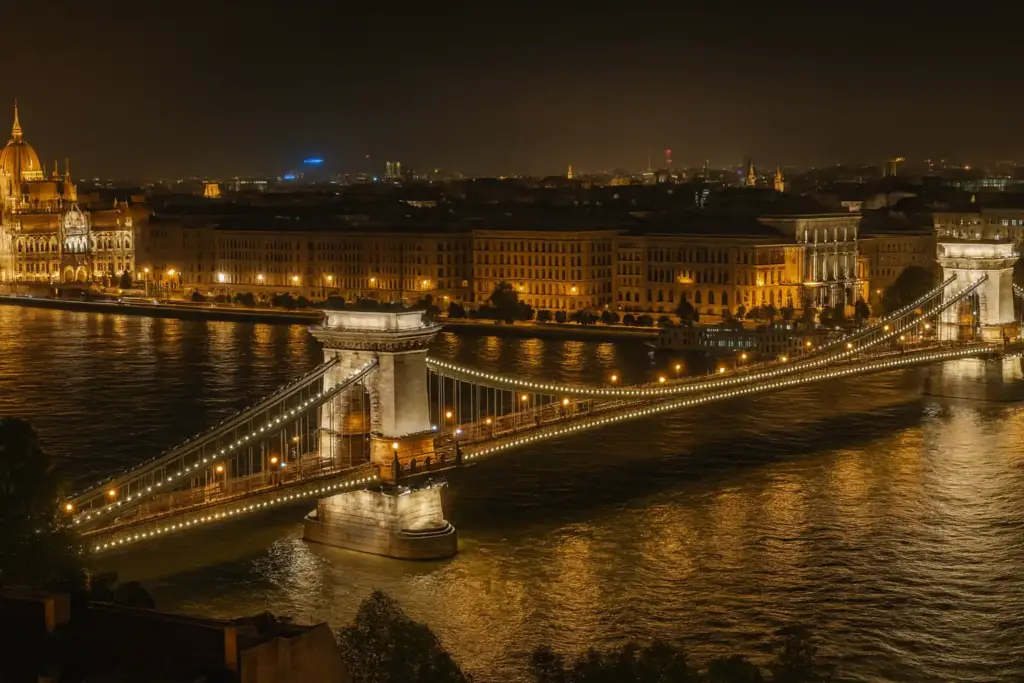
The Chain Bridge, inaugurated in 1849, was the first permanent bridge to connect Buda and Pest. This suspension bridge, guarded by its iconic stone lions, is one of the city’s most recognizable symbols. Designed by William Tierney Clark, the bridge is not only a 19th-century engineering masterpiece but also a privileged vantage point to admire both the Parliament and Buda Castle. At dusk, its lighting makes it one of the most photogenic spots in Budapest.
6. Buda Castle

Buda Castle, the historic residence of the Hungarian kings, crowns the hill of the same name, dominating the cityscape. This palace complex, whose origins date back to the 13th century, currently houses the Hungarian National Gallery and the Budapest History Museum. The current Baroque-style palace was rebuilt after World War II and offers, in addition to its museums, stunning views over the Danube and the Pest side. You can reach it via a pleasant walk uphill or by taking the historic funicular.
7. Fisherman’s Bastion

Fisherman’s Bastion, built between 1895 and 1902, is one of Budapest’s most spectacular viewpoints. This Neo-Romanesque architectural complex, designed by Frigyes Schulek, owes its name to the fishermen’s guild that defended this section of the medieval city walls. Its seven towers represent the seven Magyar tribes that founded Hungary. From its white limestone terraces and stairways, you get the best panoramic views of the Parliament and the Danube. Access to most of the terraces is free, although some upper areas require a ticket.
8. Matthias Church
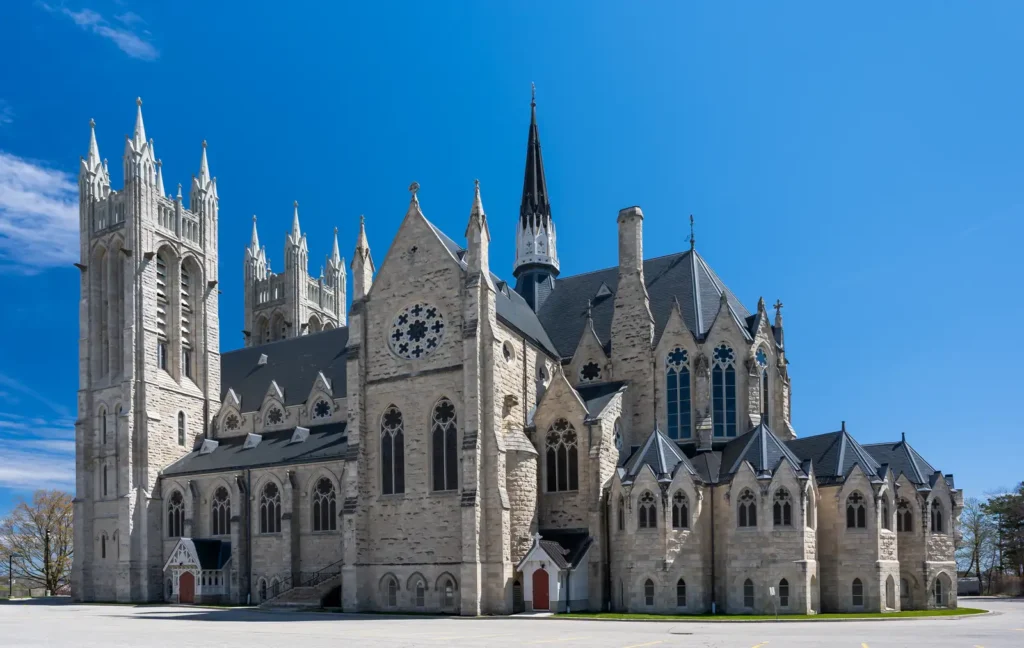
Matthias Church, officially the Church of Our Lady, is one of Budapest’s architectural jewels. With its distinctive ceramic roofs and richly decorated interior, this church has witnessed numerous royal coronations, including that of Charles I of Austria in 1916. The current building combines original Gothic elements with 19th-century renovations, featuring colorful Zsolnay tiles and artistic stained glass windows. The interior impresses with its Neo-Gothic frescoes and mystical atmosphere. It is recommended to visit the church early to avoid crowds and better appreciate the light filtering through its stained glass.
9. Central Market Hall
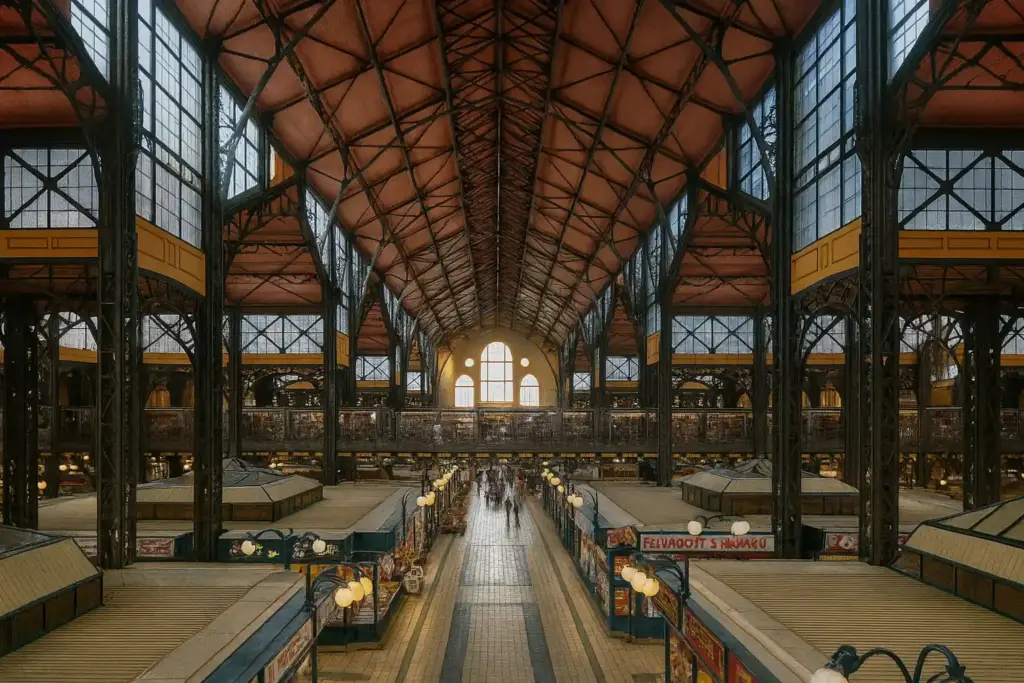
The Central Market Hall, inaugurated in 1897, is the largest and oldest covered market in Budapest. This Neo-Gothic building, designed by Samu Pecz, is both a vital commercial center and a tourist attraction. On the ground floor you will find stalls selling meat, vegetables, fruit and the famous Hungarian paprika, while the first floor is dedicated to traditional crafts and prepared food stalls. It is the perfect place to try local cuisine and buy authentic souvenirs. The market is especially lively in the mornings, when locals do their daily shopping.
10. Váci Street
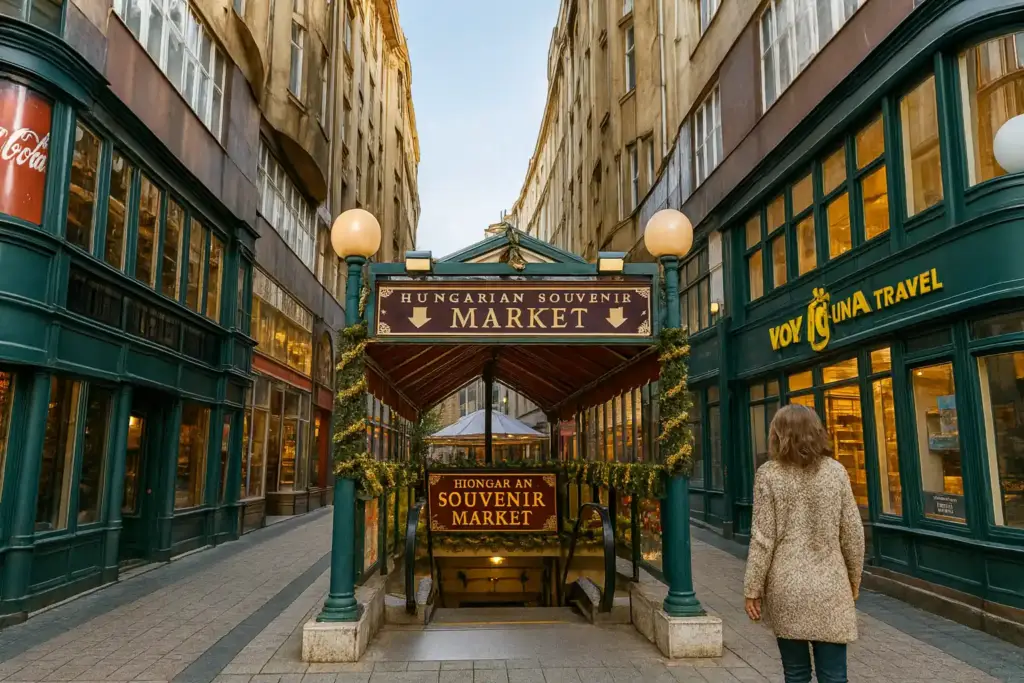
Váci Street is Budapest’s most famous shopping street, stretching from the Central Market Hall to Vörösmarty Square. This pedestrian street combines historic buildings with modern shops, traditional cafés and restaurants. During the 19th century, it was the meeting point of high society, and today it maintains its status as the center of the city’s commercial and social life. Along the street you will find everything from major international brands to Hungarian craft shops. It is especially charming at sunset, when the shop lights and historic lampposts create a unique atmosphere.
Download the map
If you don’t want to wander around like a lost tourist with a paper map in hand, we recommend joining a free tour with GuruWalk, which is the most fun and enriching way to get to know the city.
In any case, if you want to have the map on your device, you can download it completely free and take it anywhere, in both JPG and PDF format.
Best Free Tours in Budapest
Welcome to Budapest, the Pearl of the Danube ! You’ve finally made it, and after that long trip, it’…

Did you know that most of the Jews deported to Auschwitz were Hungarian? Discover wit…

Welcome to Budapest ! Finally, you’re here! If you’d like to discover Pearl of …

THE OFFICIAL AND THE BEST TOUR IN BUDA CASTLE FEEL THE CITY Our tour…

A playful twist on sightseeing! Ready to explore Budapest like never before? ✨ Join me for a

⭐️⭐️⭐️⭐️⭐️ Amazing walk tour in Budapest castle ! Join us on an unforgettable walking to…

Explore Budapest through its alternative cultures on a 2 hour small-group walking tour of the sights and hist…

💡 Practical Tips
If you want to learn everything about this city, check out our expert-written guide on what to see and do in Budapest.
Best time to do the tour
- Spring (March–May) or autumn (September–October)
- Start early (8:00–9:00) to avoid crowds
- Avoid rainy days due to steep areas
What to bring
- Comfortable walking shoes
- Water and snacks
- Camera
- Cash for entrance fees
- Public transport card
Frequently Asked Questions
Frequently Asked Questions about Budapest
What is the best time of year to visit Budapest?
The best time is during spring (March–May) or autumn (September–October), when the weather is pleasant and there are fewer tourists. In December, the Christmas markets make the city especially magical.
How long does it take to complete the walking tour of Budapest?
The basic route takes 4–5 hours, but we recommend dedicating a full day if you plan to visit the interiors of the monuments and make longer stops.
Is it necessary to book tickets in advance?
Yes, especially for the Parliament it is essential to book in advance. Other attractions such as the Basilica or the Castle do not require advance reservations.
Is the tour accessible for people with reduced mobility?
The route includes some steep areas and stairs, especially around the Castle area. There are alternative routes and accessible public transport options for people with reduced mobility.
What kind of public transport is available in Budapest?
Budapest has an extensive network of metro lines, trams and buses. The Budapest Card offers unlimited public transport and free entry to several museums.