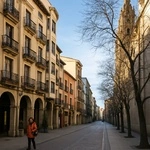
Did you know that exploring Logroño means immersing yourself in the heart of La Rioja, a land of wine, history and tradition? Walking through its streets is like travelling through centuries of culture, from centuries‑old churches to narrow lanes packed with pinchos bars that make this city an unforgettable destination.
And the best way to experience it is with people who truly know the city. Join a free tour of Logroño and discover every corner through the eyes of passionate local guides. Let yourself be surprised by the Rioja magic step by step!
What to see in Logroño in one day
If you only have one day to discover Logroño, you can follow a very complete route through its main attractions. Start your day with a Guruwalk free tour, where local guides will introduce you to the city and give you tips so you can make the most of your stay.
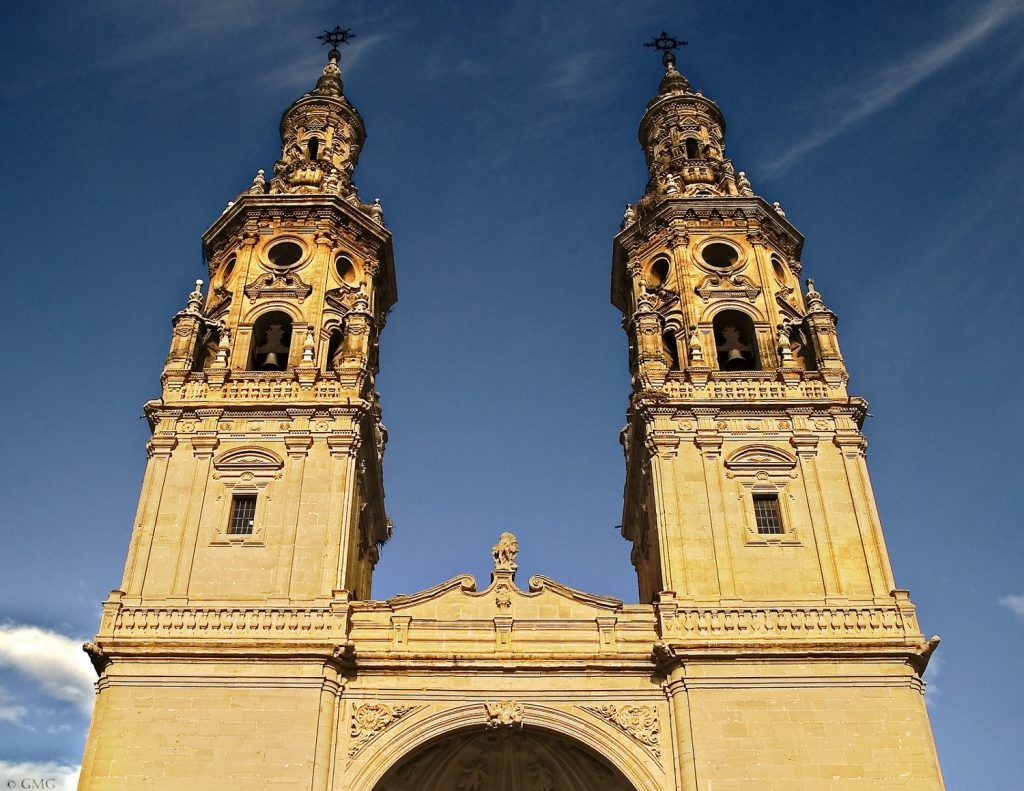
A good starting point after the free tour is a visit to the emblematic Co‑Cathedral of Santa María de la Redonda, with its characteristic twin towers. From there, head to the historic Calle Ruavieja to discover the famous underground wine cellars (calados) and the essence of the Camino de Santiago.
At the end of the morning, explore Plaza Santiago, where you can see the curious Game of the Goose and the church of the same name. Afterwards, walk along Calle Portales, the commercial and social hub of the city, until you reach Paseo del Espolón, where you can admire the monument to Espartero and enjoy its gardens.
In the afternoon, head to the Puente de Piedra and take a pleasant stroll along the Paseo de la Florida, where you’ll enjoy beautiful views of the River Ebro. End your visit at the Museum of La Rioja, located in the Espartero Palace, where you’ll discover the region’s rich history and culture through its exhibitions.
Iconic streets
Going for tapas along Calle Laurel and nearby streets
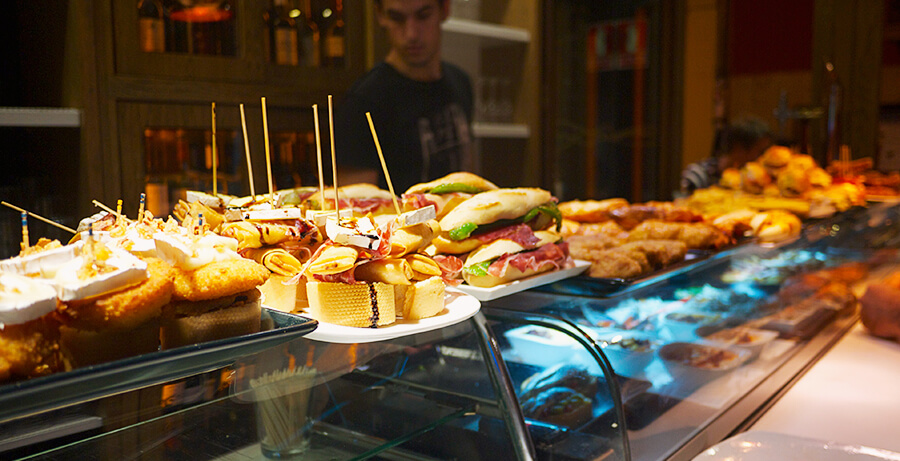
Logroño’s gastronomy is a real feast for the senses, especially on the emblematic Calle Laurel (and neighbouring streets such as San Agustín and Travesía del Laurel), nicknamed “the elephants’ trail” because of the habit of leaving slightly unsteady on your feet after a good round of wine and tapas.
Along some 200–250 m you’ll find more than 80 establishments where you can try everything from classics such as grilled mushrooms with prawns at El Soriano or Bar Ángel, to pinchos morunos (marinated skewers) at Bar Páganos, or the tasty “matrimonio” of anchovies and peppers at Blanco y Negro. You’ll also find spicy patatas bravas (Bar Jubera), Spanish omelette with spicy sauce (Bar Sebas), or embuchados and pork jowl at La Tavina. All of this is, of course, paired with Rioja wines, the true stars of the experience.
🧭 Tips for Calle Laurel (updated 2025)
- 🍄 El Soriano – Mushroom skewer with prawn (**~1,80–2,20 €** per pincho; drinks not included). Usually closed on Tuesdays and Wednesdays. Approximate opening hours (other days): 12:00–15:00 and 19:15–23:00 📅
⏰ Recommendation: If you go around 14:00 or 21:00, you’re more likely to get a spot at the bar. - 🍄 Bar Ángel – Mushrooms similar to El Soriano (**~1,80–2,50 €** per pincho; drinks not included). Open every day 12:00–15:30 and 19:30–23:30.
- 🍟 Bar Sebas – Spanish omelette (spicy option) **~3–4 €**; drinks not included.
- 🍶 Rioja wines – Average price: a small glass of wine + pincho usually comes to around 3–5 €, especially from Thursday to Sunday evenings.
Calle Portales
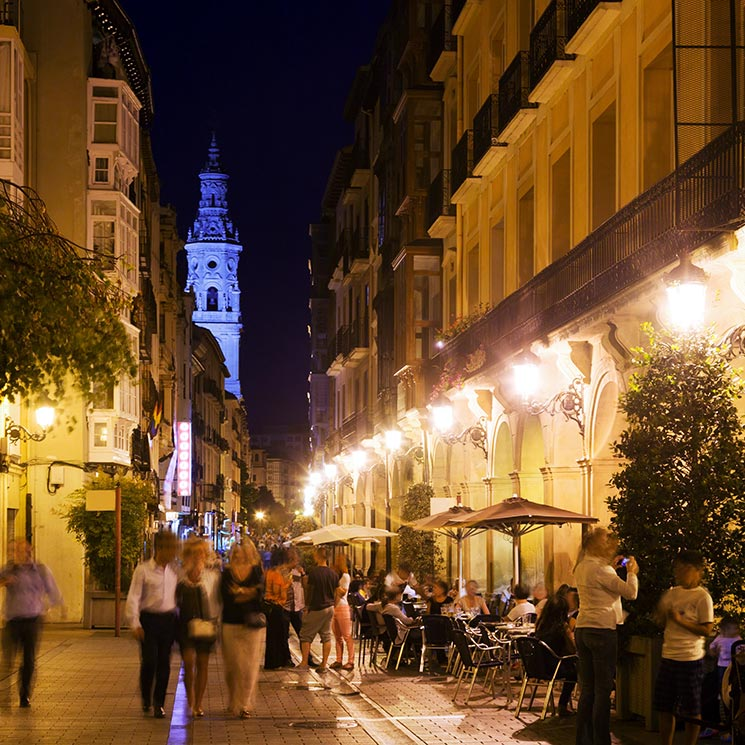
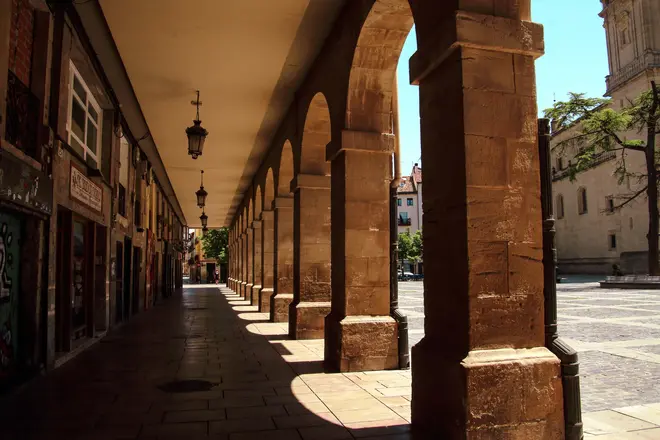
Very close by, Calle Portales displays its elegance beneath arcades that have seen the centuries go by. This street is home to several of the most important buildings to see in Logroño. They all feature arcades, most of which date from the late 19th century. Some of these buildings also date back to the 18th century or even earlier. All of them, however, have rectangular or cylindrical pillars and follow a very irregular line. It’s hard to discern a clear pattern in them.
This street has had many names for the people of Logroño, such as “de la Constitución”, “del Mercado”, “del General Mola”, “de la República”, “de la Herventia” or “de las Tiendas”. In the end, its current name was chosen after a decision by the City Council in 1979. Calle Portales has witnessed numerous celebrations, such as the San Bernabé festivities or the well‑known product and livestock fairs. Today it’s also home to many of the city’s best restaurants.
The fame of Calle Portales is due to many reasons. Besides its history, which we’ve just told you about, it has also been home to some of the most important establishments in Logroño.
🧭 Tips for Calle Portales (updated 2025)
- 🍽️ Restaurante Al Toque (Portales 24) – Signature cuisine: 3‑course menu for ≈ 34 € (Saturday night). Kitchen open: 13:30–16:00 and 20:30–23:00 📅
🥘 Restobar Palmeral (Portales 71) – Ideal for snacks or light dinners; opening hours vary, check their website. - ⏱️ Co‑Cathedral opening hours (Portales 14) – Daily visits; mass and culture have coexisted here since the 16th century, with access from Portales; there may be religious services or concerts.
Calle Ruavieja
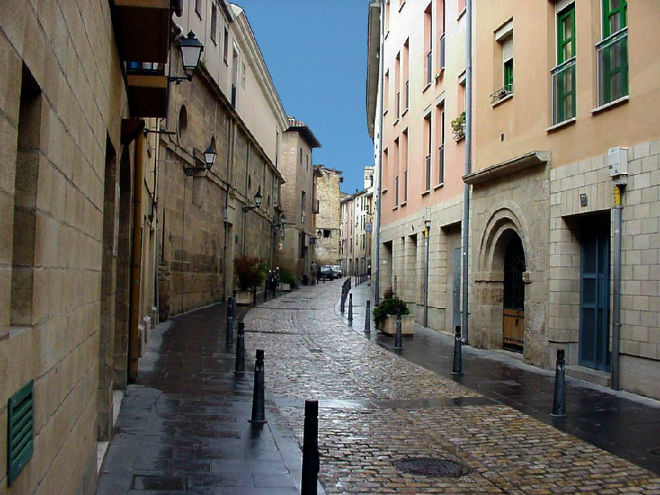
Many of the city’s wineries are located beneath residential buildings. Logroño is full of underground wine cellars, but some of the oldest and most important are found along the pretty cobbled Calle Ruavieja. One of the most outstanding is the Calado de San Gregorio, which, as we’ve mentioned, dates back to the 17th century and features a barrel‑vaulted ceiling and a length of around 30 metres.
🧭 Tips for Calle Ruavieja (updated 2025)
🍷 Calado de San Gregorio
- 17th‑century underground cellar, 30 m of barrel vault, part of the “El Camino del Vino” exhibition alongside Espacio Lagares.
- Free guided tours (max. 15 people): July–September with reservation.
- Opening hours: Ermita de San Gregorio opens by the Brotherhood on the first Saturday of each month, approx. 10:00–12:30; check the municipal events calendar before you go.
📍 Hermitage/Chapel of San Gregorio (Calle Ruavieja, 55)
- Baroque chapel from the 17th century with a restored painting.
- Free visits guided by the Brotherhood; no reservation required on the first Saturday of the month, approx. 10:00–12:30.
Co‑Cathedral of Santa María de la Redonda
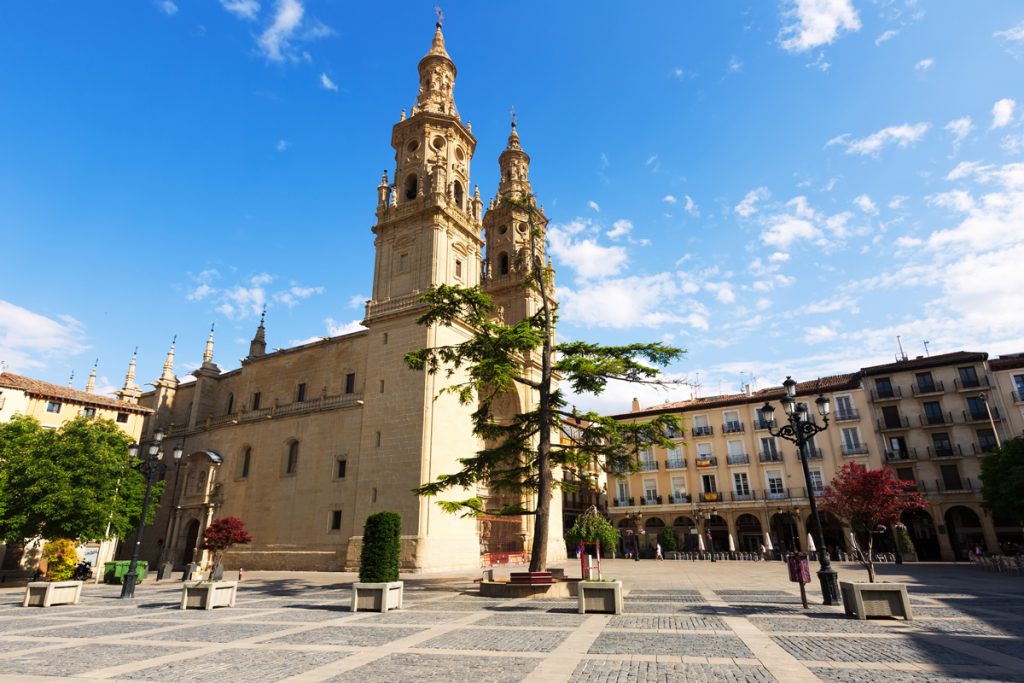
The Co‑Cathedral of Santa María de la Redonda was built in the 16th century. It is one of the most emblematic buildings in Logroño, so you really shouldn’t leave without seeing it. Many visitors to the city wonder about the origin of its name. The truth is that although the current church is not round in shape, the earlier Romanesque church that once stood here did have a circular plan.
The spot where it stands is a privileged location, as it is very close to the River Ebro. According to local tradition, its foundations were reinforced with vine cuttings or other plant material due to the damp soil; in any case, the church has required some unique structural solutions given its proximity to the river.
It features so‑called “twin towers”, though in reality they are different. While both clearly represent classic Riojan architecture and rise as icons of this style, one is slightly taller than the other. The architects who designed the towers used as their model the tower of another church that you can also visit near Logroño: the Church of Santo Tomás in Haro.
ℹ️ Information (updated 2025)
🏛️ Official opening hours
- Worship area (every day): 08:30–13:00 and 17:00–21:00
- Tourist visits: 10:00–13:00 and 17:00–20:00 (except Sunday and holiday mornings)
💶 Admission: Free whenever open to the public
Paseo del Espolón – Espartero Monument
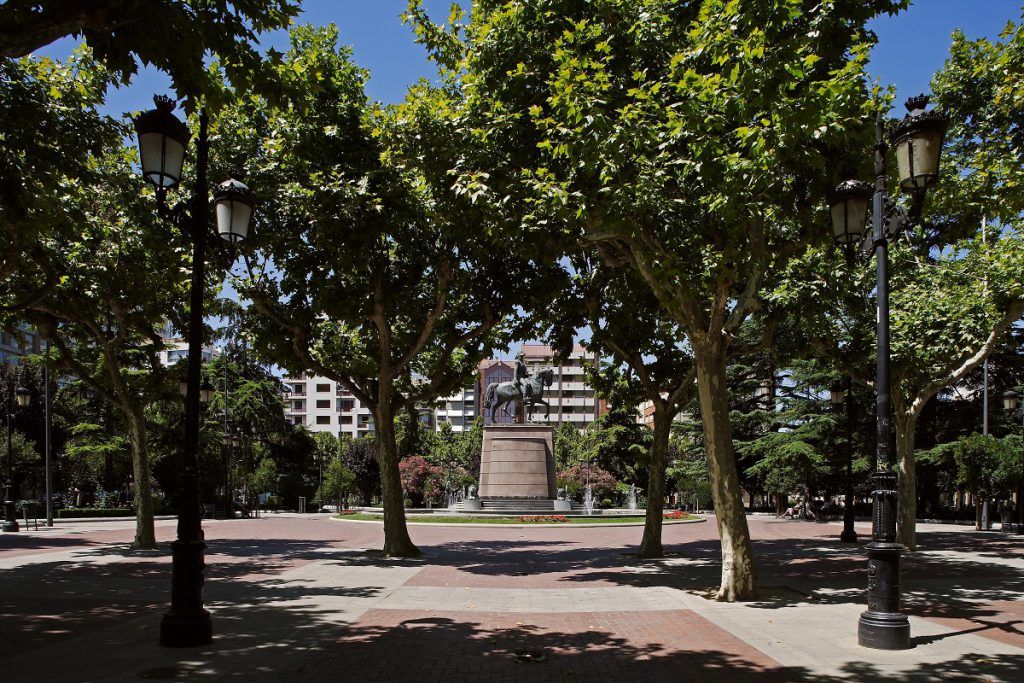
Paseo del Espolón is another of Logroño’s must‑see spots. It dates back to the early 19th century. At that time it was the main public square located outside the city walls. There are many reasons for its importance. To begin with, this is where you’ll find La Concha del Espolón, a very symbolic place in Logroño mainly because of the San Mateo festivities.
During the month of September (usually the week of the 21st), during the San Mateo festivities, the first offering of the new must (freshly pressed grape juice) is made to the Virgin, patron saint of Logroño, in this very spot. However, you don’t need to wait until September for this place to matter. If you’re not sure what to do in Logroño, you’ll probably find something happening here whatever the time of year, as it’s the most common venue for concerts and has a wonderful atmosphere.
Paseo del Espolón is also one of the greenest areas in the Riojan capital, as it’s home to the park of the same name. Like the rest of the promenade, it has a fantastic atmosphere, especially on sunny days when groups of friends, couples or families gather here.
Espartero Monument
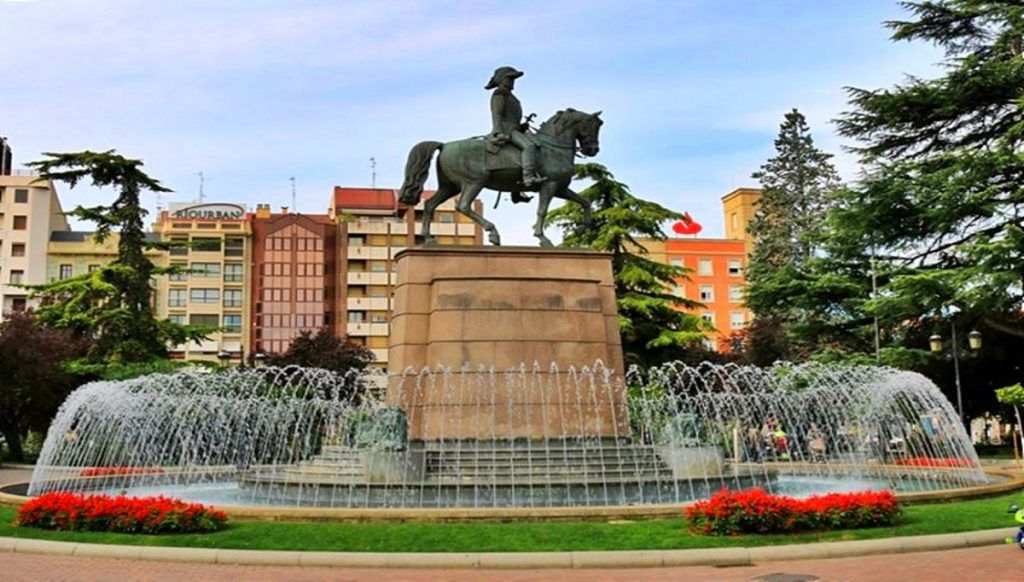
Finally, we cannot talk about Paseo del Espolón without mentioning the statue of Baldomero Espartero. This is an equestrian statue. Baldomero Espartero was a general who married a much‑loved woman from Logroño called Jacinta Martínez de Sicilia. They were deeply involved in the city’s political life and were generally very popular with its inhabitants.
Once they retired from politics, they went to live in what is now the Museum of La Rioja, which we’ll talk about later, located in Plaza San Agustín. The spot where the statue stands is officially called Paseo del Príncipe de Vergara. Besides being a highly emblematic square, it was the centre of Logroño for many years.
Espartero died at the age of 85 in 1879. A frequent curiosity: people sometimes say that the position of the horse’s legs indicates how the person died (two raised = in battle, one raised = from wounds, etc.). This is a myth with no general validity and it is not applied universally.
Puente de Piedra in Logroño
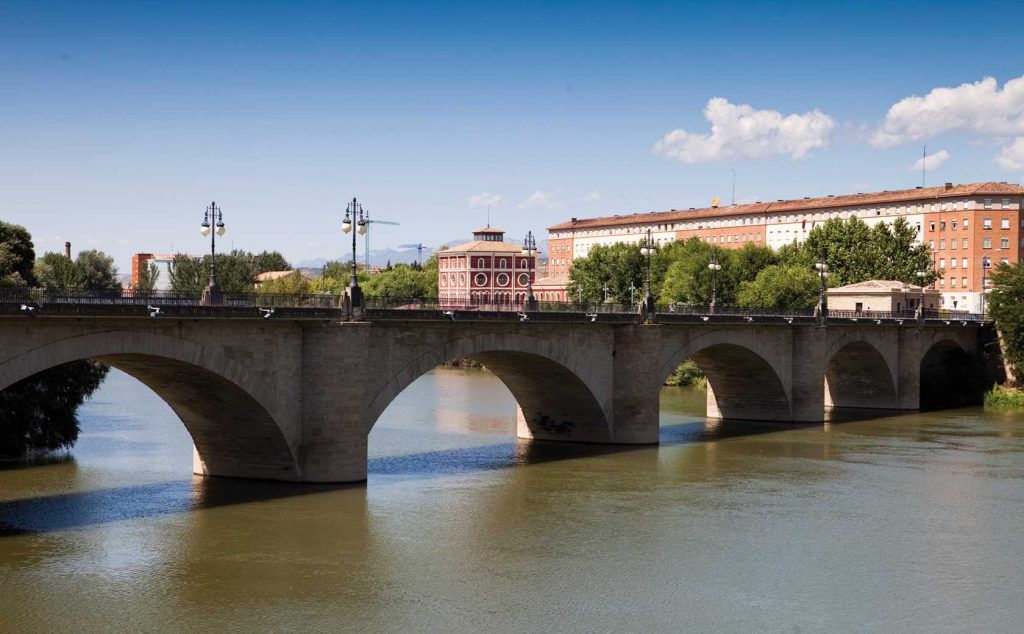
One of the city’s most important symbols is the Puente de Piedra (Stone Bridge), so when you visit Logroño you really must come and enjoy the characteristic view of the bridge, the River Ebro and the towers of its churches. The structure we see today was built in 1884 by Fermín Manso de Zúñiga.
Another reason why this bridge symbolises Logroño is that it appears on the city’s coat of arms. It’s also the gateway into the city for pilgrims walking the Camino de Santiago.
Paseo de la Florida
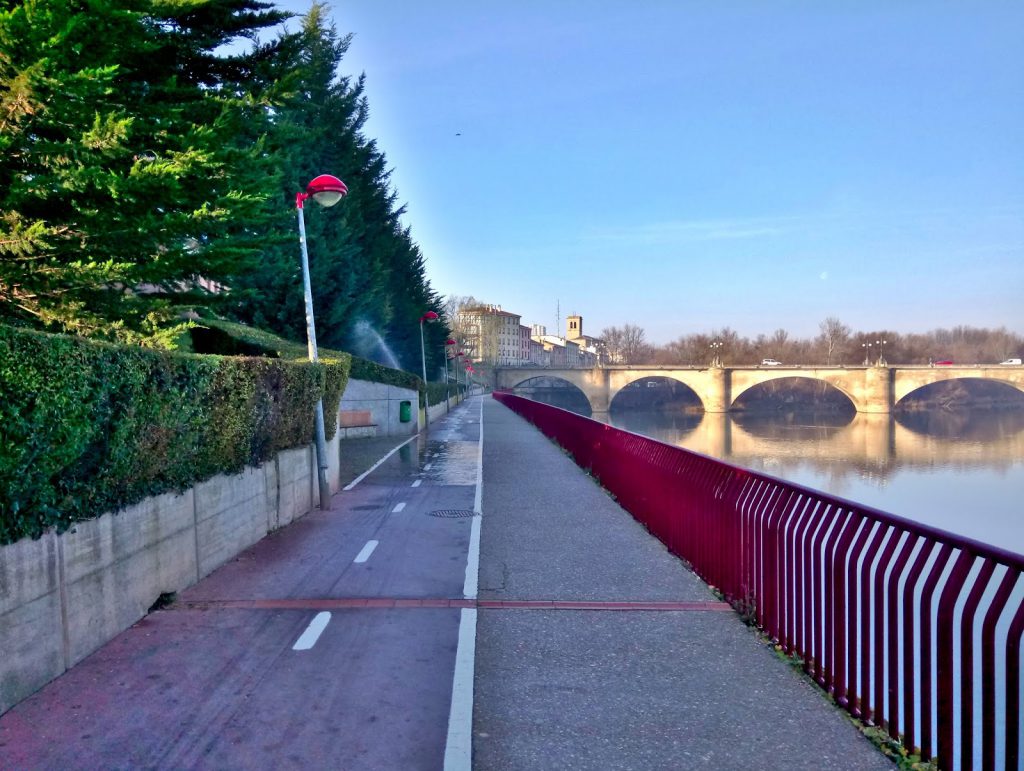
Paseo de la Florida is of great historical value, but also of great aesthetic value, as it runs along the bank of the River Ebro. This cobbled path was built in the 1990s, as part of the redevelopment of the river’s southern bank. It was during this redevelopment that all the roads around Puente de Piedra were improved and the Ebro Park was created – another highly recommended spot in the city.
If you walk to the end of the promenade, you’ll find, after turning right, the symbolic gate to the park. The gardened area before the park and the park itself used to be virtually untouched land. Since the redevelopment and the creation of the promenade, however, this area has become very popular, especially at weekends. In Logroño, Paseo de la Florida is known as a fantastic place to enjoy the natural setting of the Ebro, go fishing and take in impressive views of Puente de Piedra.
Puente de Hierro in Logroño
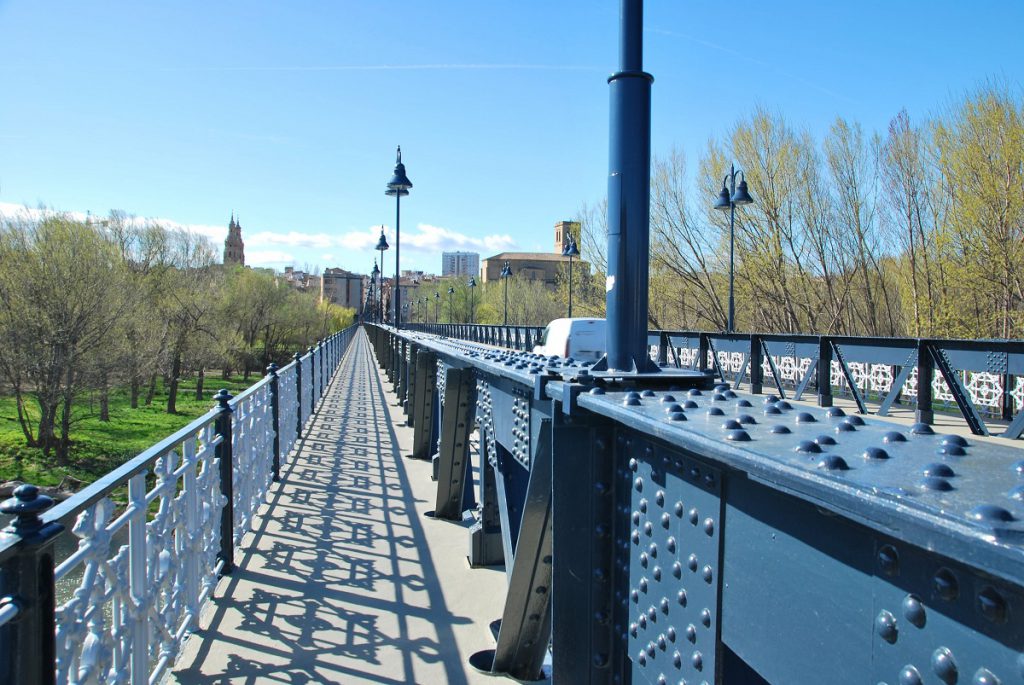
The Puente de Hierro (Iron Bridge) is one of five bridges in the city of Logroño and, of these, it is both the longest and the oldest. It has crossed the River Ebro since 1881–1882 (project approved in 1881 and inaugurated on 18 December 1882), and is also known as the Puente de Sagasta. It was opened to the public the year after its approval and, since the 19th century, served for many years as the connection to the railway and the main entrance to Logroño.
The company that built it was Maquinista Terrestre y Marítima. It was a project that the then Prime Minister, Mateo Sagasta, strongly supported after the collapse of the military flying bridge on 1 September 1880. Before its construction, the Puente de Piedra was the only bridge crossing the River Ebro.
A budget of 547 479 pesetas was allocated to the construction of the bridge. At the time, it was one of the most advanced examples of civil engineering. Its total length is 330 metres.
Plaza Santiago – Plaza de la Oca
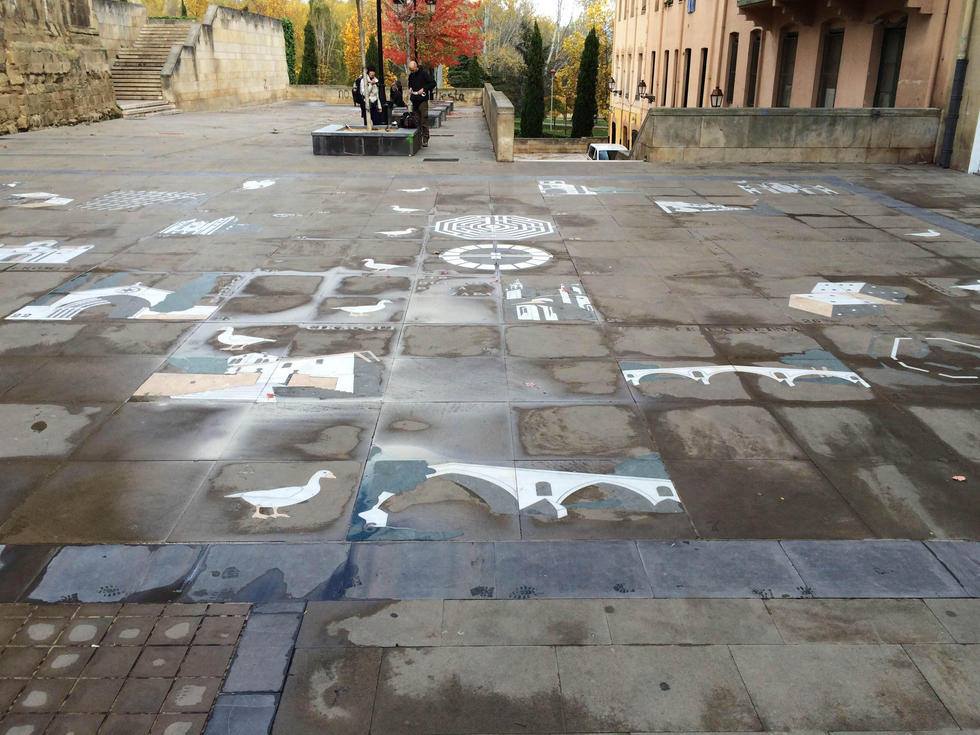
Plaza Santiago is a place you can’t miss, as it will make you feel like you’re travelling back in time. Here you’ll find all kinds of symbols related to the Camino de Santiago. If you don’t know what to see in Logroño, this is one of the spots of greatest cultural and historical value in the city. The square is located next to the Church of Santiago el Real, which you should definitely visit as well to discover more examples of religious architecture from La Rioja.
The square is full of curious details that may surprise you. One of them is that underground wine cellars (calados) are hidden beneath the houses. If you’re not from Logroño, you may not be familiar with the term “calado”, but it’s a fascinating concept: these are wine cellars built under the homes. We’ll talk more about them in the next section. One of the oldest and largest is the famous Calado de San Gregorio, which dates back to the 16th century.
A second interesting fact is that a Game of the Goose is drawn on the ground in Plaza Santiago, but with references to the different stages of the Camino de Santiago and the various towns along the way. That’s why the square is also known as Plaza de la Oca (Goose Square). Another important curiosity is that the passage of carriages along Calle Rúa Vieja was banned by the city council in 1583. The reason? To avoid damaging the wines stored in the calados, those wonderful underground cellars.
Teatro Bretón de los Herreros
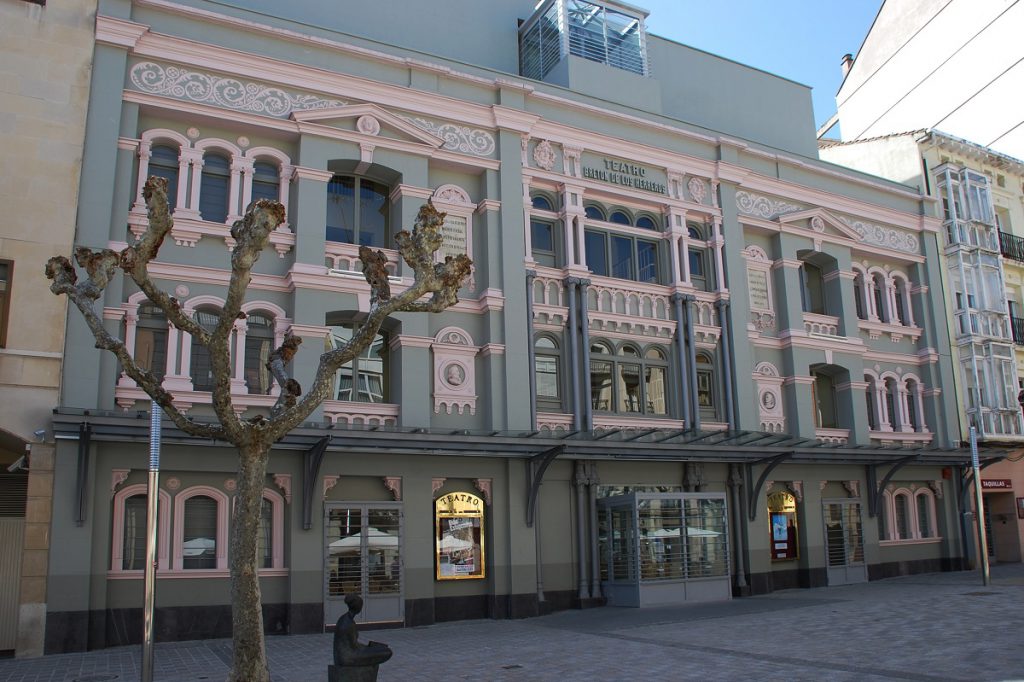
Teatro Bretón de los Herreros has a long and fascinating story to tell. Even if you don’t attend a play, it’s a place you should visit to better understand the charming character of Logroño. Since 1990, what’s popularly known as Teatro Bretón has had two halls: the Columnas Hall and another that shares its popular name: “Sala Bretón”. Today it is municipally owned and used for theatrical performances.
The theatre has been a Site of Cultural Interest since 1983. One of the most important moments in its history occurred in the early hours of 24 to 25 January 1979, when the theatre suffered the worst fire in its history. Unfortunately, it was not rebuilt until 1986. Finally, it was officially reopened in May 1990 by Queen Sofía, at which point it became municipal property. In the years that followed, the theatre didn’t undergo major changes. Only between 2008 and 2010 was a final refurbishment carried out.
ℹ️ Information (updated 2025)
🎟️ Box office hours and tickets
- From Monday to Saturday, open from 11:00 to 14:00 and also 2 hours before the start of performances.
- Sundays and public holidays from 12:00 to 14:00, plus the same advance opening when there’s a show.
💶 Estimated prices
- Tickets between 8 € and 25 €, with discounts for students, over‑65s, unemployed people and school groups.
- Films in original version with subtitles (VOSE): 4–6 €; passes and cultural packages available.
Museum of La Rioja
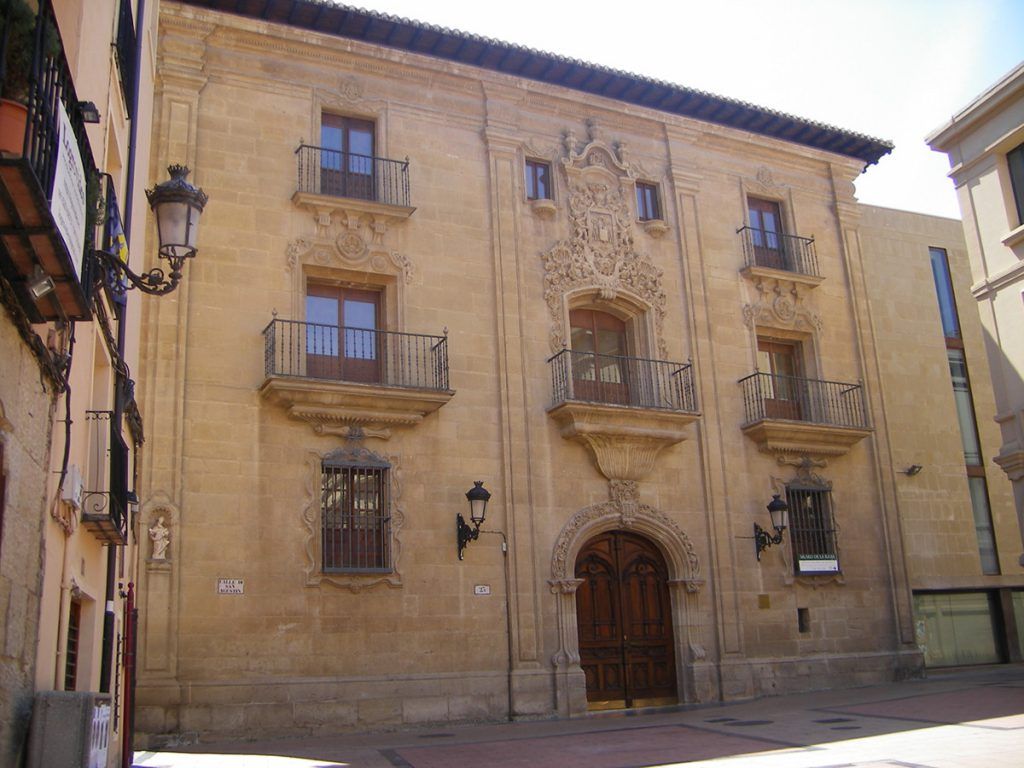
The Museum of La Rioja was built throughout the 18th century. Today it is a place where you can enjoy both permanent and temporary exhibitions. During your visit, you’ll discover the full weight of the passage of time in the city of Logroño and in all of La Rioja, as well as the history that its streets and stories seek to convey to visitors. This museum will help you dive into the very heart of Riojan culture – and you’re bound to love it!
ℹ️ Information (updated 2025)
🕰️ Opening hours and closing days
- Tuesday to Saturday: 10:00–20:30
- Sundays and holidays: 10:00–14:00
- Closed: Mondays; 1 and 6 January; 1 May; 20 September (San Mateo); 24–25 and 31 December.
💶 Admission
- Free for all visitors, under the Heritage Law of La Rioja.
📚 Permanent collections
- A journey from prehistory (hand axes, the Venus of Herramélluri) to medieval, Renaissance and Baroque art, and rural ethnography.
- Highlights include: the San Millán panels, altarpieces, Gothic sculptures, and Riojan painting from the 19th–20th centuries.
Day trips from Logroño
Wine tourism
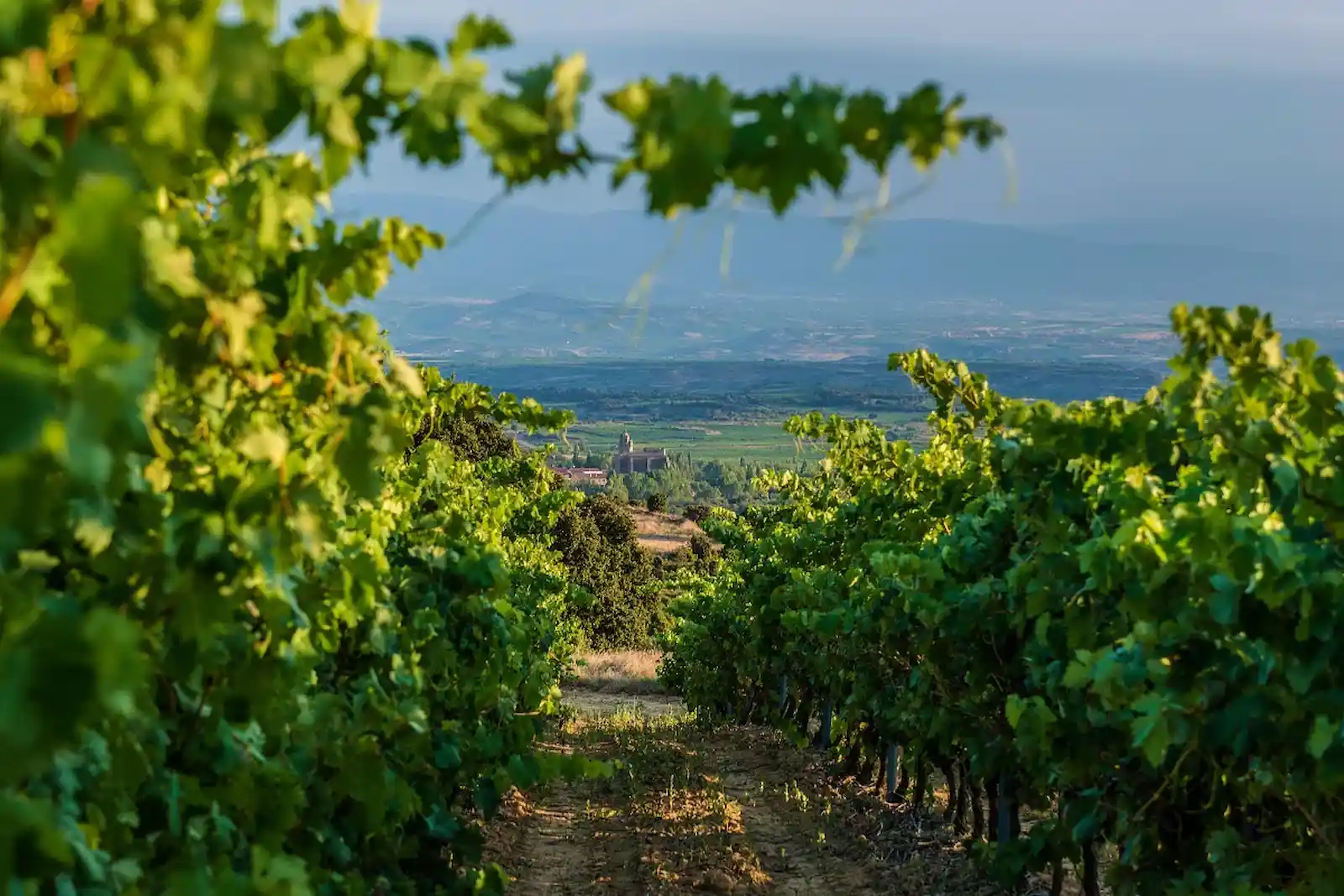
The surroundings of Logroño offer an unbeatable setting for wine tourism, with standout names such as Bodegas Vivanco, located in Briones, which combines winemaking tradition with an impressive museum devoted to wine culture. The site includes permanent and temporary exhibition rooms, a garden with more than 220 grape varieties, and a guided tour with tastings of two wines to explore 8,000 years of viticulture history.
Near Logroño, Bodegas Viña Ijalba is another key stop: just a few minutes away by car, it offers visits and tastings that include a walk through its “natural museum” of native grape varieties and an aperitif among the vines – ideal for understanding organic vineyards in La Rioja.
ℹ️ Information (updated 2025)
🍷 Bodegas Vivanco (Briones)
⏱️ Recommended schedule and packages
- “Visit + Museum + Tasting” package from 29 €, including guided tour of the winery + museum + tasting of 2 wines. Recommended total duration: ≈ 2 hours.
- There are also unguided options or museum‑only tickets (check their website for current prices and availability).
- Cancellation policy: check current conditions on the official website when booking.
🌿 Highlight experience
- Museum of Wine Culture: 5 rooms of permanent exhibitions + temporary shows, a garden with more than 220 grape varieties, and audio guides available in several languages.
Full‑day excursions
For those looking for a more complete experience, there is the option of taking full‑day tours in Rioja, either in small groups or privately, which include bus routes with stops at three emblematic wineries in the region. These tours combine winery visits with guided tastings, traditional meals and explanations about wine production and ageing, plus the bonus of visiting underground cellars in places such as Laguardia.
These day trips can also be combined with other complementary activities: visiting Vivanco’s Museum of Wine Culture, taking part in specialised tastings or themed workshops organised by its foundation, or travelling along the Rioja Alta Wine Route, which offers hiking routes, horse‑riding and gastronomic experiences in 17th‑century wineries in towns such as Briones, Cenicero, Nájera or Navarrete.
What to eat in Logroño
Signature dishes
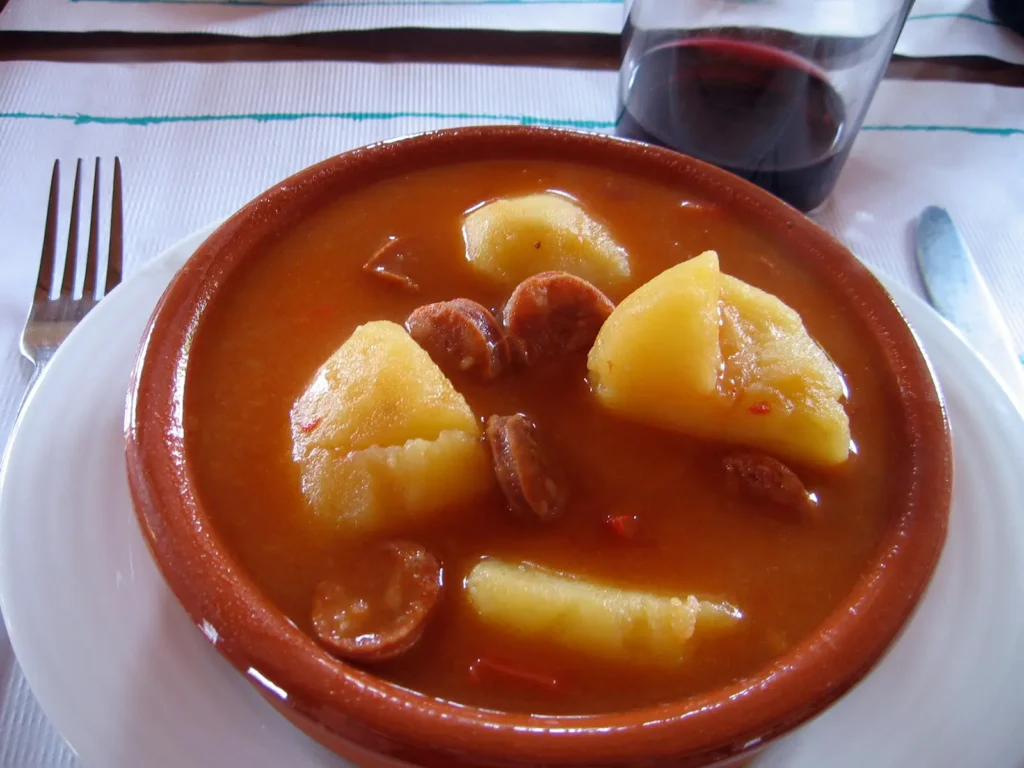
The gastronomy of Logroño is deeply rooted in Riojan cuisine, known for its comforting stews and simple yet flavourful dishes. Among the most iconic are patatas a la riojana, made with potatoes, chorizo and peppers, whose thick texture and intense flavour have made them a local symbol.
Another classic is bacalao a la riojana (Rioja‑style cod), prepared with desalted cod, peppers, tomato and garlic, offering a delicious mix of sea flavours and local ingredients. For meat lovers, chuletillas de cordero al sarmiento —lamb cutlets grilled over vine‑shoot embers— provide an authentic flavour that’s very characteristic of the region.
Winter stews and pulses
When the cold sets in, hearty spoon dishes such as caparrones riojanos and pochas with quail become true culinary treasures. Caparrones are red beans stewed with pork cuts (chorizo, ear, ribs, etc.), very nutritious and comforting. Pochas, fresh white beans cooked with quail, have a soft, almost buttery texture that delights anyone seeking a traditional gastronomic experience. Both dishes reflect the local focus on seasonal products and proximity farming in La Rioja.
Tapas and pinchos in the streets
Logroño is famous for its tapas culture, especially along the iconic Calle Laurel, where more than 80 bars each offer their own speciality, from garlic mushrooms to embuchado or “matrimonios” (anchovy and boquerón on the same skewer).
No less important is Calle San Juan, an alternative area with a more relaxed atmosphere and slightly lower prices, where you’ll find pinchos such as calamari rolls, secreto ibérico (pork), or a wide range of toast toppings. These routes offer travellers the perfect opportunity to pair small local delicacies with a good Rioja wine in a vibrant, social setting.
Best free tours in Logroño
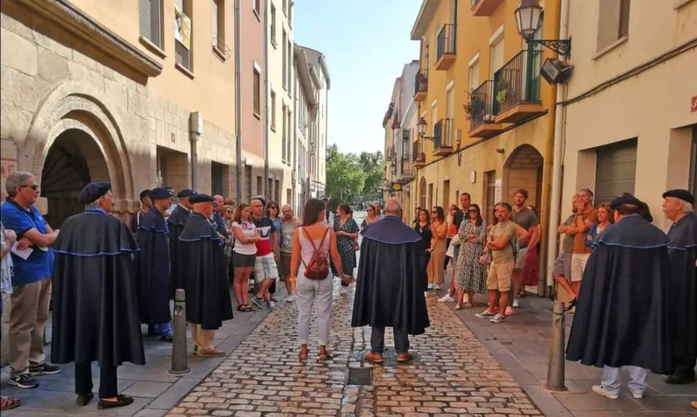
I invite you to share an unforgettable tour of Logroño, its most iconic places, historical details, the best of its…

On our tour, we'll take a journey back in time through Logroño's old town to relive the most significant episodes…

Hello travelers! I am María, guru from Logroño and I want to welcome you to this incredible city, which is…

For centuries, the figure of the witch has haunted our nightmares, our stories, and our bonfires. But who were these…
Frequently asked questions about Logroño
What can you see in Logroño for free?
Among the free places you can visit are the Co‑Cathedral of Santa María de la Redonda, Paseo del Espolón, Calle Portales, Puente de Piedra, the Muralla del Revellín and the Museum of La Rioja, which offers free admission.
What can you do in Logroño as a couple?
Logroño offers romantic plans such as strolls through the old town, tapas dinners on Calle Laurel, winery visits, walks along the River Ebro or getaways to nearby villages. You can also relax in a hotel with a spa or attend cultural events.
Which villages are worth visiting near Logroño?
Highlights include Laguardia, Elciego, Briones, Nájera, Haro and Santo Domingo de la Calzada. These charming villages feature wine‑making traditions and unique landscapes, perfect for day trips.
Which places should you visit in Logroño?
Don’t miss the Co‑Cathedral, the Museum of La Rioja, Calle Laurel, Paseo del Espolón, the Muralla del Revellín, the Church of San Bartolomé and Puente de Piedra.
What typical products can you buy in Logroño?
Local products include Rioja wines, cured meats such as Riojan chorizo, fardelejos (almond pastries), piquillo peppers, asparagus, Cameros cheeses and plums from Nalda or Quel.
How safe is Logroño?
Logroño is one of the safest cities in Spain, with a low crime rate and a peaceful atmosphere both day and night.
What can I see in Logroño in one day?
In one day you can visit Calle Portales, the Co‑Cathedral, the Museum of La Rioja, Paseo del Espolón, Puente de Piedra and enjoy some pinchos on Calle Laurel.
What can you do on a Saturday in Logroño?
You can start with a visit to the food market, wander around the historic centre, enjoy a tasting at a winery, have dinner on Calle Laurel and end the night with a drink in one of its bars.
What is typical to eat in Logroño?
Typical dishes include patatas a la riojana, bacalao a la riojana, chuletillas al sarmiento, vegetable stew (menestra), huevos a la riojana and desserts such as fardelejos.
What does the word Logroño mean?
Its origin is uncertain, although it is believed to derive from the Celtic term “gronio”, meaning ford or crossing, referring to its location by the River Ebro.
Which famous people are from Logroño?
Among those born in Logroño are the comedian Pepe Viyuela, guitarist Pablo Sáinz‑Villegas, screenwriter Rafael Azcona and cyclist Carlos Coloma.
What is the most famous street in Logroño called?
The most famous street is Calle Laurel, known for its lively atmosphere and tapas bars. It’s one of the city’s main tourist attractions.
What to eat in Logroño?
In addition to the classic Riojan dishes, the tapas and pinchos scene on streets such as Laurel and San Juan is a highlight. It is also very common to pair food with local wines.
When is the best time to visit Logroño?
Spring and autumn are ideal thanks to the mild weather and the grape harvest. In September, San Mateo, the wine harvest festival, is celebrated – one of the liveliest times of the year.
* The information on prices, opening hours and access conditions is current as of December 2025 according to official sources. These details may change at any time due to public holidays, construction works or regulatory changes. Always check the official websites or contact details of each place before your visit.