


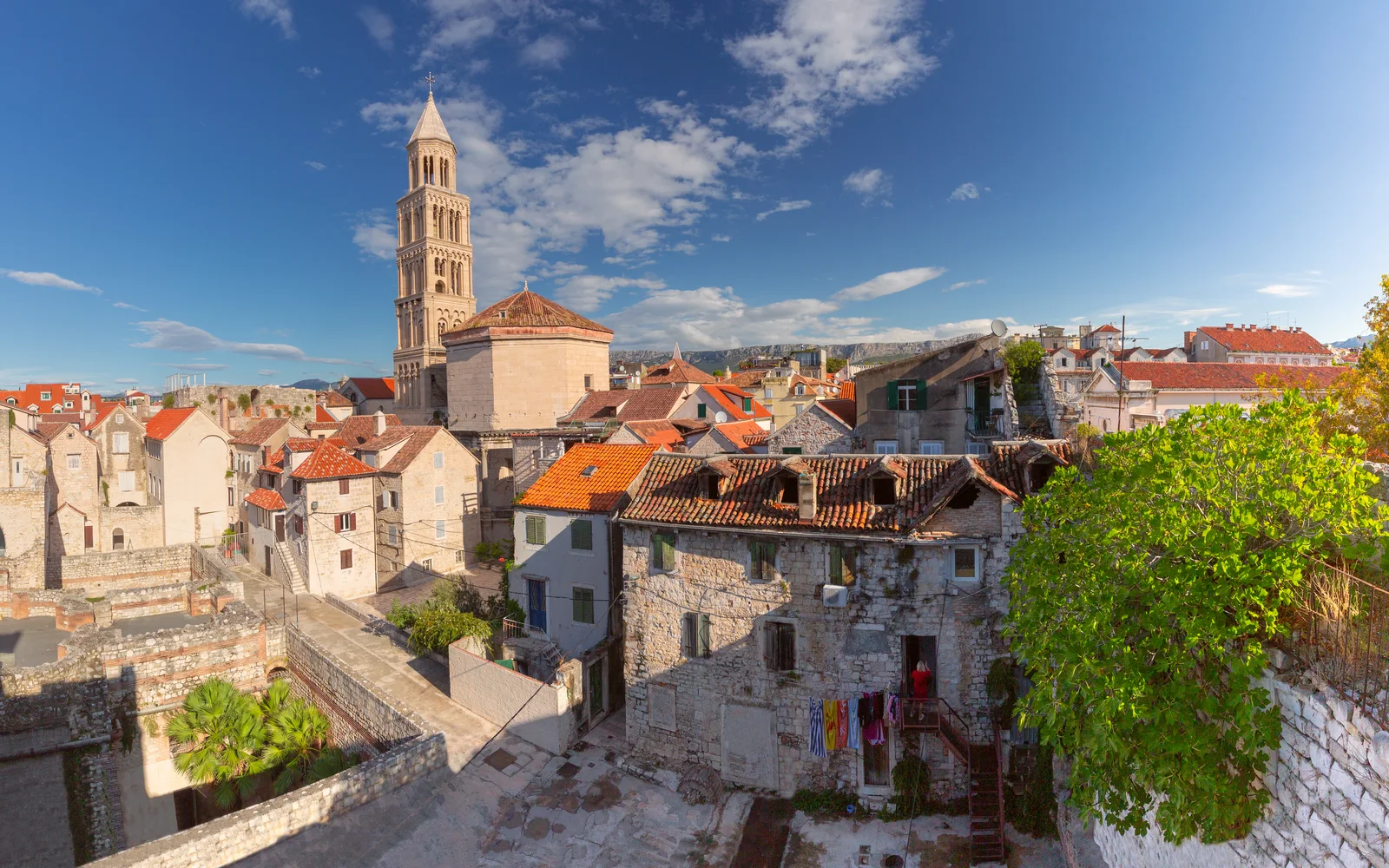
Split’s Roman palace, medieval lanes, local markets, Adriatic waterfront and Marjan are organised into practical routes for one, two or three days.
 Belén Rivas
GuruWalk
·
Updated 3 Sep 2026
Belén Rivas
GuruWalk
·
Updated 3 Sep 2026Split makes more sense once you accept one unusual fact: its old town does not surround a Roman palace; it grew inside one. Within a few streets, you move between fourth-century courtyards, medieval houses, local markets and the Adriatic waterfront. This guide organises the best things to do in Split by area and by time, with realistic plans for one, two or three days. At GuruWalk, we suggest starting with one of the free tours in Split: you will see the historic core with local context, and no credit card is needed to book.
Last verified: August 2026 — Prices, opening hours, and reservation requirements checked against official sources. GuruWalk’s Split guides reviewed the practical recommendations.
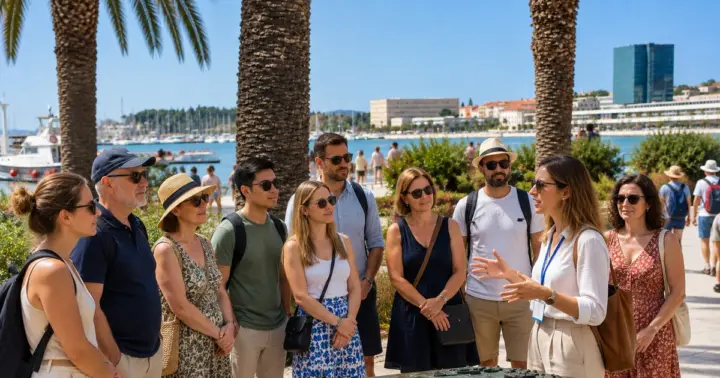
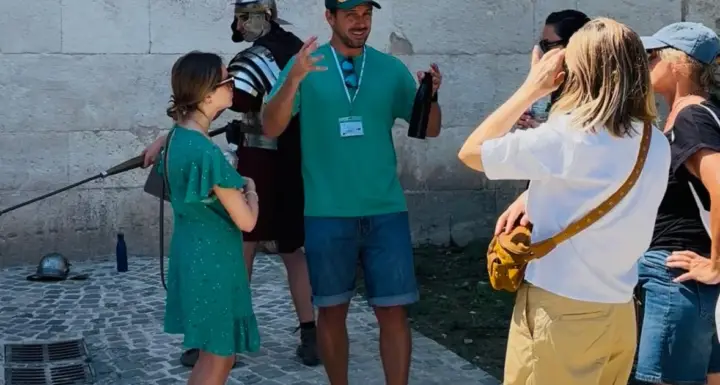
Your first walk should cover the Peristyle, the four palace gates, People’s Square and the Riva. These places sit close together, yet the Roman, Venetian and Yugoslav layers are easy to miss without context. A walk with a guru turns scattered stonework into a coherent story.
Free tours have no fixed ticket price. At the end, each traveller tips the guru according to the experience; €10–20 per person is the usual range, rising to €50 for a small group or an exceptional tour. Check the meeting point and language before confirming because departures vary by day.
Split has an incredibly rich history. Today we can see traces of Greek, Roman, Venetian, Ottoman, French, and…

Step into a time machine with me and let's blast back to ancient Split for an epic historical adventure…

Hello! I am Ivan, a licensed tour guide and a history teacher, with a master's degree in history and art…

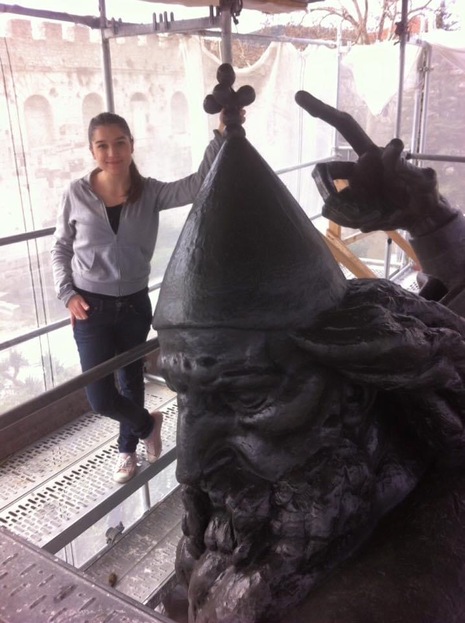
Hi, my name is Ana. I participated in the restoration of many Split landmarks including the statue of Grgur Ninski…
Hi, welcome to Split! 🙂 This tour is for history buffs, with a mix of culture and everday local life…

Join me for a walk through the heart of Split — where Roman walls still hold stories, and daily life…

This 1.5-hour walking tour covers the UNESCO-listed Diocletian's Palace and the medieval centre of Split, including the…

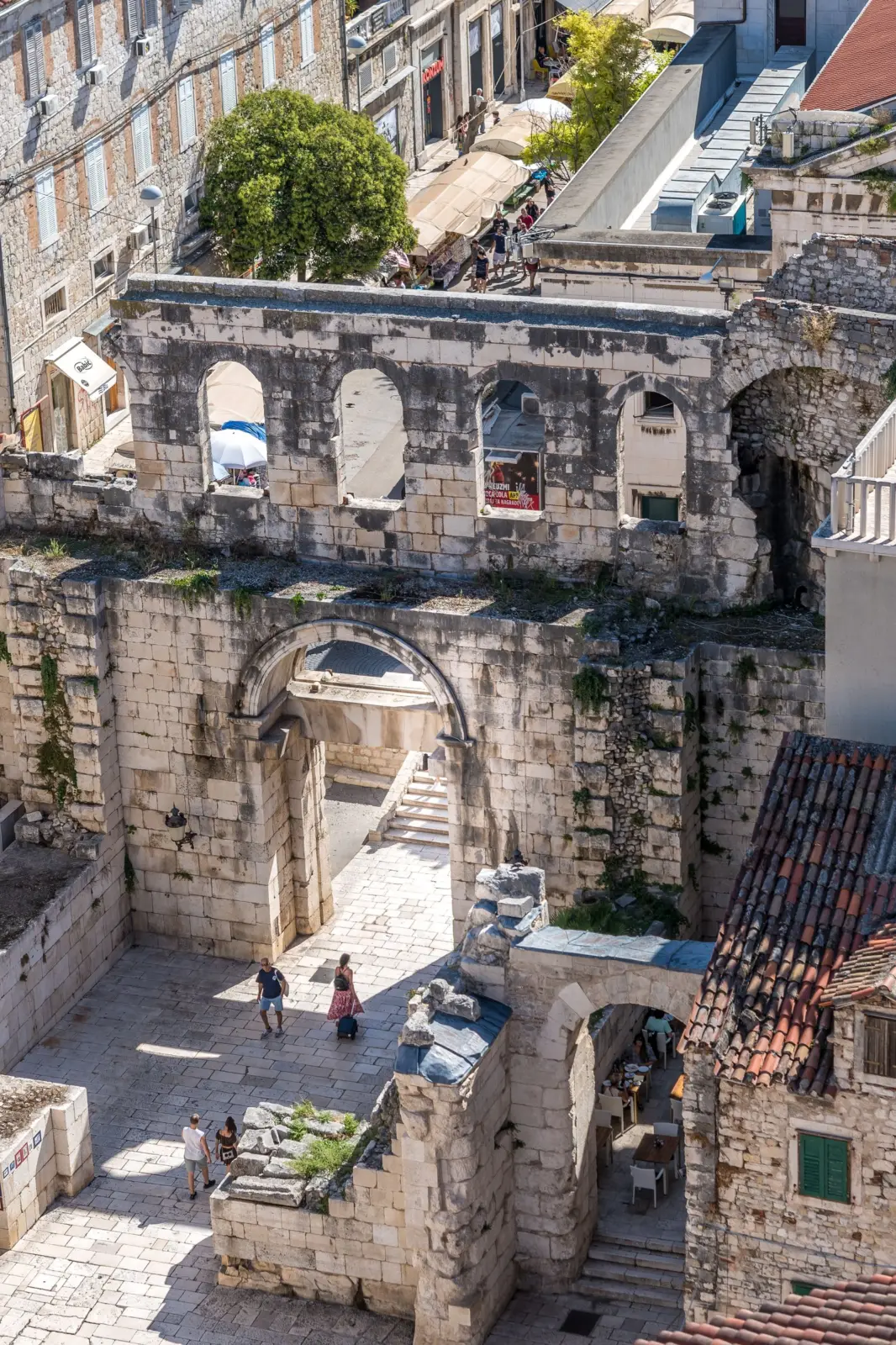
Diocletian’s Palace began to rise around AD 300 as the emperor’s retirement residence. Its southern half held the imperial quarters, while services and soldiers occupied the north. Homes, cafés, workshops and narrow lanes now fill the walls. Walking through the precinct is free; only certain interiors require a ticket.
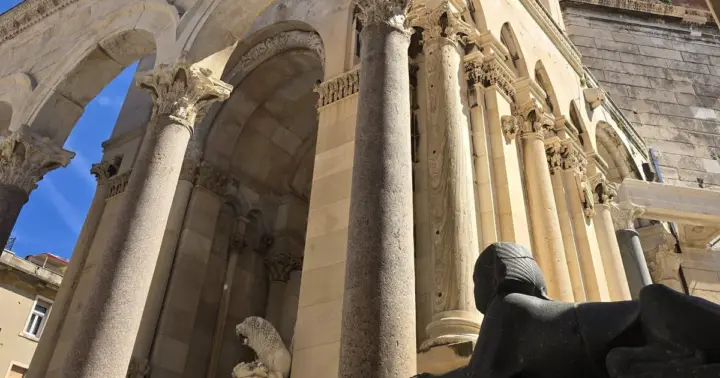
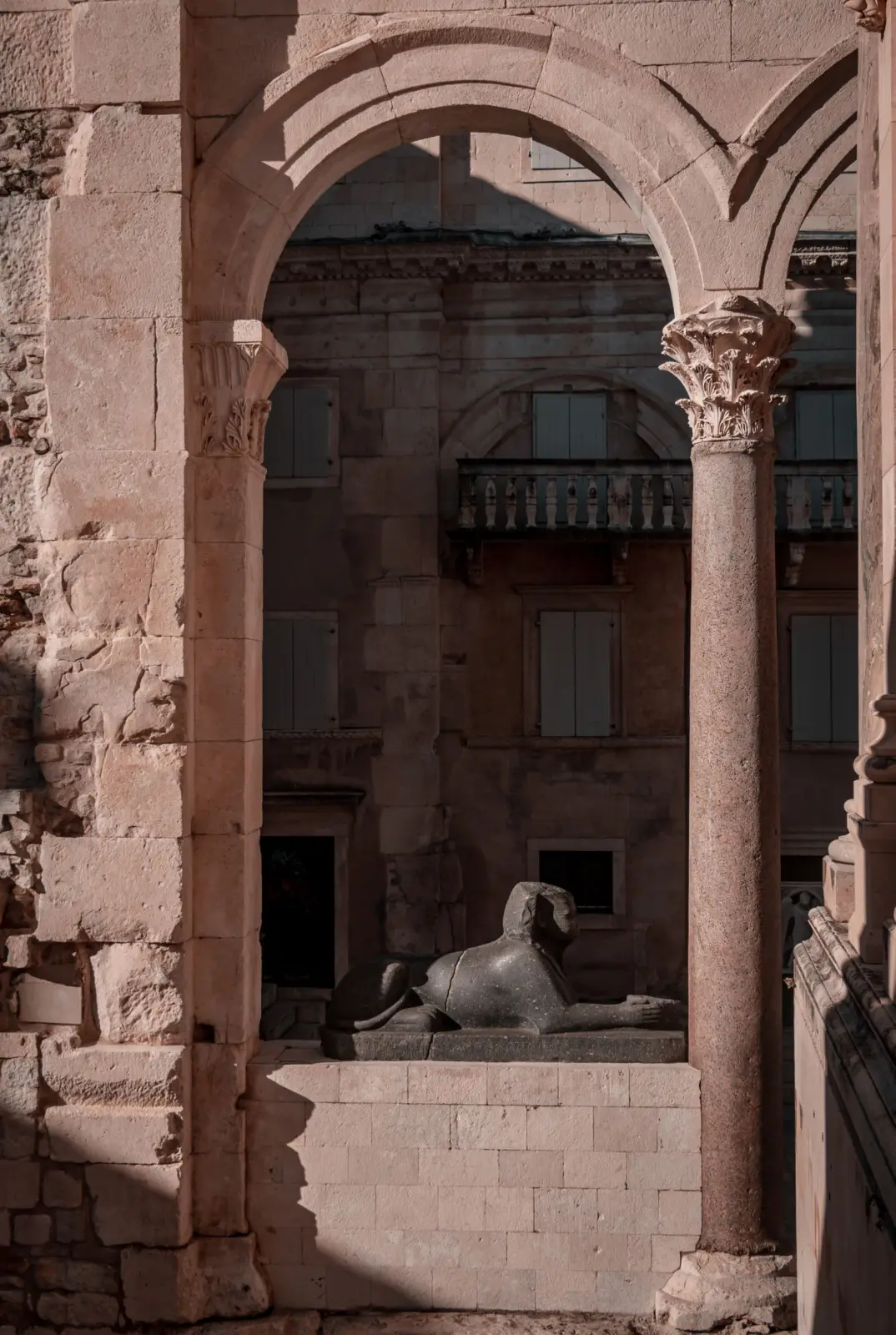
Begin at the Bronze Gate opposite the Riva. The passage leads to the circular Vestibule and the Peristyle—the palace’s ceremonial court—before reaching Saint Domnius Cathedral and the basement entrances. “One of the best preserved monuments of Roman architecture in the world,” the official tourist board notes.
Split’s historic complex joined the World Heritage List in 1979. The official UNESCO entry explains why the Roman palace and the later city form one historic unit.
Palace basements: ticket price and opening hours.
At basement level, the central gallery is a public passage between the Riva and the Peristyle. Side chambers preserve the floor plan of the imperial rooms above and need a ticket.
In August 2026, general admission costs €10 and the reduced ticket €8. Opening hours are 8:30 am to 8 pm daily, with last admission 30 minutes before closing. Check the official Split City Museum page for both details.
Allow about 45 minutes for the chambers. If you only want to use the main passage and see the exterior structure, ten minutes is enough. Early morning is calmer; cruise groups become more common from mid-morning through late afternoon.
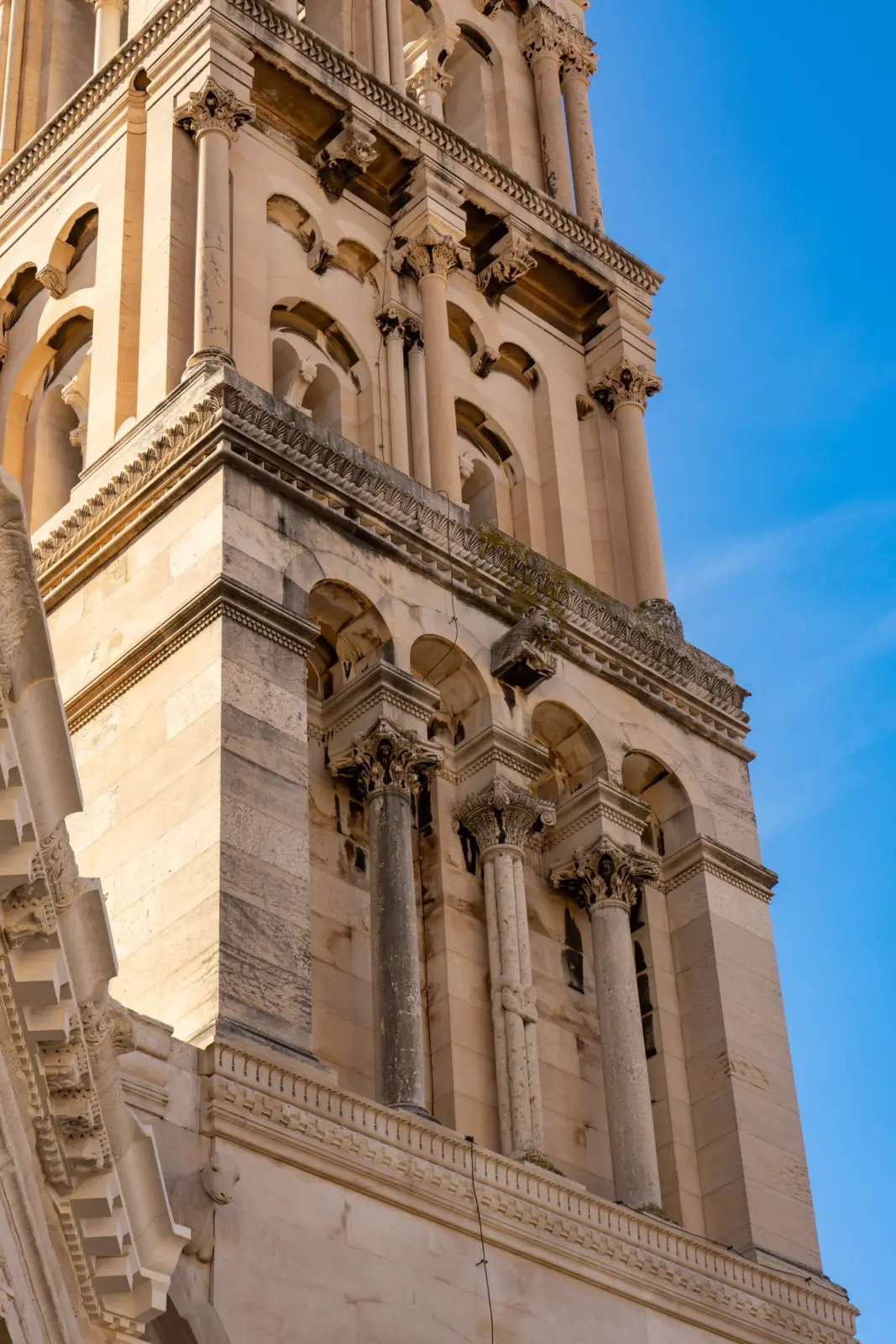
Saint Domnius Cathedral occupies the emperor’s former mausoleum—a pagan tomb turned Christian landmark—within the Roman walls. Its Romanesque bell tower rises above the palace roofs and looks towards the Riva, Marjan and the mountains.
The climb includes narrow steps and exposed metal sections. Skip it if heights make you uncomfortable.
Ticket combinations can cover the cathedral, bell tower, treasury, crypt and baptistery. Because access changes with the season and religious services, read the board at the Peristyle ticket office before buying.
Near opening time or late afternoon, Saint Domnius has a shorter queue and gentler light. We would not place this climb in the crowded middle of the day.
Facing ancient Salona, the Golden Gate served as the palace’s main landward entrance. Ivan Meštrović’s large statue of Grgur Ninski now stands outside it. This open area gives the clearest view of the northern wall without later buildings covering its original geometry.
From here, circle the wall along Bosanska or re-enter through the lanes around Papalićeva. The second route passes Split City Museum in the Papalić Palace. General admission is €10. It opens Tuesday to Sunday from 9 am to 8 pm, closes on Mondays and public holidays, and admits its final visitors 30 minutes before closing.
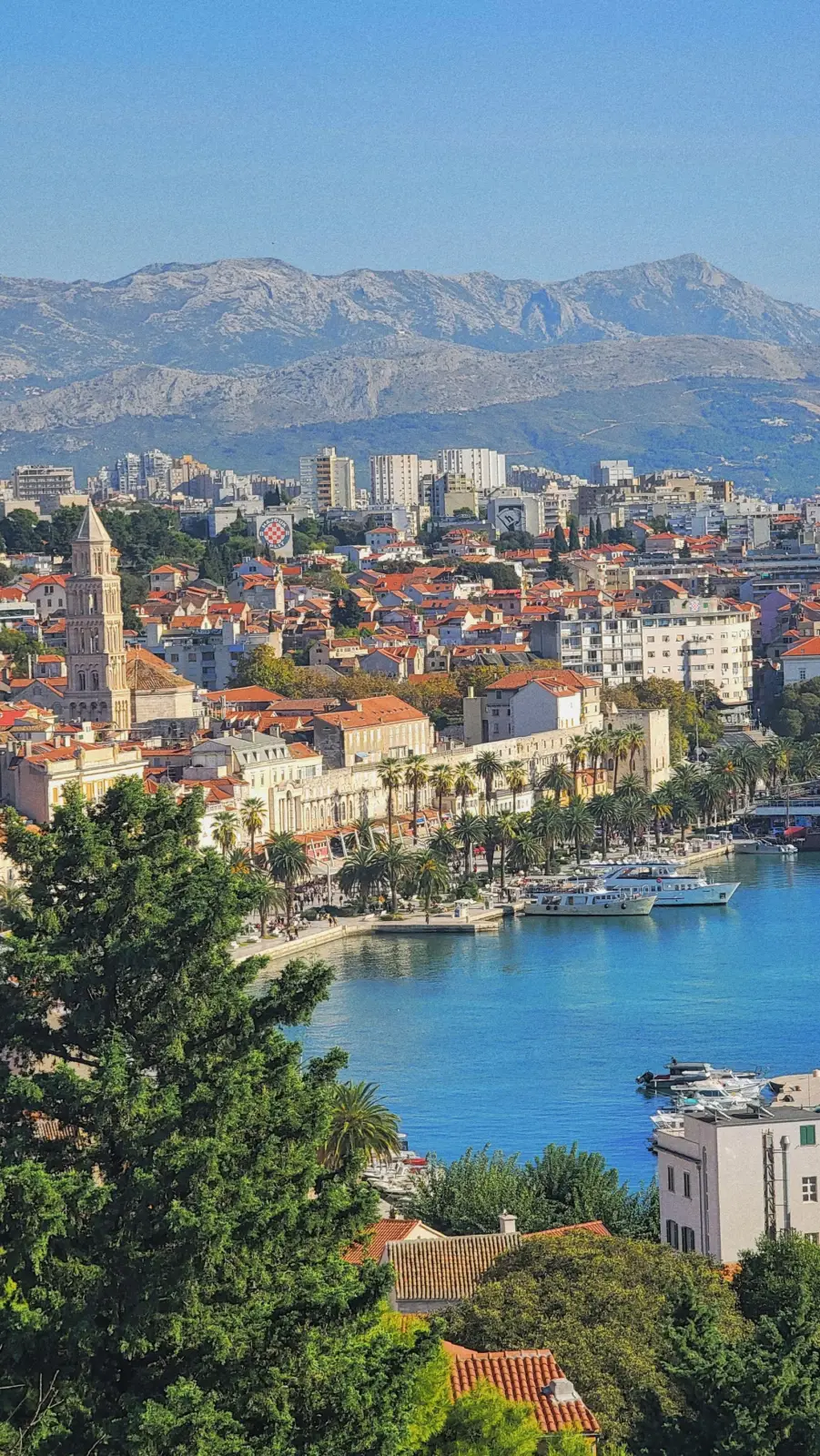
People’s Square, usually called Pjaca, shows how medieval Split expanded beyond the Roman walls. Its old town hall shares the space with façades from several periods.
Three minutes away, Fruit Square is framed by the Venetian tower and the Milesi Palace. It feels much smaller.
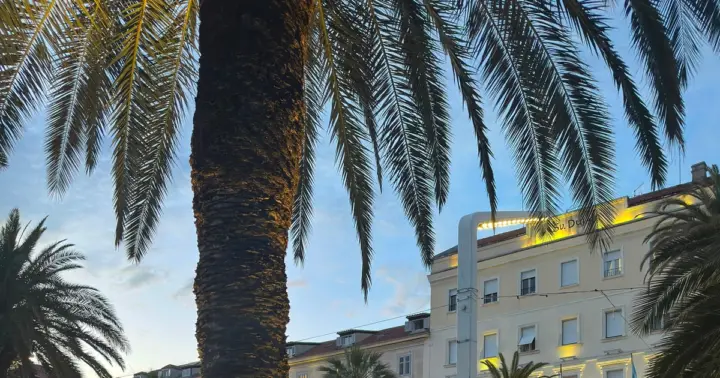
Finish on the Riva, Split’s pedestrian waterfront. It faces the morning sun; towards sunset, the palace’s southern façade takes on softer light. Continue west to the small fishing harbour of Matejuška, which marks the transition from the monumental centre to the neighbourhood of Varoš.
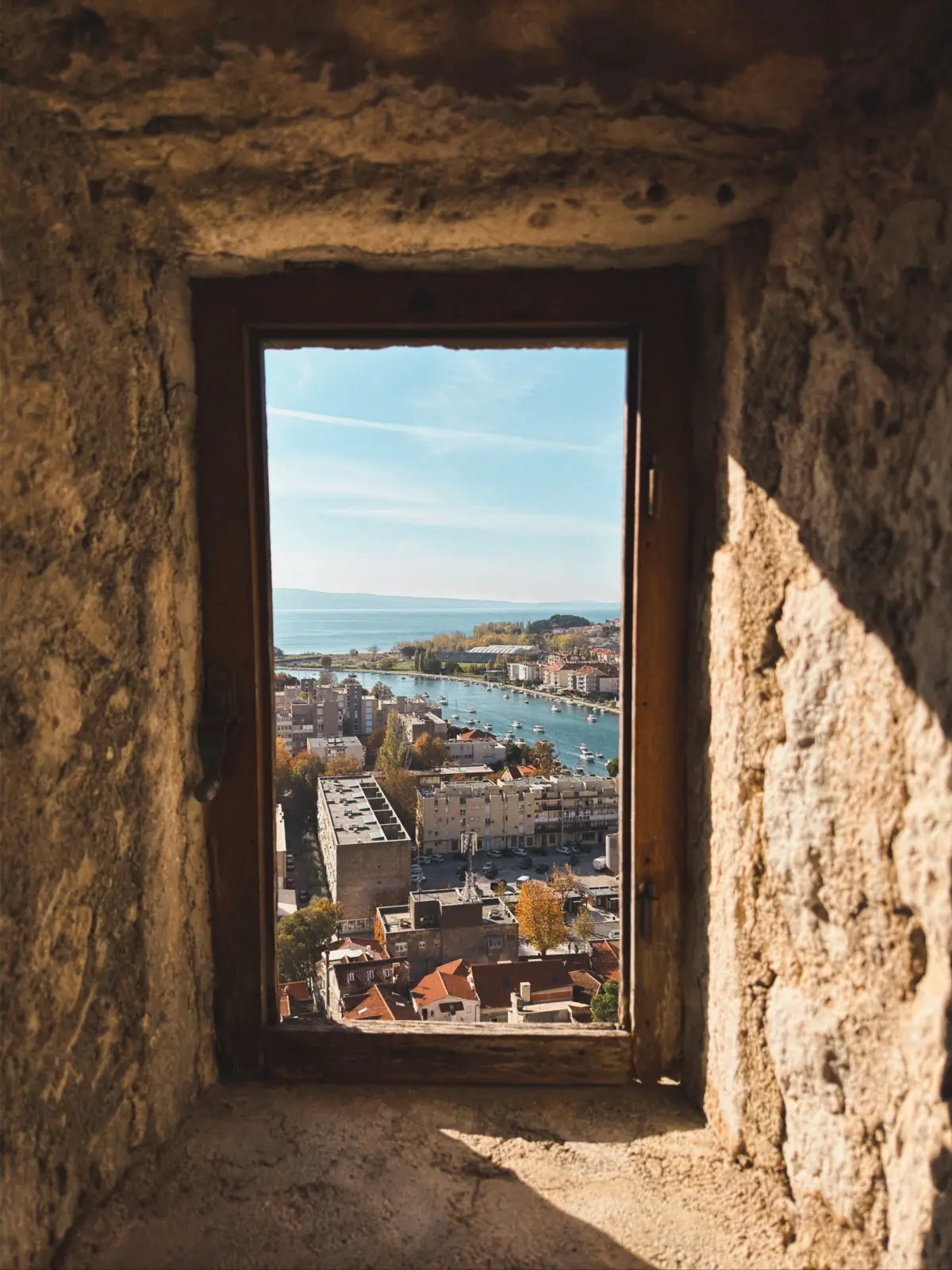
Matejuška does not need a long stop. Use it as the starting point for the stone houses and sloping lanes of Varoš. The walk from the harbour to Prva Vidilica, the first Marjan viewpoint, takes roughly 20 minutes at a steady pace.
Varoš feels more domestic than the palace. Its lanes are not a stage set; people live behind those shutters and doors. The easiest route follows Senjska towards the viewpoint. Wear shoes with a secure sole because polished stone becomes slippery after rain.
Marjan is the wooded peninsula closing the city to the west. On a short visit, climb to the first viewpoint and return through Varoš.
With half a day, continue towards the rock-cut hermitages and the beaches of Kašjuni or Bene. Steps and inclines add up. Keep this outing separate from an intensive palace visit.
Bačvice is the simplest beach without transport. It sits east of the port, about a 15-minute walk from the Riva, with sand and shallow water.
Locals play picigin here, keeping a small ball in the air while standing in the sea. Kašjuni has a more open setting beneath Marjan, although reaching it means extra walking or a bus ride. We would choose between the two rather than rush both.
 HR
HR
 HR
HROn a rainy day, Split City Museum has the closest connection to its setting: it bridges the imperial palace and the medieval city. The Emanuel Vidović Gallery focuses on one of Split’s best-known painters and opens Tuesday to Sunday from 10 am to 8 pm when no exhibition installation is under way. For Croatian sculpture, the Meštrović Gallery occupies a seafront villa west of the centre; confirm its reopening status before travelling because it has undergone renovation work.
In summer, save interiors for the middle of the day. From noon to 4 pm, the sun is stronger on the Riva and the approaches to Marjan. The palace lanes provide shade, although the Peristyle and larger squares remain exposed.
Pazar lines the palace’s eastern wall with fruit, vegetables, cheese and regional products from early morning. Trade slows after midday. The fish market stands to the west near Marmontova and also works best as a morning stop. Check displayed prices and carry some cash for smaller stalls.
For lunch, look for a konoba with a short menu and Dalmatian dishes. Pašticada is slow-cooked beef in a sweet and spiced sauce. Soparnik is a thin chard-filled pie from nearby Poljica. Fish may be priced by weight, so ask for the final amount before ordering.
Begin the morning with a free tour, Golden Gate, Peristyle and Vestibule. Around midday, visit the palace basements and eat near Pazar.
Use the afternoon for Pjaca, Fruit Square, the Riva and Matejuška. At sunset, choose Prva Vidilica viewpoint or the walk to Bačvice.
Keep day one focused on the old town. Give day two to Marjan: viewpoints in the morning, a swim at Kašjuni and a coastal return. If culture matters more than the beach, replace the swim with Split City Museum and a slower visit to the basement chambers.
Use a third day for one excursion: Trogir pairs a compact historic centre with straightforward road access, while Klis adds a fortress above the mountain pass.
For an island day, the port connects with Brač, Hvar, Vis and Šolta. Pick one island. Check the final return before paying.
HRHR“Hvar” can mean the island or Hvar Town, and boats do not all arrive at the same place. Fast line 641 connects Split directly with Hvar Town; in 2026, its ticket also reserves a seat for that departure. Check times and buy through the official Jadrolinija website.
Drivers usually use the car ferry to Stari Grad—the island’s main vehicle port—rather than the catamaran to Hvar Town.
Book ahead in high season, particularly for limited-capacity catamarans. Reach the harbour early because berths spread across a large area and crossing it with luggage takes time. On a first two-day stay, remaining in Split often produces a better trip than squeezing in an island at speed.
Several central routes—the palace, Riva, Matejuška, Pazar and Bačvice—are easy to walk. Promet buses become useful for Marjan, Kašjuni and accommodation farther out. From 1 June 2026, a Split-to-Split ticket costs €1.50 at a ticket outlet or online and €3 from the driver. It remains valid for 60 minutes after first validation. The official Promet fare table also covers suburban zones.
Located in Kaštela, Split Airport sits 20 km from the city. A shuttle runs throughout the day to the main bus station, and public bus routes also stop at the terminal. The airport’s official transport page advises allowing for heavy summer road traffic. The main bus station, railway station and ferry port all sit together at the eastern end of the Riva.
One day covers the palace and waterfront. Two days add Marjan, a beach and a museum without rushing. With three days, include Trogir, Klis or one island.
No fee applies to the streets, gates and squares of Diocletian’s Palace, or to its central basement passage. The underground chambers, cathedral complex and several cultural spaces sell separate tickets.
Inside the palace you are close to everything, but stairs, noise and difficult car access are common. Varoš works well for both Marjan and the centre. Bačvice is better for travellers prioritising the beach, ferries and transport connections.
The Riva and several palace routes are level, but uneven paving, steps and buildings without lifts remain common. The Bronze Gate provides the most direct entrance from the waterfront. Confirm access for each ticketed monument before buying.
Alongside walking tours, compare activities and experiences in Split according to your schedule. Cover the historic core first, then decide whether your spare day fits Marjan, a boat trip or an inland excursion.
Travel marketing specialist with extensive experience in the travel sector. At companies such as Despegar and GuruWalk, she has led traveler-focused digital acquisition strategies. Now, from the GuruWalk blog, she combines her expertise with her passion for discovering and sharing unique destinations.
Local guides, pay-what-you-want and no credit card to book. That is how you understand a city.
Explore free tours on guruwalk.com