


Plan what to do in Zagreb in one or two days: Upper Town, Dolac, museums, Mirogoj, Maksimir, transport and free walking tours.
 Belén Rivas
GuruWalk
·
Updated 3 Sep 2026
Belén Rivas
GuruWalk
·
Updated 3 Sep 2026Zagreb makes more sense when you walk from the ordered streets and garden squares of the Lower Town to the medieval lanes of Gradec and Kaptol. Croatia’s capital places markets, viewpoints, compact museums and large parks within an easy journey. A useful way to organise the first few hours is to join one of the free tours in Zagreb. No credit card is needed to book, and the local context helps you decide where to return later.
Last verified: August 2026 — Prices, opening hours, and reservation requirements checked against official sources. GuruWalk’s Zagreb guides reviewed the practical recommendations.
Zagreb’s historic centre grew from two settlements—Gradec and Kaptol—that developed separately for centuries. Gradec became today’s Upper Town; Kaptol grew around the cathedral. Dolac Market, Tkalčićeva Street and Ban Jelačić Square now occupy the ground between them. We use this distinction to make the compact centre easier to read.
A free walking tour in Zagreb at the start of the trip provides that framework. Current routes, departure times, meeting points and languages appear on each tour page. Booking requires no advance payment and no credit card. At the end, each walker chooses what to give the guru; €10–20 per person is the usual guideline, rising to as much as €50 for a small group or exceptional work.
The first and best tour in Zagreb! A 2-hour special introduction to the city of Zagreb guided exclusively by local…

Join me on a journey through Zagreb’s past, where two medieval towns — Kaptol and Gradec — shaped the city…

Welcome to Crobites – Zagreb’s First Free Gastro Tour ! …

So, your path led you to Zagreb and you don't know what to do? Let us show you! Join us…

Explore Zagreb’s past and present on my 1 Guide. 2 Hills. 5 Stars. Zagreb Upper Town & Kaptol Small Group

During our tour, we are going to get to know the city of Zagreb and its main sights, with special…

Thinking you would like a complete tour of Zagreb? Well, look no further as we will provide you the best…

Ban Josip Jelačić Square is the most useful reference point in central Zagreb. Trams cross it throughout the day. Pedestrian streets lead towards the Lower Town, Dolac and Kaptol, while the Manduševac fountain marks the eastern side. An equestrian statue of the ban stands in the centre. We suggest using it as the meeting point before a group separates.
Splavnica climbs from the square to Dolac Market in a few minutes. The market combines outdoor fruit and vegetable stalls, a covered section and a separate fish-market building. Traditional red Šestine umbrellas—a familiar Zagreb motif—form its most recognisable view. Zagreb’s tourist board dates the central market to 1930 and describes its continuing role for local producers, so a morning visit is more rewarding than arriving near closing time.
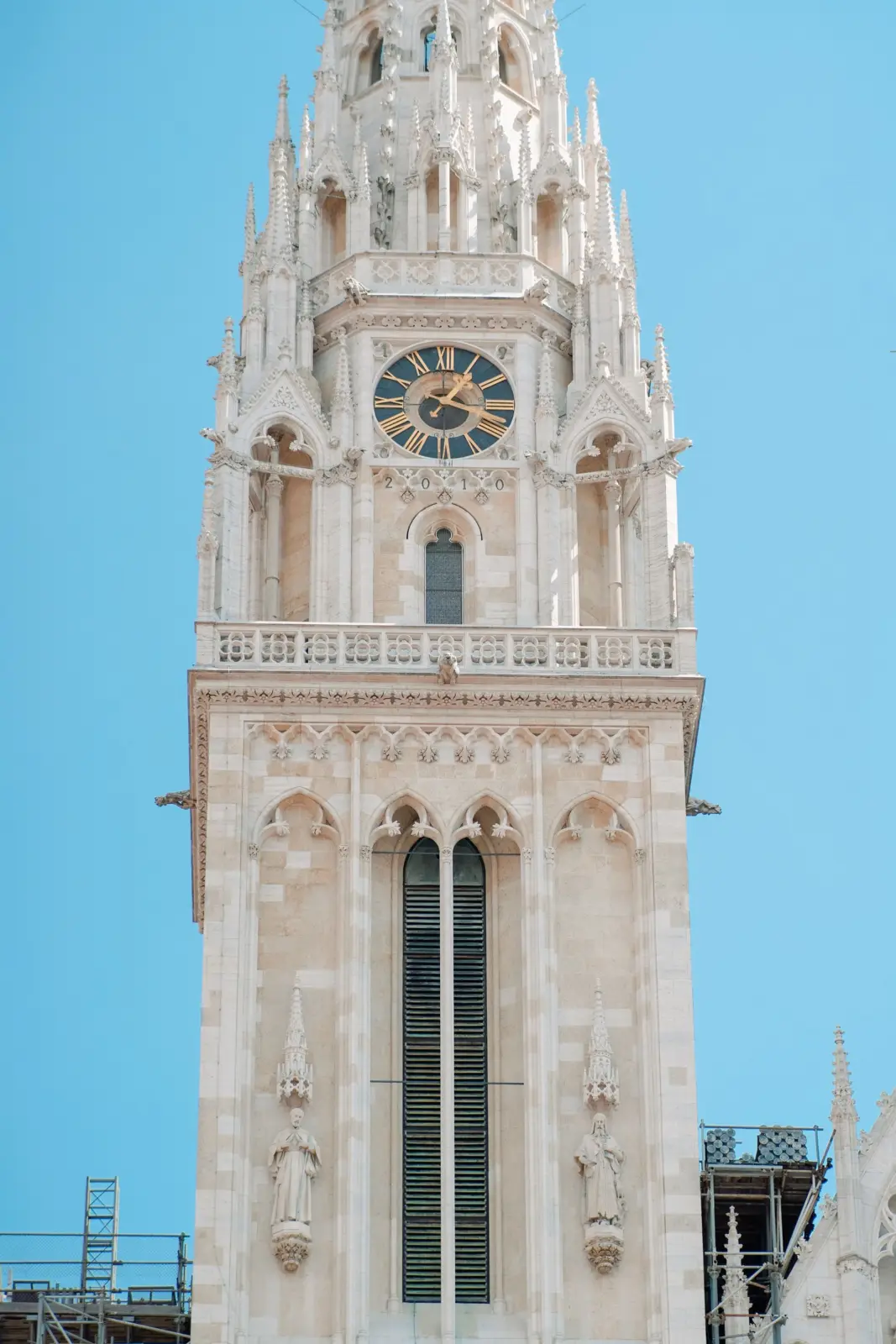
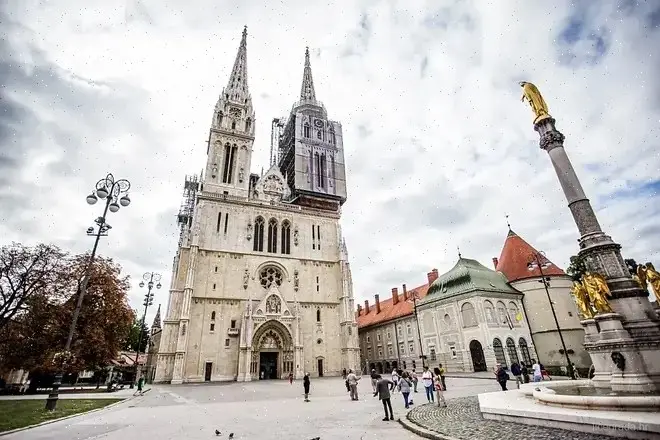
Cathedral towers still define the Kaptol skyline. The 2020 earthquake led to a long restoration programme, so works, entrances and access to interior spaces can change as each phase progresses. We treat it first as an exterior stop and use the surrounding square to view the Renaissance defensive walls.
Tkalčićeva Street runs north from here between low façades. It follows the old dividing line between Gradec and Kaptol. Cafés now occupy much of the street, but its practical role in this route is to connect the two historic settlements without returning to the main square. A short detour reaches Krvavi Most, whose name recalls the clashes between the neighbouring communities.
Stone Gate, or Kamenita vrata, is the only surviving medieval gate. The passage remains part of an active street, but it also contains a small chapel dedicated to the Virgin Mary. Walk through quietly and leave space for people who come to pray. Kamenita Street then leads directly to St Mark’s Square.
St Mark’s Church retains Romanesque and Gothic elements, while its coloured tiled roof belongs to the 19th-century Neo-Gothic rebuilding. The designs show the coats of arms of Zagreb and the former Triune Kingdom of Croatia, Slavonia and Dalmatia. Parliament and government buildings share the square, so security controls can limit movement. “The heart of the Upper Town,” the Zagreb Tourist Board said of St Mark’s Square.
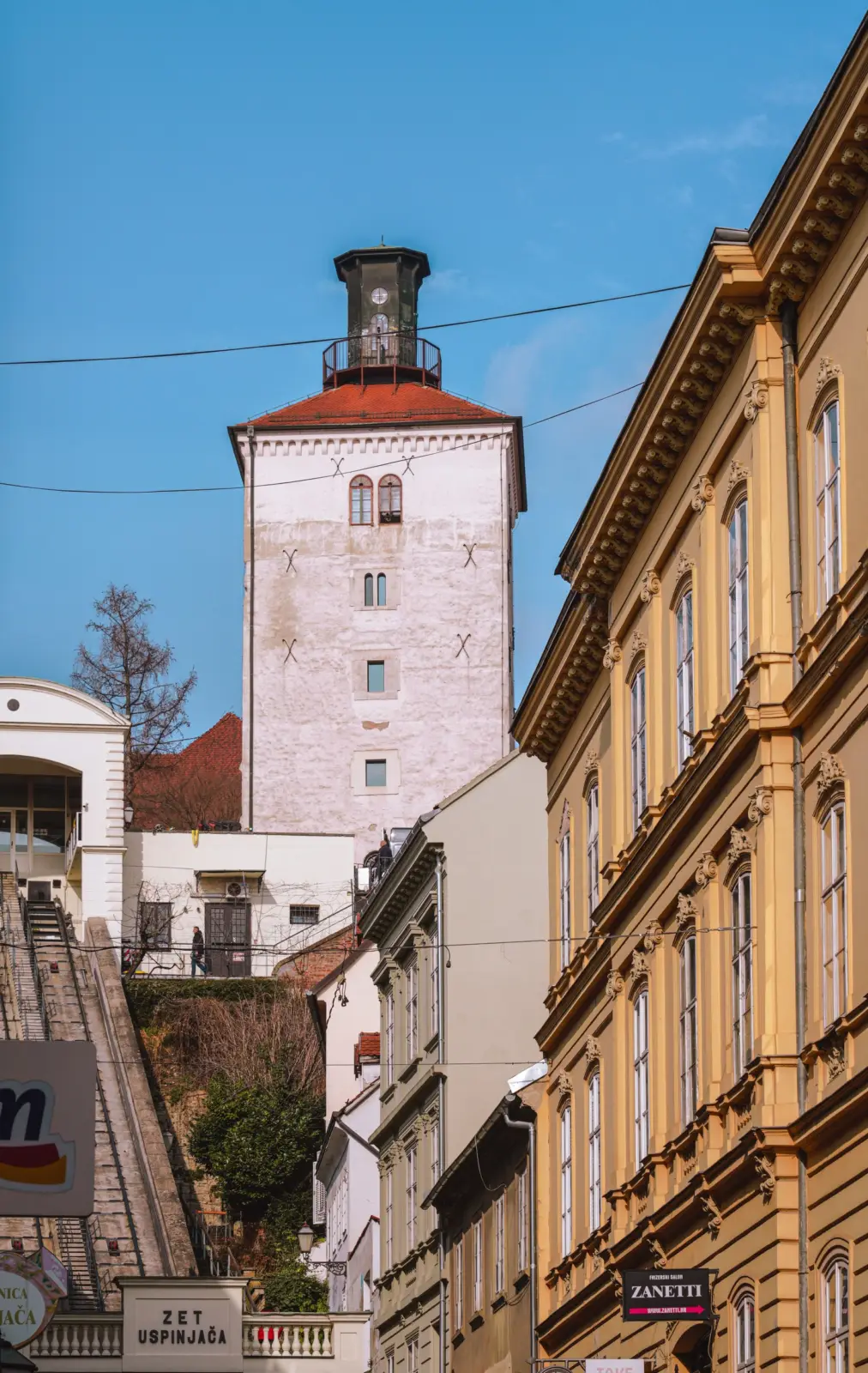
Lotrščak once guarded a southern entrance to Gradec. At noon, the Grič cannon continues a daily tradition heard across much of central Zagreb. When the tower is accessible, its staircase leads to an open view over the Lower Town rooftops. Strossmayer Promenade beside it provides a free alternative without an interior climb.
For the funicular, Tomićeva Street is the Lower Town station. Service resumed on 19 May 2026 after a major renovation. ZET lists a 66-metre track, departures every ten minutes and a one-way fare of €0.66. The ride lasts about a minute, so the parallel stairs can be just as quick for visitors without mobility limitations. Current details are available on the official funicular page.
Inside a palace in the Upper Town, the Museum of Broken Relationships presents objects alongside personal accounts of ended relationships. Its manageable size makes it easy to combine with St Mark’s Square and Lotrščak instead of assigning half a day. Personal stories—rather than an art-historical sequence—are the centre of the visit.
For a chronological account, choose Zagreb City Museum in the former Convent of the Poor Clares. Its displays move from early settlements to the modern capital. In August 2026, the museum lists opening hours of 10:00–18:00 from Tuesday to Saturday and 10:00–14:00 on Sunday; adult admission is €7. The official Zagreb City Museum website carries holiday closures and current prices.
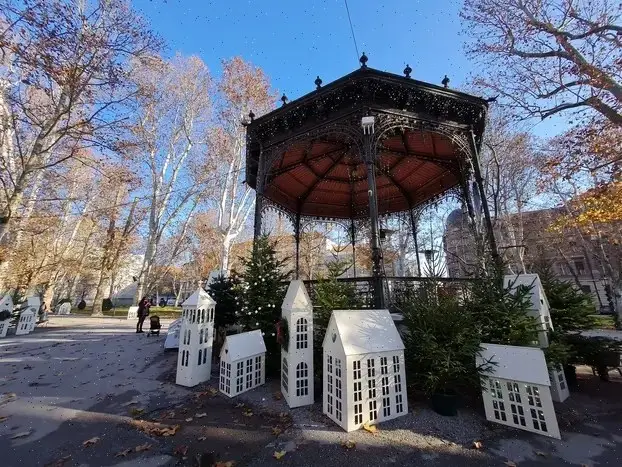
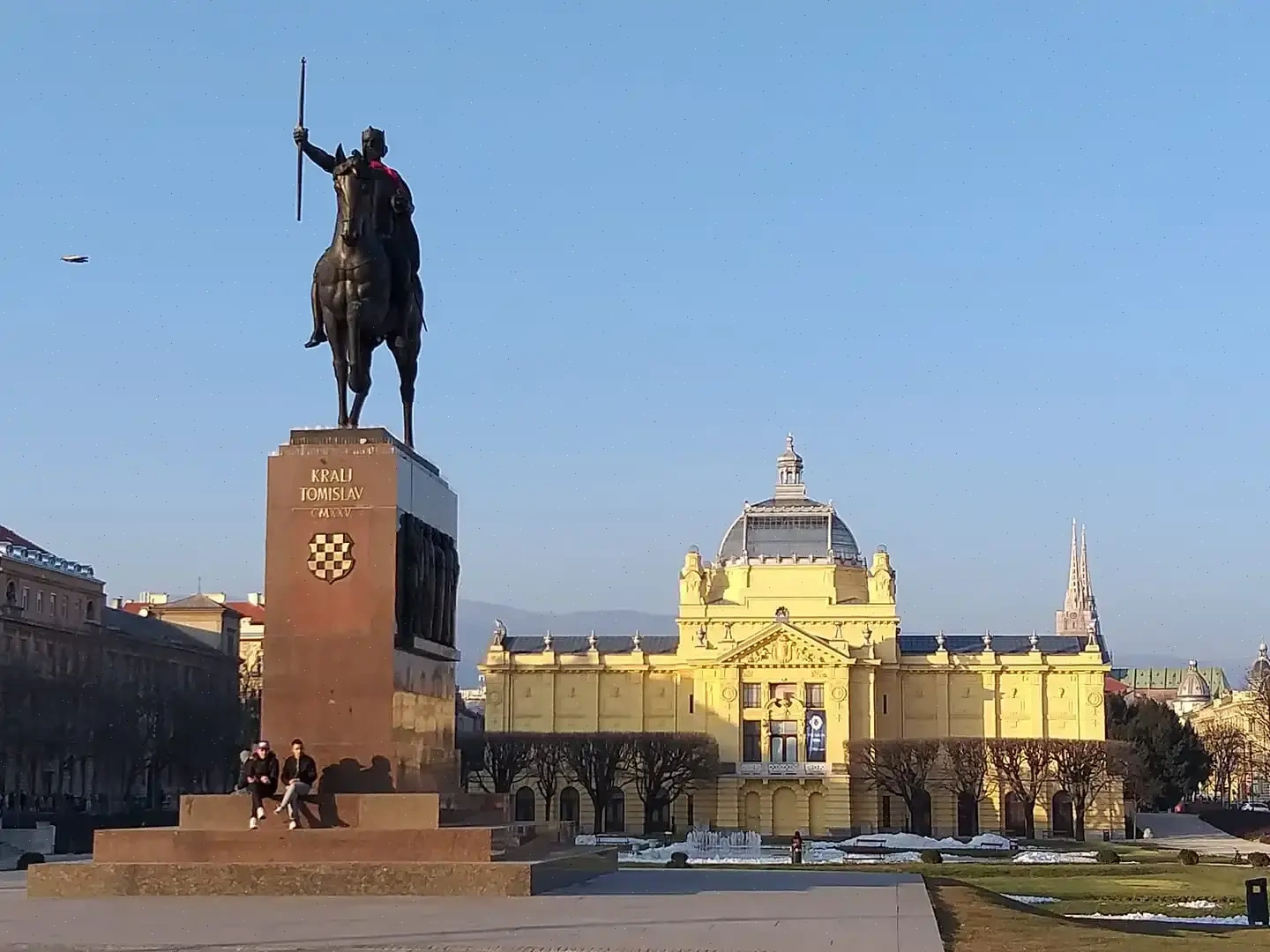
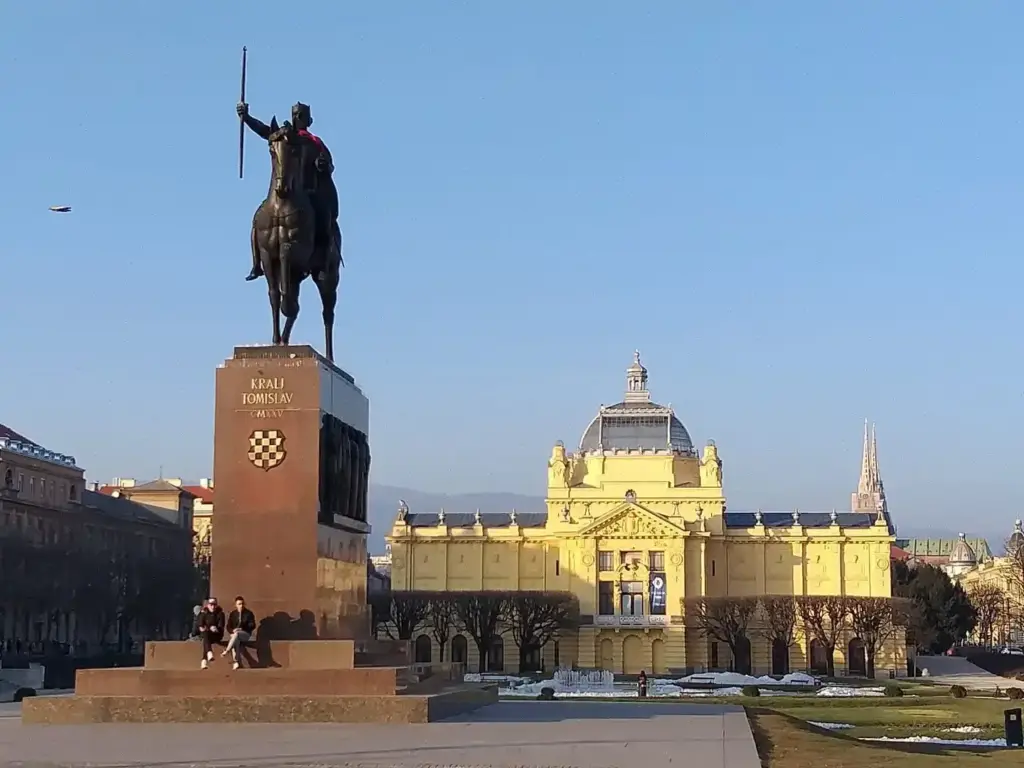
Lower Town changes the pace. Zrinjevac begins a sequence of 19th-century parks and squares known as the Green Horseshoe, or Lenuci Horseshoe. Continue through Strossmayer Square to King Tomislav Square and the Art Pavilion. The main railway station faces the latter, making this axis useful for arriving in or leaving the centre on foot.
At the southern edge of the green sequence, the Botanical Garden holds more than 5,000 plant species according to the tourist board. It operates seasonally until sunset. Paths inside encourage a slower visit, so this is not a shortcut. Because opening dates depend on the season, check access that day before building an entire afternoon around the garden.
On Republic of Croatia Square, the Croatian National Theatre marks the western end of the Green Horseshoe. Its Neo-Baroque exterior and Ivan Meštrović’s Well of Life sculpture make the detour worthwhile even without performance tickets. Masarykova Street then leads back towards the centre through historicist buildings, bookshops and cafés.
Oktogon is another useful covered passage. It connects Ilica with Petar Preradović Square beneath a glass roof and an octagonal central space. The stop is brief, but it provides a traffic-free link between the Green Horseshoe and Ban Jelačić Square when it rains.
Grič Tunnel was constructed during the Second World War as a shelter and corridor beneath the Upper Town. Entrances connect Mesnička and Radićeva through a central hall. Admission is free when the passage is open, but sections can close for installations or events. Do not depend on it as the only route to a timed booking.
That rapid contrast with the streets above is the main reason to include Grič Tunnel. In less than ten minutes, the route moves from a commercial street into a concrete corridor and then back to the Gradec hillside. Lighting is functional, and the main passage is level.
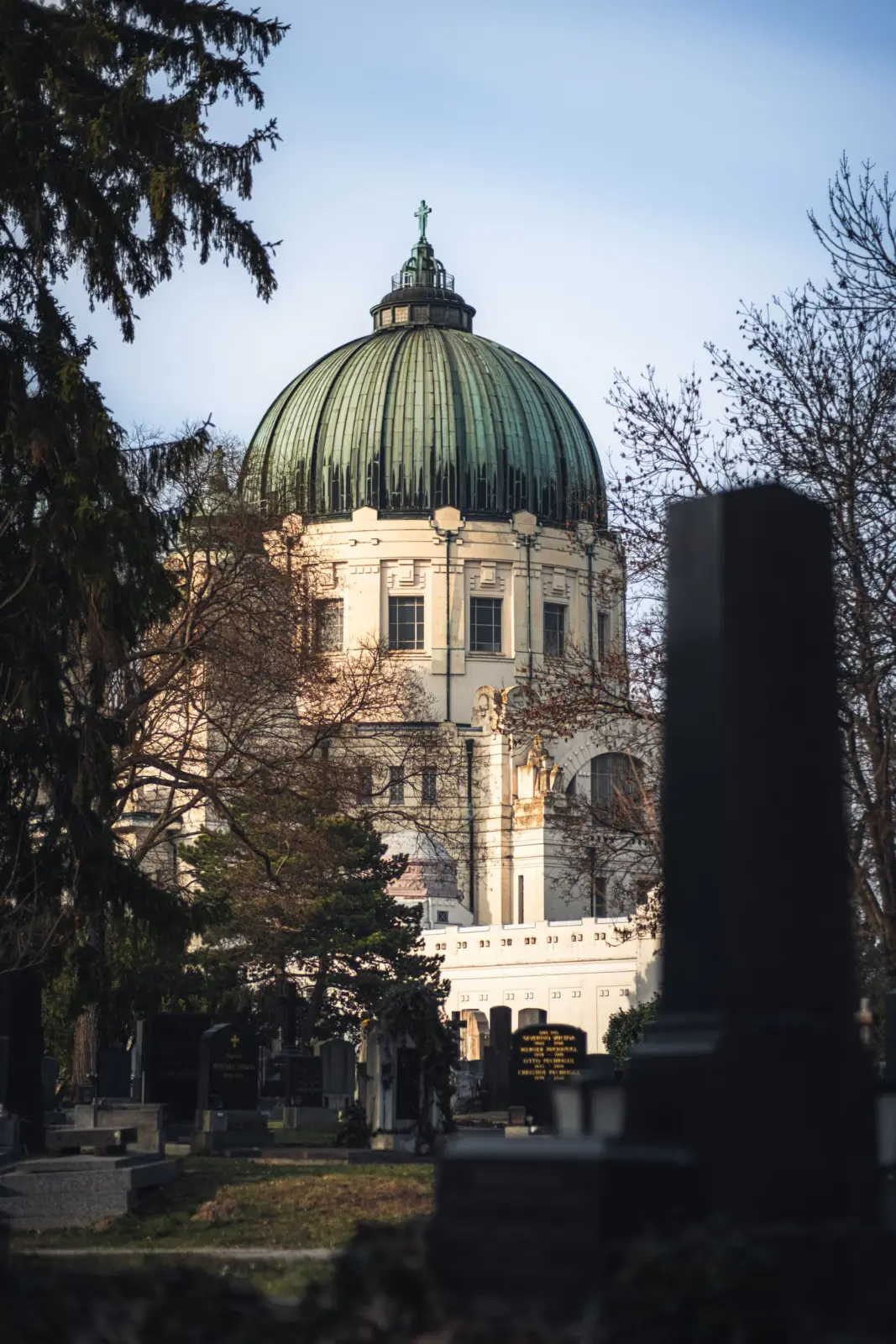
Mirogoj lies north of the centre and requires public transport or a long uphill walk. Hermann Bollé designed its arcades, domes and pavilions as part of a wooded complex that is both an active cemetery and a major architectural site. Keep voices low, give ceremonies space and do not treat graves as scenery.
At Mirogoj, the brick façade and arcades dominate. For a first visit, follow the main axis and return through the side gardens. That route is enough. Because the site lies north of the compact centre, it fits more naturally into a second day.
Maksimir provides Zagreb’s clearest change of scale. The park opened to the public in 1794 and now covers 316 hectares of woodland, meadows, lakes and paths. Tram lines 11 and 12 travel from Ban Jelačić Square to the Bukovačka stop beside the principal entrance.
Park entry is free, and the grounds remain open 24 hours according to the public body that manages them. Daylight is still the practical choice for following paths and recognising junctions. The official Maksimir Park website explains its history, area and tram connections.
One day: begin at Ban Jelačić Square and Dolac, continue to the cathedral and Tkalčićeva, pass through Stone Gate and reach St Mark’s Square. Walk to Lotrščak, descend by funicular or on foot, then cross Zrinjevac, King Tomislav Square and the National Theatre. This order limits backtracking and leaves enough time for one interior visit.
Two days: keep that route for the first day. On the second, enter Zagreb City Museum, visit Mirogoj in the morning and spend the afternoon at Maksimir. Travellers who prefer art and architecture can replace the park with the Botanical Garden, Oktogon and an evening performance at the National Theatre.
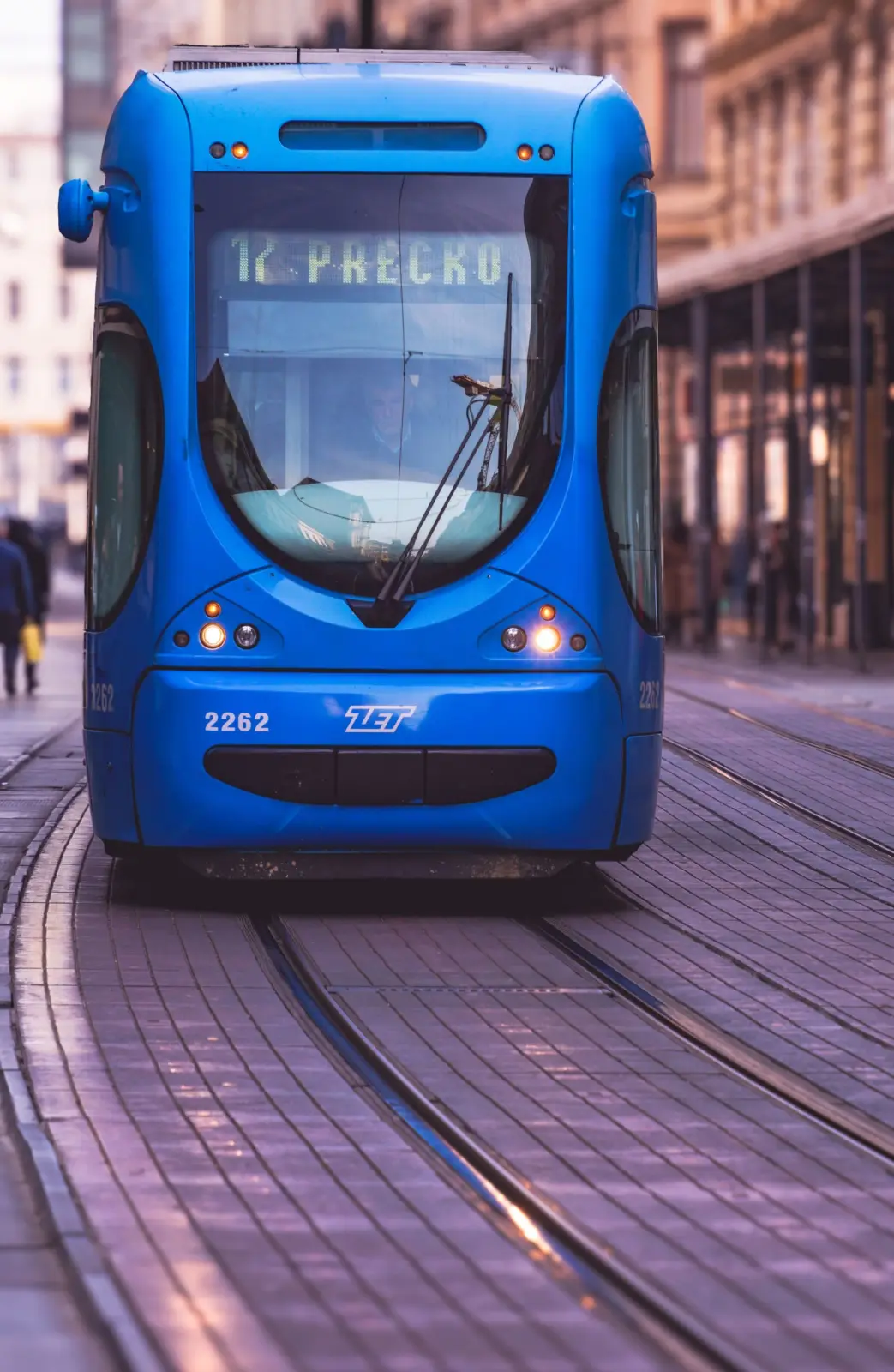
Central Zagreb is walkable, but trams or buses make Mirogoj and Maksimir easier to fit into the day. ZET sells tickets valid for 30, 60 and 90 minutes. In August 2026, advance-purchase prices are €0.53, €0.93 and €1.33; buying from the driver costs more. A daily ticket is €3.98.
Validate the ticket after boarding. Ban Jelačić Square acts as a reference for several routes, while the main station connects directly with the Green Horseshoe. Walking is enough for a day focused on the Upper and Lower Towns; the daily ticket is more useful when adding outer neighbourhoods.
One day covers the key sights in the Upper and Lower Towns. With two days, you can add a museum, Mirogoj and Maksimir without turning the visit into a race.
Yes. Ban Jelačić Square, Dolac, Kaptol, St Mark’s Square, Lotrščak and the Green Horseshoe form a continuous route. Expect slopes and cobbles in the Upper Town; the funicular removes part of the climb.
There is no fixed advance price. At the end, each walker values the guru’s work with a tip; €10–20 per person is the usual guideline. No credit card is needed to reserve a place.
Ban Jelačić Square is the most practical start. Dolac and Kaptol lie to the north, the Upper Town to the west and Zrinjevac to the south. That position makes it easy to adjust the route to the available time.
Compare the free tours available in Zagreb to choose a time, language and theme. To add admission tickets or further routes, browse the activities and experiences in Zagreb. GuruWalk is the platform for finding and booking free tours with local guides and activities in cities around the world.
Travel marketing specialist with extensive experience in the travel sector. At companies such as Despegar and GuruWalk, she has led traveler-focused digital acquisition strategies. Now, from the GuruWalk blog, she combines her expertise with her passion for discovering and sharing unique destinations.
Local guides, pay-what-you-want and no credit card to book. That is how you understand a city.
Explore free tours on guruwalk.com