

 Julieta Betancor
GuruWalk
·
Updated 25 Aug 2026
Julieta Betancor
GuruWalk
·
Updated 25 Aug 2026Plan a day in Dubrovnik with 10 must-see sights, from the Old Town walls and Stradun to Lovrijenac Fort, Lokrum Island and Mount Srđ.
Last checked: August 2026. Opening times, ticket conditions, boat services and event programmes can change with the season and weather, so confirm the latest details before you visit.
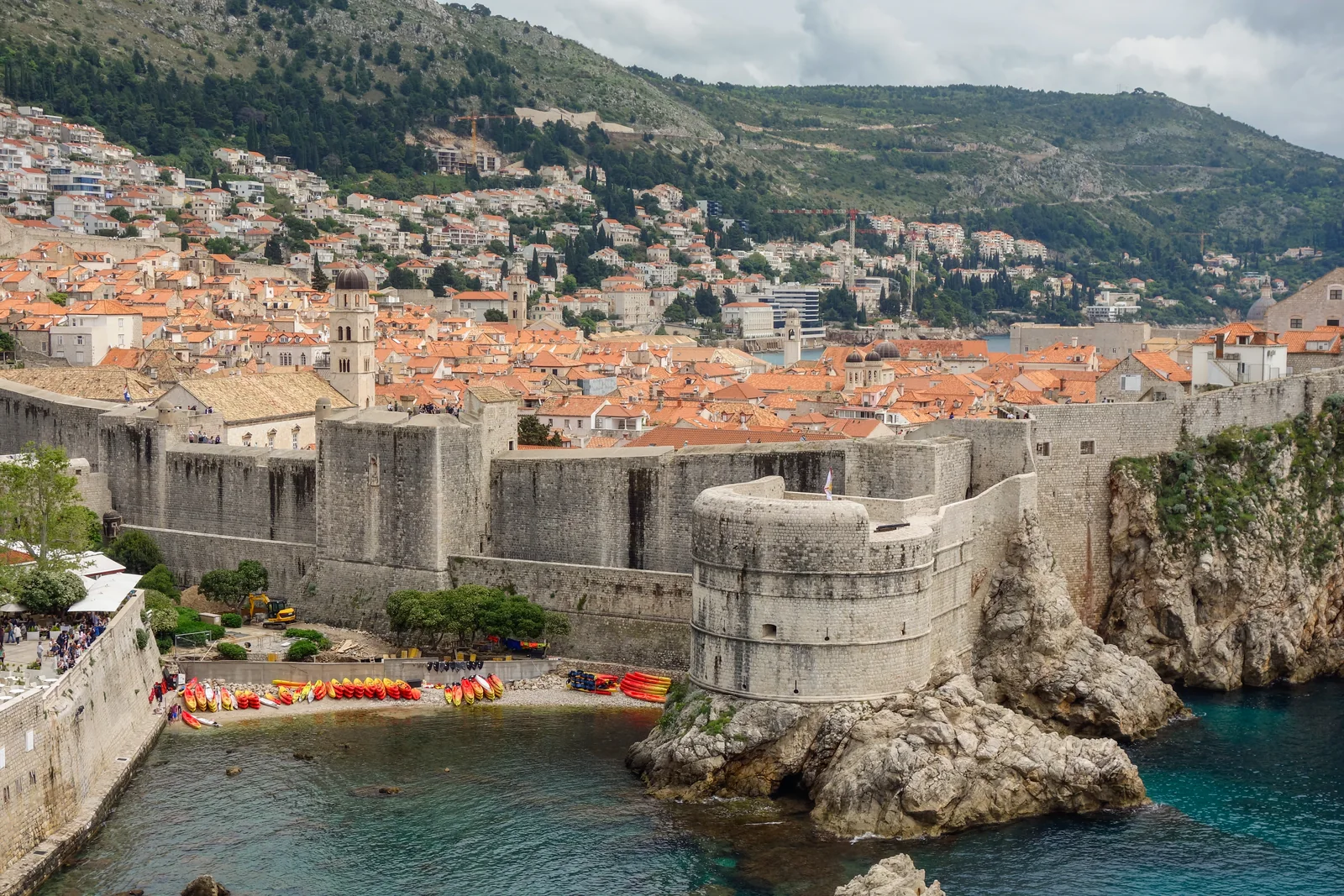
Start in Dubrovnik Old Town, the compact UNESCO-listed heart of the city. Enter through Pile Gate and follow Stradun, the polished limestone main street, before the lanes become busy.
Continue towards Dubrovnik Cathedral and Sponza Palace. Together with the Rector’s Palace, Onofrio’s Fountain and Luža Square, they give you a clear introduction to the architecture and history of the former Republic of Ragusa.
Allow the largest part of your morning for the Dubrovnik City Walls. The full circuit is close to two kilometres and includes many stairs, so comfortable shoes, water and sun protection are worth bringing.
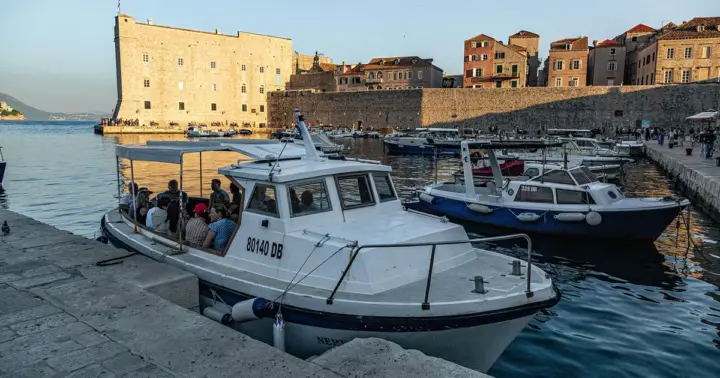
After lunch, choose between a boat trip to Lokrum Island and more time inside the Old Town. Lokrum is reached from the Old Port, but services depend on the season and may stop in poor weather.
Back on the mainland, climb to Lovrijenac Fort for a different angle over the walls and the Adriatic. End the day around Luža Square, or take the Dubrovnik Cable Car up Mount Srđ if the service is running and visibility is good.
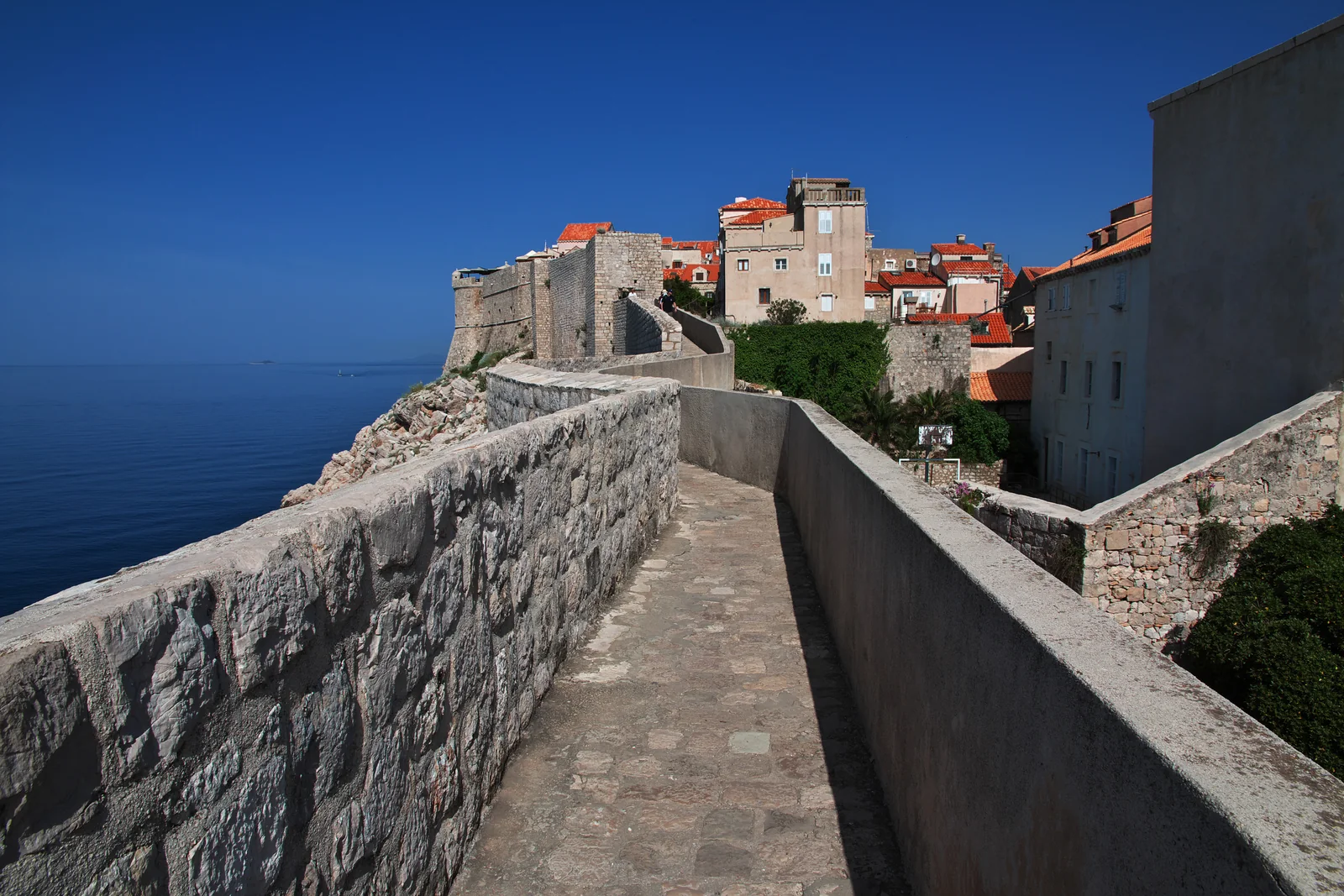
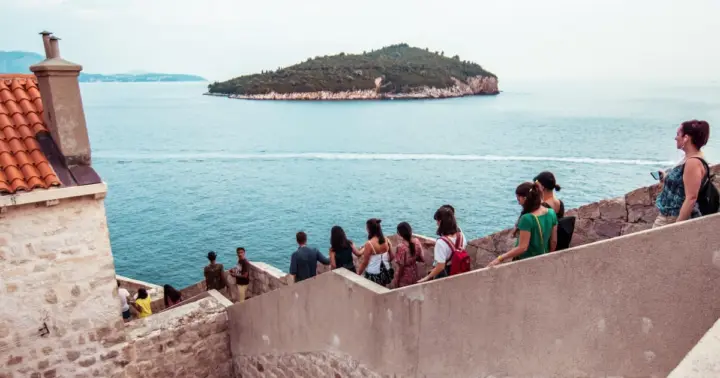
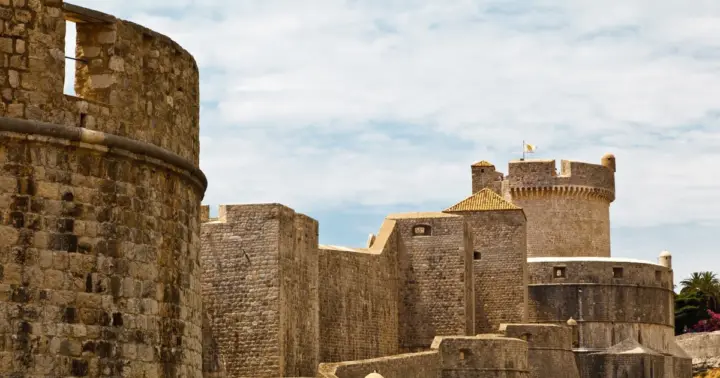
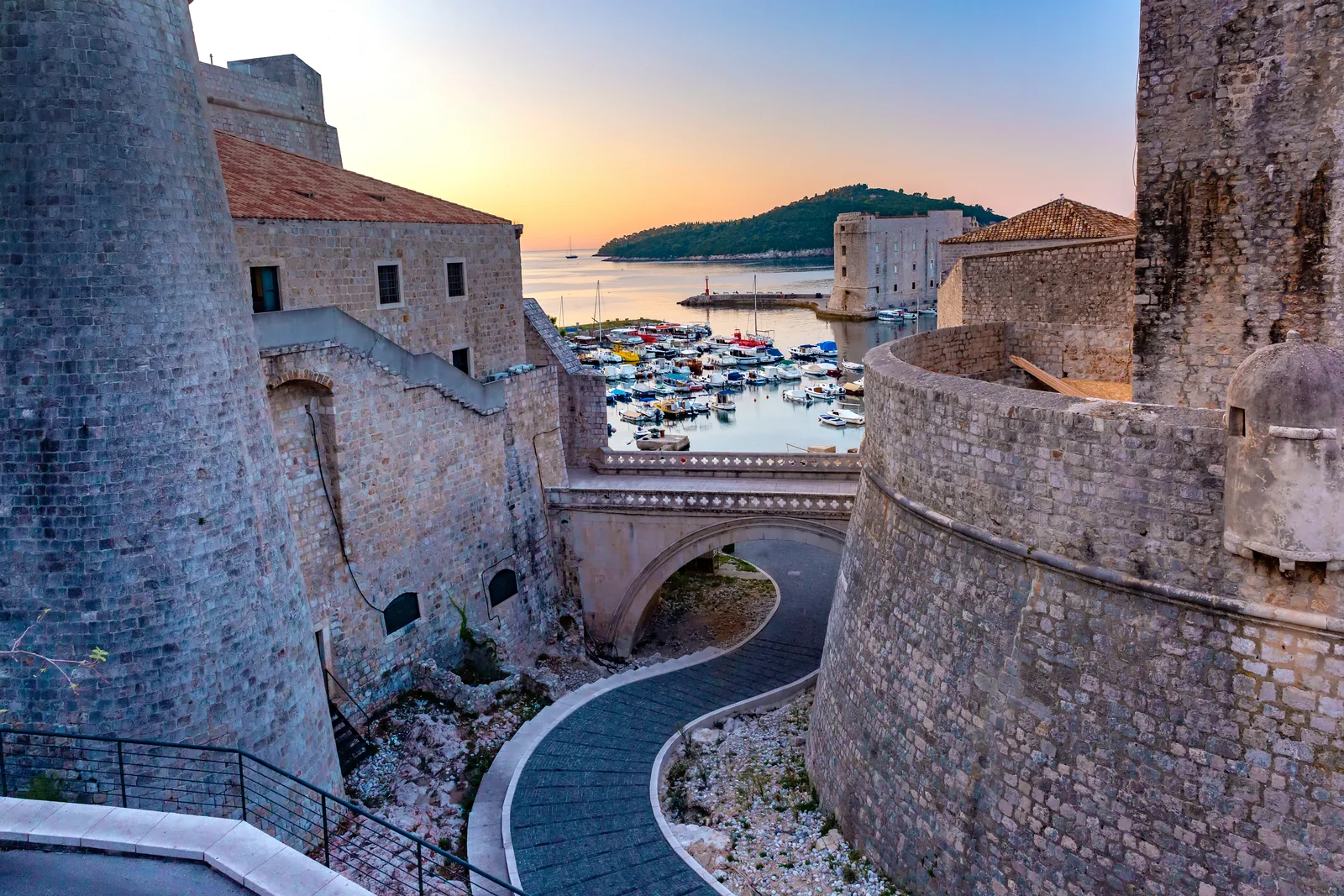
The Dubrovnik City Walls form an almost continuous circuit of roughly two kilometres around the Old Town. Towers, bastions and forts were added and strengthened over centuries, creating one of the Adriatic’s most recognisable defensive ensembles.
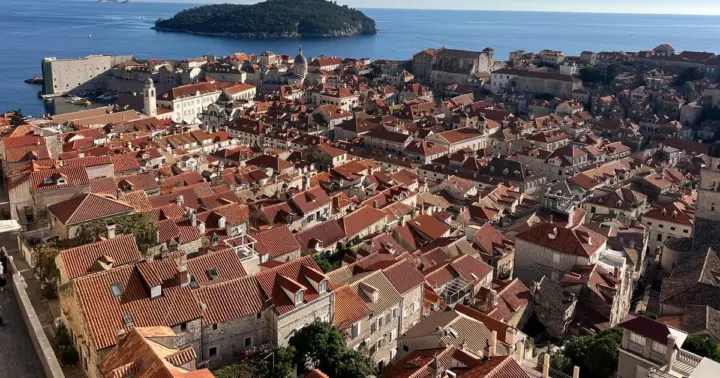
The walk opens up views of terracotta roofs, the harbour and the sea. Most visitors need between one and two hours, depending on crowds and photo stops. The route has steep staircases, uneven stone and very little shade.
The walls are part of the UNESCO World Heritage property of the Old City of Dubrovnik. They were also used as filming locations for Game of Thrones, but their real story is broader: they protected a maritime republic whose trade and diplomacy reached far beyond the Adriatic.
Opening hours and entry conditions vary through the year. Check the current schedule before setting out, and avoid the hottest part of the day in summer.
Look beyond the skyline as you walk: changes in the colour and finish of the stone reveal layers of construction, repair and restoration across the walls.
Julieta Betancor
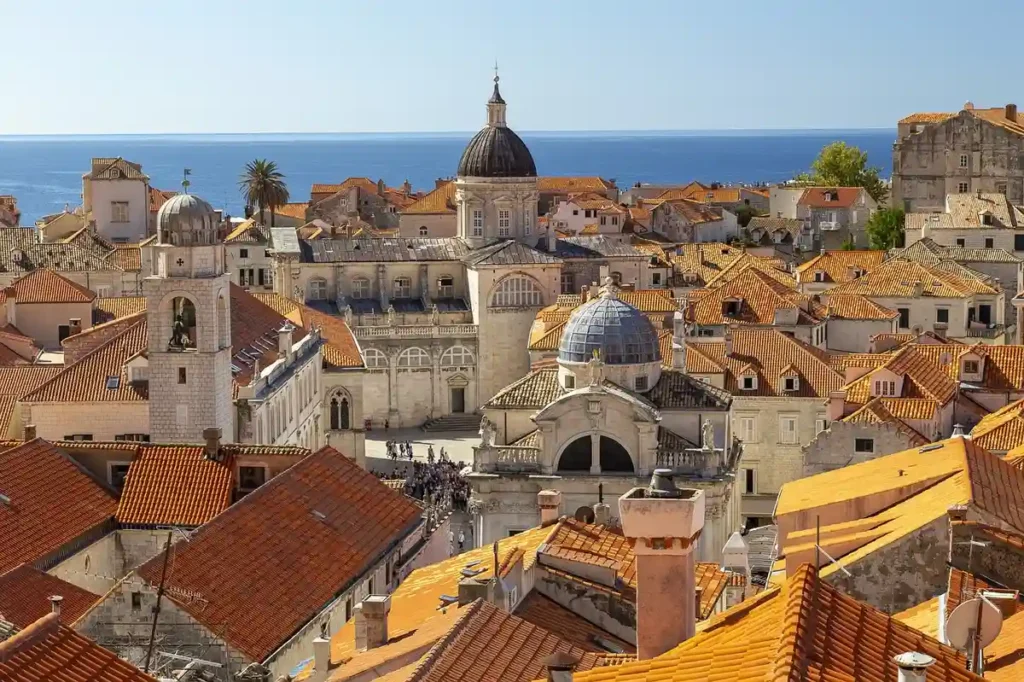
Dubrovnik Old Town is a dense network of stone streets, squares, churches and civic buildings enclosed by the city walls. Its UNESCO status recognises the urban ensemble as a whole, not just a handful of individual landmarks.
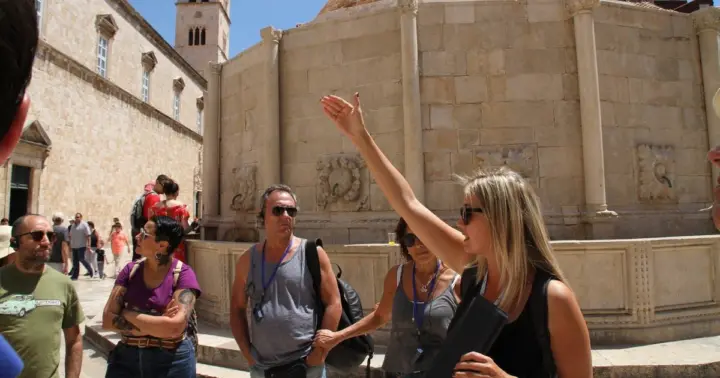
The Rector’s Palace was the seat of government of the Republic of Ragusa and now houses the Cultural History Museum. Nearby, Luža Square brings together Sponza Palace, the city bell tower, Orlando’s Column and the Church of St Blaise.
The broad steps of St Ignatius are another familiar view, while Gundulić Square hosts a morning market when scheduled. Museums, exhibitions and performances change throughout the year, so check individual programmes if one is central to your visit.
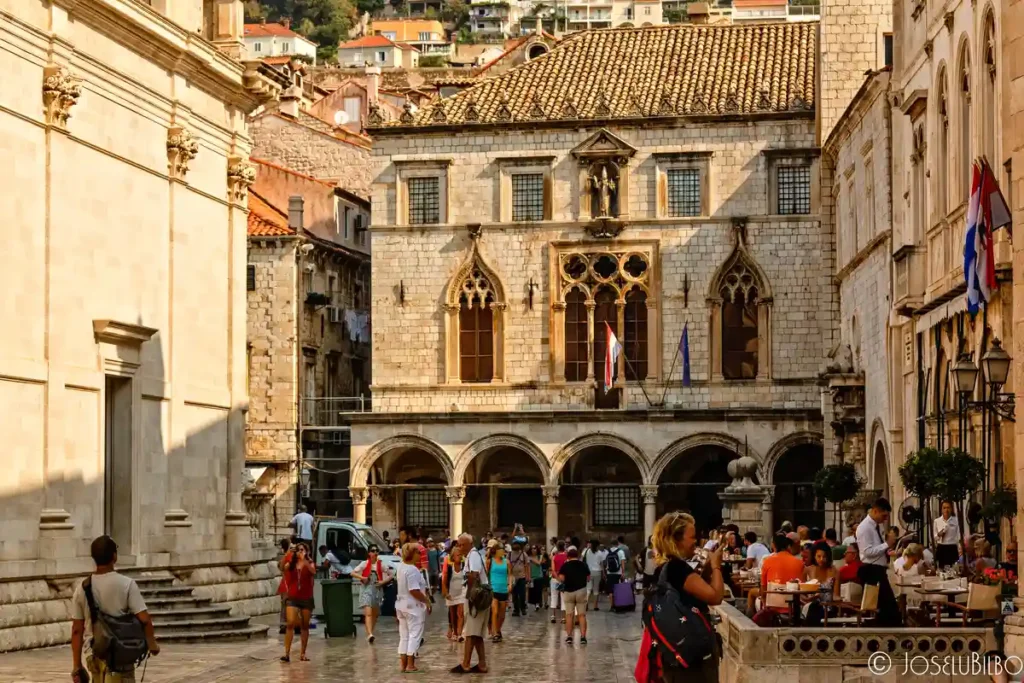
Sponza Palace is one of Dubrovnik’s finest Gothic-Renaissance buildings. Construction began in the early 16th century, and the palace served several public functions connected with trade, customs, the mint and civic life.
Its arcaded courtyard and finely carved facade survived the 1667 earthquake that devastated much of the city. Today the building houses the State Archives in Dubrovnik, whose collections preserve documents from the Republic of Ragusa and later periods.
The square in front of Sponza Palace is traditionally used for the opening of the Dubrovnik Summer Festival. Interior access and temporary exhibitions can vary, but the facade and courtyard alone make this an essential stop in Luža Square.
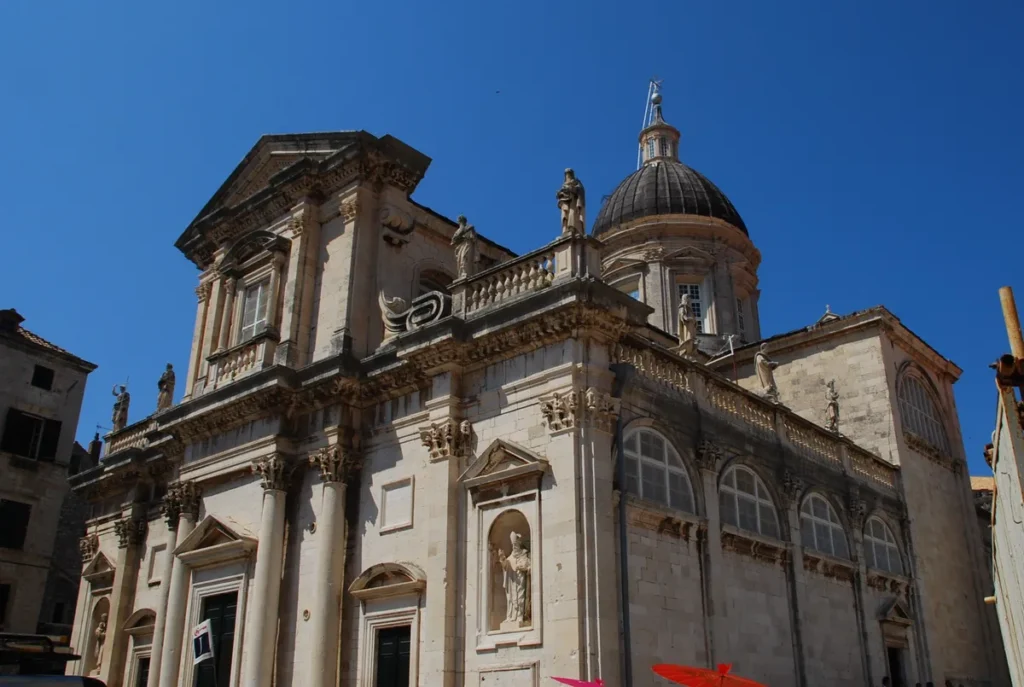
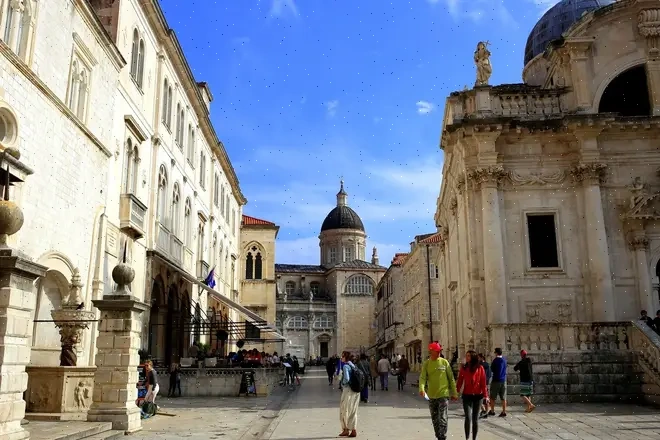
Dubrovnik Cathedral, formally the Cathedral of the Assumption of the Virgin Mary, is the Baroque successor to an earlier Romanesque cathedral destroyed in the earthquake of 1667. The present church was built around the turn of the 18th century.
The cathedral treasury preserves important reliquaries associated with St Blaise, Dubrovnik’s patron saint. The main altar is known for a polyptych of the Assumption traditionally attributed to Titian and his workshop.
This remains an active place of worship. Tourist access can be restricted during services, and treasury opening hours may differ from those of the church.
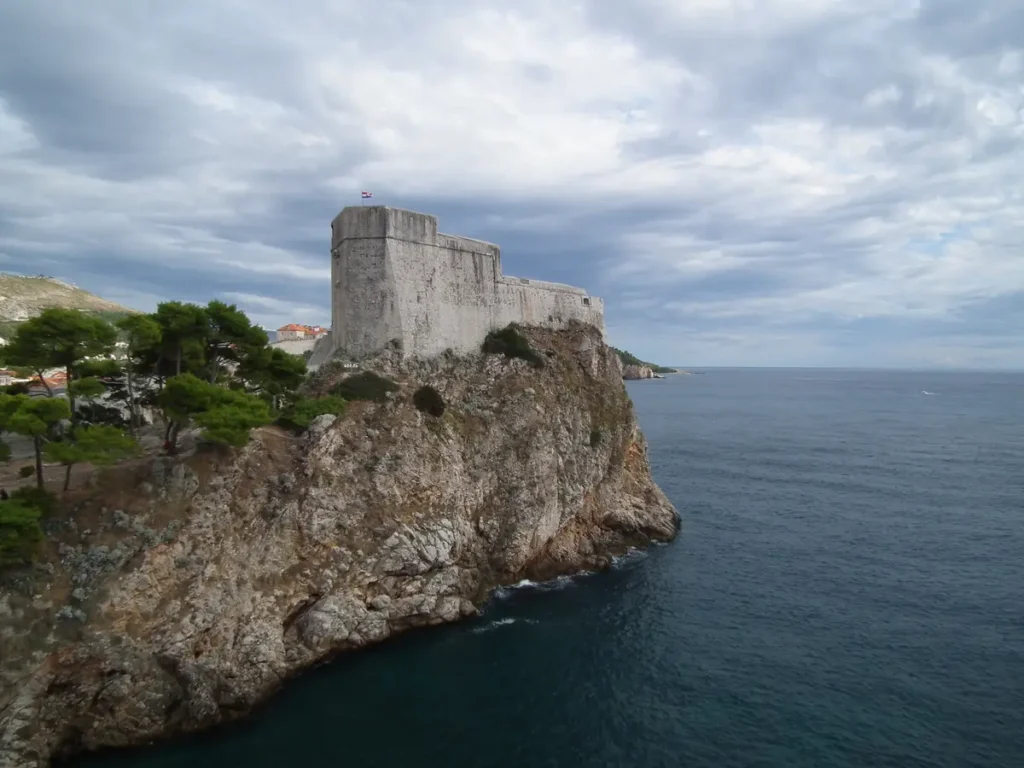
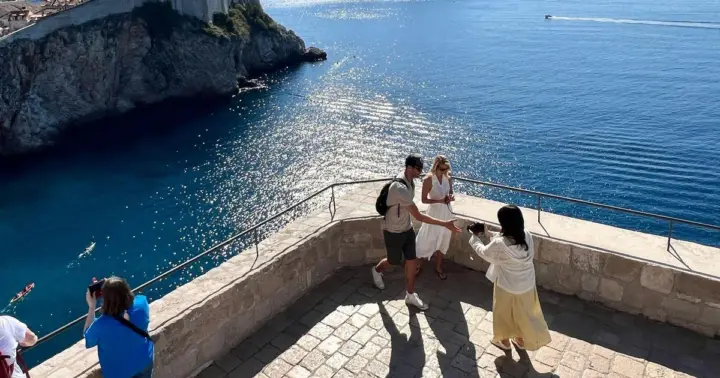
Lovrijenac Fort, often called the “Gibraltar of Dubrovnik”, stands on a rocky outcrop about 37 metres above the sea. Its position west of the Old Town allowed it to defend both the land approach and the harbour below.
The fortress developed over several centuries, although local legend connects its beginnings with an 11th-century attempt by Venice to build a fort on the same rock. From the upper terraces, the views back towards the city walls are among the best in Dubrovnik.
Lovrijenac is also a performance venue during the Dubrovnik Summer Festival, especially for theatre. Event schedules and visitor access can therefore change.
Pause on the approach as well as at the top: the path reveals the fort’s relationship with Pile Bay, Bokar Fort and the western section of the city walls.
Vicente Ortiz
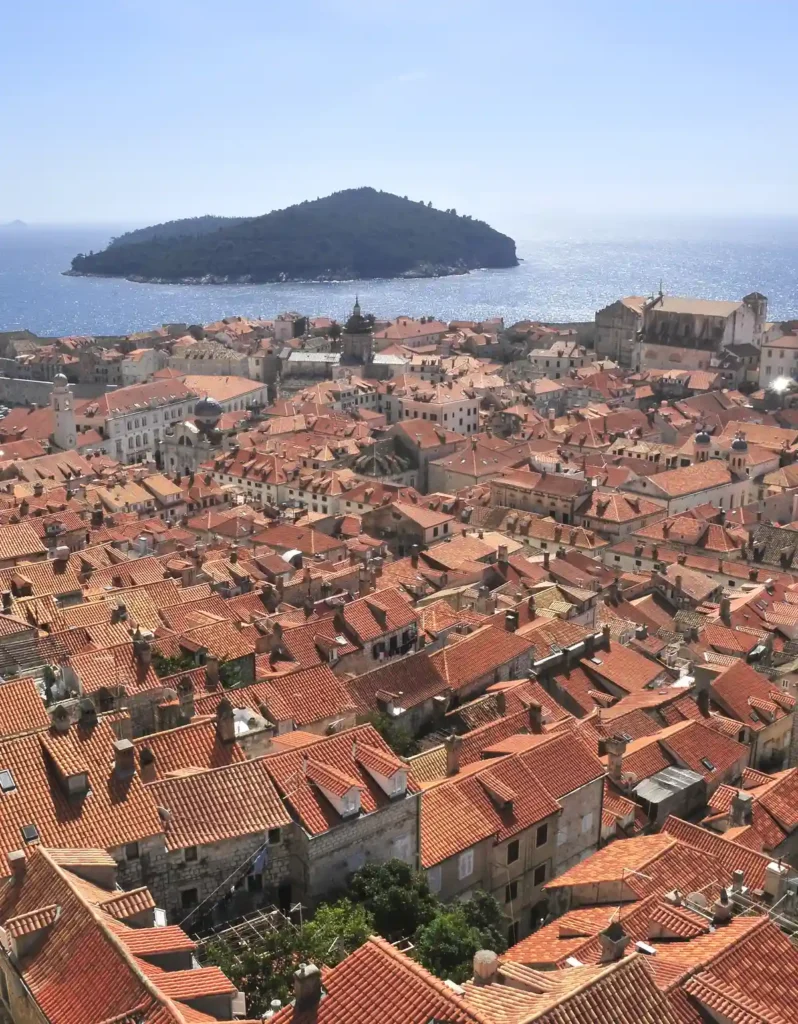
Lokrum Island is a protected nature reserve just off Dubrovnik. The island covers about 0.7 square kilometres, most of it wooded, and the boat from the Old Port usually takes around ten minutes.
Its cultural highlights include the remains of a Benedictine monastery, the 19th-century summer residence associated with Maximilian of Habsburg and a botanical garden founded in 1959. Peacocks, introduced in the 19th century, are among the island’s most visible residents.
For swimming, look for the rocky shoreline or the small saltwater lake known as the Dead Sea. Follow marked paths and local safety signs; the coast can be exposed and slippery.
Boat frequency, the last return and island opening dates vary with the season and weather. Staying overnight is not permitted, so check the return schedule before exploring.
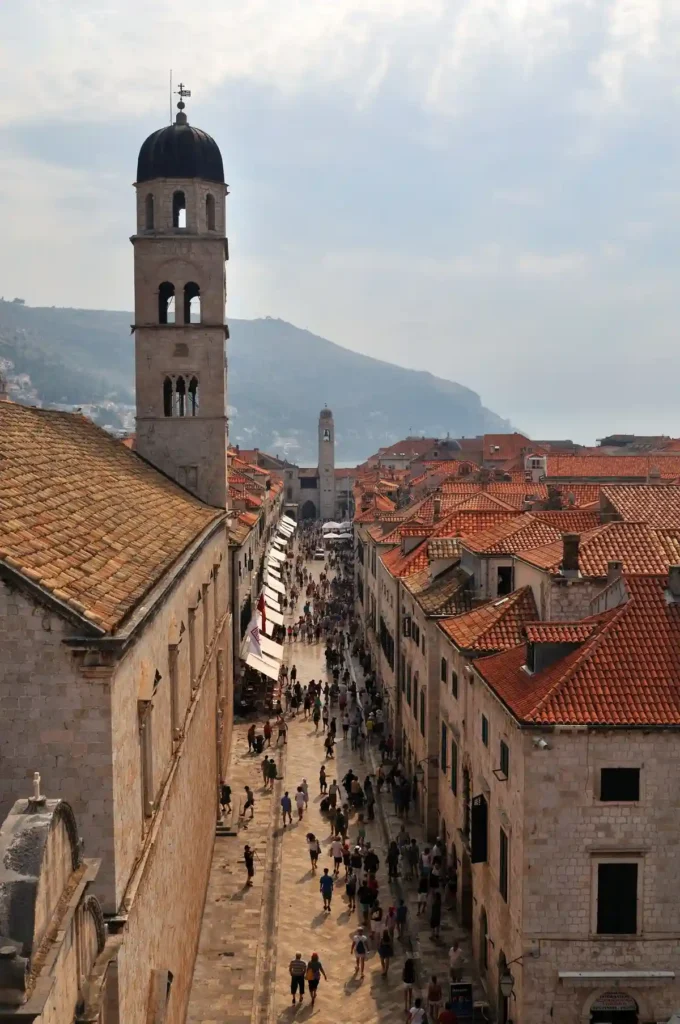
Stradun, also called Placa, is the main pedestrian street through Dubrovnik Old Town. It runs for roughly 300 metres from the Pile Gate area towards Luža Square, linking many of the city’s best-known landmarks.
The limestone paving has been polished by generations of footsteps. The street’s harmonious facades reflect the rebuilding that followed the 1667 earthquake, when much of the city was reconstructed in the Baroque style.
Stradun is busiest during the middle of the day and on summer evenings. Walk it once for the grand view, then turn into the side streets for small squares, steep stairways and a more intimate sense of the Old Town.
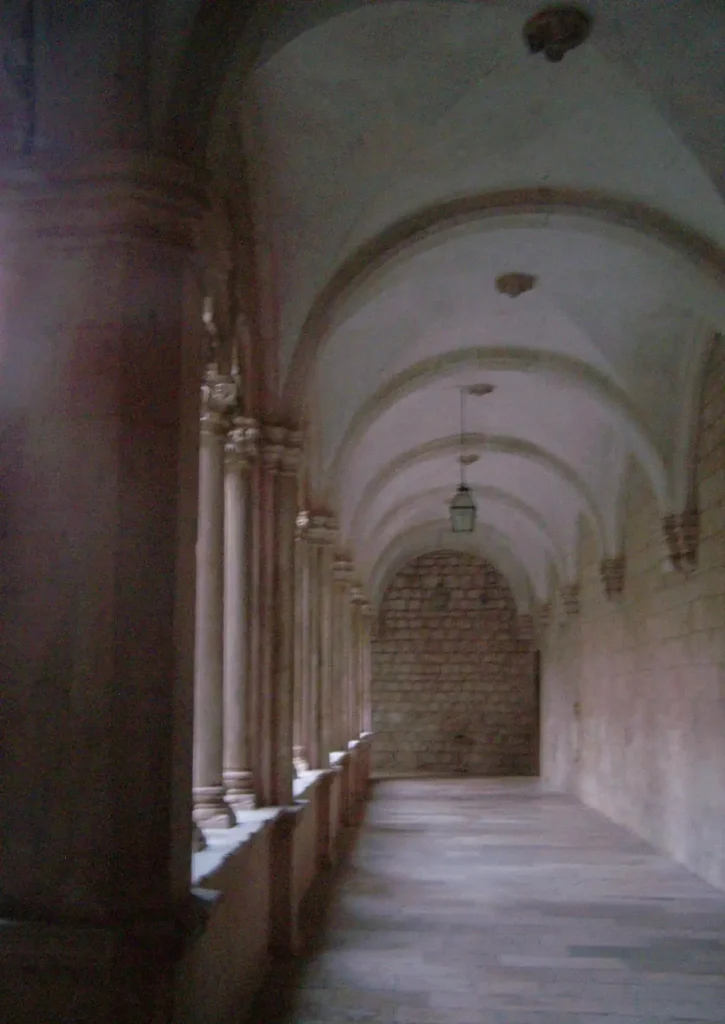
The Franciscan Monastery stands near the western end of Stradun. Construction of the complex began in 1317 after the community moved within the protection of the city walls.
The Romanesque-Gothic cloister offers a quiet contrast to the street outside. The monastery also preserves an important library and art collection, while its museum displays historic pharmacy vessels and equipment.
The pharmacy associated with the monastery dates to 1317 and is commonly described as one of Europe’s oldest still operating. Museum and church access may follow different schedules.
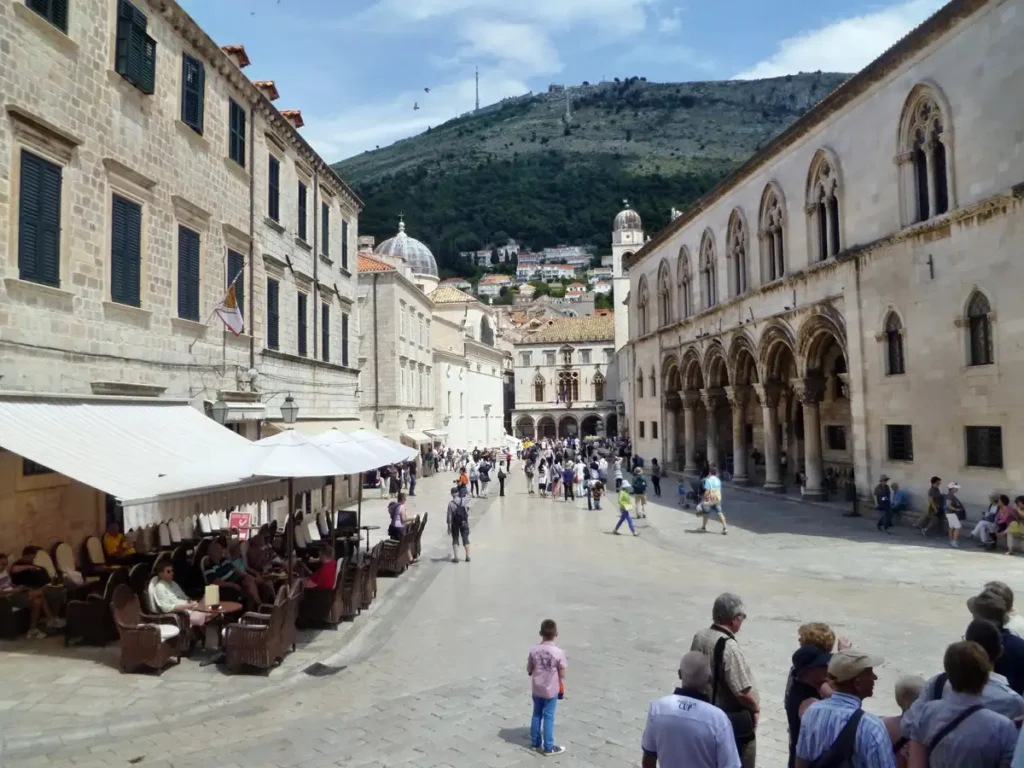
Luža Square is the civic focus at the eastern end of Stradun. Sponza Palace, Orlando’s Column, the city bell tower, the Small Onofrio Fountain and the Church of St Blaise all stand around or beside this open space.
The square has long been a setting for public ceremonies. It remains central to the Dubrovnik Summer Festival, whose opening traditionally takes place in front of Sponza Palace.
Visit early to see the architecture with fewer people, then return in the evening when the square becomes a natural meeting point. Festival stages and access routes can alter the layout in summer.
Stand opposite Sponza Palace and compare its Gothic windows, Renaissance arches and fine stone carving—the facade is one of the clearest examples of Dubrovnik’s blended architectural language.
Julieta Betancor
The Dubrovnik Cable Car connects the lower station above the Old Town with Mount Srđ. The journey covers 778 metres of track in under four minutes, reaching an upper station at 405 metres above sea level.
At the top are viewing terraces, a restaurant and Fort Imperial, which houses a museum devoted to the Croatian War of Independence. On a clear day the panorama extends across the walled city, Lokrum and the surrounding islands.
Operating months and hours vary, and service can pause in strong wind or lightning. Check the official timetable on the day, especially if you plan to go up for sunset.
Start with the u003ca href=u0022#dubrovnik-old-townu0022u003eOld Townu003c/au003e, the u003ca href=u0022#dubrovnik-city-wallsu0022u003ecity wallsu003c/au003e, u003ca href=u0022#sponza-palaceu0022u003eSponza Palaceu003c/au003e and u003ca href=u0022#dubrovnik-cathedralu0022u003eDubrovnik Cathedralu003c/au003e. If time allows, add Lovrijenac Fort, Lokrum Island and Mount Srđ.
Walk the u003ca href=u0022#dubrovnik-city-wallsu0022u003ecity wallsu003c/au003e, follow the paths on u003ca href=u0022#lokrum-islandu0022u003eLokrum Islandu003c/au003e, kayak along the coast or head up Mount Srđ. Boat, kayak and cable-car services depend on weather and season.
Walking is the best way to explore the pedestrianised Old Town. Public buses connect Pile, Ploče, Gruž, Lapad and other districts, while boats are needed for islands such as Lokrum.
Look for Adriatic fish and seafood, black risotto, Dalmatian pršut, regional cheeses and rožata, Dubrovnik’s traditional custard dessert. Pelješac wines such as Dingač are another local speciality.
Popular options include Cavtat, the Elaphite Islands and Mljet. Routes, border requirements and seasonal boat schedules vary, so check the practical details for your chosen trip.
Beyond the walls and main palaces, visit the u003ca href=u0022#franciscan-monasteryu0022u003eFranciscan Monasteryu003c/au003e, Lovrijenac Fort and the landmarks around u003ca href=u0022#luza-squareu0022u003eLuža Squareu003c/au003e.
The central tourist areas are generally busy and well lit, but use normal precautions, watch your footing on polished stone and choose well-used routes when walking late.
The city walls, Lovrijenac Fort and the upper station of the u003ca href=u0022#dubrovnik-cable-caru0022u003eDubrovnik Cable Caru003c/au003e offer three different perspectives over the Old Town and Adriatic.
Tourism and travel expert with a strong background in creating cultural content. Fluent in multiple languages and experienced as a presenter, she connects with diverse audiences to inspire the exploration of unique destinations. Her creative and dynamic approach stands out in every project, conveying the essence of each place she discovers.
Local guides, pay-what-you-want and no credit card to book. That is how you understand a city.
Explore free tours on guruwalk.com