

This guide to things to do in Tirana combines a practical one-day route with museums, neighbourhoods, green spaces and options for a longer stay. Start by comparing free walking tours in Tirana, then use the sections below to plan what to explore before or after your tour.
Last verified: August 2026 — Prices, opening hours, and reservation requirements checked against official sources. GuruWalk’s Tirana gurus reviewed the practical recommendations.
Best free tours in Tirana
A free tour is a practical way to begin exploring the centre and understand how Skanderbeg Square, the communist-era landmarks and modern Tirana fit together. Compare Tirana free walking tours and filter the available departures by language and date.
The exact meeting point is the location shown in each booking confirmation; a landmark mentioned in this guide should not be treated as the meeting point unless the booking says so. Tours commonly have an expected duration of about two to three hours, but the confirmed duration and route appear on the individual tour page.
Wear comfortable footwear and carry water, particularly in warm weather. Free tours have no fixed ticket price: a common tipping baseline is €10–€20 per person, while travellers may give up to €50 for an especially strong or longer experience. After the tour, continue independently to the Pyramid, Blloku or the City Park according to where the route finishes.
Tirana is completely underrated and during my tour, you will discover the beauty of my city. All I want is…

Join us in this free walking tour to get a great insight, and visit the essential and most important places…

Discover Tirana with passionate locals and certified expert guides

Unveiling Tirana: A Fusion of Street Art & Modern Architecture Embark on an unforgettable journey through Tir…
Discover Tirana like never before with our "Tirana Hidden Treasures Tour"! Dive into the city's rich history, explore its hidd…

Visiting Tirana for the first time? Start here. Discover Tirana through the eyes of a local guide and learn the…

Tirana, the capital of the Republic of Albania, is known for its Ottoman, Fascist, and Soviet architecture. The walking tour…

What to see in Tirana in one day

Morning
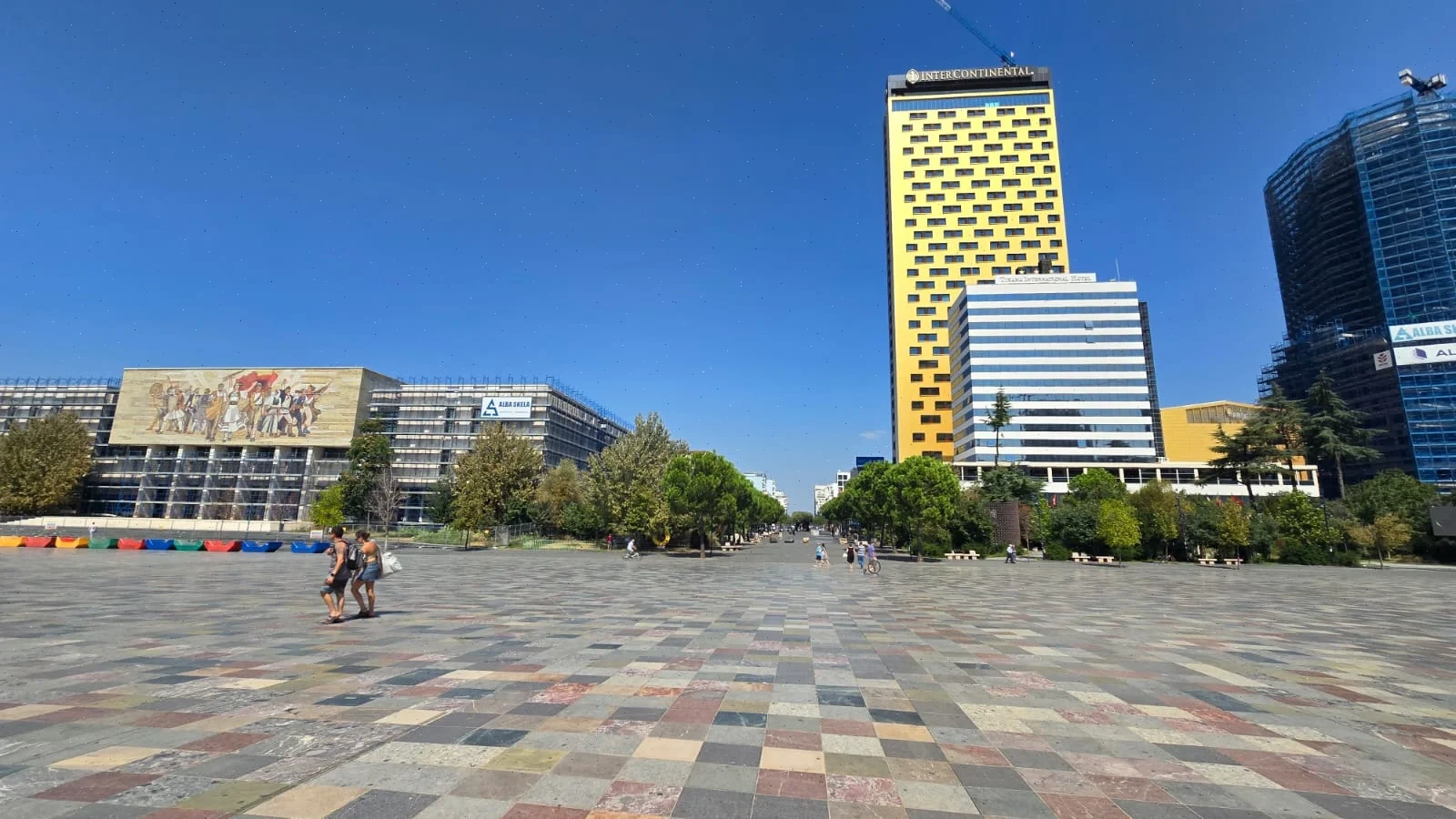
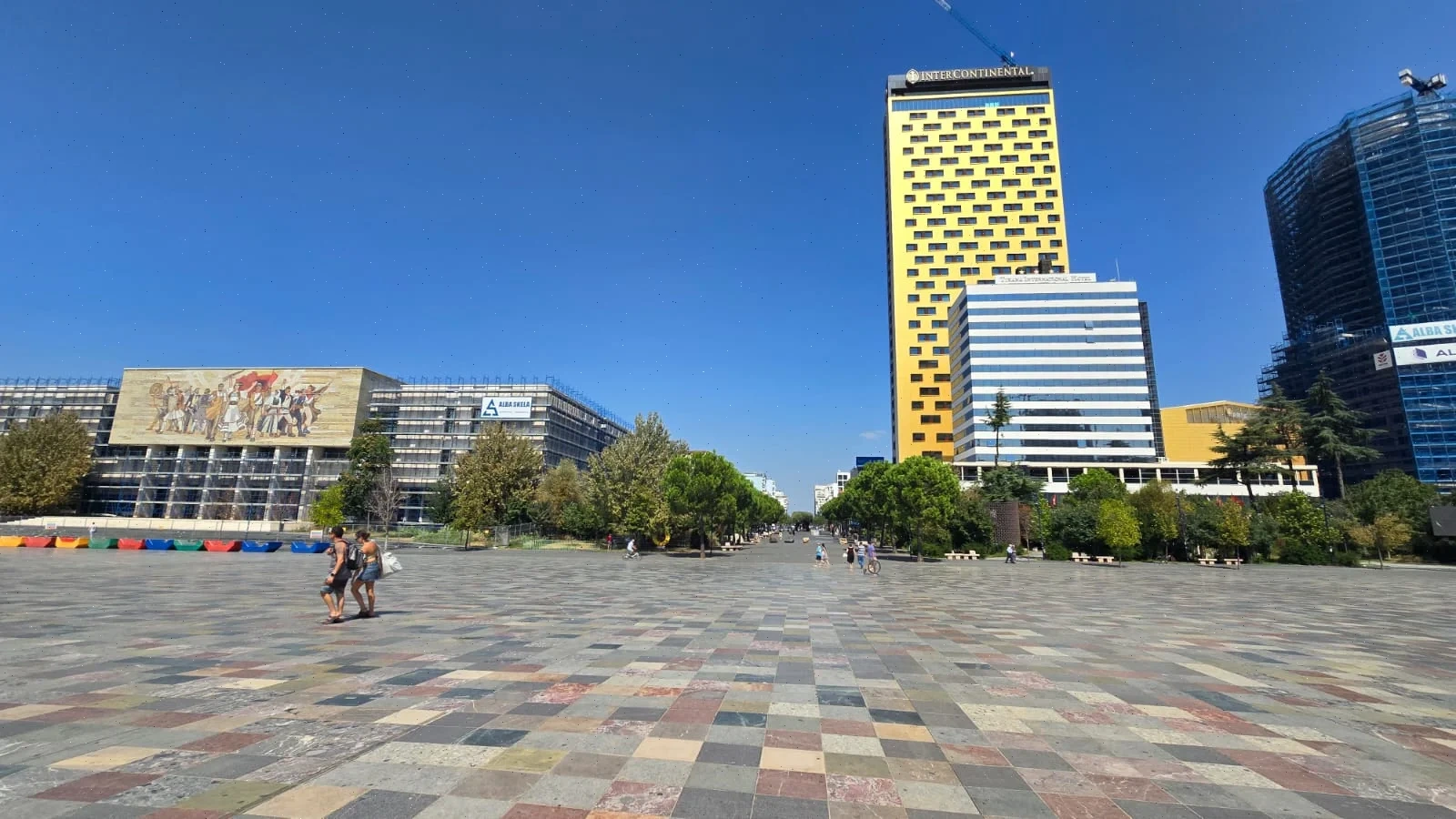
Start in Skanderbeg Square, where several central landmarks sit within a short walk of one another. See the Skanderbeg statue, the National Opera and Ballet Theatre and the surrounding civic buildings before continuing across the square.
Walk past the National History Museum to see its exterior mosaic. Official information reviewed in August 2026 indicated that the museum was closed for renovation, with reopening planned for March 2028; confirm the latest status on the official museum website before planning an interior visit.
Continue south-east to the Pyramid of Tirana. Its stepped exterior and terrace provide a different view of the centre and form a convenient transition towards Blloku.
Afternoon
Stop for lunch in the Blloku neighbourhood, then check the current status of the National Gallery of Arts before deciding whether to include it. Both places are close enough to combine without crossing the city several times.
Continue to the City Park for a walk beside the lake. Return towards Skanderbeg Square afterwards and finish at the Clock Tower, subject to current access conditions.
Skanderbeg Square

Skanderbeg Square is the central public space of Tirana. It is named after Gjergj Kastrioti, known as Skanderbeg, the Albanian leader who fought the Ottoman Empire in the 15th century. His equestrian statue stands in the centre and serves as one of the square’s main reference points.
The square is also a social and cultural meeting place. Buildings around it include the National Opera and Ballet Theatre and the National Library, while public events and festivals periodically use the open pedestrian area.
National History Museum

The National History Museum opened in 1981 and occupies a prominent position on Skanderbeg Square. During its renovation closure, travellers can still examine the large mosaic on the façade, but should not plan an interior visit without first confirming that public access has resumed.
Before the closure, the museum’s collection covered periods from prehistory and ancient Illyria to the Middle Ages, independence and the communist era. These descriptions provide context for the institution, rather than indicating that the galleries are currently accessible.
Displays included archaeological objects, documents and photographs related to Albanian political and social history. The collection and exhibition layout available after reopening may differ, so use the official visitor information when planning a future visit.
Pyramid of Tirana

The Pyramid of Tirana was built in 1988 as a museum dedicated to Enver Hoxha, Albania’s communist leader. Its design by Pranvera Hoxha, Klement Kolaneci, Pirro Vaso and Vladimir Bregu uses sloping geometric forms and exposed concrete.
During the 1990s, the building fell into neglect and was used for graffiti and alternative cultural activities. It has since been redeveloped as a creative and educational space, while the surrounding grounds provide paths, seating and room for public events.
Bunker Museum

The Bunker Museum uses a former communist-era shelter to examine Albania’s recent history. Its rooms address political surveillance, repression and the defensive policies associated with Enver Hoxha’s government.
The displays include personal objects, photographs and documents connected with daily life under the regime. Reading the introductory material before moving through the rooms helps place individual testimonies within the wider political chronology.
The bunker’s corridors and reinforced rooms are also part of the visit. Check current admission availability and reservation requirements before travelling, as these can change.
National Gallery of Arts
Tirana’s National Gallery of Arts opened in 1954 and developed into an important institution for Albanian modern and contemporary art. The gallery has been undergoing renovation, so confirm its current public access and exhibition programme before adding it to your route.
Its established collection includes works by Albanian artists such as Kolë Idromeno and Vangjush Mio, alongside material representing different periods and techniques. Treat descriptions of the interior collection as background until the institution confirms which galleries are open.
City Park

Located south of central Tirana, the City Park provides walking paths, trees and open areas around its lake. It works well as an afternoon break after visiting the denser central streets and museums.
Benches and grassy areas make the park suitable for a picnic or a short rest. Rental services and other seasonal activities may not operate every day, so check locally rather than planning the visit around a specific service.
Clock Tower

The Clock Tower stands beside Skanderbeg Square and forms part of the Et’hem Bey Mosque complex. Built in the 19th century, it rises to around 35 metres and has a balcony overlooking the surrounding centre.
The clock mechanism has been replaced and restored several times, including after damage during the Second World War. Its design combines Ottoman and later Italian influences. Confirm whether access to the upper level is available before relying on it as a viewpoint.
Blloku neighbourhood

The Blloku neighbourhood was once reserved for Albania’s communist political elite. Its change into a district of cafés, restaurants, shops and nightlife venues makes it a useful place to observe the contrast between the city’s recent history and its present-day social life.
Cafés and restaurants are concentrated along several streets, making Blloku a convenient lunch or evening stop. Choose according to the menu and current availability rather than treating the district as a single attraction.
Dajti Ekspres and Bunk’Art 1
With more than one day in Tirana, combine Bunk’Art 1 with the Dajti Ekspres because both lie east of the centre. Visit the museum first or second according to its current entry arrangements, then use the cable car for access towards Mount Dajti rather than trying to fit both into the central walking route.
Operating days and weather-related interruptions can affect the cable car. Check the current timetable on the official Dajti Ekspres website and consult availability instead of relying on a fixed price or schedule.
For additional day trips, food experiences and guided visits, compare tours and activities in Tirana.
Frequently asked questions about Tirana
What are the best things to do in Tirana?
Start with Skanderbeg Square, the Pyramid of Tirana, Blloku and the City Park. The Bunker Museum adds context about communist-era Albania, while Mount Dajti is better suited to travellers with more than one day.
Is one day enough for Tirana?
One day is enough for a central walking route covering Skanderbeg Square, the Pyramid, Blloku and the City Park. Add another day if you want to combine Bunk’Art 1 with the Dajti Ekspres.
How long do free walking tours in Tirana take?
A typical expected duration is about two to three hours, although the exact length and route depend on the selected tour. Use the meeting point and duration shown in your booking confirmation.
Is Tirana safe for tourists?
Tirana is generally considered safe for tourists. Take normal city precautions, keep track of personal belongings and use well-lit routes at night.
How can I visit Mount Dajti from Tirana?
The Dajti Ekspres provides cable-car access towards Mount Dajti and can be combined with nearby Bunk’Art 1. Check the official operating timetable and current transport arrangements before leaving the centre.

Travel marketing specialist with extensive experience in the travel sector. At companies such as Despegar and GuruWalk, she has led traveler-focused digital acquisition strategies. Now, from the GuruWalk blog, she combines her expertise with her passion for discovering and sharing unique destinations.