


Link A Coruña’s Roman lighthouse, glass-fronted Marina, Old Town, Atlantic beaches and museums on practical routes for one or two days.
 Belén Rivas
GuruWalk
·
Updated 3 Sep 2026
Belén Rivas
GuruWalk
·
Updated 3 Sep 2026A Coruña makes sense when you face the Atlantic: it is a compact peninsula where a Roman lighthouse, urban beaches, glazed façades and lively squares are tied together by the seafront promenade. This guide covers the essential things to do in A Coruña, the best order for your visits and what to book ahead. For the stories that a map cannot tell, browse the free walking tours in A Coruña led by local guides.
Last verified: August 2026 — Prices, opening hours and booking requirements checked against official sources. GuruWalk’s A Coruña guides reviewed the practical recommendations.
A free tour is an excellent first step because centuries of local history fit into a short walk through the centre. Routes commonly connect María Pita Square, the glass-fronted Marina and the lanes of the Old Town while a guide explains the city’s defences, its bond with the sea and its unusual architecture. Join on your first morning and you can return later to the museums, tapas streets or viewpoints that catch your interest.
GuruWalk lets you compare times, languages, meeting points and traveller reviews before booking. No credit card is needed. At the end, you decide how much to give the guide based on your experience; many travellers choose around €10–€20 per person after a tour they enjoyed. Arrive about ten minutes early, wear comfortable shoes and cancel if your plans change so the guide can manage the group.
Discover A Coruña in a different way. We'll talk about history and geography, of course! But we'll also

Discover the City of Glass! On this tour, we will show you the essentials of A C…

This tour will deal with the origin of Galician superstitions as well as other issues related to the best-known customs…
Do not miss one of the most famous maritime cities of Galicia: its historical and cultural importance, always linked to…

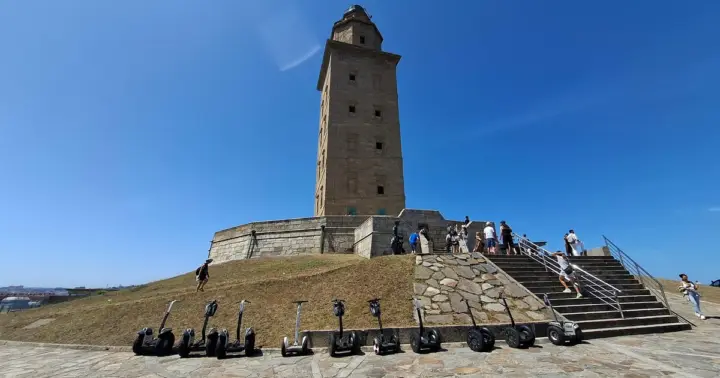
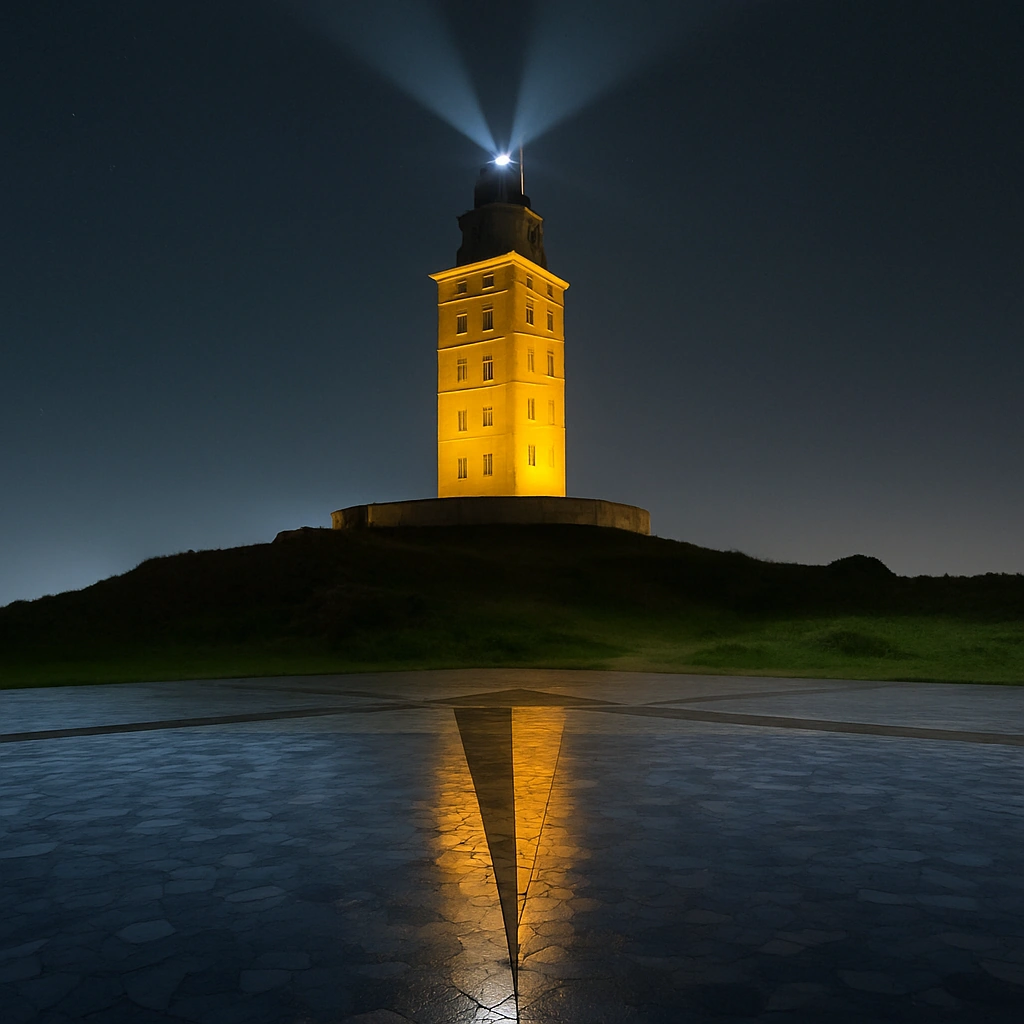
Nearly two thousand years of maritime history converge at the Tower of Hercules. No other surviving Roman lighthouse still serves its original purpose. This UNESCO World Heritage monument rises within a broad sculpture park, so the visit begins well before the doorway. Leave time to follow the paths, see the Rosa dos Ventos compass mosaic and approach the cliffs while staying inside marked areas.
General admission costs €3 and the reduced ticket is €1.50. Entry is free on Mondays, although you still need a ticket from the visitor centre. From 16 June to 15 September, the tower opens daily from 10:00 to 21:00, with last admission at 19:45. During the rest of the year it closes at 17:00 and the final entry is at 15:45. Capacity is limited to 20 people per half-hour slot, so summer visitors should book through the official Tower of Hercules website. Strong winds can close the tower or its balcony even if you hold a ticket.
María Pita Square is A Coruña’s grand civic room. City Hall fills one side, while arcaded façades create a sheltered place to pause, eat or begin exploring the historic centre. The central statue honours María Pita, a heroine associated with the defence against the English attack of 1589. Her small house museum, a few minutes away, explains that episode and the city’s development. Admission is free and it opens Tuesday to Saturday with a midday break.
Cross from the square to Avenida da Marina. Rows of enclosed balconies form the image behind A Coruña’s “City of Glass” nickname. These galleries were more than decoration: the glazed chamber captured sunlight, kept out the rain and helped warm the rooms behind it. View them from the harbour side, where the repeating white frames and changing reflections are easiest to appreciate.
Behind the Marina lies a quieter district of stone lanes, intimate squares and medieval churches. The Collegiate Church of Santa María do Campo and the Church of Santiago are useful points for shaping a walk. Former noble homes, convents and cultural institutions fill the streets between them. There is no need for a rigid checklist: enter via Rúa de Santiago, continue towards Santa María and finish beneath the trees in San Carlos Garden.
Inside San Carlos Garden stands the tomb of Sir John Moore, the British general who died after the Battle of Elviña in 1809. Nearby, the Archive of the Kingdom of Galicia marks the route downhill towards San Antón Castle. The local tourism office lists the principal landmarks in its practical overview of the Old Town.
This fortress occupies a former islet that is now joined to the mainland. Built to defend the bay, it houses the Archaeological and Historical Museum. Its collections trace the prehistory and history of Galicia, but the building is equally rewarding for its courtyards, walls and harbour views. In July and August it opens Tuesday to Saturday from 10:00 to 21:00, and Sundays and public holidays from 10:00 to 15:00. General admission is €2, with last entry 30 minutes before closing.
Continue along the seafront towards the Tower when you leave. This stretch links the castle, breakwater, Aquarium Finisterrae and lighthouse park, with distinctive red lamp posts marking the way. It is a rewarding walk, but local buses are useful if the weather turns or you are travelling with children.
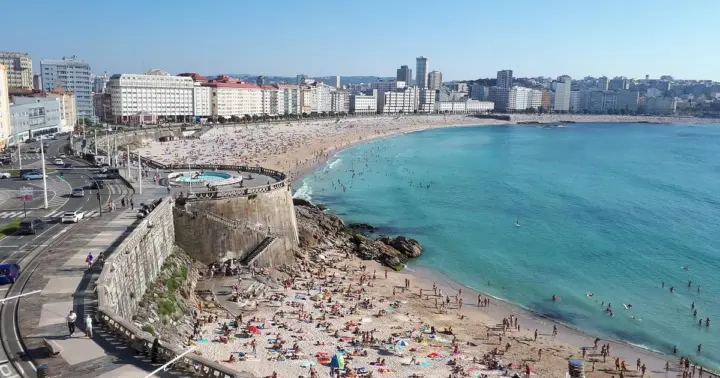
A Coruña lets you move from the city centre to the sand without a long journey. Riazor Beach stretches for about 610 metres, while Orzán and neighbouring Matadero form a beach around 780 metres long. Both face the open Atlantic, so pay close attention to flags and surf conditions even on bright days. Smaller options include As Lapas beside the Tower and San Amaro on the eastern side of the peninsula.
The promenade covers 13.5 kilometres and links many of the main sights, but you do not have to walk all of it. One satisfying section runs from Orzán Bay to the Tower of Hercules; another joins San Antón Castle to the harbour and glass galleries. Riazor gives you a broad sunset horizon, whereas the lighthouse headland feels wilder. Carry a light extra layer even in summer because the breeze can change how the temperature feels within minutes.
A Coruña’s municipal science museums are dependable choices for a rainy day and work particularly well for families. Casa de las Ciencias occupies a mansion in Santa Margarita Park and focuses on hands-on exhibits and astronomy. Domus, an unmistakable building above the promenade, explores the human body. Aquarium Finisterrae faces the ocean and presents ecosystems from the Galician coast.
All three open daily from 10:00 to 20:00 in August. Admission is €2 for Casa de las Ciencias, €2 for Domus and €10 for the Aquarium; a combined pass for all three costs €12. Entry ends one hour before closing at the Aquarium and 30 minutes before closing at the other museums. Check for changes on the official science museums opening-hours page.
Monte de San Pedro was once a military position and became a public park in 1999. Its grounds cover more than 90,000 square metres, retain two enormous Vickers guns and open onto a panorama that includes the city, the Tower of Hercules and a long reach of coast. On a clear day, it is one of the strongest places to finish your sightseeing as the sun drops towards the ocean.
Monte de San Pedro sits away from the historic core, so a bus or taxi saves time. You can visit without relying on the panoramic lift, whose operating days should be checked separately. Keep this plan flexible when clouds close in and choose a museum first instead; the far-reaching view is the main reason to make the journey.
Local cooking reflects the harbour and Galicia’s rich produce. Octopus, fish, empanada, mussels and regional cheeses appear often on menus and market counters. For an informal meal, the streets around María Pita, Rúa Galera and Rúa Olmos gather plenty of bars and traditional dining rooms. The market at Plaza de Lugo is a good place to see seasonal produce and understand why fish and shellfish have such a prominent role at the local table.
You do not need to chase a fixed restaurant list. Read the menu, ask about portion sizes and confirm the price of any seafood sold by weight before ordering. At aperitif time, a sheltered terrace behind the Marina can be more comfortable than the beachfront when the north-easterly wind is blowing. Tarta de Santiago and Galician cheeses make simple desserts to share.
Keep the historic centre and lighthouse together on day one. On the second day, choose the Aquarium, Domus or Casa de las Ciencias according to your interests, continue with an unhurried walk by Riazor and finish at Monte de San Pedro. This plan builds in room for rain and avoids crossing the city several times. Travellers staying longer can also adapt the tourism office’s official three-day itinerary.
One active day is enough for the centre, Old Town and Tower of Hercules. Two days feel more comfortable and make room for a science museum, the beaches and Monte de San Pedro without rushing between fixed opening times.
Access to the surrounding park is free. Admission to the tower costs €3 for a general ticket and €1.50 for a reduced ticket. Mondays are free, but visitors still need to collect a ticket and enter at the assigned time.
Yes. María Pita, the Marina, Old Town, San Antón and the main beaches are linked by walkable routes. The Tower is farther from the centre, while Monte de San Pedro lies beyond the compact core, so a bus can shorten those journeys.
Domus, Aquarium Finisterrae, Casa de las Ciencias, the archaeological museum in San Antón Castle and the María Pita House Museum can fill a wet-weather day. Confirm opening hours and last admission before setting out.
No. You can book a free walking tour in A Coruña through GuruWalk with no credit card needed. At the end you choose how much to give the guide based on the experience, and you should cancel early if you cannot attend.
A balanced visit combines a local guide’s perspective with unstructured time beside the sea. Choose the tour that fits your schedule first, then add museums, viewpoints or food experiences around it. Browse the available tours and activities in A Coruña to round out your stay. Booking a free tour requires no credit card, leaving you free to adjust the rest of the day to the Atlantic weather.
Travel marketing specialist with extensive experience in the travel sector. At companies such as Despegar and GuruWalk, she has led traveler-focused digital acquisition strategies. Now, from the GuruWalk blog, she combines her expertise with her passion for discovering and sharing unique destinations.
Local guides, pay-what-you-want and no credit card to book. That is how you understand a city.
Explore free tours on guruwalk.com