


Plan one to three days in Barcelona around Modernist buildings, historic neighborhoods, museums, markets, viewpoints, transport, and walkable routes.
 Belén Rivas
GuruWalk
·
Updated 27 Aug 2026
Belén Rivas
GuruWalk
·
Updated 27 Aug 2026Planning what to do in Barcelona is easier when the city is divided into walkable areas and realistic day-by-day routes. This guide covers its Modernist architecture, historic neighborhoods, museums, markets, viewpoints and practical transport options; start with the free-tour section to get oriented before exploring independently.
Last verified: August 2026 — Prices, opening hours, and reservation requirements checked against official sources. GuruWalk’s Barcelona gurus reviewed the practical recommendations.
A free tour is one of the best ways to begin exploring the city, understand the layout of the old town and identify places to revisit later. Compare Barcelona free walking tours by route, language and availability. A contribution of €10–€20 per person is a common baseline, while an exceptional tour may merit up to €50.
All-in-One Highlights Walking Tour! Gothic quarter and Gaudi buildings Discover the Old Town's histor…

Discover the city's most popular tour of the last decade —the top-rated experience with the most fun and knowledg…

The Gaudí tour is the start tour in Barcelona, this is the #1 tour on Google Maps with over 14,000…

🏆 Tour awarded at the GuruWalk Awards 2026 as The Best Mystery & Legends Free Walking Tour (categ…

I am the only person running this tour, No Umbrella, No Metro, No Earpieces, No Upselling . Where was the…

The Original Local Company with more than 10 Years & more than 12,000 5⭐ Reviews on Google Barcelona isn’t ju…

🚨 Warning: This is not your average walking tour. With me, you’ll discover not only the history behind this beautiful…
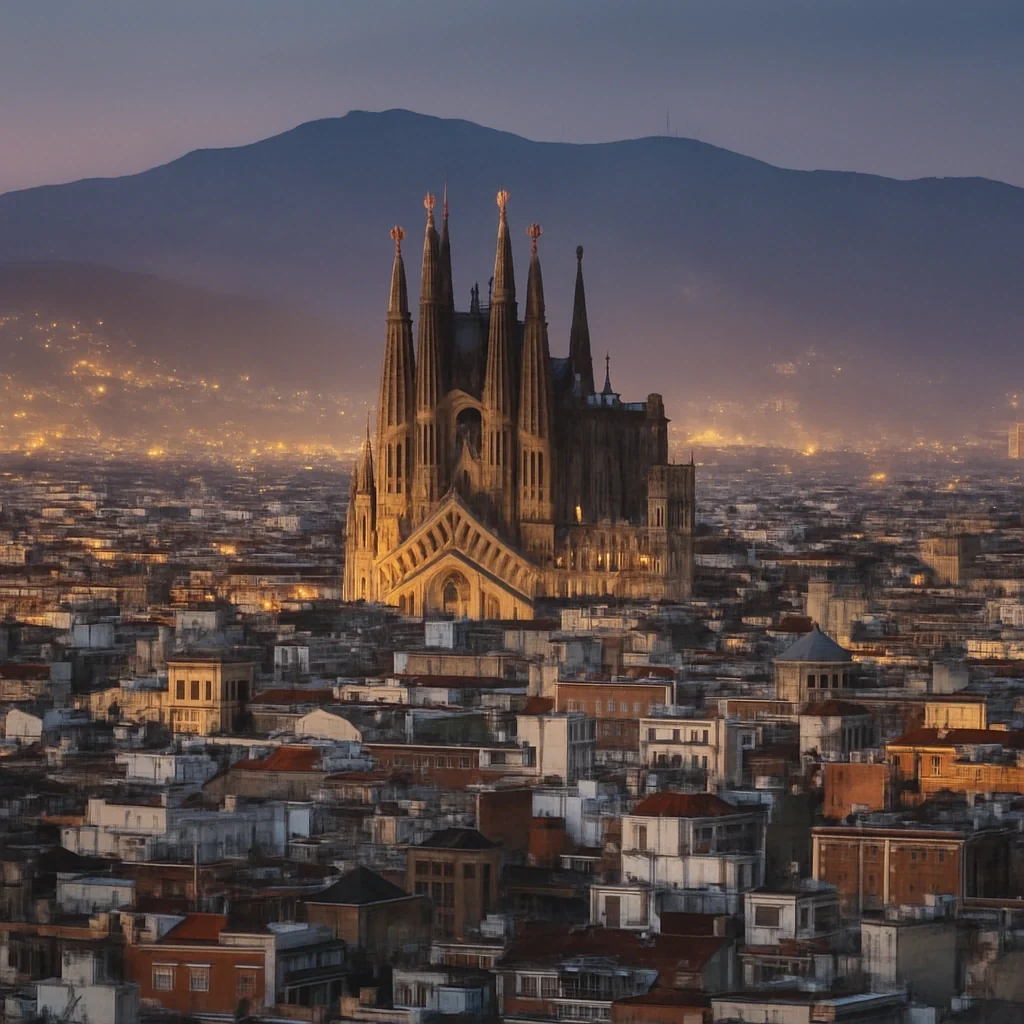
Barcelona blends urban remains, medieval neighborhoods, architecture from the Modernisme period and the 20th-century avant-garde.
Barcelona is home to several UNESCO World Heritage Sites thanks to its emblematic buildings and its cultural, historical and artistic heritage. The city offers numerous museums, shows, dance venues, historic buildings and colorful parks, as well as a varied food scene.
Within Catalonia there are other destinations that attract many travelers, such as Tarragona and Girona. The following route covers the main places to see in Barcelona in three days or during a weekend getaway.
Start your visit at La Sagrada Família, one of the masterpieces of architect Antoni Gaudí and Barcelona’s most recognizable symbol. Check reservation availability in advance because admission is in high demand. Continue through the Gothic Quarter, with its narrow streets and squares such as Plaça Reial. End the day walking along Las Ramblas, the avenue connecting Plaça de Catalunya with the old port.
Dedicate your second day to art and Modernism. Visit Park Güell, another of Gaudí’s designs, with colorful mosaics and broad city views. Then head to La Pedrera (Casa Milà) and Casa Batlló, two Modernist buildings on Passeig de Gràcia. The same avenue contains other Modernist façades and provides a direct walking route back toward Plaça de Catalunya.
On your last day, make time for Montjuïc Hill, where you can explore the Fundació Joan Miró and the National Art Museum of Catalonia (MNAC). Continue to Montjuïc Castle for views over the city and port. Finish with a stroll through Port Vell and dinner at one of the nearby restaurants.
These three days provide an overview of Barcelona’s architecture, historic districts, cultural venues and waterfront. Grouping nearby places limits unnecessary travel across the city.

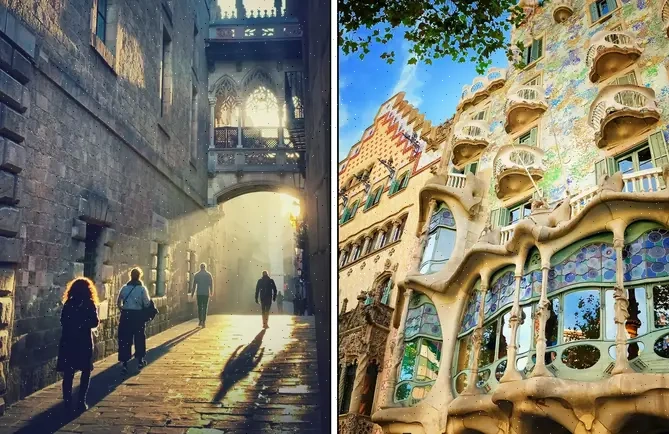
One of the best-known neighborhoods is the Gothic Quarter, home to a dense collection of Gothic buildings. It’s known for its medieval layout, narrow streets, small squares and mix of old and modern buildings.
Look closely at the stone walls around the cathedral and the former royal complex: several details reveal how these public spaces were used over time.
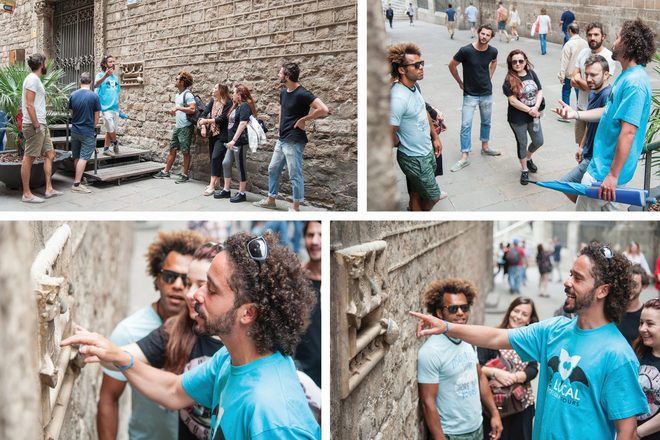
As you walk through the narrow streets of the Gothic Quarter, the oldest part of medieval Barcelona, there’s a curious detail in the old stones of its walls.
In several spots around the cathedral and the Royal Major Palace, you’ll see deep vertical cuts in the stone. The grooves have a practical explanation.
During the Middle Ages and until more recent times, people commonly sharpened knives and other tools on stones in public places.
There was no modern concept of preserving artistic and cultural heritage, so citizens used these public surfaces as convenient sharpeners.
Some stones were particularly suitable because of their resistance and quality. Karstic sandstone from Montjuïc was used throughout Barcelona’s history to build structures ranging from the Roman wall to the Sagrada Família.

The people least pleased by these improvised sharpeners were probably the esmolets, professional knife sharpeners who walked Barcelona’s streets carrying a grinding wheel and playing the sonaveus, a syrinx or Pan flute used to announce their presence to potential customers.
TIP

To explore the streets and stories of Barcelona’s Gothic Quarter, compare the routes in the free-tour section.

The World Begins with Every Kiss is a mural in one corner of Barcelona’s Gothic Quarter. It appears as a mosaic made from 4,000 photos sent by readers of El Periódico de Catalunya and set in ceramic to commemorate the idea of “living free” in 2014. Photographer Joan Fontcuberta created the work, inspired by a poem by Oliver Wendell Holmes.
The sound of a kiss is not so loud as that of a cannon, but its echo lasts a great deal longer. — Oliver Wendell Holmes

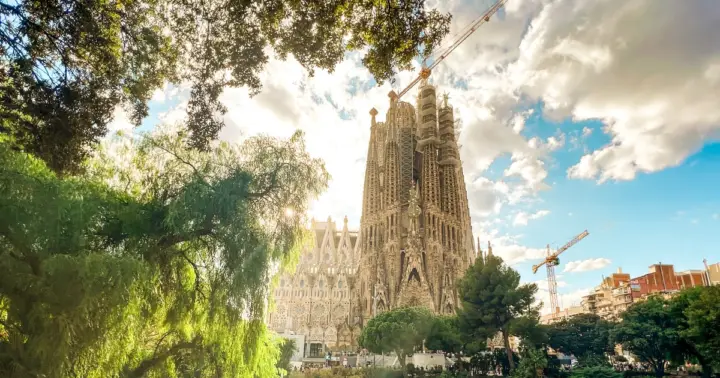
The Sagrada Família is the city’s best-known symbol. This Modernist work by Antoni Gaudí i Cornet remains under construction and receives large numbers of visitors. Check admission and guided-visit availability before choosing a time slot.
The first stone was laid in March 1882 for a Neo-Gothic project. The crypt was then built and, after disagreements with the promoters, the basilica came into Gaudí’s hands, who completely redesigned it. When the architect died in 1926, the basilica was unfinished, but construction could continue using the preserved plans.
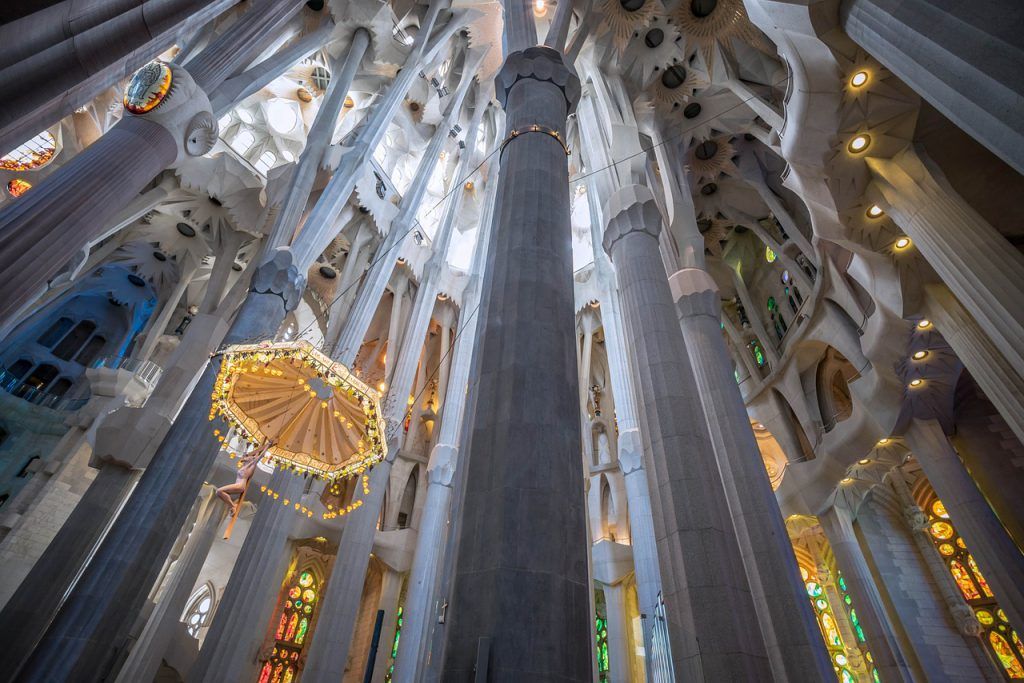
The towers — The complete design comprises 18 towers dedicated to the Apostles, the Evangelists, the Virgin Mary and Jesus. The façades — The Glory Façade addresses death, Judgment Day, glory and the abyss. The Nativity Façade depicts the birth of Jesus, while the Passion Façade reflects the suffering of the crucifixion. The interior — Large branching columns evoke tree trunks, while stained glass filters colored light into the nave. The altar and crypt are also central parts of the visit.
Reservation requirements can change, so consult current availability before going. A guided visit can provide additional architectural context and explain details that are easy to overlook inside the basilica.

Barcelona is strongly associated with Modernism, and Els Quatre Gats provides a compact introduction to the movement’s social and artistic setting.
Barcelona is an international reference in architecture partly because of the Modernist movement that developed in the late 19th and early 20th centuries. Antoni Gaudí’s Sagrada Família and Casa Batlló, and Lluís Domènech i Montaner’s Palau de la Música Catalana and Hospital de Sant Pau, reflect that period. Josep Puig i Cadafalch also shaped the movement, and the Els Quatre Gats building is one place to examine his work.
Els Quatre Gats is an artistic symbol of the city. Artists including Pablo Picasso met at this beer hall, which opened in 1897. Its direct inspiration was the Parisian cabaret Le Chat Noir (“The Black Cat”), while its name refers humorously to the Catalan expression for a sparsely attended place.
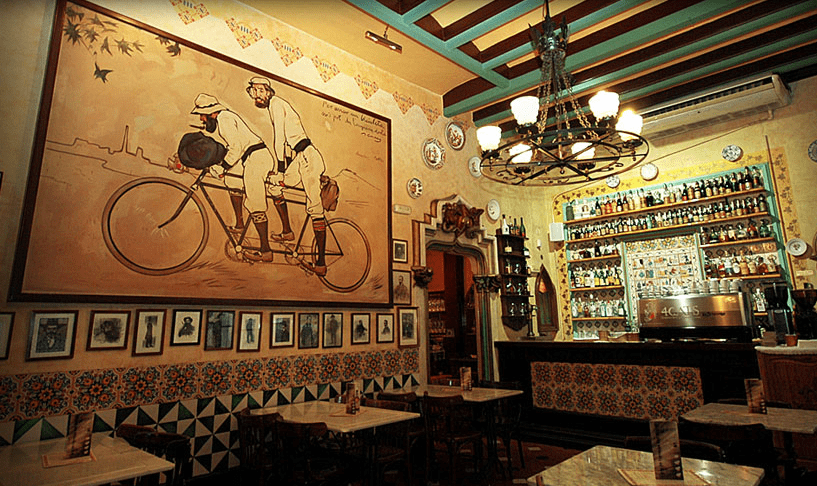
Part of its reputation rests on Picasso’s early exhibitions at the venue. A reproduction of a poster he designed for Els Quatre Gats can be seen near the building’s entrance.
Els Quatre Gats combines Modernist architecture with the history of the artists and writers who gathered there.
Las Ramblas is the central promenade linking Plaça de Catalunya with the old port. The route is approximately 1.3 kilometers long and passes several landmarks, cultural venues and markets.
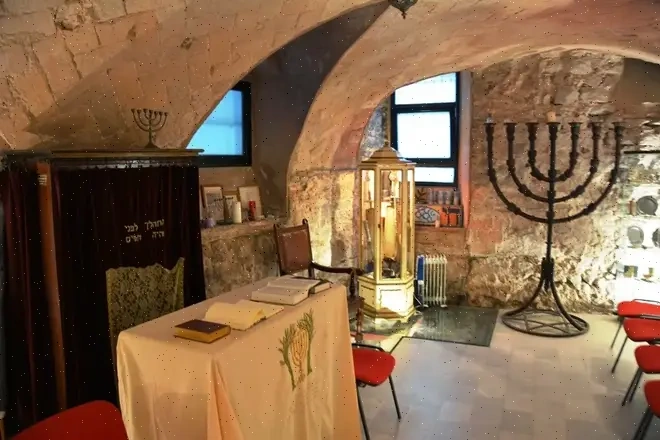
The Wax Museum occupies a Neoclassical building and contains more than 200 wax figures representing famous and historical characters. One of its unusual spaces is the former bank vault. Consult current admission availability before visiting.

La Boqueria occupies more than 2,500 square meters and contains over 300 stalls selling products including fruit, sweets, meat and fish. Entry is free; consult the market’s current operating days and hours before planning a visit.
⏰ Timing: Go while the produce and specialist stalls are operating rather than treating the market only as a lunch stop.
❌ Busy periods: Saturday is generally one of the busiest days, so allow more time to move through the aisles.
💶 Payment method: Carry more than one payment option because acceptance can vary between stalls.

The monument to Christopher Columbus was built for the 1888 Barcelona Universal Exposition. It stands 60 meters high at the end of Las Ramblas, next to the port.

Passeig de Gràcia was a major boulevard of Barcelona’s 19th-century bourgeoisie. It connects Plaça de Catalunya with the Gràcia neighborhood, and its Modernist and Noucentista buildings include two notable works by Antoni Gaudí.
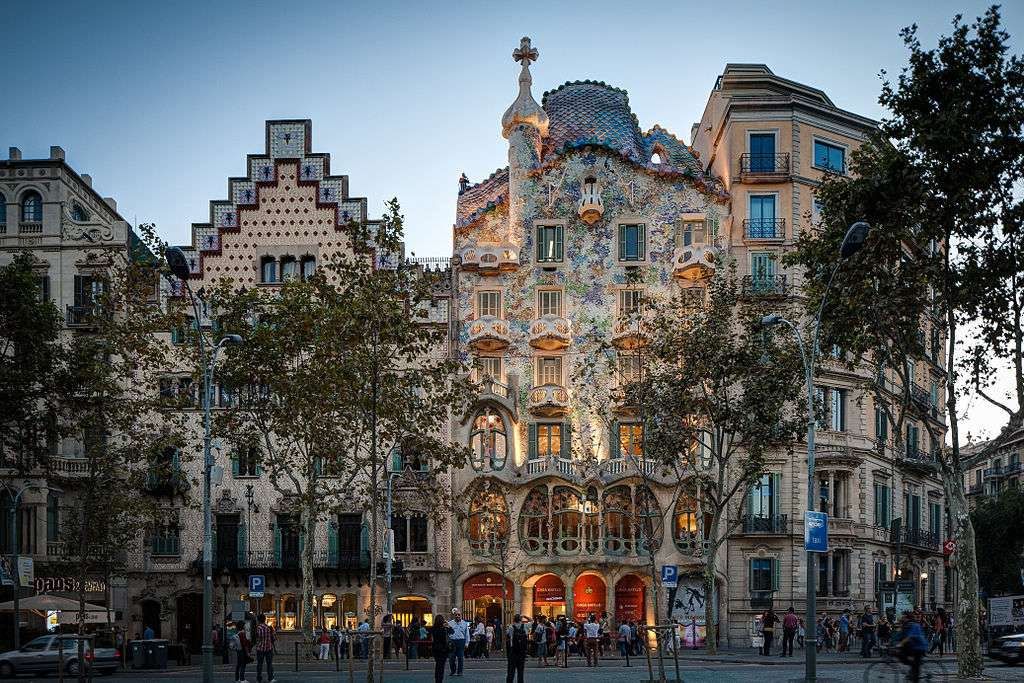
Casa Batlló was designed by Gaudí for Josep Batlló and built between 1904 and 1906. On the façade, the balconies resemble skulls and the pillars resemble bones. The interior route passes through the former family residence, a light-filled courtyard and the rooftop with its sculptural chimneys. Consult availability for admission and audio-guided visits.

La Pedrera, or Casa Milà, was built between 1906 and 1912 at the request of Pere Milà and Roser Segimon. The building is known for its undulating limestone façade, large windows and interlaced balconies. Its rooftop contains stairwell enclosures, skylights, chimneys and ventilation towers.
Casa Batlló and La Pedrera both require more time than a quick exterior stop. Compare current admission availability before deciding whether to visit one interior or both.

Construction of the Hospital de la Santa Creu i Sant Pau began in the early 20th century under Modernist architect Lluís Domènech i Montaner. The complex covers nine city blocks on a square plot and contains 27 pavilions. Today it is a UNESCO World Heritage Site.
The hospital was designed around ideas that were advanced for its period and served patients for decades. The historic complex can now be explored independently, with an audio guide or on a guided visit; consult current availability before going.

El Born is one of Barcelona’s best-known central neighborhoods. Its compact streets connect medieval landmarks, museums, markets and the Parc de la Ciutadella.
El Born was an economic hub between the 13th and 15th centuries because of its trade routes. The resulting wealth contributed to buildings such as the palaces on Carrer Montcada. The area later changed substantially around the construction and eventual demolition of the Ciutadella military fortress, whose former site is now occupied by the park.
Notable landmarks include the Gothic basilica of Santa Maria del Mar, built between 1329 and 1383, and the Picasso Museum on Carrer Montcada. Other useful stops are Santa Caterina Market, Via Laietana and Carrer Princesa.
Plan a route linking Santa Maria del Mar, Carrer Montcada and the old market area. This keeps the visit focused while leaving time for the neighborhood’s independent cafés and bakeries.

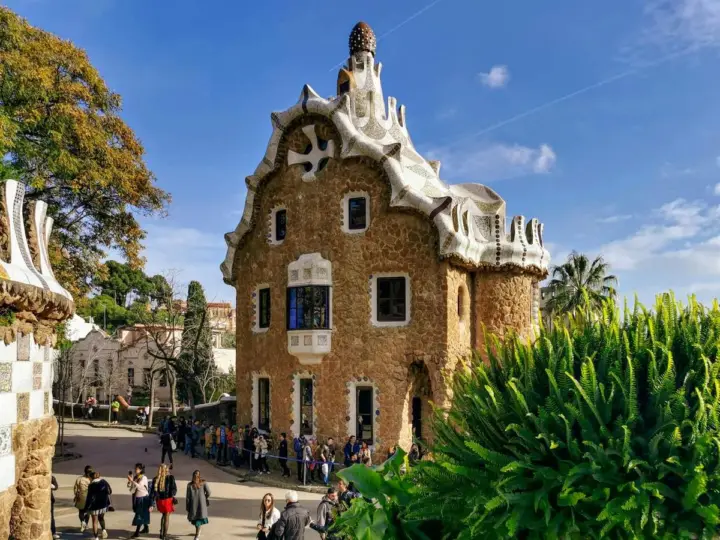
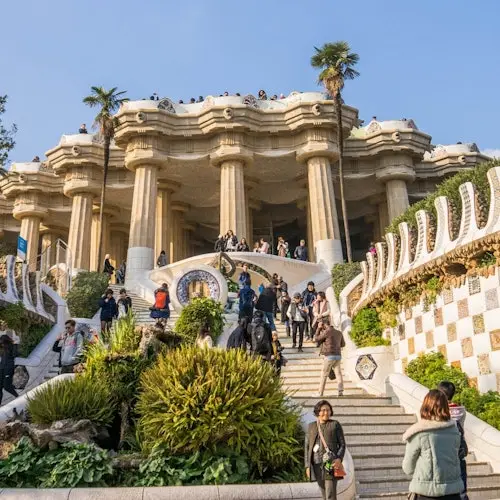
Park Güell is a public park with gardens and architectural features in northern Barcelona. Antoni Gaudí directed its design, and construction took place between 1900 and 1914. Access conditions differ between areas, so consult current ticket and reservation availability for the monumental zone.
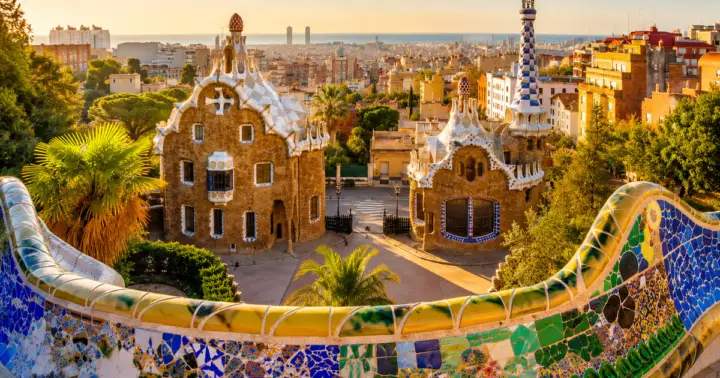
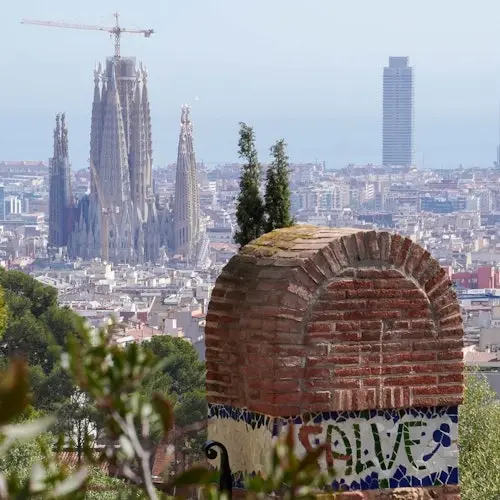
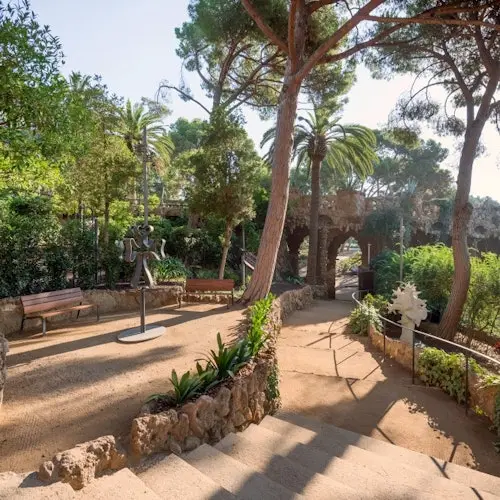
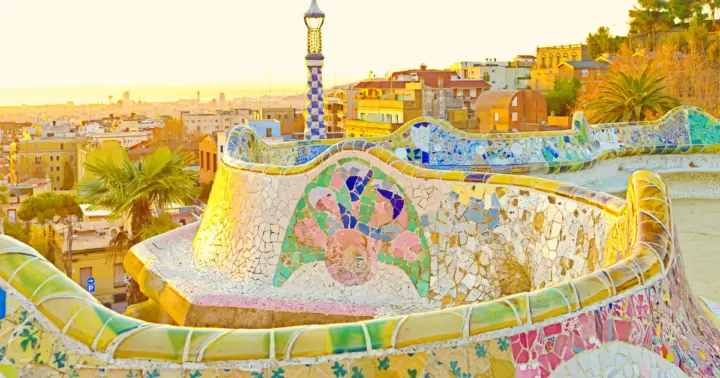
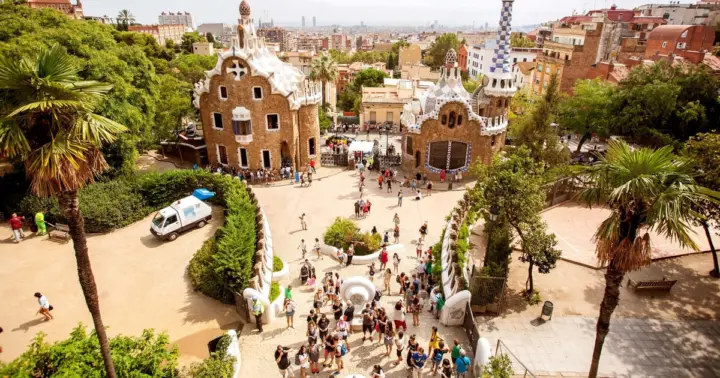
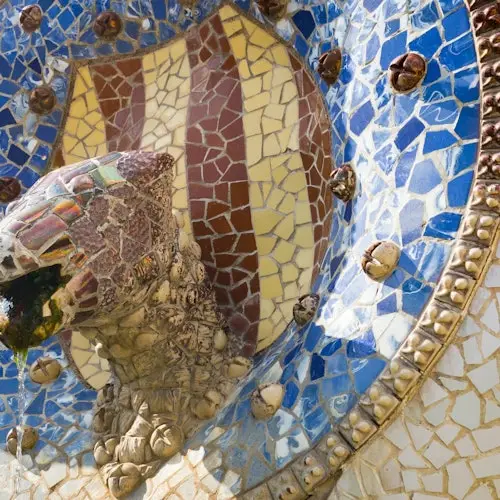
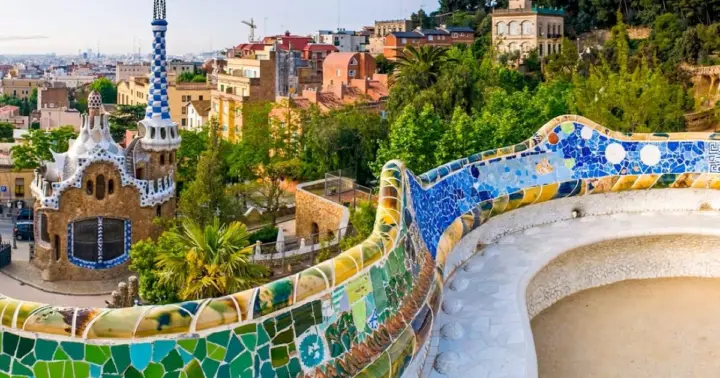
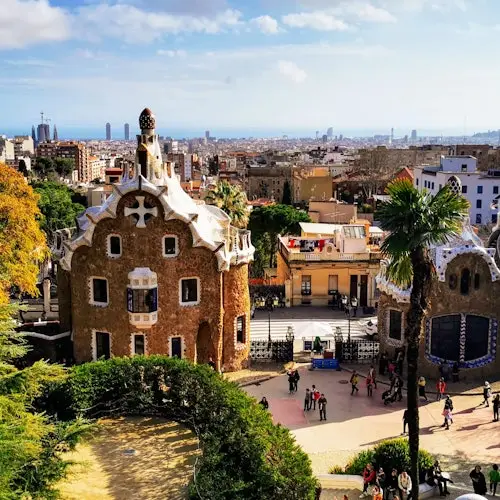
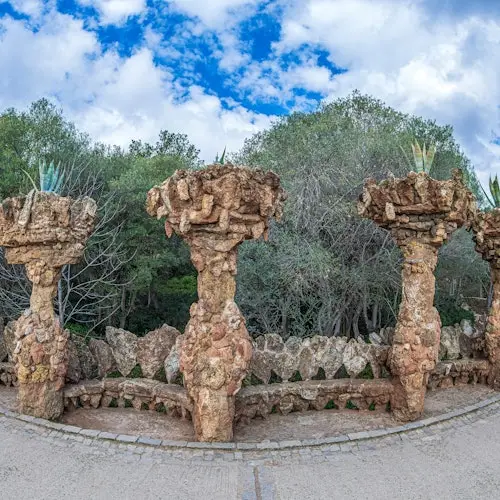
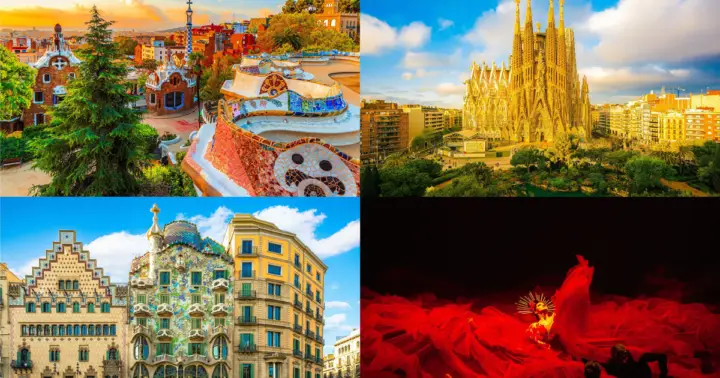
This esplanade is bordered by an undulating bench covered in mosaic and provides an open viewpoint over the city.
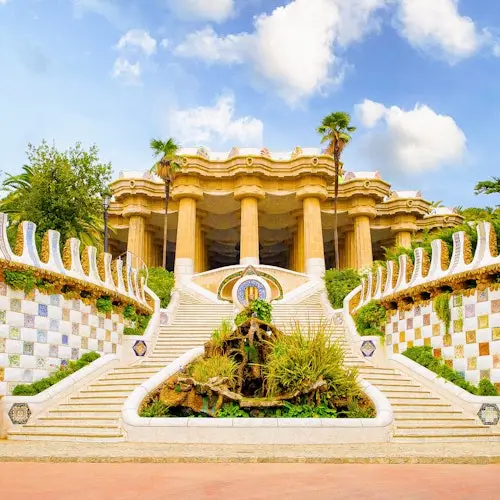
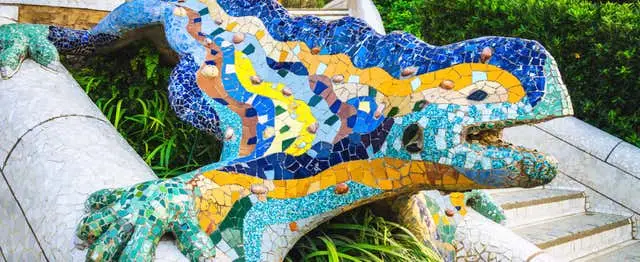
The stone staircase is structured in three sections. Near the top is the mosaic-covered salamander, often called the dragon, which has become one of the park’s symbols.
The hall is supported by 86 columns and forms part of the structure beneath Nature Square. Its ceiling domes are decorated with ceramic mosaics.

Along with Tibidabo, Montjuïc is one of Barcelona’s principal hills. The area contains museums, gardens, sports venues and former defensive structures spread across a large site.
Main stops include Montjuïc Castle, the Joan Miró Foundation, the National Art Museum of Catalonia, the Grec Theatre Gardens and the Magic Fountain of Montjuïc. The Lluís Companys Olympic Stadium and Palau Sant Jordi also host sporting and cultural events. Check current admission and event availability for the places you intend to enter.

The Palau de la Música Catalana was designed by architect Lluís Domènech i Montaner between 1905 and 1908. The Modernist building has an ornamented façade and occupies a compact site among the streets of the La Ribera neighborhood.
Inside are the Orfeó Català’s Modernist rehearsal room, a concert hall illuminated by a large central skylight and the Lluís Millet Hall, which overlooks the colonnade on the façade’s balcony. Consult current concert and visit availability before choosing a date.

MACBA, the Museum of Contemporary Art of Barcelona, opened in 1995. Its collection focuses on art from the second half of the 20th century onward, alongside temporary exhibitions.
It is located in Plaça dels Àngels, next to the CCCB and the Faculty of Geography and History of the University of Barcelona. The square is also known as a gathering place for skaters.
Richard Meier designed the museum building. Its white façade and extensive glazing contrast with the surrounding historic district. Consult current exhibition and admission availability before visiting.

Horta Labyrinth Park is in the northwest of the city, in the Horta-Guinardó district. It is Barcelona’s oldest surviving garden.
Its location away from the central sightseeing route means it requires a separate journey, making it better suited to a longer stay than a tightly scheduled first visit.
This park, which combines Neoclassical and Romantic styles, began to be built in the late 18th century as the private garden of the Desvalls family. The design was commissioned to Italian architect Domenico Bagutti, who worked with French gardener Devalet and builder Jaume Valls.
In 1961, the Desvalls family ceded the gardens to the city of Barcelona. Today they are recognized as a garden museum and a Local Cultural Asset of Interest.
The park’s main feature is its cypress labyrinth. Elsewhere in the grounds are sculptures, fountains and small buildings including the Temple of Danaë and the Pavilion of Charles IV.

El Raval is in central Barcelona, next to La Rambla within the Ciutat Vella district. Historically known as the “Barrio Chino,” it is one of the city’s most culturally diverse neighborhoods.
Use major streets and named cultural venues to structure the route. MACBA and the CCCB make practical reference points and can be combined with nearby markets.
Originally, El Raval consisted of settlements outside the city walls near Barcelona’s entrances. After fortification reforms began in the 14th century, the neighborhood came to be inside the wall, which was not completely demolished until the 19th century.
At the end of the 18th century, El Raval underwent a strong process of industrialization that shaped its history and turned it into a densely populated working-class district. The casa-fàbrica, or factory houses, survive from that period and are now protected for their heritage interest.
El Raval contains small shops and eateries serving food from many regions.
La Rambla del Raval is a pedestrian avenue through the neighborhood. Here you’ll see a large bronze cat sculpture by Fernando Botero that has become one of the area’s symbols.
The neighborhood is home to major cultural spaces including MACBA, the CCCB and the Filmoteca.
From El Raval you can access La Boqueria Market and Sant Antoni Market. They can be combined with a walking route through the surrounding historic districts.
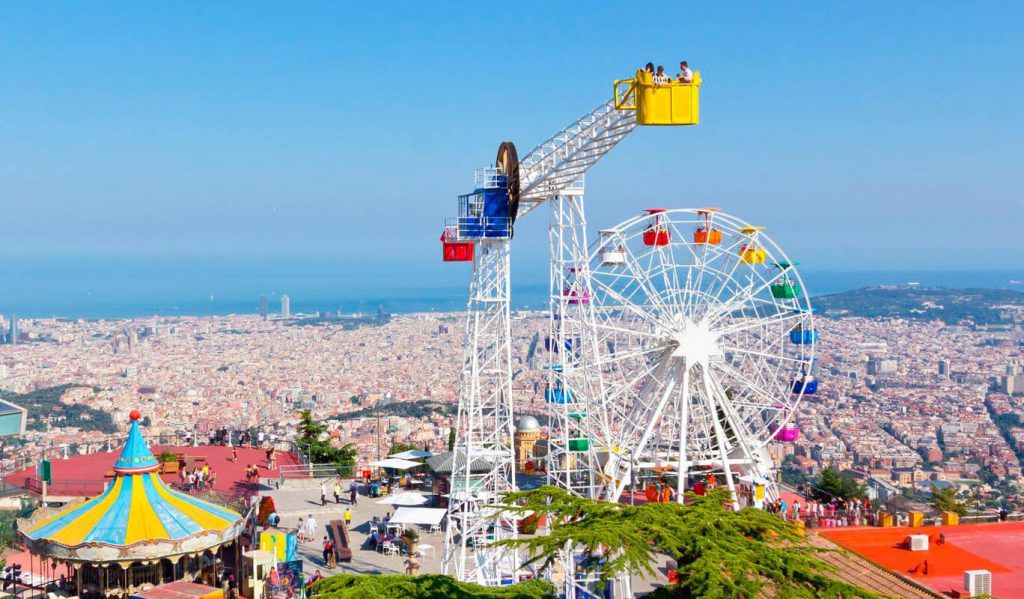
Tibidabo is a mountain approximately 500 meters above sea level within the Collserola range. From the 19th century onward, the hill was gradually urbanized with residences and Modernist houses.
There are different ways to reach the summit and its viewpoints. The funicular connects the lower part of the hill with the upper area; consult the current transport schedule before setting out.
One of the main attractions is Tibidabo Amusement Park. Inaugurated in 1901, it is the oldest operating amusement park in Spain and contains a mix of historic and modern rides.
The Expiatory Temple of the Sacred Heart is another landmark at the summit. This Neo-Gothic construction by architect Enric Sagnier i Villavecchia consists of a lower crypt and a church above.
Ticket conditions and opening dates vary during the year. Check the official Tibidabo schedule and current availability before visiting.
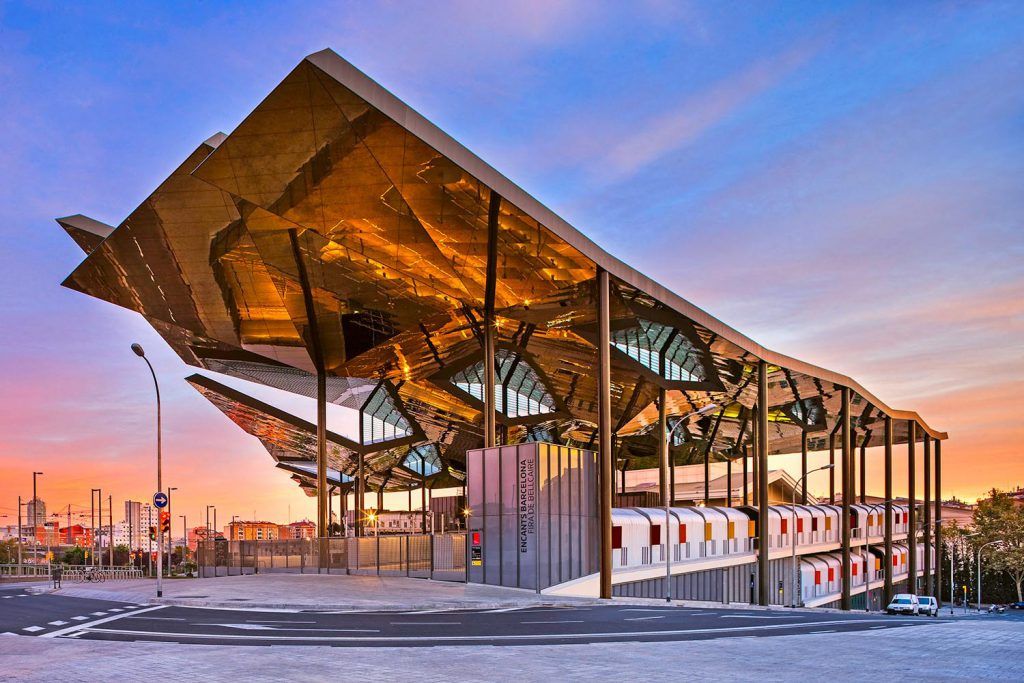
Encants Market specializes in collectibles, second-hand goods and auctions. It is the largest market of its kind in the city.
Its origin dates back to the 13th century, making it one of Europe’s long-running markets. After changing location several times, it moved into its permanent open-sided, covered structure near Glòries in 2013.
The market is in the Eixample district near Glòries, Monumental and Encants metro stops. Its floors are connected by elevators and stairs, and there are dining options inside. Entry is free; consult current market days and opening hours before traveling there.

La Barceloneta is a historic fishing neighborhood beside Port Vell. It was sparsely populated until the 18th century, when fishermen began settling there. Its narrow street plan and sea-weathered façades remain visible amid later development.
A walking route through the backstreets can include the Museum of the History of Catalonia and the Clock Tower, built in the 18th century as the port’s lighthouse. Barceloneta Beach is approximately 578 meters long and has sports and leisure facilities.
Barcelona can be reached by plane, train, boat, bus or car. The most practical option depends on the point of origin, luggage and where you are staying in the city.

Barcelona–El Prat is the city’s main airport. Compare total journey time and luggage conditions rather than the headline airfare alone.
Public transport options between the airport and central Barcelona include the Aerobus, regular urban services, rail connections and the metro. The appropriate route depends on the terminal and final destination, so check the current official timetable and fare before traveling.
Travelers arriving at a terminal without their chosen rail connection can use the interterminal service. Confirm its current operating arrangements at the airport.
Taxis and prearranged private transfers provide door-to-door transport. Compare the official conditions and destination before choosing between them.
Barcelona Sants is the city’s main long-distance railway station, with high-speed and conventional connections to destinations including Madrid, Zaragoza and Valencia. Check current schedules and fares directly with the rail operator before booking.
The Port of Barcelona is a major Mediterranean passenger and cruise port. Maritime operators connect Barcelona with destinations in Spain, France, Italy and other Mediterranean countries; routes vary seasonally.
Long-distance bus services connect Barcelona with cities across Spain and Europe. Many routes arrive at Barcelona Nord Station in the Fort Pienc neighborhood. Check the operator’s current journey time and arrival station before departure.
Traveling by car offers flexibility outside Barcelona, but parking and urban traffic should be included in the plan. Check the accommodation’s parking arrangements before driving into the center.
On this map of Barcelona you can locate the points of interest described in the article. Use it to group nearby monuments and neighborhoods into a practical route.
Barcelona contains more places than a short stay can cover. Prioritize a small number of interiors that require admission, then connect them with nearby streets, parks and viewpoints.
For bookable options beyond free tours, compare tours and activities in Barcelona, checking current availability before finalizing the itinerary.
Spring (March to May) and autumn (September to October) generally offer mild conditions for exploring Barcelona on foot. Summer suits beach plans but is typically busier and warmer.
Allow at least 3 days for Barcelona’s principal sights. A 4–5 day stay provides more time for museums, neighborhoods outside the central route and a slower schedule.
Eixample is convenient for Gaudí’s architecture, the Gothic Quarter provides a central historic setting, and Gràcia has a more residential atmosphere. El Born is another central option near museums and the old town.
Travel marketing specialist with extensive experience in the travel sector. At companies such as Despegar and GuruWalk, she has led traveler-focused digital acquisition strategies. Now, from the GuruWalk blog, she combines her expertise with her passion for discovering and sharing unique destinations.
Local guides, pay-what-you-want and no credit card to book. That is how you understand a city.
Explore free tours on guruwalk.com