

Things to do in Belgrade: Kalemegdan, Saint Sava, Zemun and museums, plus 1-to-3-day itineraries, official hours and practical tips.
 Belén Rivas
GuruWalk
·
Updated 3 Sep 2026
Belén Rivas
GuruWalk
·
Updated 3 Sep 2026Belgrade makes more sense when three scenes are connected: the Kalemegdan walls above the meeting point of the Sava and Danube, the façades along Knez Mihailova, and the vast dome of Saint Sava. The centre is easy to explore on foot, but each district belongs to a different historical layer. Starting with a free tour in Belgrade gives those layers context on your first morning. No credit card is needed to book.
Last verified: August 2026 — Prices, opening hours, and reservation requirements checked against official sources. GuruWalk’s Belgrade guides reviewed the practical recommendations.
An introductory walk connects Republic Square, Knez Mihailova, and the fortress before you decide where to spend more time. That is particularly useful here. Roman, Ottoman, Habsburg, Yugoslav, and contemporary traces sit within a fairly compact area, and the transitions are not always obvious. Gurus supply the context that does not fit on a plaque and help identify which period shaped each building.
A free tour has no fixed fee. At the end, each person tips the guru according to the value of the experience; €10-20 per person is the usual reference, rising to €50 for a small group or an exceptional tour. Booking is still advisable because places are limited. GuruWalk does not ask for a credit card.
Belgrade city center free walking tour. Insightful, fun-filled and informative walks with locals who will tell you about…

Belgrade, the capital of Serbia that is lying on two rivers and that is located both in the Balkans and…

Place where we will meet is in front of the most famous hotel in the city that was visited by…
How to explore the whole Belgrade city center in half time? On E-Scooter ! Most convenient and fun way! …

It's been more than 20 years (or is it 30?) that Yugoslavia doesn't exist as a country, yet it is…

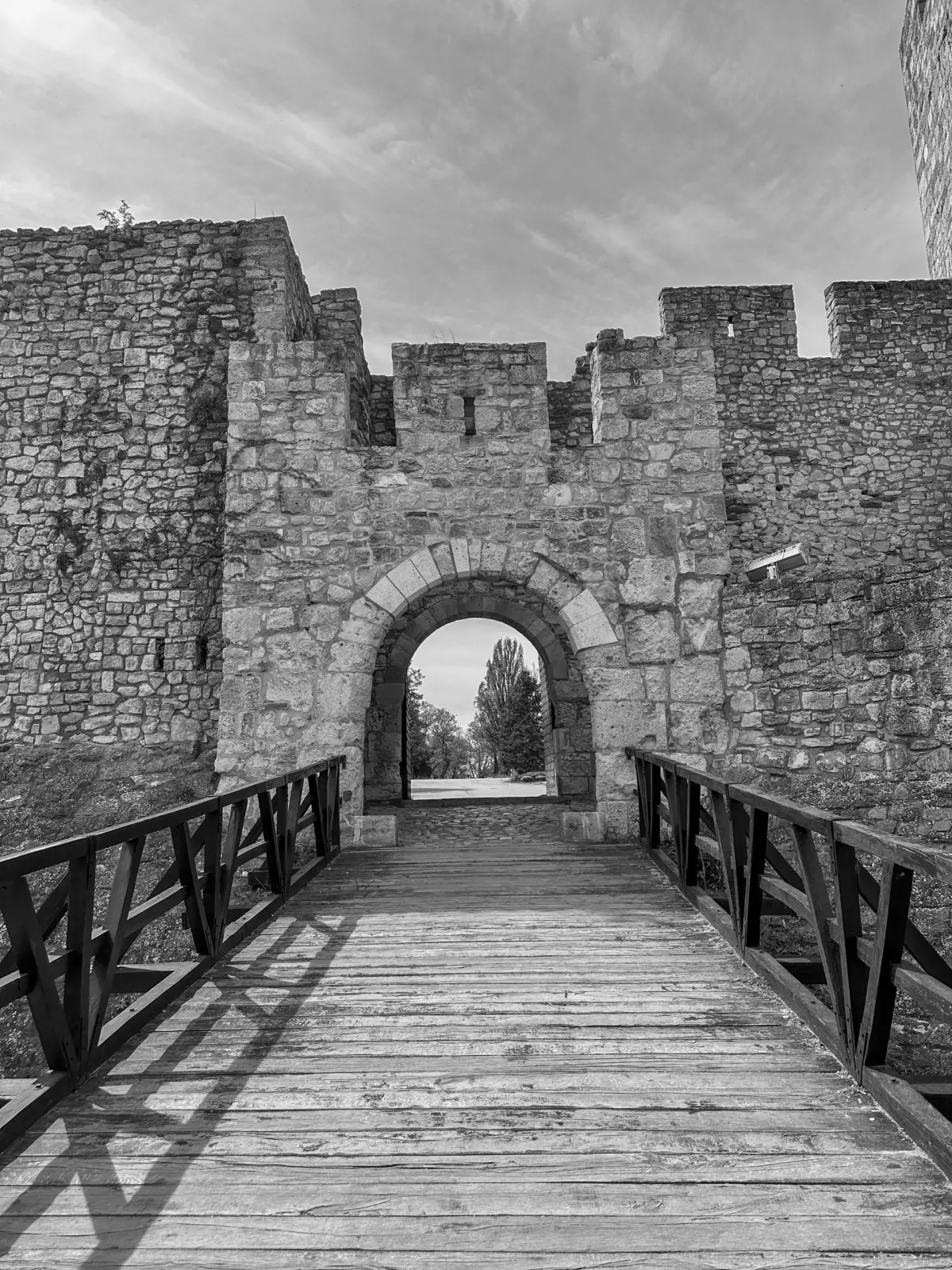
The fortress occupies the ridge above the meeting point of the Sava and Danube. Its defences were built and altered from the 1st to the 18th century, so it is not a monument from one period. The open-air route through Kalemegdan includes walls, gates, the Victor monument, and broad views over both rivers.
At sunset, the park and open sections work particularly well. Several enclosed attractions have separate opening times and admission. From 15 April to 15 October, the site operator lists general facility hours of 11:00 am to 7:00 pm, with last admission at 6:30 pm. The official Belgrade Fortress visitor page gives the individual days and prices.
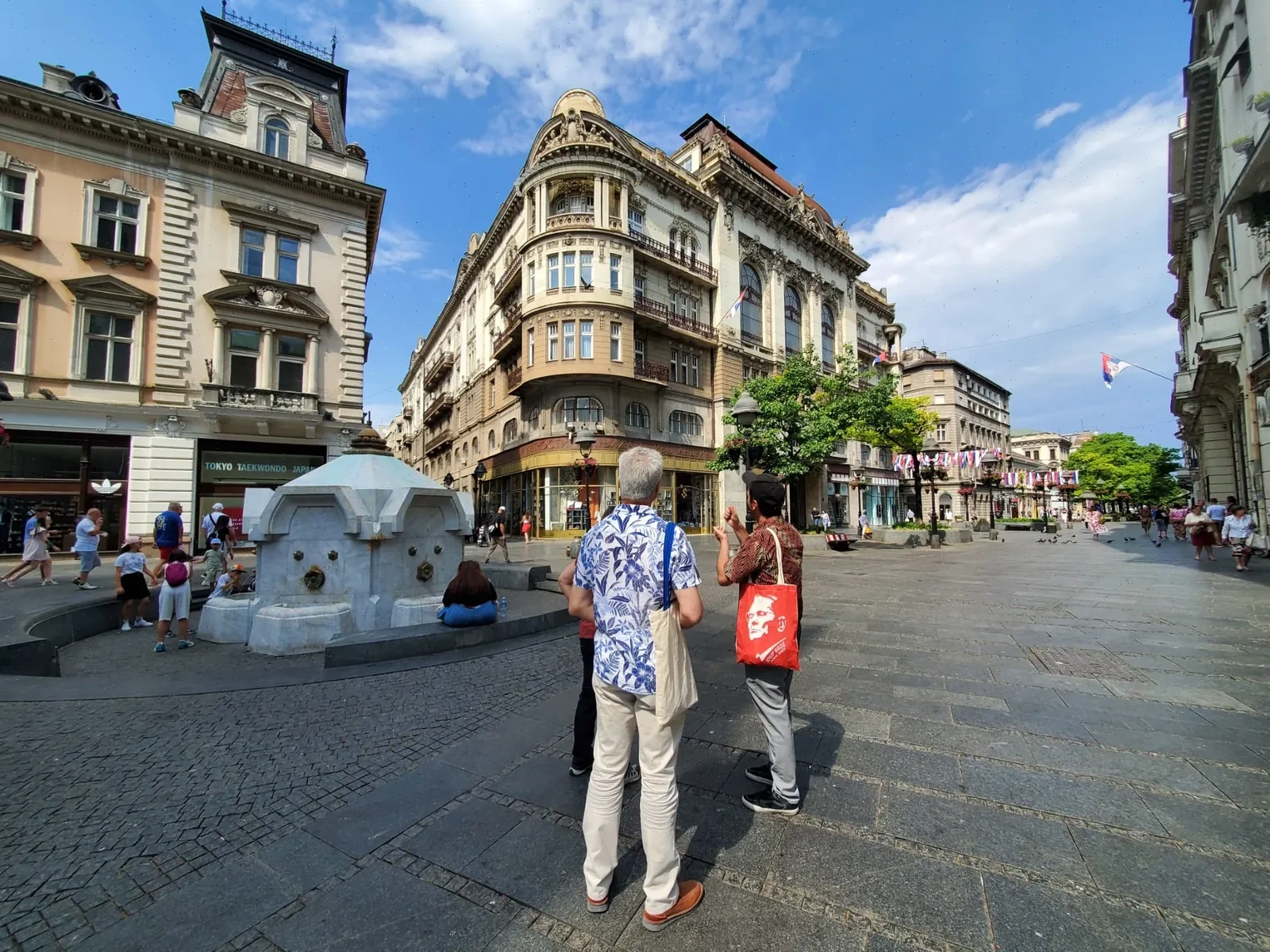
Knez Mihailova is the pedestrian axis between Republic Square and Kalemegdan. It brings together 19th- and 20th-century buildings, bookshops, cafés, and side passages. Look above the shopfronts. Balconies, domes, and decorated façades say more about the former commercial centre than the present-day signs.
Republic Square is a common meeting point, bordered by the National Museum and National Theatre. Skadarlija is nearby. Knez Mihailova leads directly towards the fortress, while the Tourist Organization of Belgrade groups these places with the city’s other historic districts.
Skadarska Street, usually called Skadarlija, keeps its cobbles and low houses just beyond the commercial centre. Its identity grew around writers, actors, cafés, and traditional restaurants. Daylight is better for seeing the street itself; evenings bring music and busier dining rooms. It does not require half a day and combines naturally with Republic Square and Dorćol.
Dorćol slopes from the old town towards the Danube. Bajrakli Mosque, the Museum of Vuk and Dositej, independent shops, and residential buildings from different periods share its streets. This district rewards an unhurried walk, especially around Gospodar Jevremova Street and the lower edge of Kalemegdan.
In Vračar, Saint Sava’s white dome dominates the plateau. Inside, the golden mosaics and crypt create a completely different sense of scale. The church administration confirms that entry to the Church of Saint Sava is free; specialist guiding for organised groups is a separate service. This remains an active place of worship, so quiet behaviour and suitable clothing matter.
A Vračar villa holds the Nikola Tesla Museum’s documents, personal objects, and working models. Guided visits include demonstrations and last about 45 minutes. According to the Nikola Tesla Museum’s official schedule, it opens from 10:00 am to 6:00 pm on Monday and 10:00 am to 8:00 pm from Tuesday to Sunday. An English tour costs RSD 800. Payment is in Serbian dinars and cash only; individual visitors do not need a reservation.
On Republic Square, the National Museum covers Balkan archaeology alongside Serbian and European art. The National Museum visitor page lists hours of 10:00 am to 6:00 pm on Tuesday, Wednesday, Friday, and Sunday; Thursday and Saturday run from noon to 8:00 pm. It closes on Monday. Sunday admission is free.
This complex south of the centre examines Yugoslavia’s social and political history. Built in 1975 as a winter garden, the House of Flowers contains the tomb of Josip Broz Tito. The Museum of Yugoslavia opens Tuesday to Sunday from 10:00 am to 6:00 pm. Monday is the closing day. General admission is RSD 800, while individual visits are free on the first Thursday of each month.
Zemun was once a separate town and still feels different from central Belgrade. Its Danube promenade, low-rise streets, and climb towards Gardoš justify half a day. The tower looks over tiled roofs and the river. Pair the market and waterfront before walking uphill, which keeps the route coherent and leaves time for a break beside the Danube.
Kosančićev venac retains cobbled lanes and 19th-century houses on the Sava slope. It is a quiet link between the centre and the river. Its viewpoints make Belgrade’s topography clearer, showing how the fortress, old town, river, and newer construction on the opposite bank relate to one another.
Ada Ciganlija provides a green pause on a third day or a hot afternoon. The lake, paths, and sports areas draw residents during the warmer months. It should not replace the historic sights on a short stay, but it reveals how the city spends its leisure time beyond museums and central squares.
Across the Sava, the urban pattern changes. Novi Beograd was planned with broad avenues, residential blocks, and public buildings from the Yugoslav period. An architecture-focused route adds a physical counterpart to the Museum of Yugoslavia. Pick a few specific stops and connect them by public transport because distances are much greater than in Stari Grad.
Begin at Republic Square and follow Knez Mihailova on a free tour. Continue through Kalemegdan, enter the fortress, and save the late afternoon for the river viewpoint. Walk back through Dorćol and have dinner around Skadarlija. This is a full day, but the principal stops all sit within the historic centre.
Keep the first day in Stari Grad. On day two, visit Saint Sava early and choose the Nikola Tesla Museum or National Museum according to your interests. Finish in Kosančićev venac and descend towards the Sava. Travellers focused on 20th-century history can replace one museum with the Museum of Yugoslavia.
Use the third morning for Zemun and Gardoš. In the afternoon, choose Ada Ciganlija for open air or a modernist architecture route through Novi Beograd. Grouping the stops this way avoids crossing the rivers several times and leaves room to revisit the part of central Belgrade that interested you most.
Nikola Tesla Airport publishes several public transport options. The A1 minibus runs to Slavija Square in about 30 minutes. Bus 72 reaches Zeleni venac in 30-40 minutes, while route 600 connects with Beograd Centar railway station in a similar time. The official Belgrade Airport transport page shows the active routes and stops.
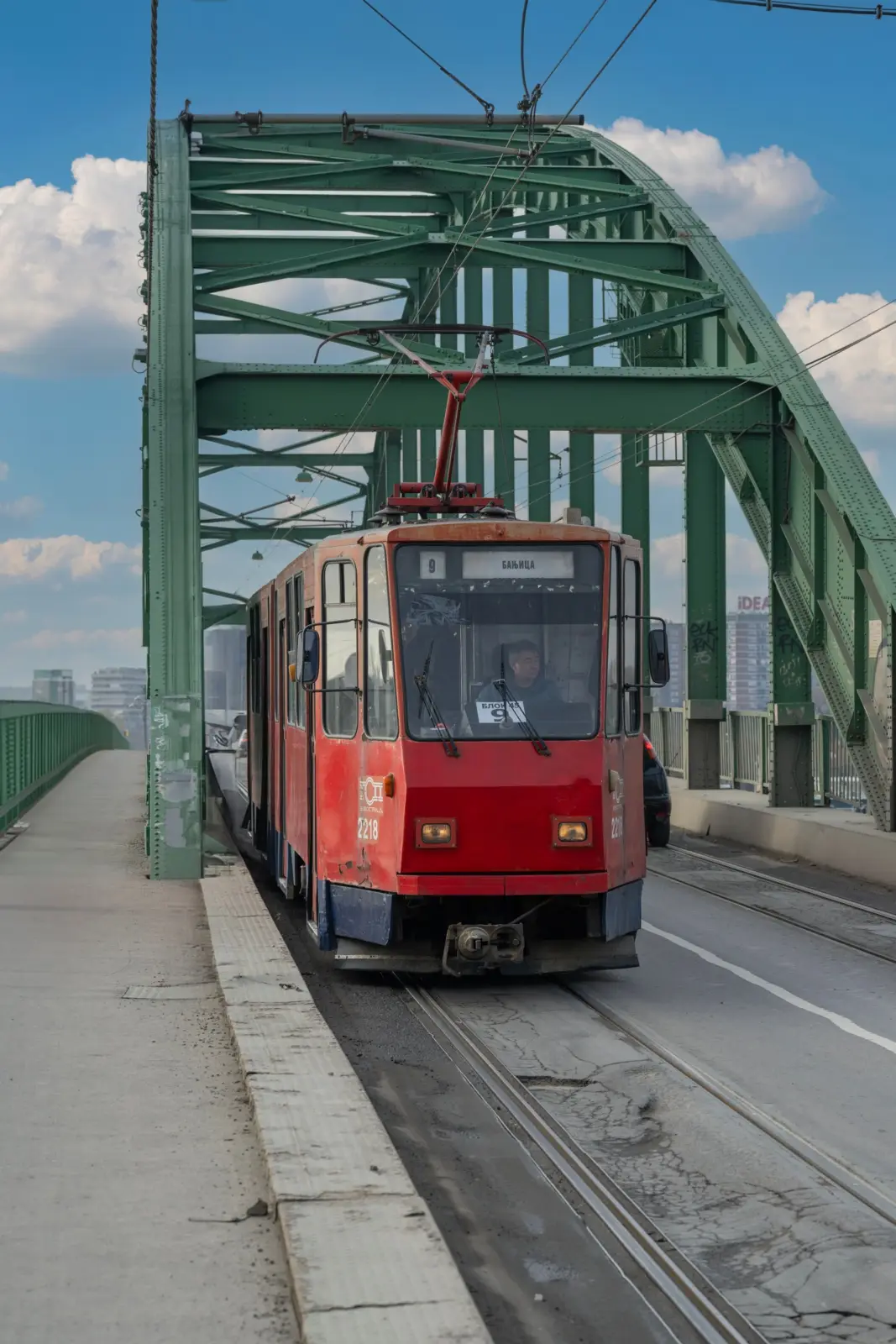
Stari Grad is walkable, although Kalemegdan includes slopes and cobbles. Buses and trams are useful for Saint Sava, Zemun, Ada Ciganlija, and Novi Beograd. The city announced that urban public transport has been free since 1 January 2025. Express minibuses and special services may operate under different conditions.
Monday needs planning. The National Museum and Museum of Yugoslavia close, while the Nikola Tesla Museum remains open until 6:00 pm. Sunday works well for the National Museum because admission is free. Carry Serbian dinars in cash for the Tesla Museum, whose ticket desk does not accept cards.
Two days cover Kalemegdan, Stari Grad, Saint Sava, and one museum. Three days let you add Zemun, the Museum of Yugoslavia, or Novi Beograd without rushing between visits.
Central Belgrade is walkable. Republic Square, Knez Mihailova, Skadarlija, Dorćol, and Kalemegdan form a practical route. Public transport saves time when travelling to Vračar, Zemun, and Novi Beograd.
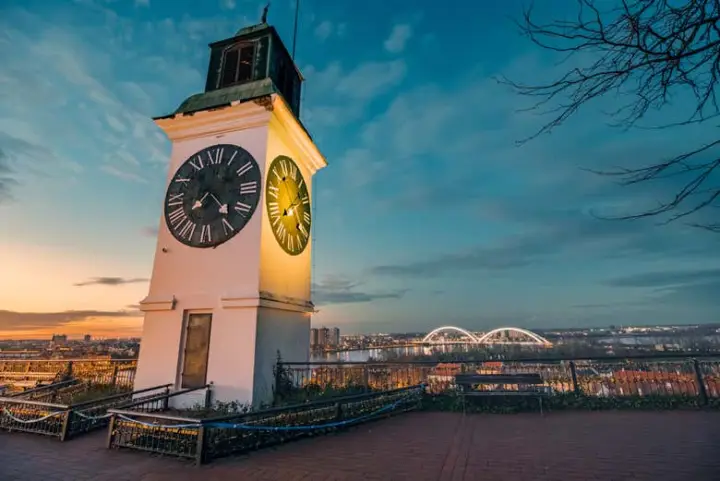
You can walk through Kalemegdan and the fortress’s open areas without a general ticket. Enclosed attractions such as the Clock Tower, Roman Well, and Nebojša Tower have their own opening times and admission fees.
Belgrade’s urban public transport has been free since January 2025. Do not assume that express minibuses and every special service are included; check the information for the specific line.
Individual visitors do not need to reserve the Nikola Tesla Museum, though it recommends arriving 15 minutes before the guided tour. Groups of more than 10 people must book. For other museums, check the programme when you need a tour in a particular language.
Around Kalemegdan’s Victor monument, the view opens over the meeting point of the Sava and Danube. Arrive before sunset to see the walls in daylight first.
A sound first-visit sequence is simple: context on foot, the fortress, and then one museum. Compare times and reviews for free tours in Belgrade and book with no credit card needed. To add tickets or other formats to your itinerary, check the activities and experiences in Belgrade available for your dates.
Travel marketing specialist with extensive experience in the travel sector. At companies such as Despegar and GuruWalk, she has led traveler-focused digital acquisition strategies. Now, from the GuruWalk blog, she combines her expertise with her passion for discovering and sharing unique destinations.
Local guides, pay-what-you-want and no credit card to book. That is how you understand a city.
Explore free tours on guruwalk.com