



Follow Bergen’s compact harbour route through Bryggen, Bergenhus Fortress, the Fish Market and Fløyen, with options for rain and museums.
 Belén Rivas
GuruWalk
·
Updated 3 Sep 2026
Belén Rivas
GuruWalk
·
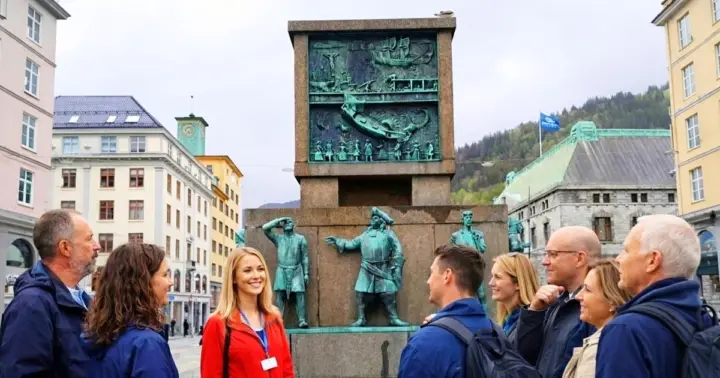
Updated 3 Sep 2026This harbour city makes more sense once you see how its timber buildings and mountains fit together. The centre is compact, yet each street explains a different part of Norway’s maritime history. On a first visit, we suggest using a free tour in Bergen to place Bryggen, the fortress, the market and the waterfront neighbourhoods before exploring independently. No credit card needed to reserve.
Last verified: August 2026 — Prices, opening hours, and reservation requirements checked against official sources. GuruWalk’s Bergen guides reviewed the practical recommendations.
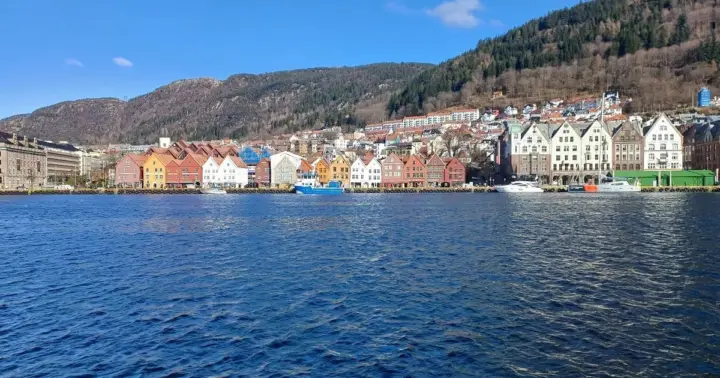
An early walking tour answers two common questions: what actually belongs to historic Bryggen, and how to link the main sights without crossing the centre repeatedly. Routes normally begin around Vågen —the inlet at the heart of the city— then connect the Fish Market, the Hanseatic waterfront and Bergenhus Fortress.
A free tour has no fixed ticket price. At the end, each guest tips the guru according to the experience; the usual reference is €10–20 per person and it can reach €50 for a small group or an exceptional guru. Choose an early departure if you want to revisit Bryggen slowly or go up Mount Fløyen while there is still daylight.
THIS IS A COMEDIC TOUR!!! I repeat This is a Comedy tour! So bring your smiles😃 We talk about history…

Welcome aboard! Get ready for a tour of Bergen that skips the fluff and dives straigh into the juicy stuf….

Join us for the best free walking tour in Bergen! Discover the beauty of this historic city with guides who…

When you sign up, you just need to reserve one spot. You can take as many as you like for…

With a full day, start at Torgallmenningen and walk towards Torget, home to the Fish Market and tourist information office. The Bryggen façades stand across the quay. Enter the wooden passages, continue to St Mary’s Church and finish the historic stretch at Bergenhus Fortress. These sights form a clear line around Vågen.
After lunch, return towards Vetrlidsallmenningen to take the Fløibanen funicular or walk uphill. Keep the end of the afternoon for the view from Fløyen. When steady rain arrives, reverse the plan: spend the wettest hours at Schøtstuene, KODE or Bryggens Museum and save the viewpoint for the clearest forecast window.
This route does not require public transport in the centre. It also scales down well: Bryggen, Bergenhus and the market area remain a coherent circuit when you only have four or five hours. With two days, add Nordnes, an art museum and a fjord trip.
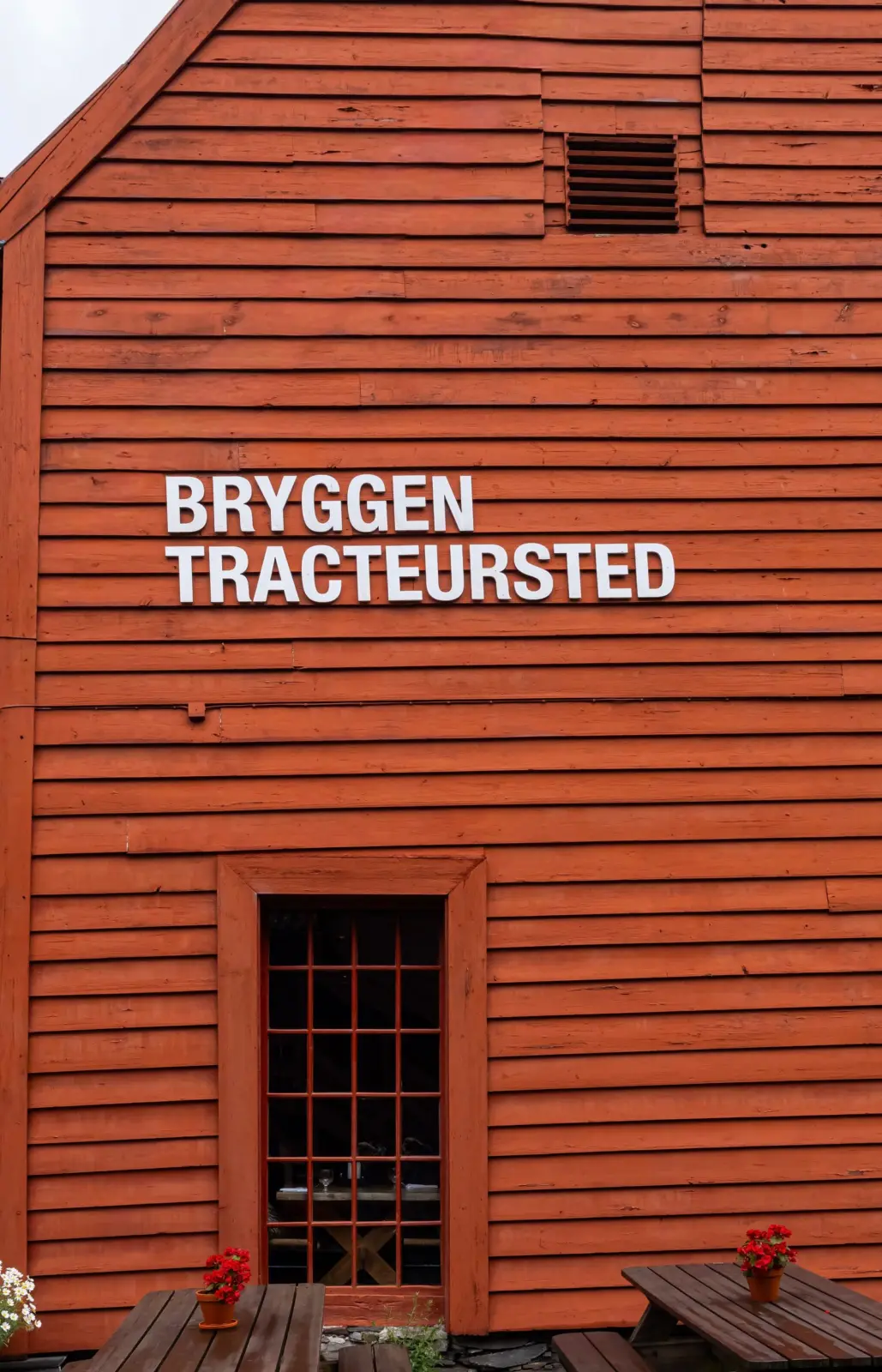
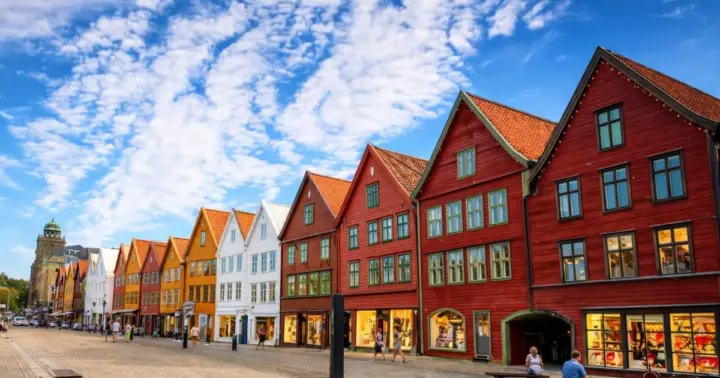
Bryggen was Bergen’s Hanseatic trading quarter. “Some 62 buildings remain,” UNESCO said in its official listing, alongside a pattern of narrow passages running parallel to the harbour. Much of today’s appearance follows the rebuilding after the 1702 fire, when older plots and construction traditions were retained.
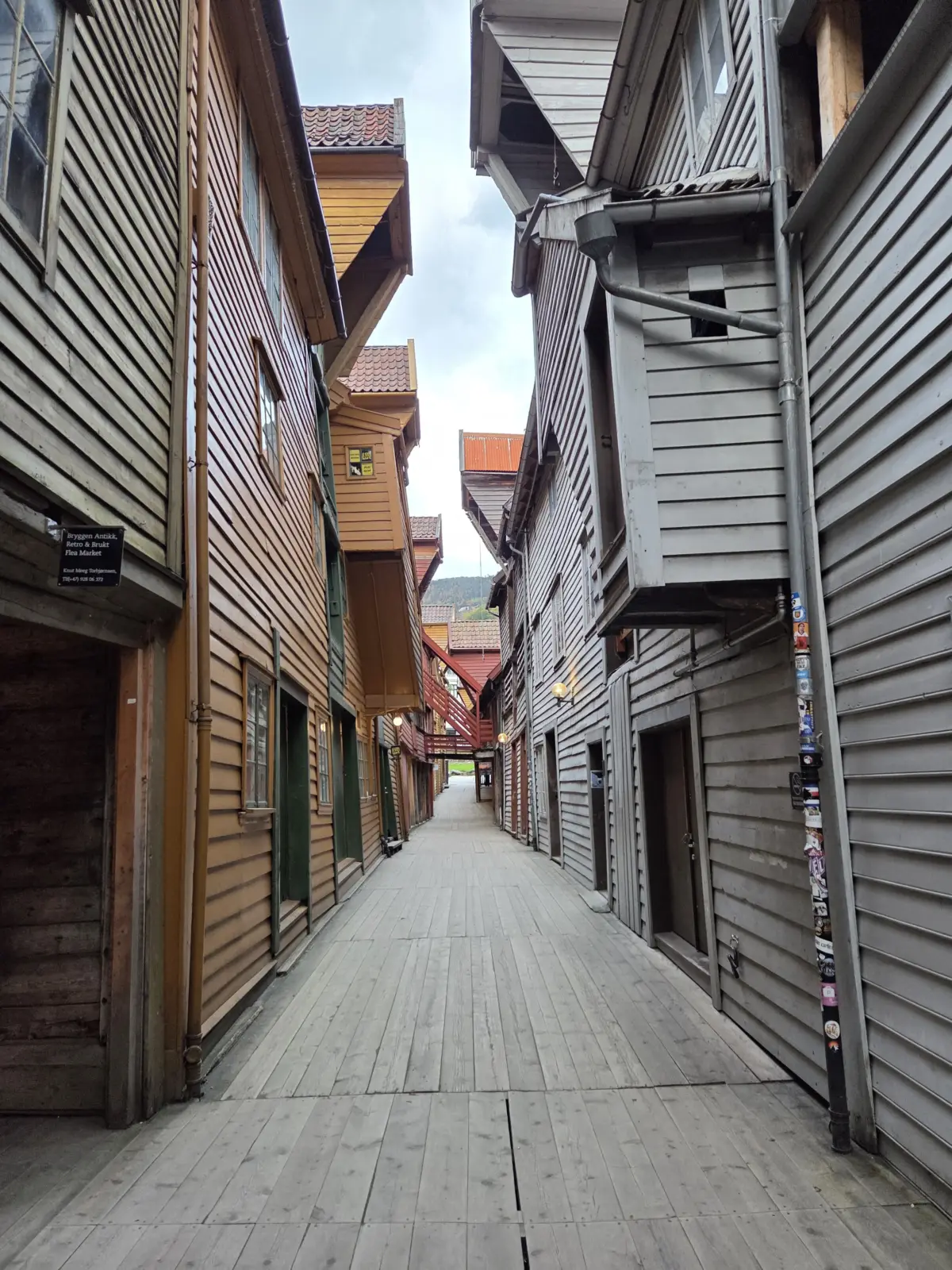
Do not stop after taking a picture from Torget. Walk through several timber corridors and notice how far the buildings extend towards the hillside. Their layout once separated offices, dwellings, warehouses and communal rooms. Wooden boards can be uneven and slippery in rain, so this is a place to explore slowly.
Schøtstuene adds the human story. Its assembly rooms and kitchens show where Hanseatic merchants met and ate away from the main warehouses. The Hanseatic Museum and Schøtstuene website lists the exhibitions and current tours. For an August 2026 visit, check the available ticket and tour language before setting out.
North of Bryggen, Bergenhus brings together the city’s royal and military periods. Walking through the fortress grounds gives you another angle on the entrance to Vågen. The principal buildings are Håkon’s Hall, built in the thirteenth century as a royal residence and ceremonial hall, and the Rosenkrantz Tower, which combines medieval and Renaissance structures.
The official Bymuseet visitor page lists the buildings open to visitors and their practical conditions. The tower includes narrow corridors and steep stairs, so entering it is different from walking around the outdoor grounds. Check specific accessibility information before buying a ticket if mobility or luggage is a concern.

 BSCA
BSCA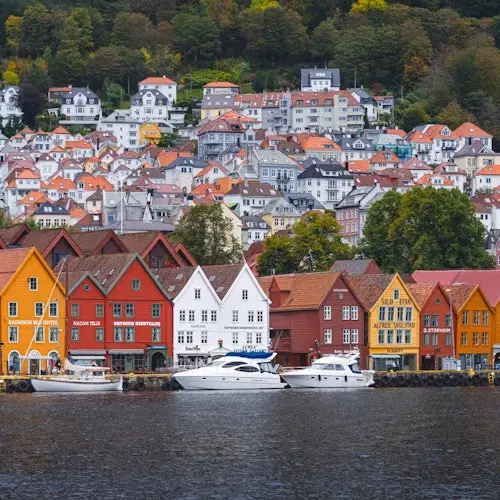
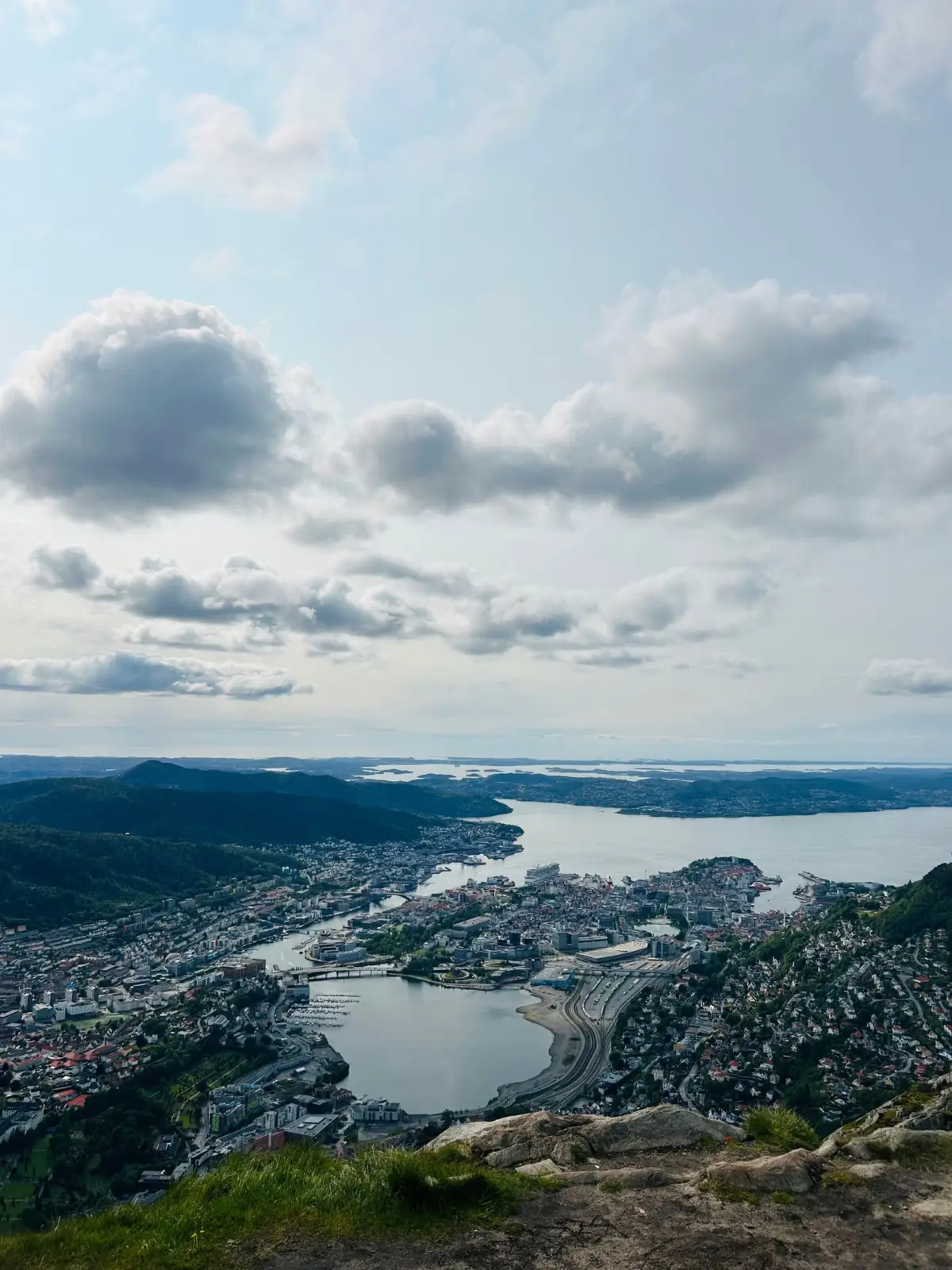
Fløyen provides the easiest elevated view to fit into a short stay. The lower Fløibanen station is on Vetrlidsallmenningen, a few minutes from the market and Bryggen. According to the official Fløyen website, the journey is short —about six minutes— and several mountain walks begin at the upper station.
At Fløyen, a useful combination is to ride up and walk down. You preserve energy for the rest of the day while still passing through woodland and hillside neighbourhoods at your own pace. We check the weather first: low cloud can hide the harbour even when conditions in the centre merely look grey.
Fløyen and Ulriken are not substitutes. Fløyen is integrated into the centre and suits a one- or two-day stay. Ulriken rises to 643 metres and needs more travel time; its official cable-car ticket page lets you confirm operations before making the journey. Pick one mountain when time is short and save both for a three-day itinerary.
Torget has been a trading point since the Middle Ages. The outdoor market is strongly seasonal, while the indoor Mathallen has permanent fishmongers and restaurants throughout the year. Bergen’s official visitor information page publishes 2026 dates and hours. Check the individual business if you intend to eat there, because the stalls do not all use one timetable.
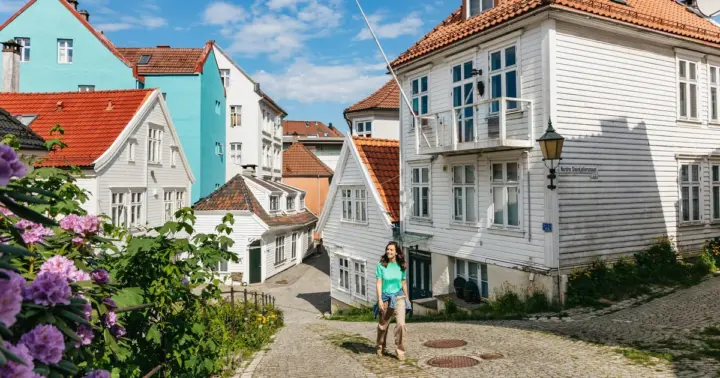
From the market, either follow Vågen or turn towards Nordnes. The latter changes the scale of the visit: major attractions give way to residential lanes, timber houses, pocket-sized squares and water views. It is a sensible second-half walk after covering Bryggen, particularly when you want an outdoor route without admission fees.
The aquarium stands at the far end of Nordnes. It works particularly well with children or during heavy rain, but it needs more time than a casual detour. Decide in advance whether you plan to enter; otherwise, walk to Nordnesparken and return through Klosteret.
KODE’s city museums occupy several buildings beside Lille Lungegårdsvannet, close to the railway station. Their collections span art, design and music. Choose a building around the current exhibition rather than trying to cover every gallery. This makes KODE easy to combine with the historic centre without surrendering a full day.
Troldhaugen, the home of Nina and Edvard Grieg, lies outside the central circuit. In August 2026 the villa is closed for renovation, although the grounds, scheduled activities and concerts remain available. Check KODE’s current Troldhaugen information before travelling. From the centre, take the light rail to Hop and complete the journey on foot.
BSCAYes, when you have at least two complete days. Bergen is a base for routes into Osterfjord and Hardangerfjord, as well as longer connections towards Sognefjord, but the choices do not have equal time requirements. A half-day boat trip leaves room for the city; a longer itinerary may run from early morning until late afternoon.
Do not schedule Bryggen, Fløyen and a long excursion on the same day. Boarding times, rain and transfers turn a tight plan into an unnecessary race. Keep it simple. Compare the exact departure point, total duration, included transport and change conditions. For options that can be booked alongside your city visit, check the available activities and experiences in Bergen.

Most sights in this guide are within walking distance. Public transport is useful for the airport, Troldhaugen and outer neighbourhoods, and removes any need to rent a car for the centre. The official Skyss airport page confirms that Bergen Light Rail line 1 links the airport with the city and provides current ticket and interchange information.
Open the journey planner before leaving when you rely on a specific connection. A Bergen Card may save money when you group museums and transport into one or two busy days, but calculate first. We treat it as a calculation —rather than a default purchase— and confirm which benefits apply to the chosen dates.
Bergen rewards a flexible plan, not an empty one. Pack a light waterproof layer and shoes with reliable grip; a large umbrella is awkward inside narrow passages and in wind along the harbour. Keep one museum for the wettest period and use clearer windows for Fløyen or Nordnes.
Streets between Bryggen and Torgallmenningen combine cobbles, timber boards and slopes. A small backpack works better than wheeled luggage during the route. If you arrive before check-in, leave your bags first and begin with the market or KODE, not a mountain walk.
One day covers Bryggen, Bergenhus, the market and Fløyen. With two days, add Nordnes, KODE and a short fjord trip. Three days create space for Ulriken, Troldhaugen or a longer excursion without rushing the centre.
Yes. The historic centre is walkable, and light rail connects the airport with the city. Use public transport for Troldhaugen, Ulriken or accommodation outside the centre. A car offers little value within the main visitor area.
Walking through Bryggen’s passages, exploring the outdoor grounds at Bergenhus, following Vågen and crossing Nordnes require no admission. You can also walk up towards Fløyen when the conditions and your footwear are suitable.
Reserve once your travel dates are fixed, especially for summer and weekends. A departure on the morning of day 1 leaves the rest of the stay free to revisit the places that interest you most. No credit card needed.
Secure the walk that will give the centre context, then build the rest of the trip around the weather. GuruWalk is the platform for finding and booking free tours with local guides and activities in cities around the world. We compare the free tours in Bergen, choose a time that fits the arrival and keep enough space to return to Bryggen or climb Fløyen afterwards.
Travel marketing specialist with extensive experience in the travel sector. At companies such as Despegar and GuruWalk, she has led traveler-focused digital acquisition strategies. Now, from the GuruWalk blog, she combines her expertise with her passion for discovering and sharing unique destinations.
Local guides, pay-what-you-want and no credit card to book. That is how you understand a city.
Explore free tours on guruwalk.com