



Bologna’s Piazza Maggiore, porticoes, food markets, Two Towers, university district and San Luca are organised into one- and two-day itineraries.
 Belén Rivas
GuruWalk
·
Updated 3 Sep 2026
Belén Rivas
GuruWalk
·
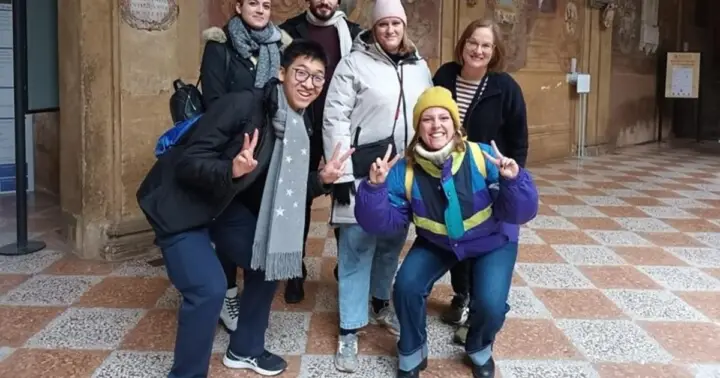
Updated 3 Sep 2026Bologna packs medieval squares, food markets, historic university rooms and more than 60 km of porticoes into a centre that works well on foot. The challenge is choosing an order that avoids backtracking and fits the timed interiors. Starting the first morning with one of the free tours in Bologna gives useful context for Piazza Maggiore, the Two Towers and the university district before museum visits or the climb towards San Luca. No credit card is needed to reserve.
Last verified: August 2026 — Prices, opening hours, and reservation requirements checked against official sources. GuruWalk’s Bologna guides reviewed the practical recommendations.
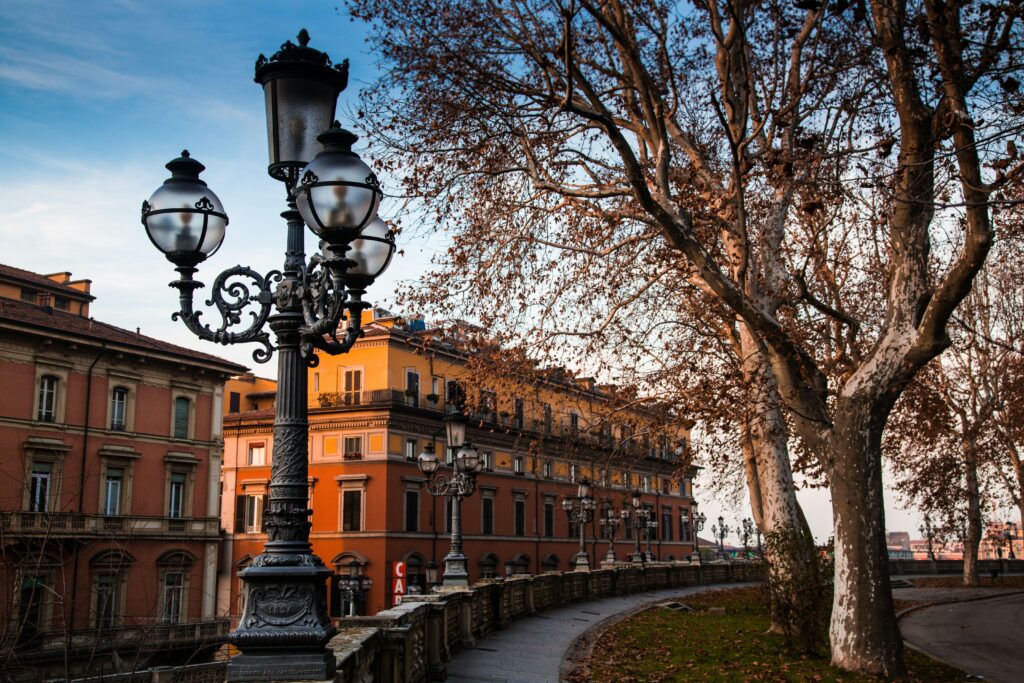
An early walk explains the layout of the old town before its main squares become busier. Typical routes connect Piazza Maggiore, Piazza del Nettuno, the Quadrilatero, Piazza della Mercanzia and the Two Towers area. From there, it is easy to continue independently towards Santo Stefano or Via Zamboni.
Free tours have no fixed ticket price. At the end, each guest gives the guru the amount they consider fair. A useful guideline is €10–20 per person, rising to €50 for a small private group or exceptional work by the guru. Book a morning departure and wear shoes suited to stone paving; the porticoes shelter much of the route from sun and rain.
Hello! My name is Marco , I'm an achaeologist, a licensed tour guide and a certif…

Discover Bologna through its flavors, stories, and symbols, seen through the eyes of those who live it every day… and…

The places that we are going to see are all placed in the center of Bologna. We will talk about…

Piazza Maggiore is the natural starting point. The square began taking shape in the early 13th century and brings together Palazzo d’Accursio, Palazzo del Podestà, Palazzo dei Notai and the Basilica of San Petronio. The adjoining square holds the Fountain of Neptune, completed in the 16th century by sculptor Giambologna.
Palazzo d’Accursio’s main courtyard is free to enter. For an elevated view, the Clock Tower is the current alternative to the Asinelli Tower. In summer 2026 it is open daily, advance booking is compulsory, and a standard €10 ticket also includes the Municipal Art Collections.
San Petronio’s unfinished façade shifts from marble on the lower level to exposed brick above. Inside, Gian Domenico Cassini’s meridian line crosses the floor and records the movement of the sun. General admission is free, while the Chapel of the Magi costs €5. The official Basilica of San Petronio website provides visitor information.
The Archiginnasio served as the University’s seat between 1563 and 1803. Its galleries display thousands of coats of arms belonging to former students and professors; access to the courtyard and general building is free.
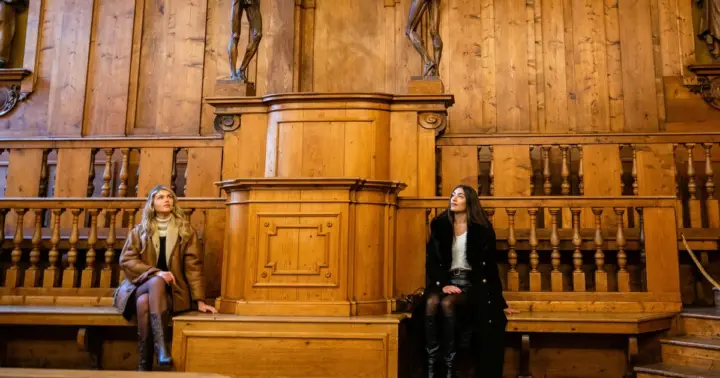
A paid route includes the wooden Anatomical Theatre, built in 1637, and the Stabat Mater Hall when institutional events do not occupy it.
In August 2026, audio-guided admission runs Monday to Saturday from 10:00 to 17:30, with the final slot at 17:20. It costs €10 and must be booked. The Archiginnasio Library maintains the building’s institutional information.
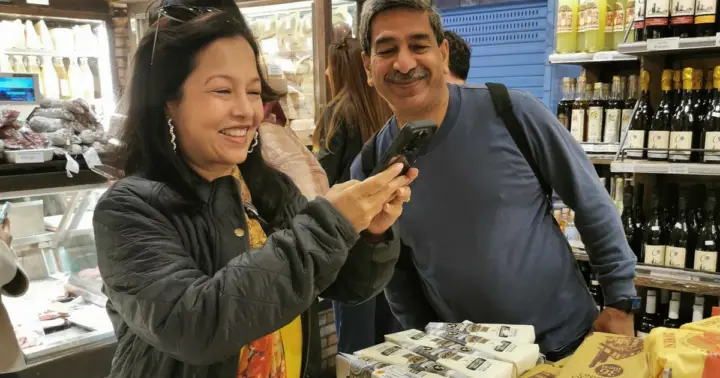
A tight grid of lanes starts just east of Piazza Maggiore. Via Drapperie and Via Pescherie Vecchie form the core of the Quadrilatero, whose craft and trading tradition dates to the Middle Ages. Modern stalls and shops still sell fresh pasta, fish, fruit, cured meats and cheese.
Go before lunch, when the shops are operating and the lanes are easier to study without joining long restaurant queues. Mercato di Mezzo has covered seating, while the surrounding independent shops are better for comparing products and buying a small amount to take away.
Asinelli and Garisenda still mark the eastern approach to the medieval centre. Asinelli rises about 97 m and contains 498 steps; Garisenda is 47 m tall and has the more obvious lean. Neither tower can be entered in August 2026. Asinelli is closed because of work in the surrounding area, while Garisenda remains under restoration. Bologna’s official Two Towers visitor page confirms the indefinite closure.
Via Santo Stefano leads from the towers to a triangular, porticoed square in under ten minutes. At its far end, the Santo Stefano complex is often called the Seven Churches, although seven separate buildings no longer survive. Courtyards, cloisters and churches from different periods create a compact visit.
First view the square from the end opposite the church, where the converging façades are easiest to read. The return towards Strada Maggiore passes Casa Isolani, which retains tall medieval timber supports.


Bologna has 62 km of porticoed pathways. The UNESCO listing for the Porticoes of Bologna, inscribed in 2021, selects twelve representative groups ranging from medieval timber structures to 20th-century concrete. This is a network rather than one continuous corridor, connecting homes, religious sites, markets and civic buildings.
For variety without leaving the centre, link Pavaglione, Via Farini, Piazza Cavour, Santo Stefano and Strada Maggiore. The route fits into a morning and keeps much of the walk under cover.
Via Zamboni begins near the Two Towers and crosses the university quarter. The University of Bologna uses 1088 as its conventional foundation date and is considered the oldest university in the Western world. The University of Bologna’s official history traces its development.
The street links teaching palaces, Piazza Verdi and several university museums. Morning is better for seeing the façades; late afternoon brings more student activity. Travellers interested in Italian painting can continue to the National Gallery at the far end of the district.
A small hatch on Via Piella opens onto the Canale delle Moline, one of the visible remains of a water network that once powered mills and workshops. The stop takes only a few minutes. It makes more sense as part of a walk between Via Indipendenza and the university district than as a separate cross-town detour.
San Luca stands on Colle della Guardia beyond the central ring road. From Porta Saragozza, the portico climbs for roughly 3.5 km through 666 arches. The distance and gradient mean that the return walk and sanctuary visit need half a day.
A city bus can shorten the approach, leaving only the upper stretch on foot. It saves time. A tourist service also leaves Piazza Maggiore, but fares and times vary by date. At the top, the sanctuary’s terrace opens a 180-degree view across Bologna and the surrounding hills.
Start day two with San Luca while temperatures are lower. Back in the centre, choose one interior: the Anatomical Theatre for the history of science, the National Gallery for painting, or the Civic Archaeological Museum for Bologna’s Etruscan and Roman periods. A pre-booked Clock Tower slot works well near the end of the afternoon.
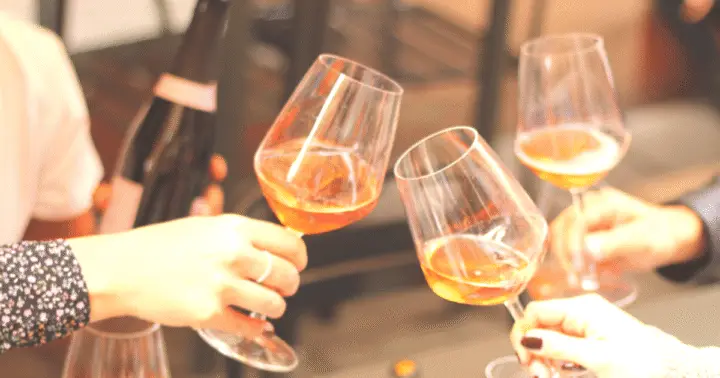
Local food fits naturally into the walking route. Look for tagliatelle al ragù, tortellini in brodo, lasagne verdi and mortadella. “Spaghetti Bolognese” is not the usual local name or pairing; traditional ragù is served with tagliatelle.
Book after 13:00 for a longer meal. To sample smaller portions, compare the counters around the Quadrilatero and ask for the price by weight before ordering cured meat or cheese. This keeps the quantity clear and avoids turning lunch into an oversized tasting menu.
Mercato di Mezzo also helps on a wet or very hot day because lunch can stay inside the walking route. A practical order is a light market stop at midday, followed by a seated meal in the evening.
That plan leaves enough time for timed museums. It also avoids carrying fresh food through churches or historic rooms where large bags are restricted.
Accessibility varies considerably between historic interiors. Visitors with reduced mobility can reach the Archiginnasio’s first floor through the entrance at Via de’ Foscherari 2, where a lift provides step-free access to the Anatomical Theatre and Stabat Mater Hall. The Clock Tower has no lift and uses narrow stairs near the upper terrace. Piazza Maggiore, the main porticoes and most of the central street route remain at ground level, although old paving can be uneven.
One day is enough for Piazza Maggiore, the Quadrilatero, the Two Towers exterior, Santo Stefano and the university district. With two days, add San Luca and one or two museum interiors.
No. In August 2026 the Asinelli Tower remains closed because of work around Garisenda. The Clock Tower in Piazza Maggiore is the available panoramic alternative.
Yes. The main central sights are close together and many routes run beneath porticoes. San Luca sits outside the central circuit and needs half a day or transport for part of the journey.
The Anatomical Theatre and Clock Tower use timed entry. Reserve the free tour as well to secure a place; no credit card is needed for that booking.
Piazza Maggiore, the porticoes, Quadrilatero, Santo Stefano, Via Zamboni, the Via Piella window and the outside of the Two Towers have no admission fee. General entry to San Petronio is free, with separate charges for specific spaces.
Reserve one of the free tours in Bologna to put the historic centre in order with a local guru; no credit card is required. Then compare the activities and experiences in Bologna that fit your travel dates.
Travel marketing specialist with extensive experience in the travel sector. At companies such as Despegar and GuruWalk, she has led traveler-focused digital acquisition strategies. Now, from the GuruWalk blog, she combines her expertise with her passion for discovering and sharing unique destinations.
Local guides, pay-what-you-want and no credit card to book. That is how you understand a city.
Explore free tours on guruwalk.com