



A practical 1, 2 or 3-day Hamburg guide covering City Hall, Speicherstadt, Elbphilharmonie, the harbour, viewpoints, prices and transport.
 Belén Rivas
GuruWalk
·
Updated 3 Sep 2026
Belén Rivas
GuruWalk
·
Updated 3 Sep 2026Hamburg makes sense once its three main landscapes are connected: the civic centre around the Rathaus, the brick warehouses of Speicherstadt and the Elbe waterfront. The city is large, but its leading sights form a clear route for one, two or three days. At GuruWalk, we recommend joining one of the free tours in Hamburg early in the trip. No credit card is needed. The walk then gives structure to the days ahead.
Last verified: August 2026 — Prices, opening hours, and reservation requirements checked against official sources. GuruWalk’s Hamburg guides reviewed the practical recommendations.
An introductory walk solves a specific problem: Hamburg does not have a single compact monument district. The Rathaus and Binnenalster sit north, while Speicherstadt and HafenCity lie south; St Pauli and Landungsbrücken stretch west. A free tour links everything. Museums, viewpoints and waterfront walks can then be placed in the right part of the itinerary.
Local gurus place the port, international trade and the Great Fire of 1842 within the same urban story. At the end, each visitor chooses a tip based on the experience. A useful reference is €10–20 per person, rising to €50 for small groups or exceptional gurus. No credit card is needed to reserve.
At GuruWalk, we place the Hamburg free tour first because it answers an orientation need, rather than interrupting the guide later. Once the main districts are connected, each traveller can decide where extra time will have the most value.
Welcome to Hamburg, a city shaped by water, commerce, and an unyielding spirit of resilience! Here is where history and…

Welcome to Hamburg! If you're ready to leave behind the typical tourist circuit and dive headfirst into the city'…
Free Tour of the Port and the Red Light District with the Blue Umbrellas! We await you with the blue…

The blue umbrellas invite you to explore the city of Hamburg. We offer our Free Tour through the Historic Center….
New from May 2025 We start our walk through the history of Hamburg’s Speicherstadt at the birthplace …

We start our walk through Hamburg's history at Hammaburg Square, the birthplace and nursery of Hamburg, and learn how Hamburg…
Die Speicherstadt – The City of Warehouses Declared a World Heritage Site by UNESCO, i…
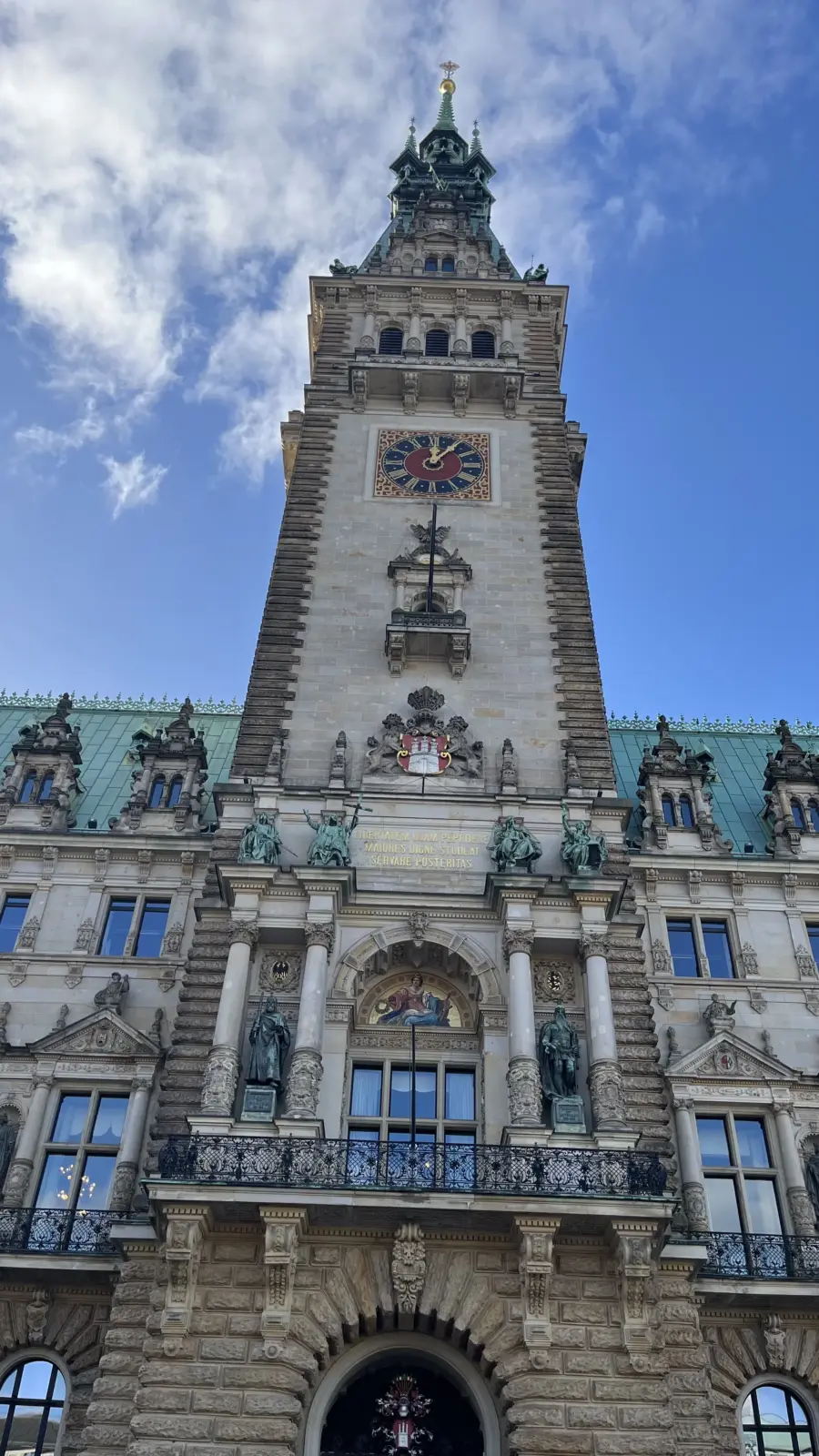
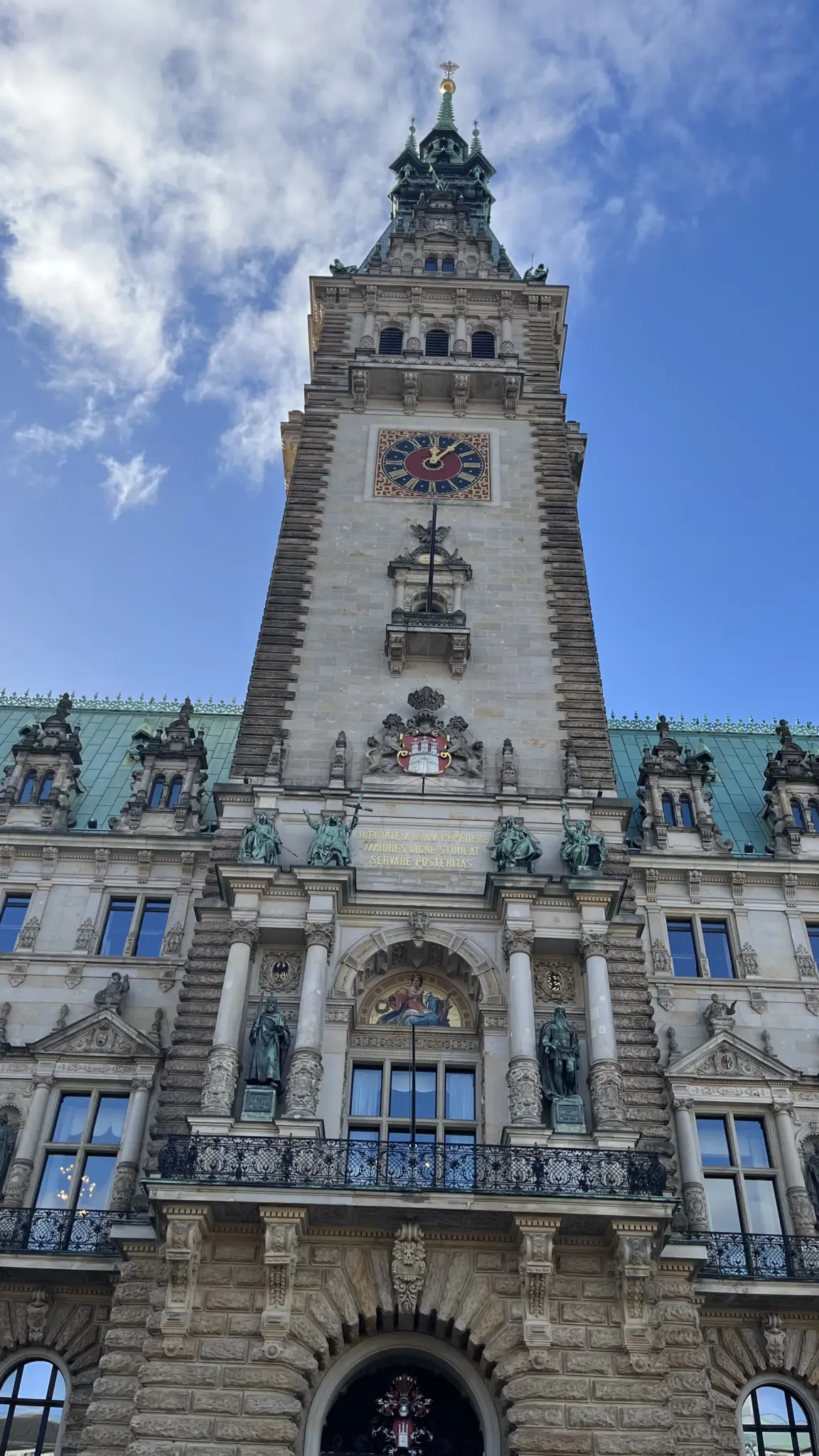
City Hall is the clearest starting point for central Hamburg. The present building was constructed between 1886 and 1897, according to the official Hamburg tourism office. “The most exciting waterfront city,” the tourism office notes. Its neo-Renaissance façade faces Rathausmarkt, within walking distance of St Peter’s Church, Mönckebergstraße and the Alster arcades.
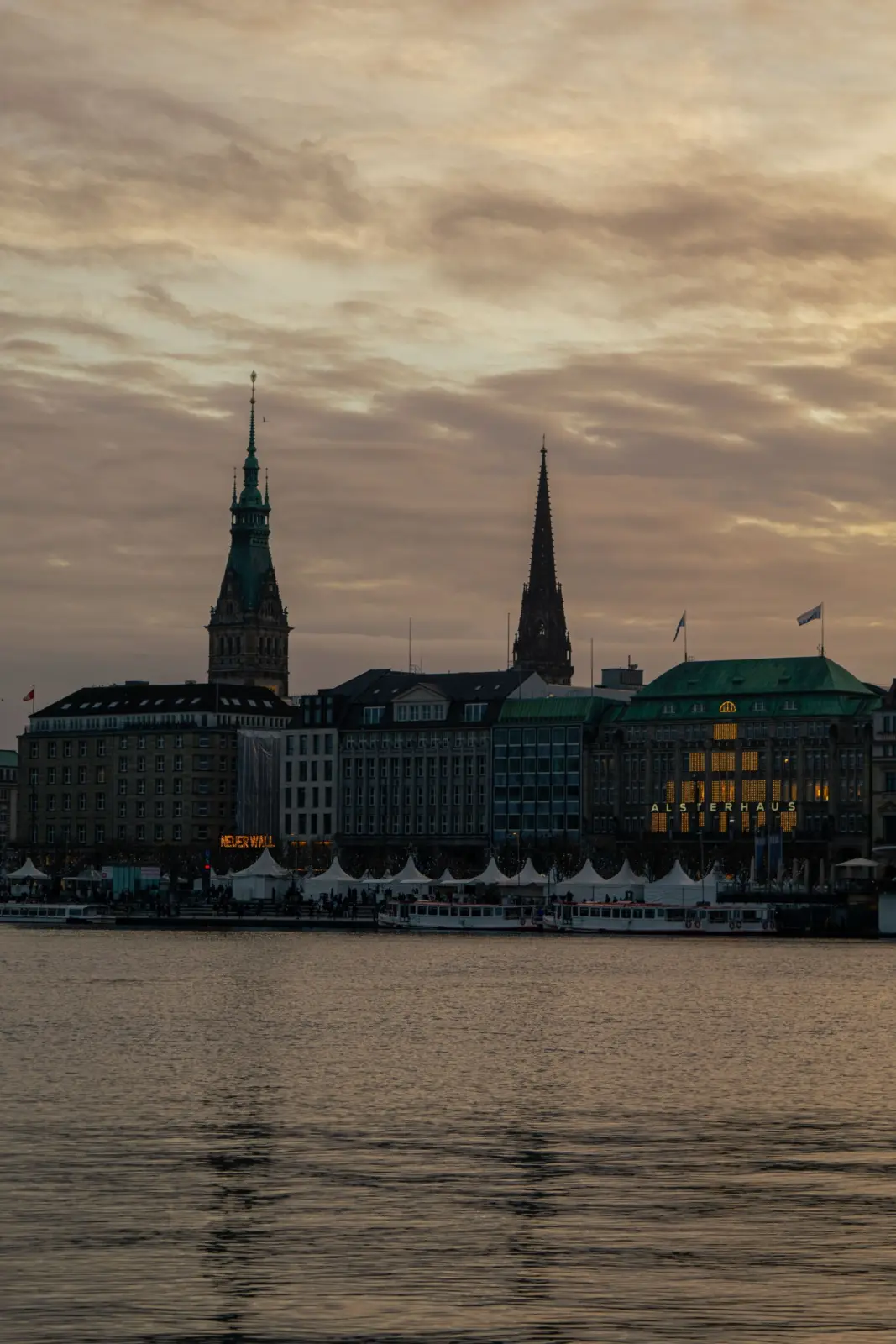
Jungfernstieg—Hamburg’s formal promenade beside the water—is only a few minutes away. It opens onto the Binnenalster, the inner section of the lake, framed by hotels, galleries and boat piers. A short loop along Neuer Jungfernstieg and Ballindamm gives a good view without taking half a day. Walking around the full Außenalster needs considerably longer and suits a three-day visit.
Between the Rathaus and Speicherstadt stands the St Nikolai Memorial. Its surviving tower recalls the destruction of the Second World War and acts as a visual marker on the way to the canals. The exterior fits easily into the same walking route.
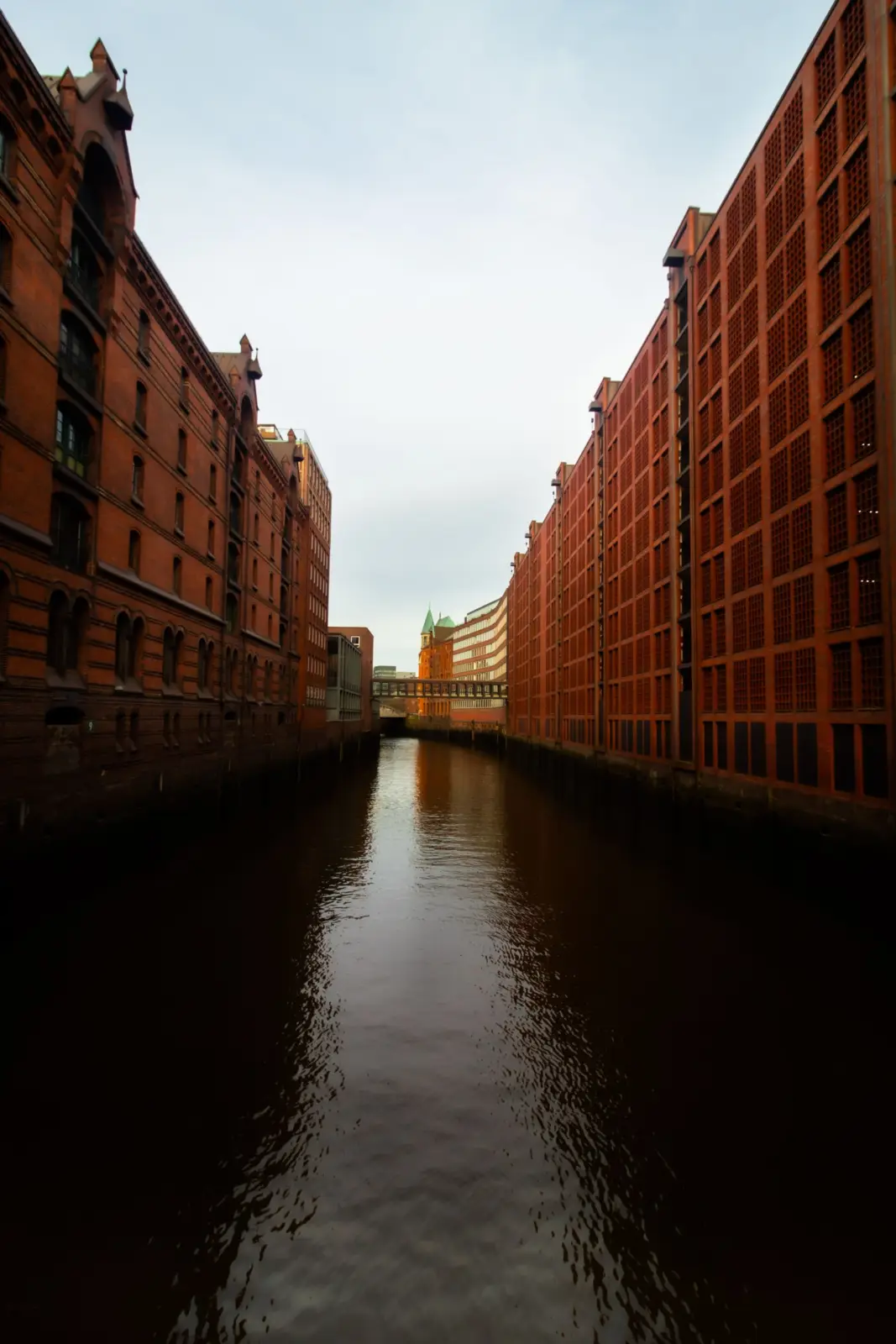
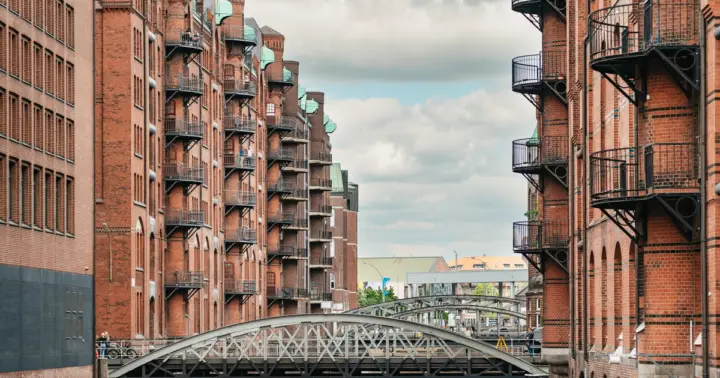
Speicherstadt is not an isolated heritage set. It is a port district developed on narrow Elbe islands between 1885 and 1927. The official UNESCO record describes around 300,000 square metres of warehouses, canals, streets and bridges—an urban system built around water—rather than a row of separate monuments.
Speicherstadt, the Kontorhaus district and Chilehaus joined the World Heritage List in 2015. Together they show how warehouses and offices were planned around international trade, rather than merely preserving a collection of individual façades.
The most useful route begins at Poggenmühlenbrücke, with a view of Wasserschloss between two canals. It continues along Brooktorkai and then crosses towards Chilehaus. The brick office building ends in a sharp corner resembling a ship’s bow and represents the Expressionist architecture of the 1920s.
Tides change the level and appearance of Speicherstadt’s waterways throughout the day. Early morning brings fewer groups. In the evening, lighting defines the red façades along the canals; the district is free to explore and works best on foot.
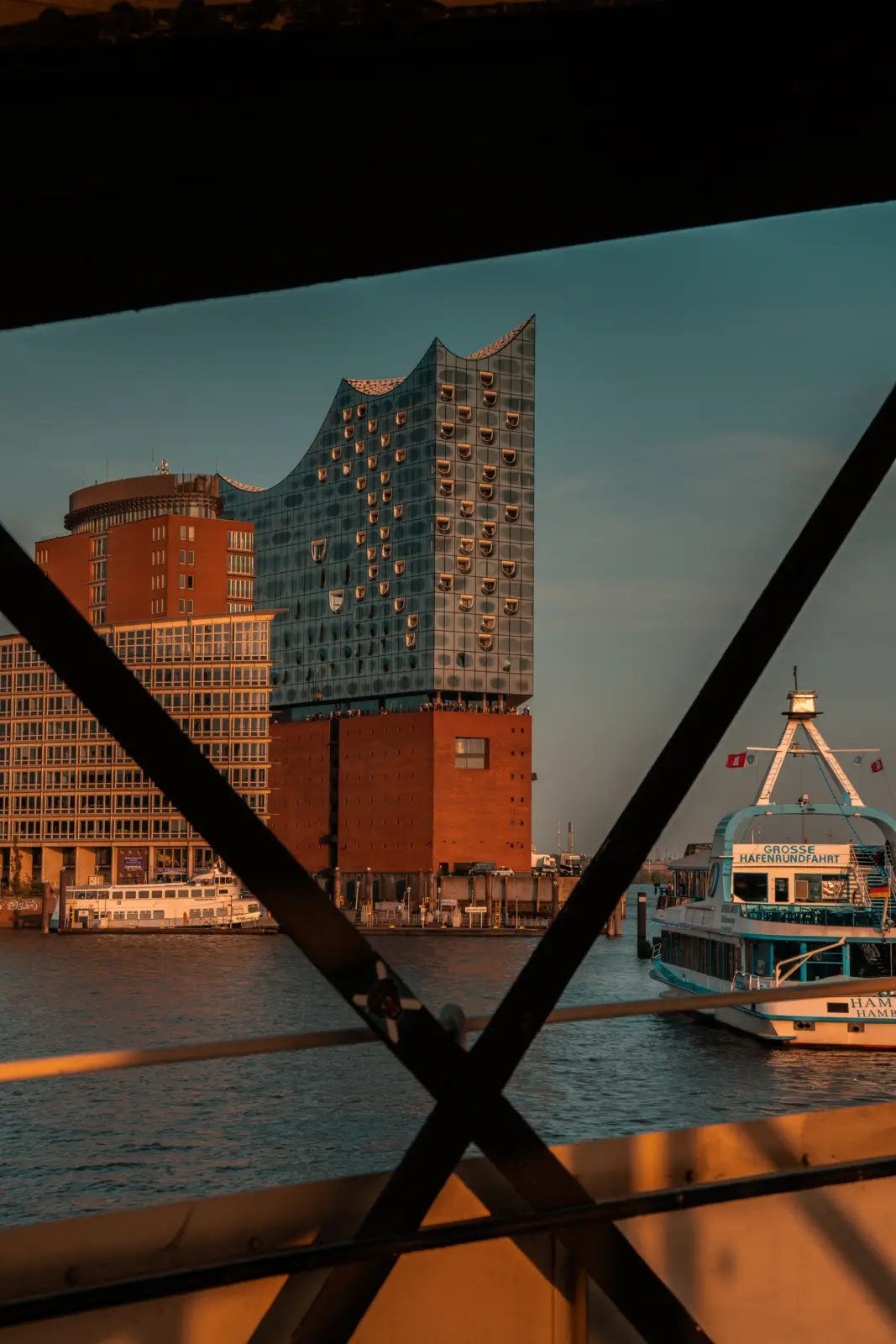
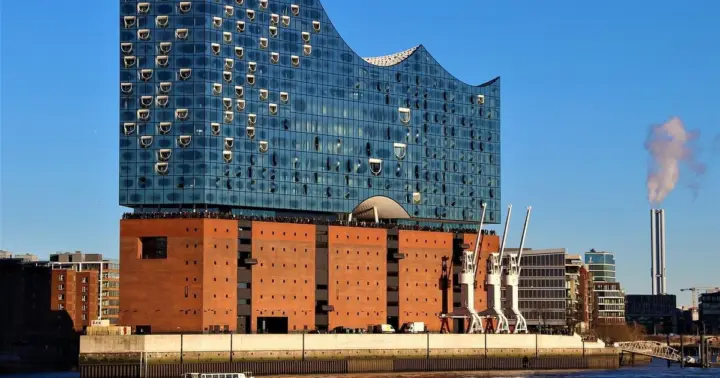
HafenCity shows Hamburg’s recent port transformation. Its main landmark is the Elbphilharmonie, built above a former brick warehouse. The Plaza—a public viewing level 37 metres above ground—looks across the Elbe, Speicherstadt and the working harbour.
In August 2026, the official Plaza information lists daily opening from 10:00 to midnight, with last admission at 23:30. Advance reservations cost €3 per person until 4 October. From 5 October 2026, admission costs €5; spontaneous entry depends on availability.
Combine the Plaza with the outdoor route along Am Kaiserkai and Marco-Polo-Terrassen. This keeps the contrast between historic warehouses and contemporary housing visible without turning the day into a series of indoor visits.
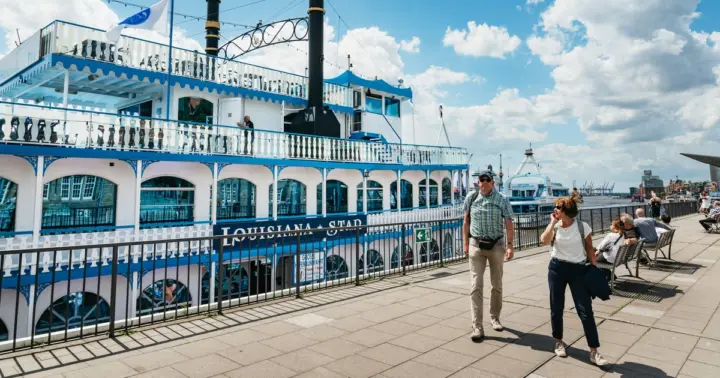



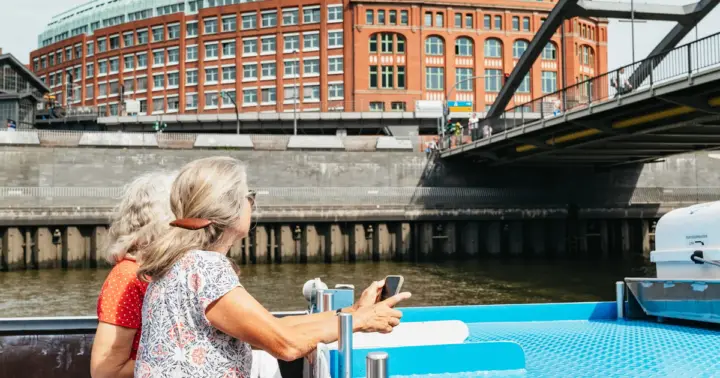
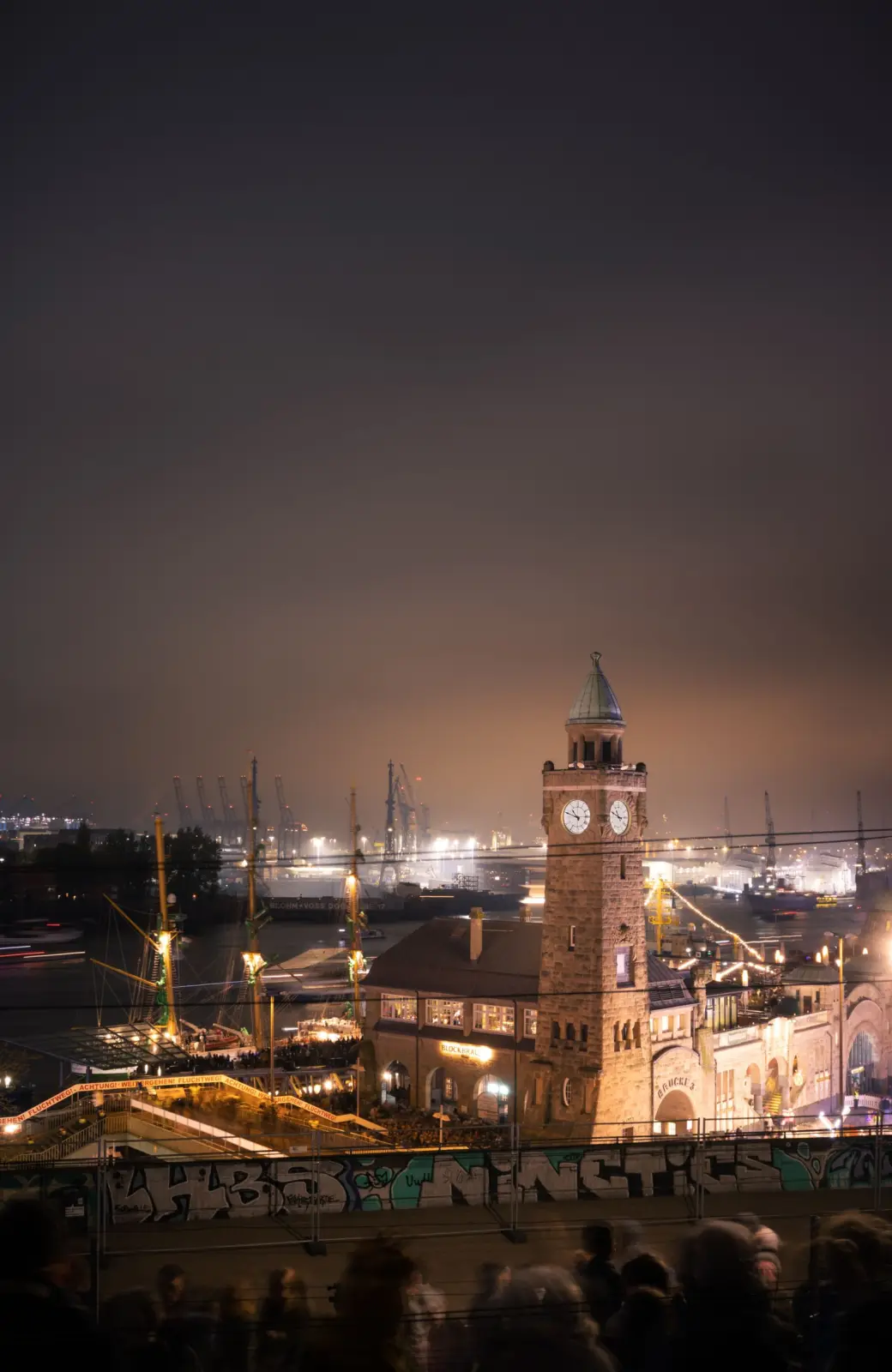
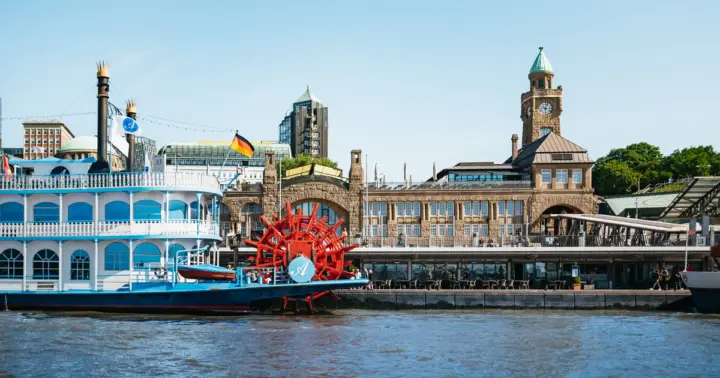
Landungsbrücken is the pedestrian starting point for the harbour. Ferries, tugboats, docks and the southern bank of the Elbe are visible from its floating walkways. Ferry line 62 connects Landungsbrücken with Finkenwerder and gives a broad view of the waterfront; the official transport planner identifies the right ticket for each journey.
The Old Elbe Tunnel begins beside the piers. Its pedestrian route passes under the river through tiled tunnels decorated with maritime reliefs. Travellers short on time can descend, walk part of the tunnel and return to the same bank.
St Pauli begins to the west. Reeperbahn is its night-time axis, but the district also preserves music venues connected with the Beatles’ early Hamburg years. During the day, it combines naturally with the port. After dark, the emphasis shifts to music and nightlife.
Fischmarkt takes place on Sunday mornings beside the former fish auction hall. The market has operated since 1703 and brings together fish, fruit, flower and prepared-food stalls. It starts very early, with seasonal hours, so it fits most naturally into a stay near Altona or St Pauli.
Farther west, Övelgönne keeps a collection of historic vessels at Museumshafen. A riverside path begins by the pier and reaches an urban sandy beach. This is not a conventional seaside swimming stop; the appeal is watching tugs, cranes and container ships pass along the Elbe.
Allow roughly two hours for this extension to the harbour route. A bus or ferry can return visitors towards the centre without retracing the entire path. On a one-day visit, Landungsbrücken takes priority. With two or three days, Övelgönne presents a quieter side of Hamburg’s riverfront.
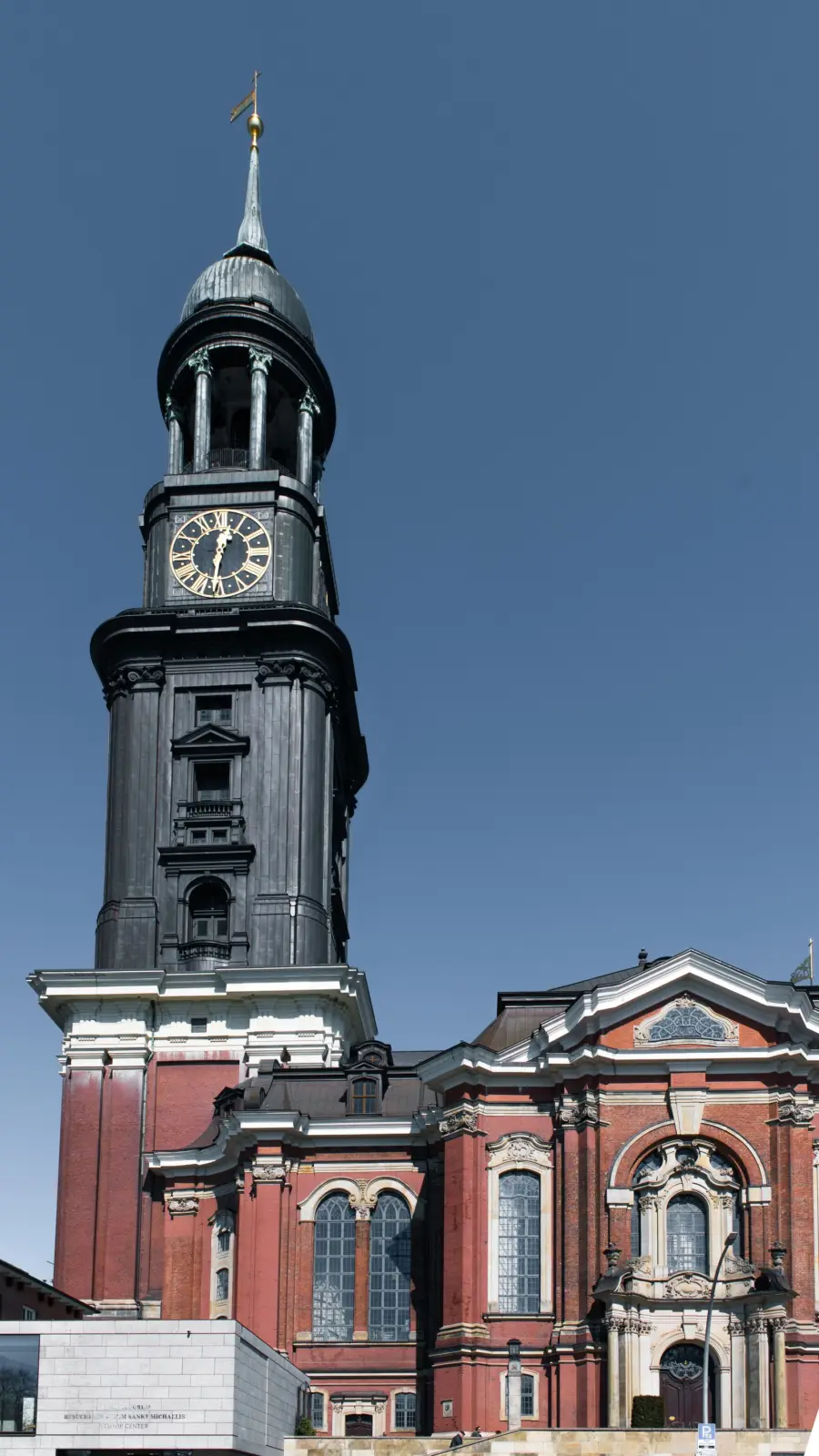
St Michael’s Church, known locally as Michel, dominates the western skyline. Entry to the church is free. Its viewing platform stands 106 metres above the Elbe and costs €8 for adults in August 2026, according to the official St Michael’s visitor information.
A lift makes the climb easier, although 452 steps are also available. From the top, visitors can identify the Elbphilharmonie, Landungsbrücken, Rathaus and Alster lakes. If only one paid viewpoint fits the budget, Michel provides the broadest city view; the Elbphilharmonie Plaza offers a lower, closer harbour perspective.
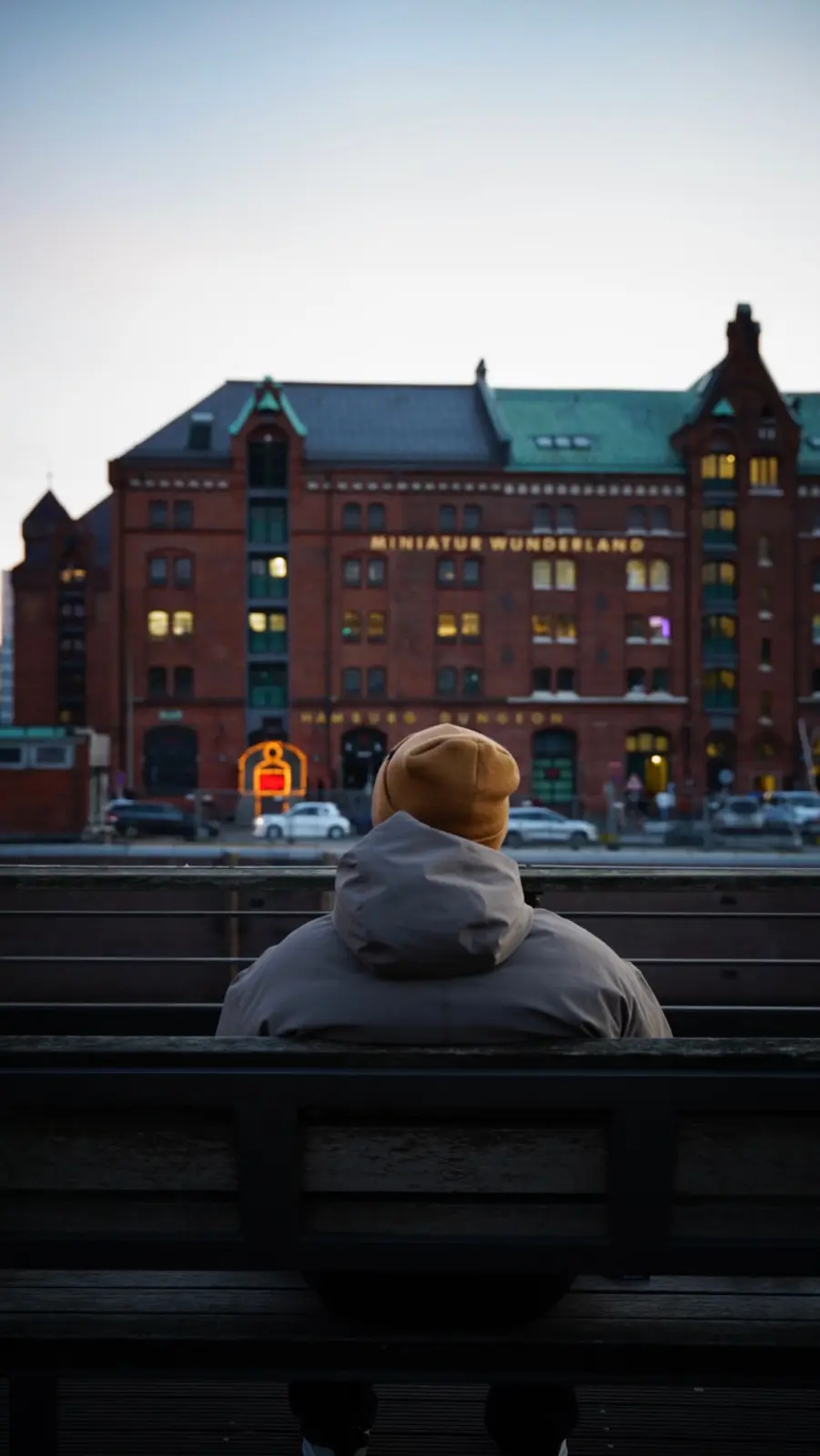
Miniatur Wunderland occupies several spaces in Speicherstadt, filled with moving model railways, airports and cities. It is not a brief stop: allow at least two or three hours. The official admission price is €22 for adults and €13 for visitors under 16 in August 2026. The attraction recommends online booking to reduce waits.
For art, Hamburger Kunsthalle sits next to the main station and covers work from medieval painting to modern collections. Another option is the International Maritime Museum inside a HafenCity warehouse. Both work well in wet weather and keep travel across the city to a minimum.
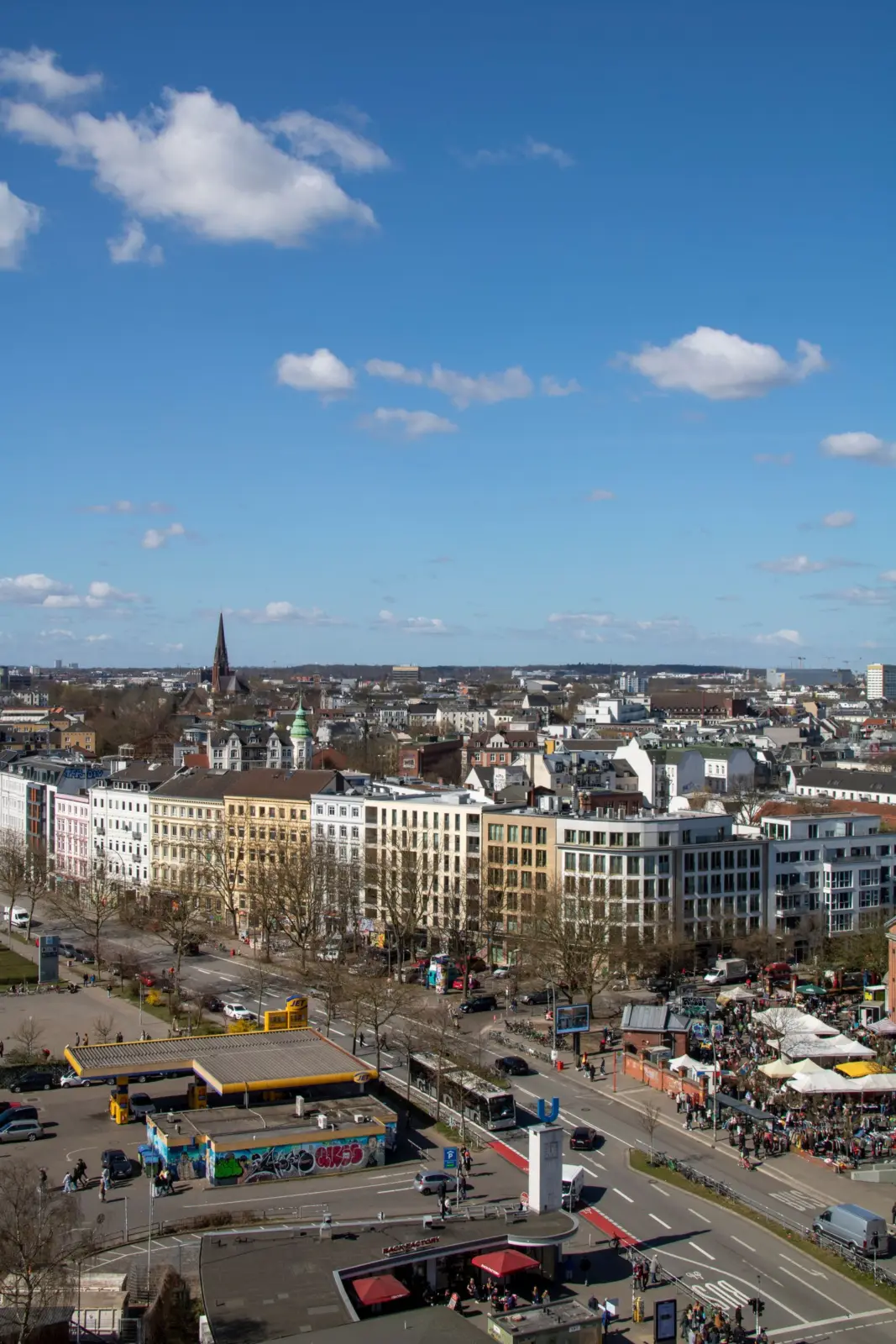
Planten un Blomen forms a green strip beside the convention centre and Dammtor station. Its gardens, ponds and paths offer a free pause between the Rathaus and Hamburg’s western districts. The park is particularly useful when St Pauli is already on the route, as it connects with that area without returning to the harbour.
Karolinenviertel and Schanzenviertel replace landmark checklists with residential streets, cafés and small shops. No ticket is required, and no fixed route is necessary. An hour around Marktstraße and Schulterblatt shows a different pace of city life before the U-Bahn ride back.
One day: begin at Rathausmarkt, cross Speicherstadt and reach the Elbphilharmonie. Continue to Landungsbrücken, then finish at St Michael’s for a high view across Hamburg. It is a compact route.
Two days: we keep the first itinerary and add the Binnenalster, Kunsthalle or Miniatur Wunderland. Late afternoon belongs to St Pauli and the Elbe. Indoor and outdoor stops alternate without repeating the same ground.
Three days: use the third day for the Außenalster, Eppendorf or Ottensen, or travel towards Blankenese and its riverside stairways. Travellers who prefer an organised option can browse activities and experiences in Hamburg and select one that fits their schedule.
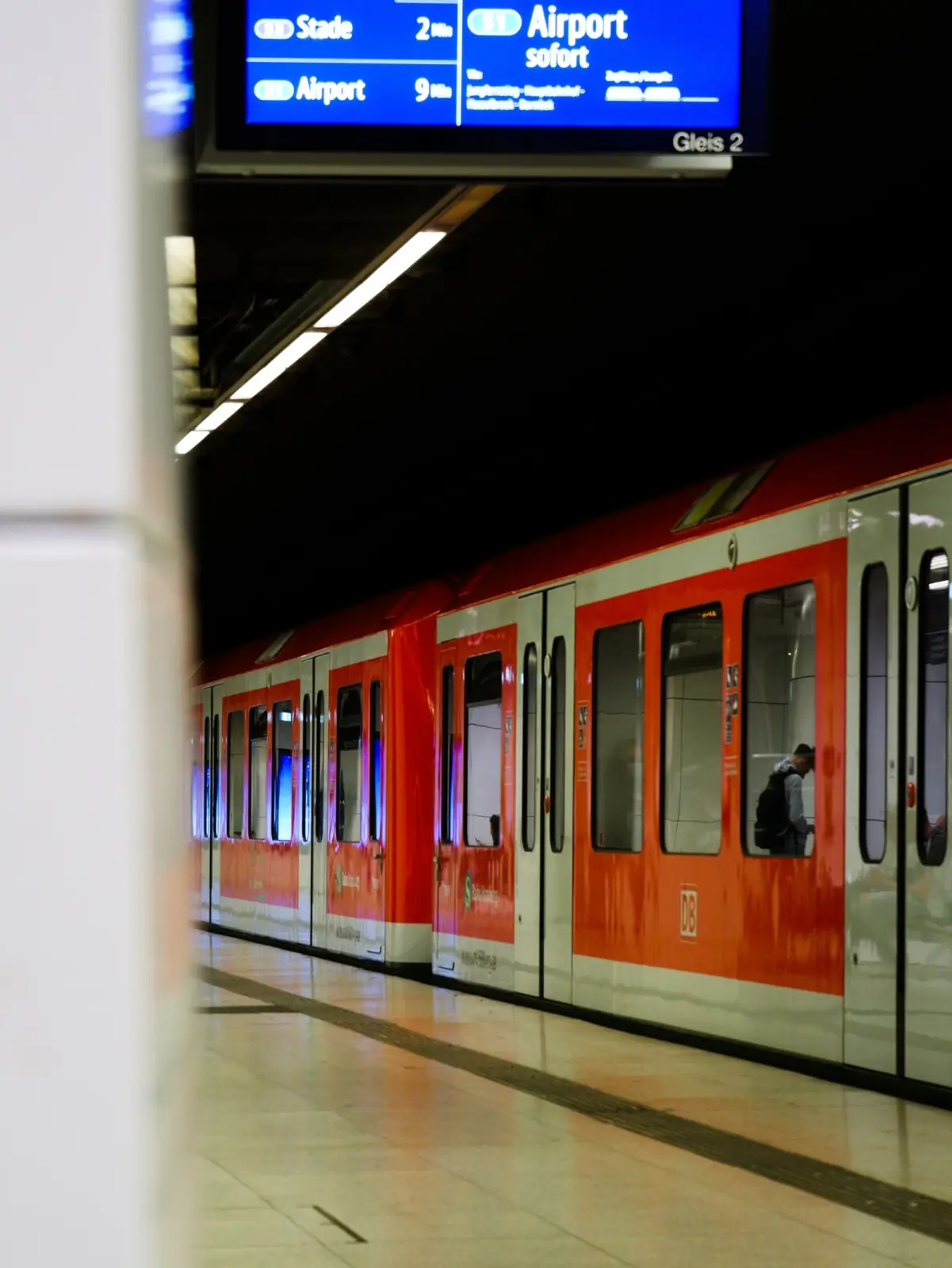
Central Hamburg is walkable, while U-Bahn, S-Bahn, buses and ferries connect outlying districts. HVV fares valid from January 2026 price a Hamburg AB single ticket at €4.10 and a day ticket at €8.20. Buying through the app gives a 7% discount.
From the airport, S1 trains run to Hamburg Hauptbahnhof every 10 minutes and take about 25 minutes, according to Hamburg Airport. For a short stay, accommodation near U3 or S1 simplifies trips between the centre, harbour and airport.
Two days cover the Rathaus, Speicherstadt, Elbphilharmonie, harbour and St Michael’s. Three days leave room for a museum, the Außenalster or Blankenese without compressing every visit.
Rathausmarkt is a practical starting point. From there, the route moves naturally through Speicherstadt and HafenCity to the Elbphilharmonie and Landungsbrücken.
Yes. The Plaza is public and opens daily. In August 2026, reserving a time slot costs €3; the admission price changes to €5 on 5 October 2026.
A Hamburg free tour is particularly useful at the start of a trip. It connects the civic centre, port districts and trading history, making it easier to choose where to return later.
No. Booking a GuruWalk free tour requires no credit card. Each visitor gives the guru a contribution at the end based on the experience.
Reserve a free tour in Hamburg to place the harbour, Rathaus and Speicherstadt in context on the first day. No credit card is needed. Then add the Hamburg activities and experiences that fit your dates and available time.
Travel marketing specialist with extensive experience in the travel sector. At companies such as Despegar and GuruWalk, she has led traveler-focused digital acquisition strategies. Now, from the GuruWalk blog, she combines her expertise with her passion for discovering and sharing unique destinations.
Local guides, pay-what-you-want and no credit card to book. That is how you understand a city.
Explore free tours on guruwalk.com