




Explore Riga in one to three days through medieval Vecrīga, Art Nouveau streets, Central Market, museums and practical walking routes.
 Belén Rivas
GuruWalk
·
Updated 3 Sep 2026
Belén Rivas
GuruWalk
·
Updated 3 Sep 2026Riga makes sense on foot because three distinct cityscapes sit close together: medieval Vecrīga, the surrounding parks and the Art Nouveau streets of the Quiet Centre. The historic centre has held UNESCO World Heritage status since 1997, yet this is not a preserved stage set. It remains lived-in. Central Market, the tram network and the Daugava itself—broad, busy and always close—belong to everyday city life. On a first visit, a free tour in Riga puts those layers in order from the start. No credit card is needed to book.
Last verified: August 2026 — Prices, opening hours, and reservation requirements checked against official sources. GuruWalk’s Riga guides reviewed the practical recommendations.
An early walking tour introduces Town Hall Square, the House of the Black Heads, St Peter’s Church, Dome Square and the Freedom Monument before you choose which interiors deserve your time. Most stops fit into a compact, walkable area. “Provided so much valuable context to better appreciate the architecture,” one walker said after an Art Nouveau tour in August 2026. A guru can connect rebuilt medieval landmarks, Hanseatic trade history and symbols of Latvian independence without turning the morning into a lecture.
Free tours have no fixed ticket price. Each walker decides what to give at the end based on the experience. A useful guideline is €10–20 per person, rising to €50 for a small private-feeling group or exceptional work by the guru. At GuruWalk, we suggest booking the first morning when possible. Local recommendations can then shape the rest of the stay.
You will love our tour:) It will be filled with important and interesting information presented in a fun way. History…

The Top rated Free tour of Riga's Old town! Running daily rain or shine, you have the chance to discover…

The Alternative Riga Free Tour is a great way for those who want to see more than just the touristy…
I want to show the magnificent Old Riga, paying attention to the nuances of history, small details of architecture, fa…

Our Central Riga & Art Nouveau tour is the best way to discover Riga's most amazing architecture and learn about…
Welcome to Riga Old town tour with informative and friendly local guides! By joining this tour, you wi…

Soviet Riga Free Tour – Discover the lives of the people who lived under Soviet occupation on a tour that…
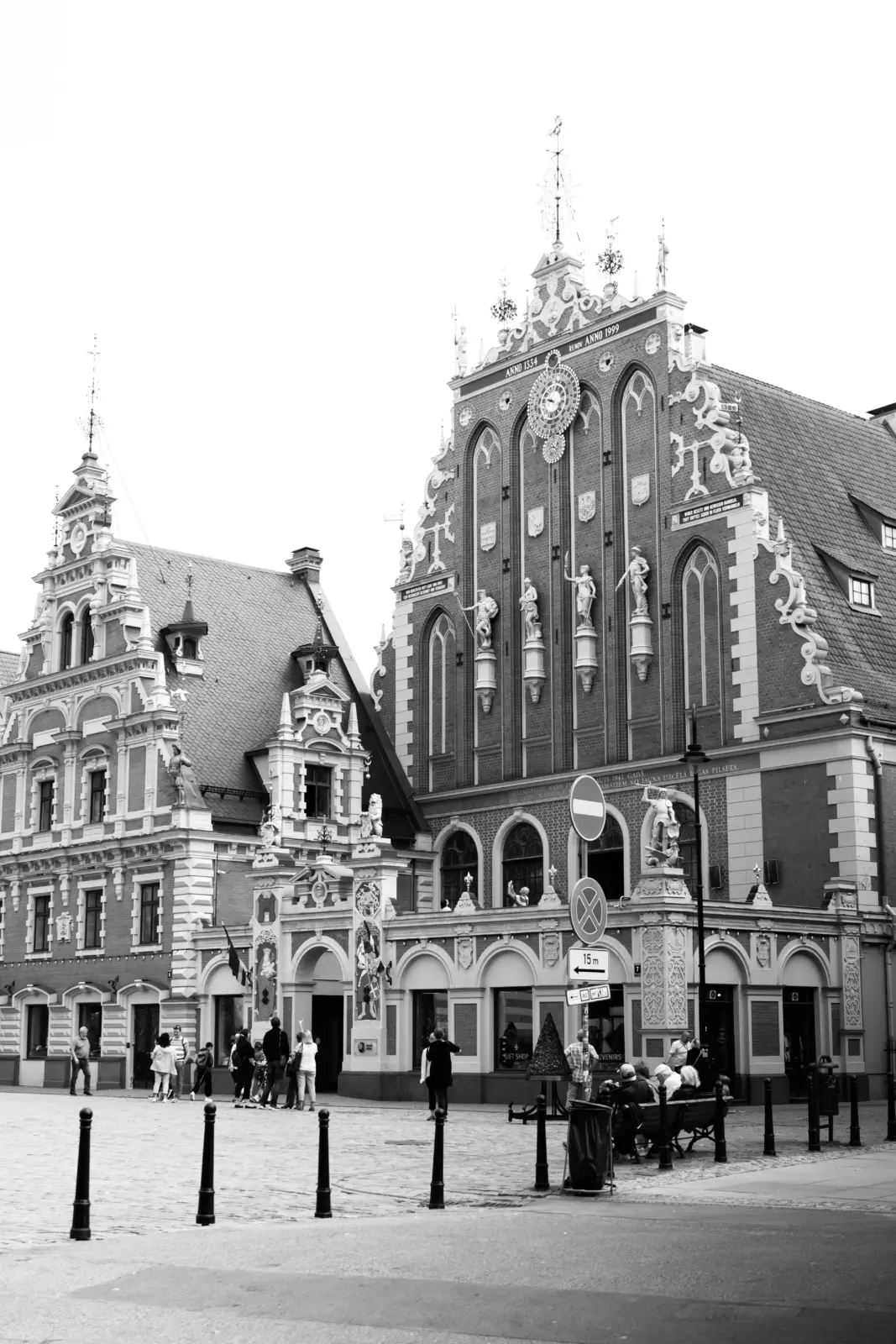
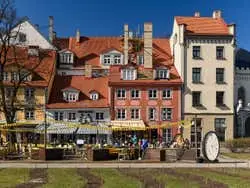
Vecrīga places the best-known sights within a short walk. It forms part of the UNESCO-listed Historic Centre of Riga, a 430.17-hectare area that also includes the boulevards and much of the Art Nouveau cityscape. Begin at Rātslaukums—or Town Hall Square—where the House of the Black Heads faces the Town Hall beside the statue of Roland.
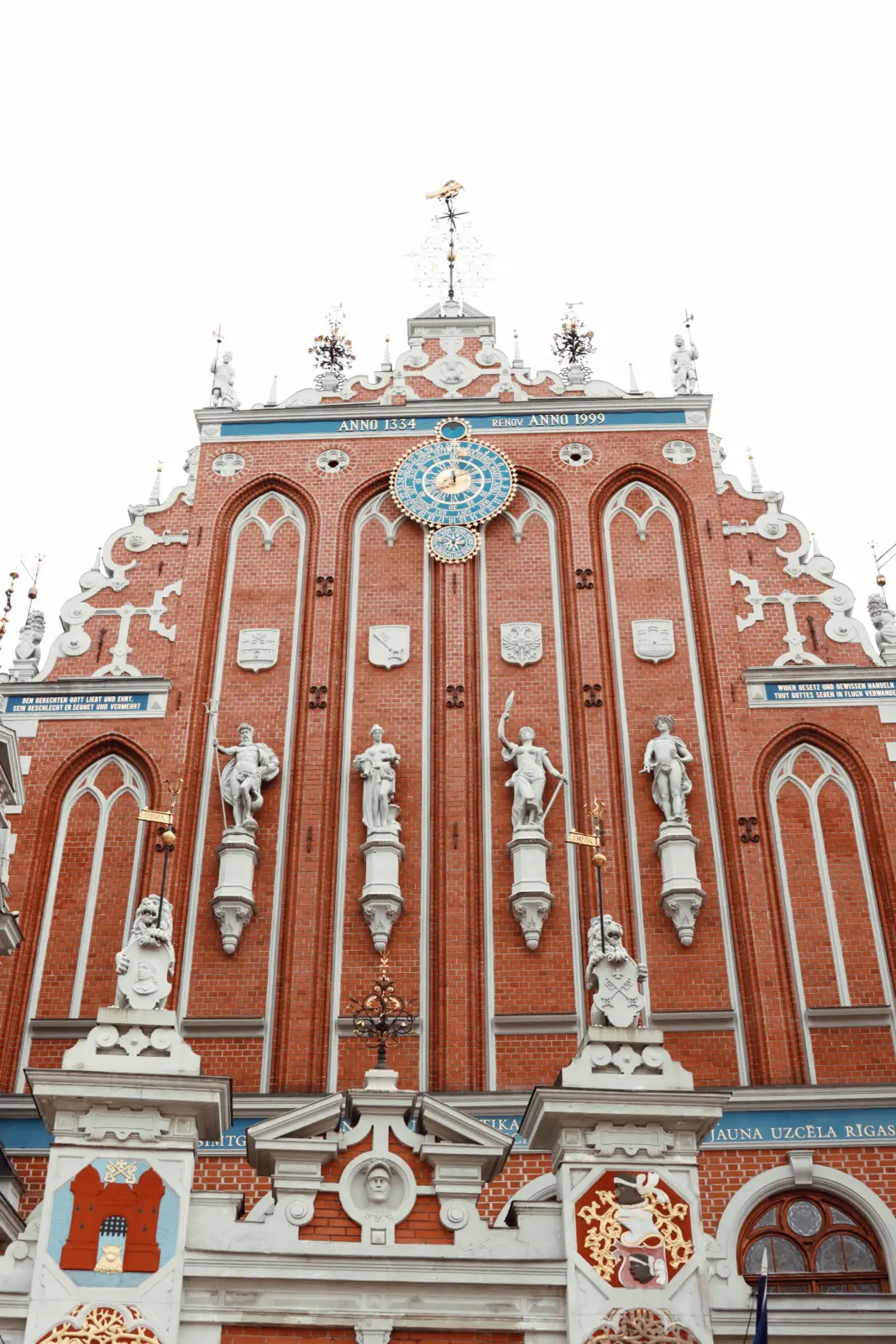
Once a base for a brotherhood of unmarried merchants, the House of the Black Heads now welcomes visitors. Its present façade belongs to a reconstruction completed at the end of the 20th century after the building was destroyed during the Second World War. For a quick visit, see the exterior early in the morning. Inside, ceremonial rooms and historic cellars need roughly one hour.
In August 2026, general admission costs €10 and the exhibition normally opens from 10:00 to 17:00. The building also hosts functions that can shorten opening on a particular date. Check the official House of the Black Heads visitor page for that day’s hours and online tickets.
St Peter’s Church stands about 150 metres from Town Hall Square. Its observation platform is 57 metres high, giving a clear view over Vecrīga’s roofs, the market pavilions and the Daugava. Visiting early in a trip helps with orientation: from above, the scale of the centre and the line between the medieval quarter and later districts become much easier to read.
In August 2026, the church opens from 10:00 to 18:00 Sunday through Thursday and stays open until 22:00 on Friday and Saturday. Admission options cover the church, exhibitions and tower access. Concerts sometimes affect the visitor route, so consult the official St Peter’s Church website before choosing a time.
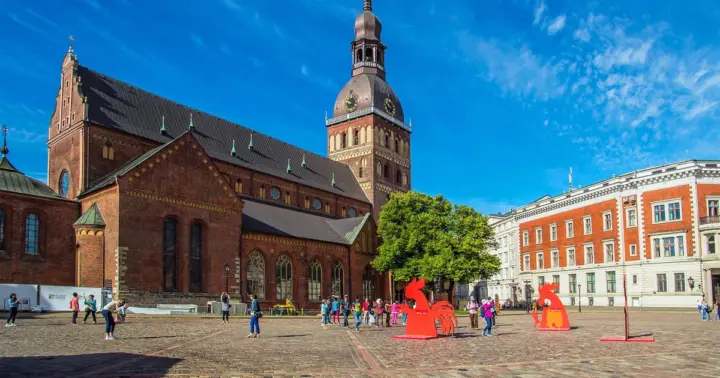
Doma laukums is Old Town’s broadest square and a good place to compare architectural periods from one block to the next. Riga Cathedral was founded in the 13th century, and its wider complex also contains the Museum of the History of Riga and Navigation. A short walk leads to the Three Brothers, adjoining houses that show successive stages of local domestic architecture.
Follow Mazā Pils iela toward Swedish Gate, which was cut through the city wall in the late 17th century. The Powder Tower and Jacob’s Barracks are nearby. You can walk the complete line from Town Hall Square to these sights in one morning without entering every building. Add one substantial interior and the circuit becomes a comfortable half-day plan.
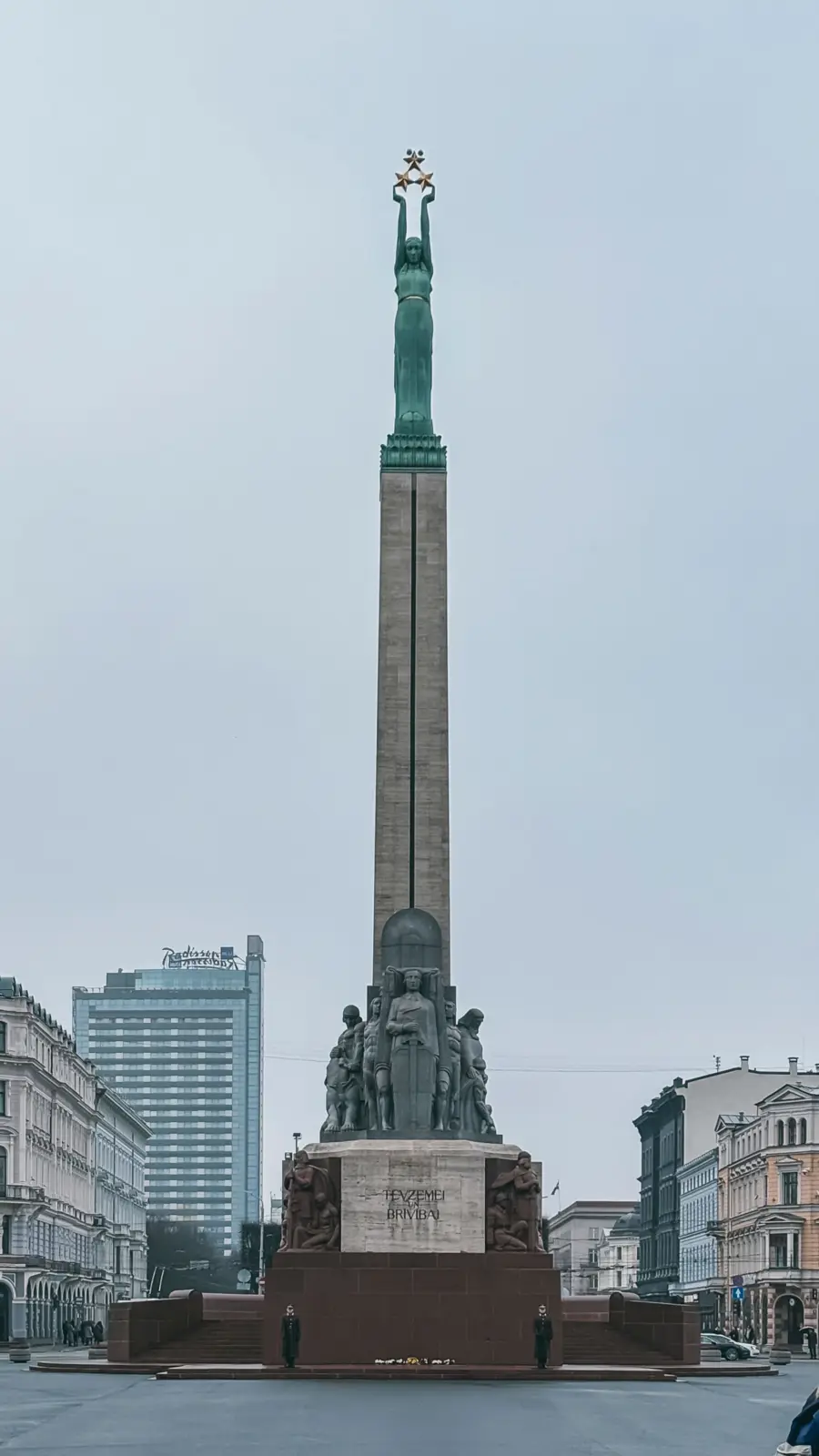
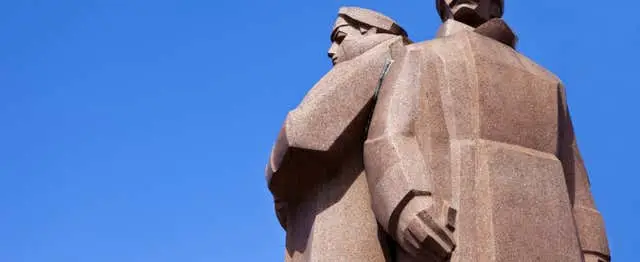
Standing between Vecrīga and the boulevards, the Freedom Monument is visible well before you reach it. It rises 42.7 metres, was unveiled on 18 November 1935 and was funded by public donations. Three stars—Kurzeme, Vidzeme and Latgale—represent Latvia’s historic regions. Riga’s official Freedom Monument guide explains its 13 sculptural groups and the guard ceremony.
Bastejkalns and the city canal create a green pedestrian link from the monument toward the Latvian National Opera. It costs nothing. With an hour available, follow the canal as far as Kronvalda Park and watch the city shift from medieval lanes to formal boulevards. Short on time? Circle Bastejkalns and return past the opera. No transport required.
About 15 minutes on foot separates Old Town from the Art Nouveau district. Alberta iela brings together façades covered with masks, animals, human figures and plant motifs; Elizabetes iela and Strēlnieku iela extend the route. Entry is not required to appreciate the area. We look at doorways and stairwells as well as rooflines, since much of the decoration sits close to street level.
At Alberta iela 12, the former apartment of architect Konstantīns Pēkšēns occupies a building completed in 1903. The setting is domestic. Riga Art Nouveau Centre recreates period rooms and displays furniture and everyday objects from the early 20th century. In the 2026 summer season, full admission is €9; the museum opens Tuesday to Sunday from 10:00 to 18:00. Its official museum website has the visitor details.
Architecture tells only part of the story. Riga’s museums explain the political changes that reshaped the city. The Museum of the Occupation of Latvia covers 1940 to 1991, including the Soviet and Nazi occupations.
Beside Town Hall Square, the museum opens daily from 10:00 to 18:00 in August 2026. We would allow at least 90 minutes here. The official Museum of the Occupation website lists closure dates and ticket information.
For art, the Latvian National Museum of Art holds Latvian painting, graphic art and sculpture from the 19th and 20th centuries. It sits beside Esplanāde between the Freedom Monument and the Art Nouveau quarter. The museum closes on Monday; it opens 10:00–18:00 Tuesday to Thursday, until 20:00 on Friday and until 17:00 at weekends. Check the museum’s official opening-hours page when planning an afternoon.
If urban history is the priority, the Museum of the History of Riga and Navigation occupies part of the cathedral complex. Its collections cover more than eight centuries of trade, daily life and shipping. Do not schedule three museums in a row during a two-day stay. Pick one that matches your interest, allow 90 minutes to two hours, then return to the surrounding streets.
Riga Central Market fills five large pavilions beside the bus station and the Daugava. It opened in 1930, reusing structures from airship hangars. Individual halls focus on fish, meat, dairy produce or vegetables, while seasonal stalls spread outside. The market works well for breakfast, rye bread or smoked fish without committing to a formal meal.
In August 2026, the pavilions normally open from 7:30 to 18:00, with the outdoor area opening at 7:00. Go in the morning when more stalls are trading. The official Riga Central Market website publishes the daily schedule. Afterwards, cross toward the red-brick Spīķeri warehouses and continue along the river promenade.
One day in Riga
Start with a free tour of Vecrīga. Afterwards, enter either St Peter’s Church or the House of the Black Heads. Pick one. Cross Bastejkalns, pause at the Freedom Monument and finish among the façades of Alberta iela. Late afternoon is a good time to return toward the Daugava through Elizabetes iela and the canal parks.
Two days in Riga
Keep the first day focused on Vecrīga and the boulevards. Begin day two at Central Market, continue through Spīķeri and spend the afternoon at either the Museum of the Occupation or the Latvian National Museum of Art. This order avoids crossing the centre repeatedly and leaves time for lunch. In fair weather, save the canal section for late afternoon.
Three days in Riga
A third day lets you leave the central circuit. Āgenskalns, on the left bank of the Daugava, mixes wooden houses with a restored covered market. Mežaparks is another option, linked to the centre by tram and offering walks beside Lake Ķīšezers. Choose one district and give it time. Trying to include both turns the day into a series of transfers.
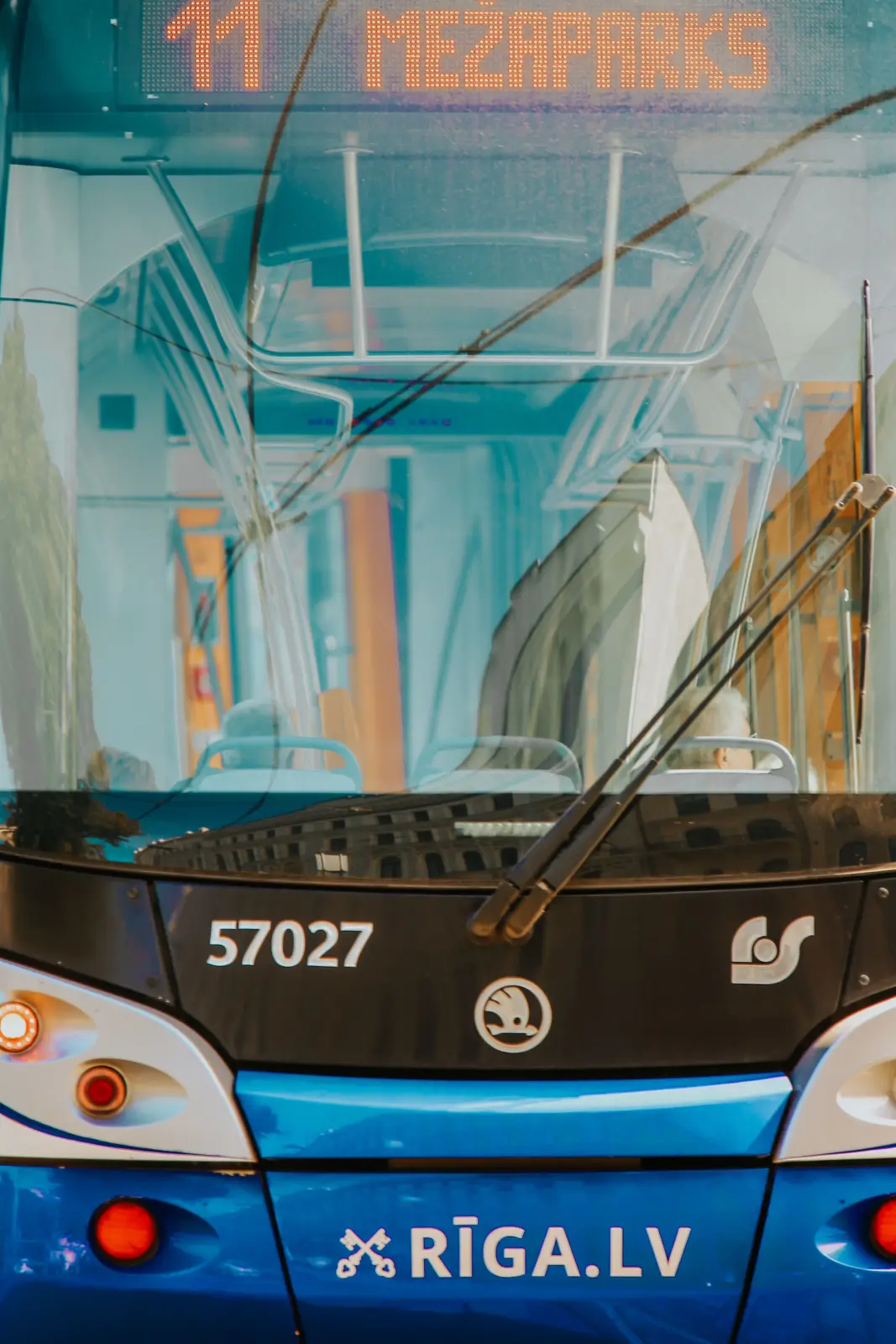
Vecrīga, Central Market, the Freedom Monument and Alberta iela fall within a reasonable walking circuit. Most visitors need only a few rides. For Mežaparks, Āgenskalns or accommodation outside the centre, municipal transport combines buses, trolleybuses and trams. In August 2026, a 90-minute ticket costs €1.50 and allows transfers during that period. Validate it each time you board another vehicle.
There are also 24-hour, three-day and five-day passes. The official Rīgas satiksme ticket page explains prices, sales points and conditions. Bus 22 connects the airport with the centre. If you arrive by intercity train or coach, the stations are beside Central Market and roughly a ten-minute walk from Vecrīga.
Two days cover Old Town, the boulevards, the Art Nouveau district and one museum. With three days, you can spend longer at Central Market and add a district beyond the centre, such as Āgenskalns or Mežaparks.
Yes. The main central sights are close together, and Vecrīga is largely pedestrian. Public transport is useful for the airport, Mežaparks and places on the left bank of the Daugava.
The exterior of the House of the Black Heads, the Three Brothers, Swedish Gate, the Freedom Monument, the canal parks and the façades of Alberta iela require no ticket. Central Market is free to enter, apart from anything you choose to eat or buy.
Choose a date, time and language, reserve a place and meet the guru at the stated point. There is no fixed fee; you contribute at the end according to your experience. €10–20 per person is a common guideline. No credit card is needed to book.
Book one of the free tours in Riga to get oriented on your first morning, then add activities and experiences in Riga that fit your schedule. GuruWalk is the platform for finding and booking free tours with local guides and activities in cities around the world. You can confirm the free tour without entering credit card details.
Travel marketing specialist with extensive experience in the travel sector. At companies such as Despegar and GuruWalk, she has led traveler-focused digital acquisition strategies. Now, from the GuruWalk blog, she combines her expertise with her passion for discovering and sharing unique destinations.
Local guides, pay-what-you-want and no credit card to book. That is how you understand a city.
Explore free tours on guruwalk.com