




Warsaw’s reconstructed Old Town, twentieth-century museums, Łazienki and the Vistula fit into practical routes for one, two or three days.
 Belén Rivas
GuruWalk
·
Updated 3 Sep 2026
Belén Rivas
GuruWalk
·
Updated 3 Sep 2026Warsaw makes most sense when you connect three layers: the reconstructed Old Town, museums that explain the 20th century, and the places where local life unfolds, from Łazienki to the Vistula. Two well-planned days cover the essential sights; a third gives you time for Praga and longer museum visits. On arrival, a free tour in Warsaw is a practical way to link the squares, monuments, and historical events before choosing which collections to enter.
Last verified: August 2026 — Prices, opening hours, and reservation requirements checked against official sources. GuruWalk’s Warsaw guides reviewed the practical recommendations.
On a first morning, follow the route from Castle Square to the Old Town Market Square, Barbican, and New Town. The distance is short. Every restored façade still raises the same questions: what survived, what was rebuilt, and why? A guru supplies that context while the group walks. For a first visit, we suggest choosing a tour that ends near your next stop.
Free tours have no fixed price. At the end, each person tips the guru according to the experience; a common reference is €10-20 per person, rising to €50 for small groups or exceptional gurus. No credit card is needed to book. Choose a route that finishes near your next stop so you do not lose time retracing the same streets.
Join us on a journey through Warsaw’s Old Town, a place that rose from complete destruction after World War II,…

Cold War Warsaw: Spies, Communism & Hidden Resistance Tour Step into a world of secrets, sha…
[Note] If you don’t see a tour scheduled on the only date available to you, please send me a message….

We are Antek and Tomek and we would like to invite you on our very personal city tour through the…

Just arrived in Warsaw and trying to find out whether you can hang out with your partner in a gay…

Step into a meaningful walk through Jewish Warsaw and its history during World War II . Befor…

Warsaw is far more than beautiful streets and rebuilt façades. Behind these walls are stories of mystery, survival…

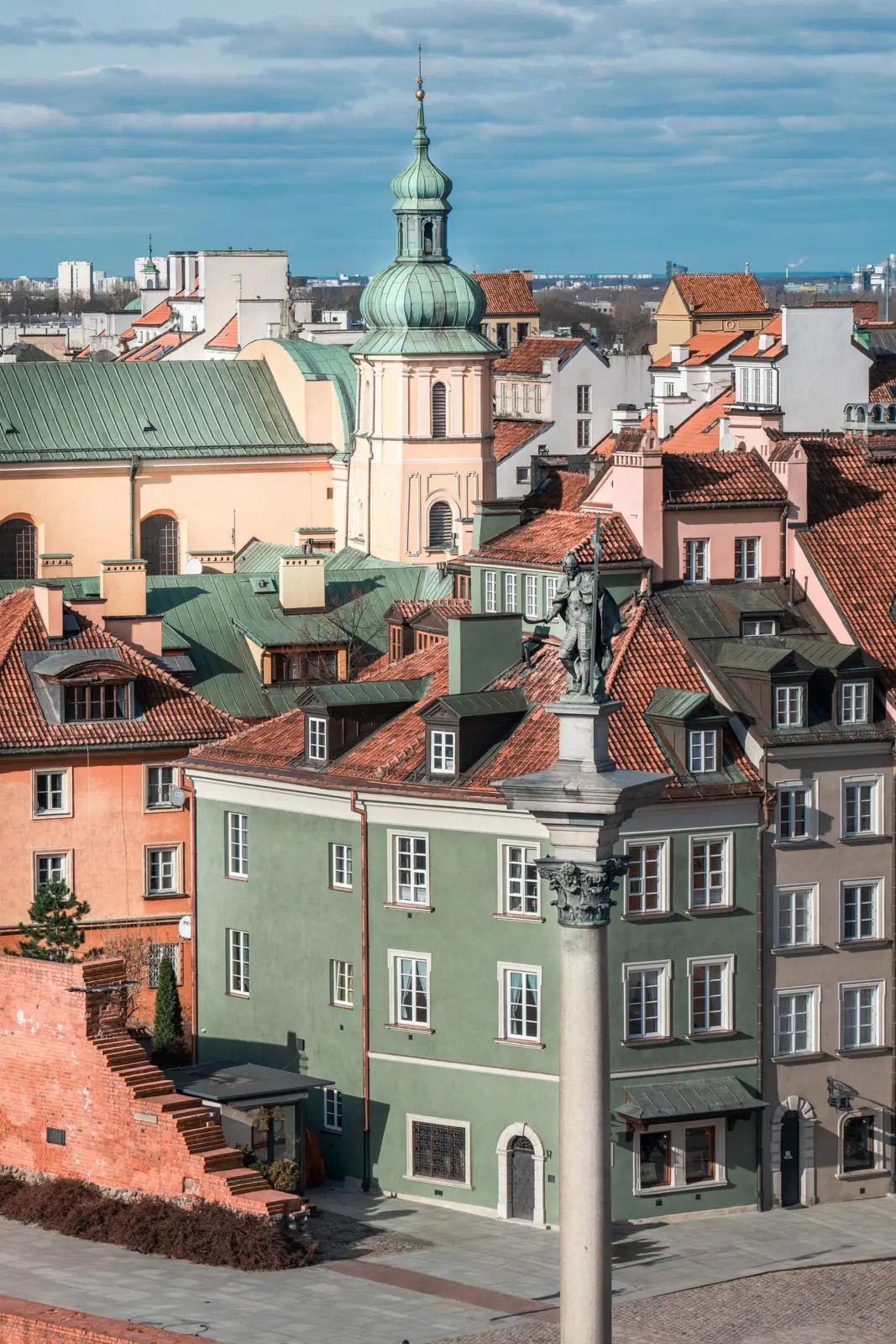
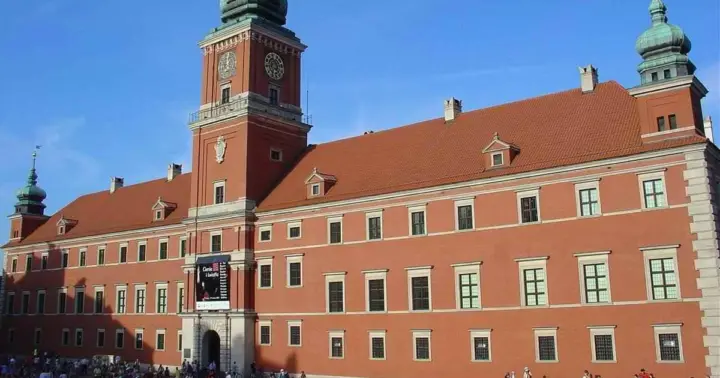
Castle Square is the natural entrance to the historic centre. Sigismund III’s Column marks the approach, while the Royal Castle’s red façade closes the square towards the Vistula. The building was destroyed during the Second World War, and reconstruction began in 1971. Inside are the royal apartments, Throne Room, paintings by Rembrandt, and Warsaw views by Bernardo Bellotto, known as Canaletto.
From May 2026, the main Royal Castle routes open Tuesday to Sunday from 10am to 6pm, with last entry at 5pm. A regular ticket for either the Royal Route or Museum Route costs PLN 60 and includes an audio guide. Wednesday offers a shorter free route. Places are limited, cannot be reserved, and tickets are collected at the box office. “A symbol of the sovereignty of the Polish State,” the Royal Castle notes in its visitor history.
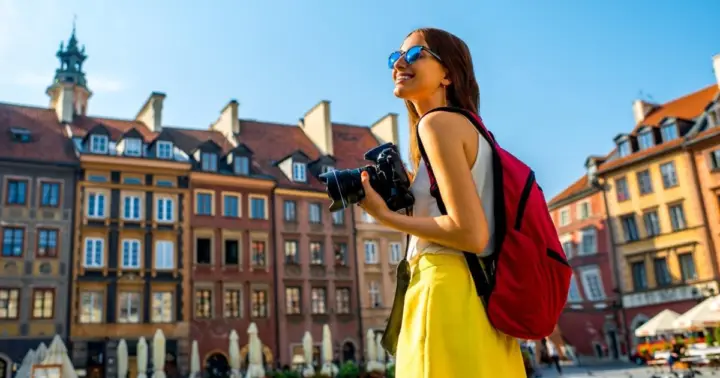
From the castle, Świętojańska Street leads to Rynek Starego Miasta. Warsaw’s Mermaid stands at its centre, surrounded by coloured townhouses that restore the pre-war street plan. The city tourism office records that the square was 90% destroyed and reconstruction began in 1949. UNESCO recognition reflects the exceptional scale and care of that rebuilding work.
Continue along the walls to the Barbican and New Town Square. For original objects and a clearer account of how residents lived before and after 1945, the Museum of Warsaw occupies several houses on the market square. Its permanent display opens 10am-6pm on Tuesday, Wednesday, Friday, and Sunday, until 8pm on Thursday, and until 7pm on Saturday. Admission is PLN 25; Thursday entry is free.
The Royal Route links the castle with Krakowskie Przedmieście, Nowy Świat, and Ujazdowskie Avenue. Its first section passes the Presidential Palace, the University of Warsaw, and Holy Cross Church, where Chopin’s heart is preserved. Castle Square is roughly 4 km from the western entrance to Łazienki, so allow 60 to 90 minutes on foot before stops.
Royal Łazienki opens its gardens daily from 6am to 10pm, free of charge. The Palace on the Isle and Royal Theatre open Tuesday to Sunday on seasonal timetables; individual entry to the historic buildings is free on Fridays. The full walk —lake, palace, and Chopin Monument— needs 90 minutes to two hours.
If time is tight, walk from Old Town to Nowy Świat, then use bus 116 or 180 for Łazienki. This is usually more direct than returning to the centre for the metro because the park sits south of both main underground lines.
POLIN covers one thousand years of Polish Jewish history —rather than the Holocaust alone— across its core exhibition. Give it time. Set aside at least two hours because the museum stops admission to the core display two hours before closing. Doors open at 10am on Monday, Wednesday, Thursday, Friday, Saturday, and Sunday. Most days end at 6pm; Saturday continues until 8pm. Tuesday is closed.
A regular combined ticket costs PLN 45 and includes the audio guide, temporary exhibition, and Legacy Gallery. Thursday admission is free, but demand is higher; booking a slot reduces the risk of arriving after tickets have gone. The official POLIN admission page shows availability and online tickets.
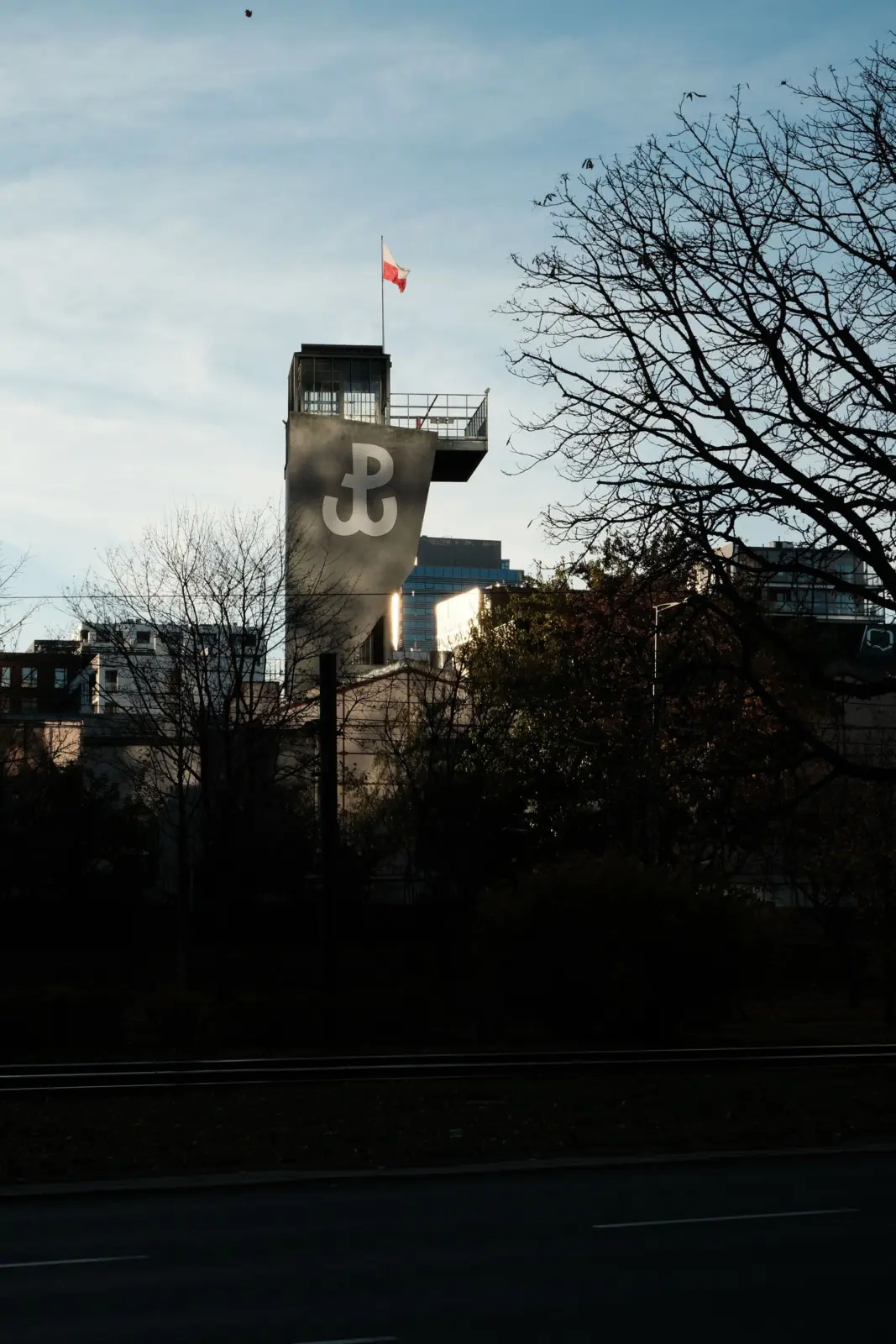
This museum focuses on the 1944 uprising through testimony, photographs, maps, and everyday objects. The narrative is dense. Allow two hours, and avoid placing it on the same day as POLIN if you prefer to read most displays. It stands in Wola, close to Rondo Daszyńskiego metro station.
Admission is controlled by date and capacity, so check the official Warsaw Rising Museum ticket site before fixing your itinerary. Monday is normally the free-entry day, subject to the number of tickets available at the museum.





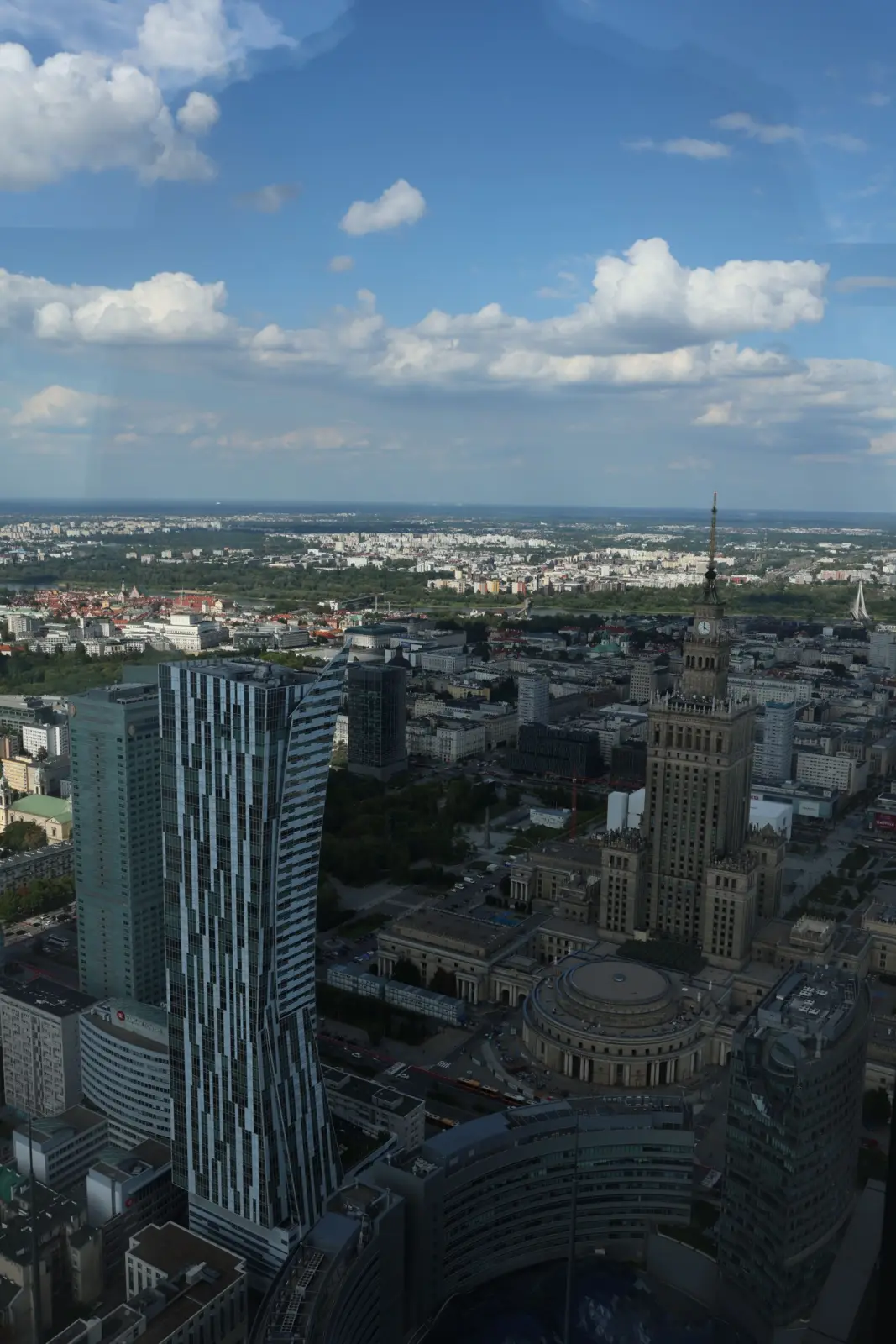
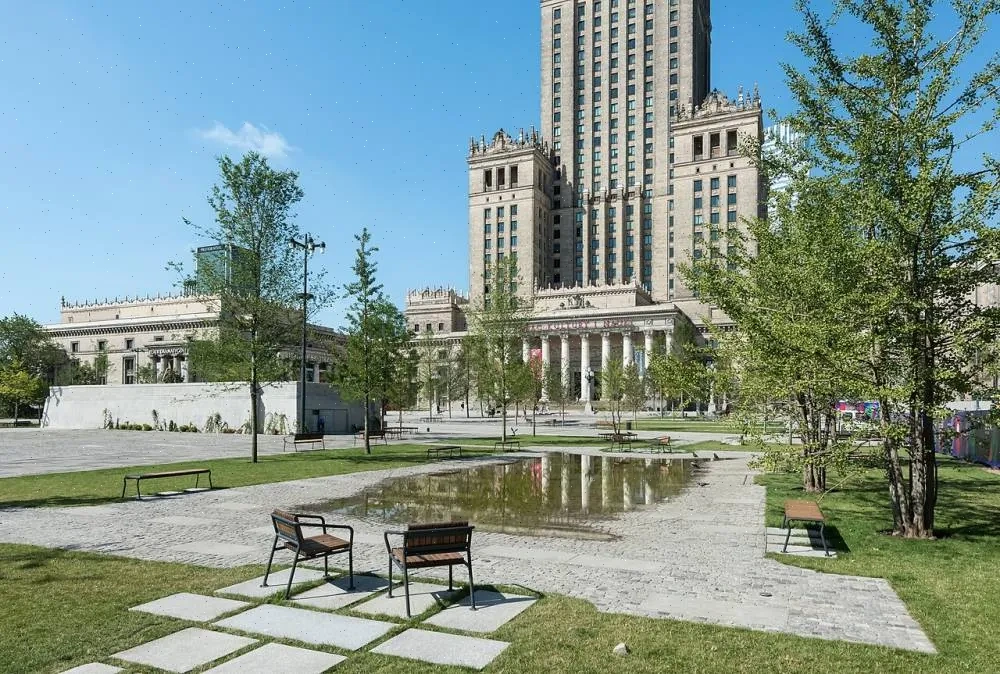
Beside Warszawa Centralna station, the Palace of Culture and Science works as a reliable navigation point. Its 30th-floor terrace stands 114 metres above the city and helps you identify the Vistula, Praga, and Wola’s tower cluster. At ground level, the new Central Square creates a pedestrian space between the palace and the Museum of Modern Art.
Later, head downhill through Powiśle to the Vistula Boulevards. Pause by the river. The promenade links the Copernicus Science Centre and Mermaid statue with the pedestrian-and-cycle bridge to Praga. It is a useful evening route. Warsaw’s official visitor bureau guide to the boulevards lists viewpoints, seating, and seasonal facilities for the entire left bank. Free ferries run between May and September 2026 —weather and river levels permitting— and connect both banks.
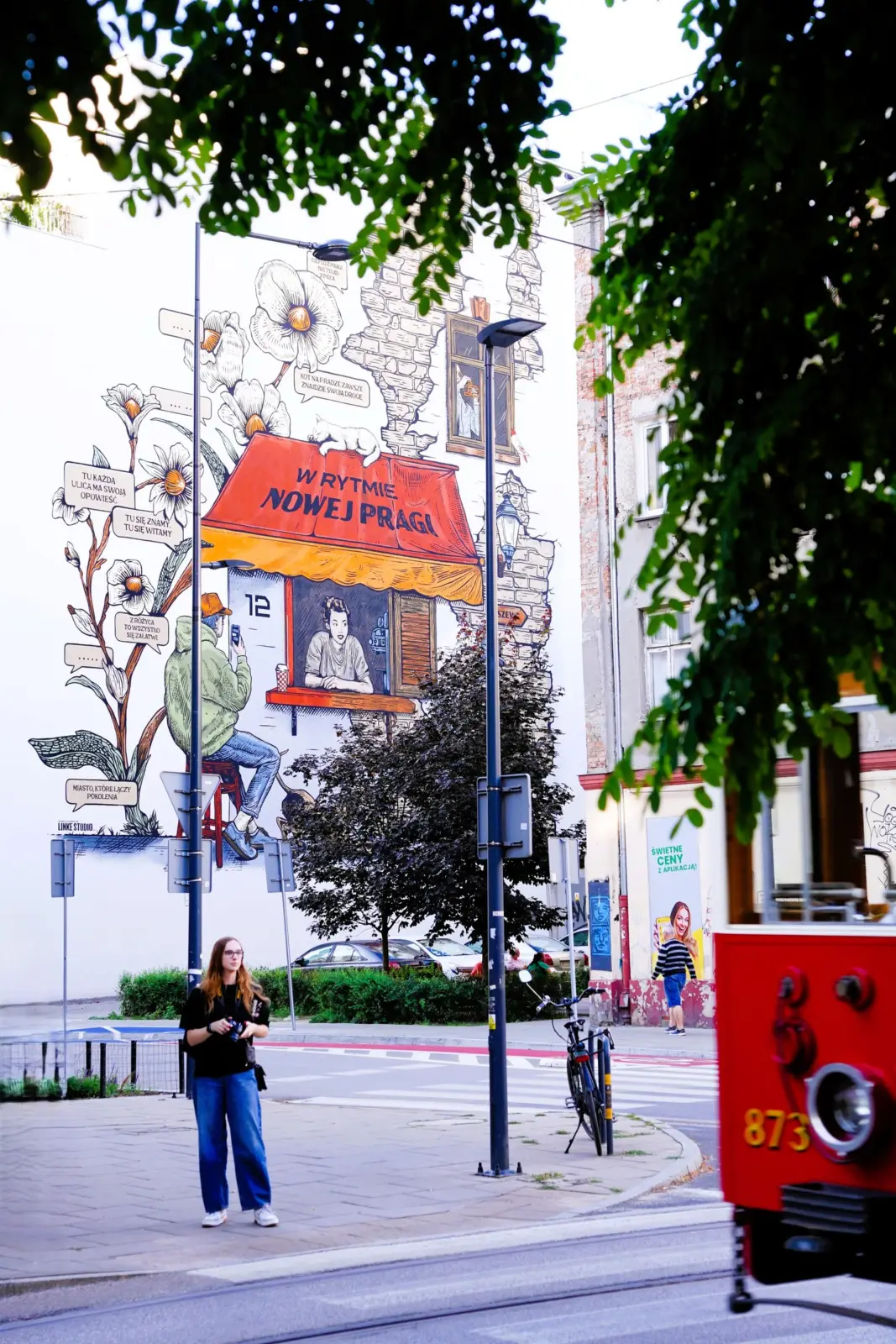
Praga retains streets and courtyards that escaped part of the destruction experienced on the left bank. Begin at the Cathedral of St Michael and St Florian, follow Ząbkowska Street, and enter the former Koneser factory complex. The Praga Museum provides context on the district’s markets, workshops, homes, and communities.
This is not a compact extension of Old Town: the sights are farther apart and need half a day. Metro line M2 reaches Dworzec Wileński from the centre. For the return, the pedestrian bridge gives a direct walking route to the Vistula Boulevards and Powiśle.
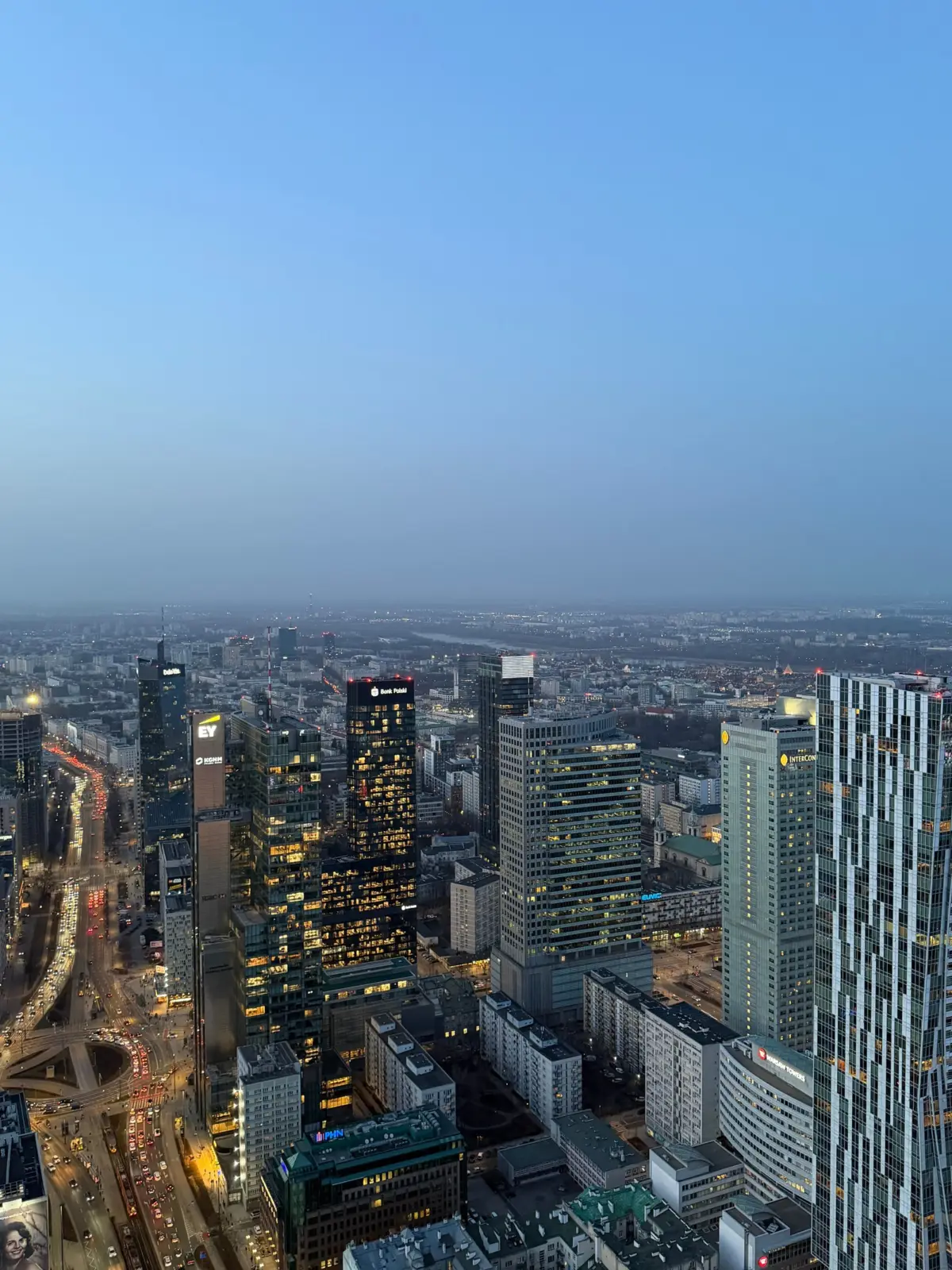
With one day, we would start with a morning free tour through Castle Square, Old Town Market Square, and the Barbican. Continue along Krakowskie Przedmieście and Nowy Świat at midday; use the afternoon for Łazienki gardens. Finish at the Palace of Culture terrace or beside the Vistula.
Keep day one for the monumental route. On day two, spend the morning at POLIN and then walk through the former ghetto area to the Monument to the Ghetto Heroes. Choose either the Warsaw Rising Museum or Museum of Warsaw for the afternoon; attempting both gives too little time inside each one.
Add Praga on the third morning. Cross back over the river on foot, then leave the afternoon for Powiśle, the Vistula, or an interior you skipped. Travellers more interested in royal residences can replace Praga with Wilanów Palace, south of the city; public transport takes about 45 minutes from the centre.
Once the fixed museum slots are in place, compare activities and experiences in Warsaw that fit the open parts of your schedule. This keeps bookable visits from dictating the entire day.
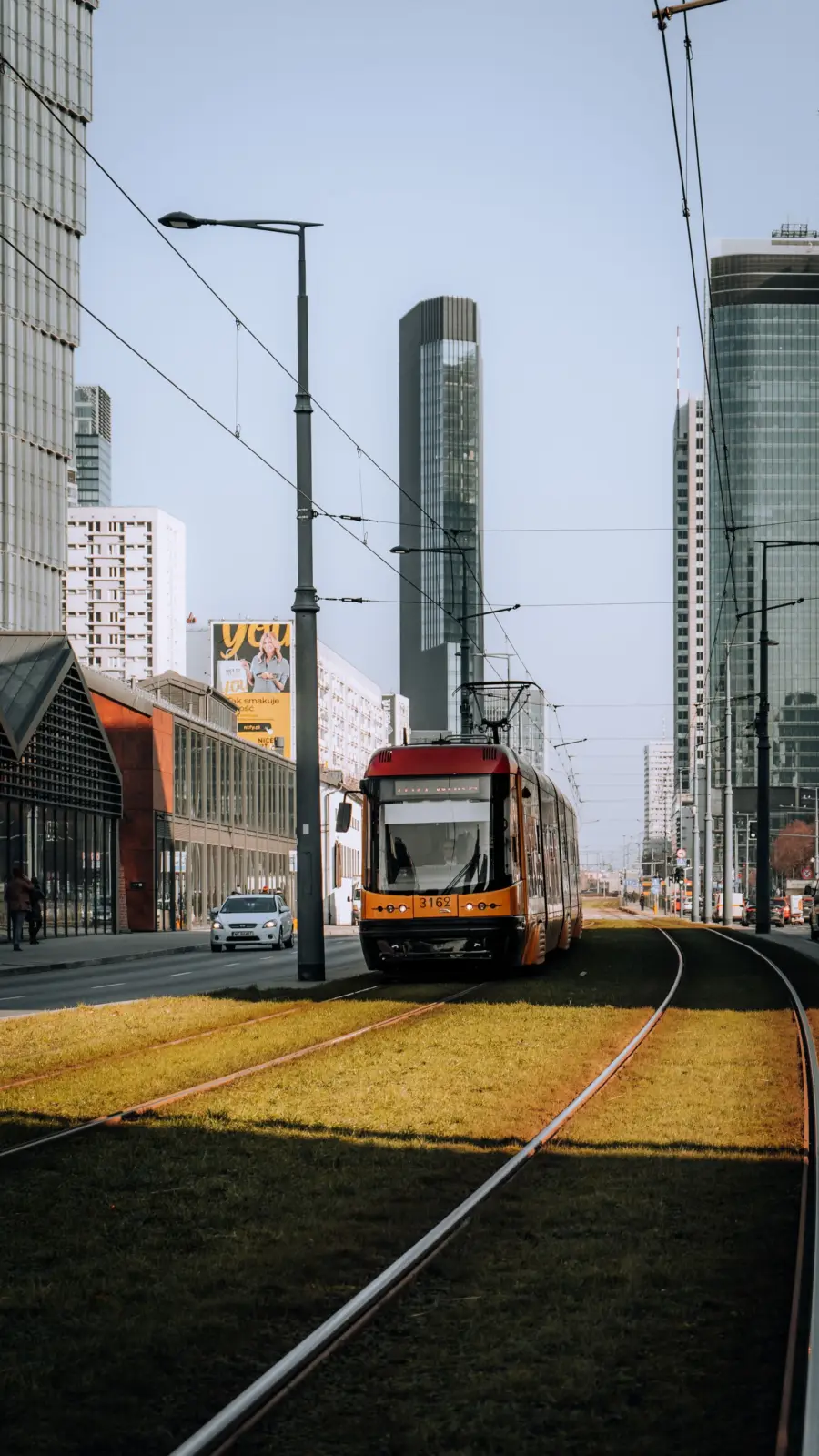
Old Town is walkable, but POLIN, Wola, Łazienki, and Praga require transport. Warsaw has two metro lines. Trams, buses, and integrated urban trains fill the gaps; a 20-minute ticket costs PLN 3.40, while a 75-minute Zone 1 ticket is PLN 4.40. Both allow transfers while valid.
Validate the ticket after boarding a tram or bus; metro tickets are validated at the gate. The city’s Warsaw public transport ticket guide lists current fares and zones. Chopin Airport is inside the urban network and connects with the centre by train and bus.
Money. Poland uses the złoty (PLN), not the euro. Cards are widely accepted, though some cash helps at small stalls. Closing days. Several museums close on Monday or Tuesday, so place indoor visits before booking your trains.
Walking conditions. Old Town has uneven paving, and shoes with a firm sole make the route more comfortable. It gets dark early from November to March; snow is possible. Summer brings longer days but higher demand on free museum days.
Reservations. We would book POLIN, the Royal Castle, and the Warsaw Rising Museum ahead when only one time slot works with your itinerary.
How many days do you need in Warsaw? Two days cover Old Town, the Royal Route, Łazienki, and one major museum. Three days allow time for Praga and a second museum without rushing between timed entries.
Is Warsaw Old Town original? Its street plan is historic, but much of the architecture was reconstructed after destruction in the Second World War. That rebuilding process is central to the district’s cultural value and UNESCO recognition.
What can you see for free in Warsaw? Old Town, the Royal Route, Łazienki gardens, and the Vistula Boulevards are free. The Royal Castle offers a limited free route on Wednesdays, POLIN is free on Thursdays, and Łazienki’s historic interiors are free on Fridays.
Which area is best for a first stay? Śródmieście is the easiest base for a first visit because it combines railway, metro, and restaurant access. Nowy Świat sits closer to the Royal Route, Wola gives quick access to the Rising Museum, and Praga works well for plans focused on the right bank and M2 metro line.
Travel marketing specialist with extensive experience in the travel sector. At companies such as Despegar and GuruWalk, she has led traveler-focused digital acquisition strategies. Now, from the GuruWalk blog, she combines her expertise with her passion for discovering and sharing unique destinations.
Local guides, pay-what-you-want and no credit card to book. That is how you understand a city.
Explore free tours on guruwalk.com