


A one-to-three-day Antigua Guatemala itinerary covers Central Park, Santa Catalina Arch, La Merced, cathedral ruins, museums and viewpoints.
 Belén Rivas
GuruWalk
·
Updated 3 Sep 2026
Belén Rivas
GuruWalk
·
Updated 3 Sep 2026Antigua Guatemala packs plazas, convent ruins, churches and cobbled streets into a historic centre made for walking. Distance is not the challenge. The real task is understanding what survived the earthquakes and how each building fits into the former capital. Start the first morning with one of the free tours in Antigua Guatemala, then return to the places that deserve more time. No credit card is needed to book. This guide orders the main sights, builds one-to-three-day itineraries and brings together opening times and admission prices checked in August 2026.
Last verified: August 2026 — Prices, opening hours, and reservation requirements checked against official sources. GuruWalk’s Antigua Guatemala guides reviewed the practical recommendations.
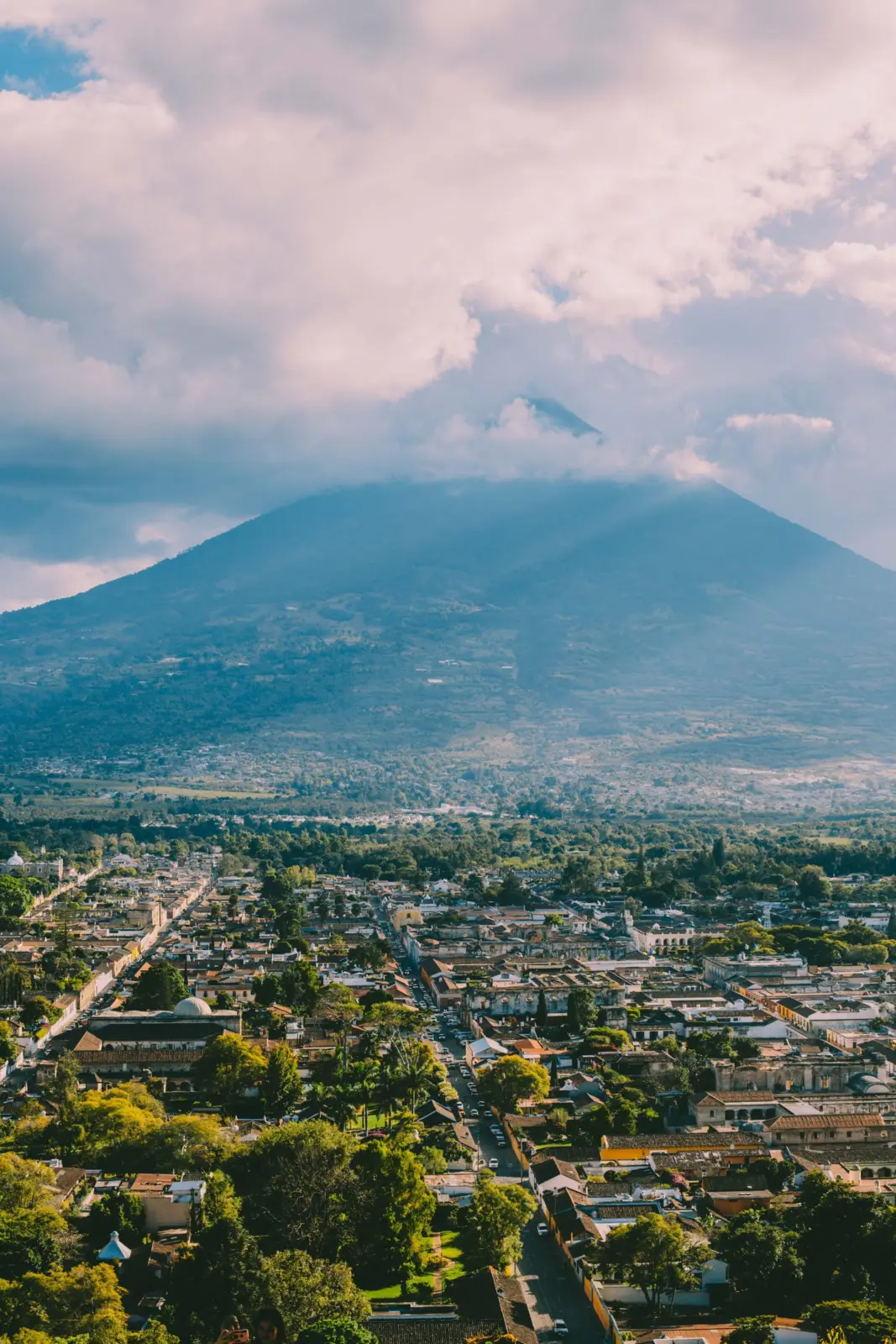
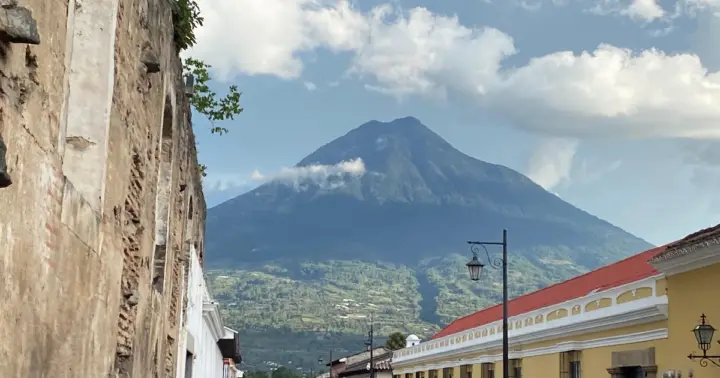
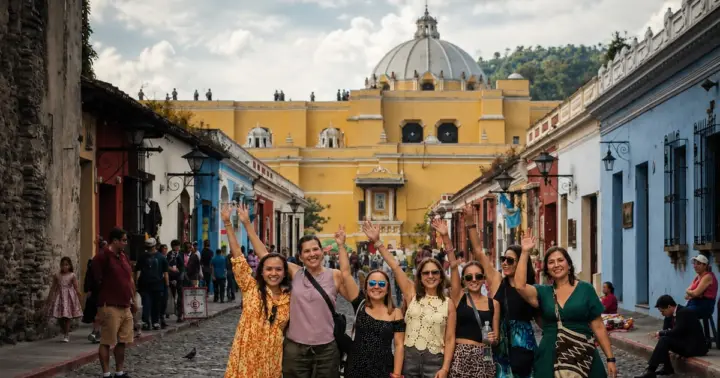
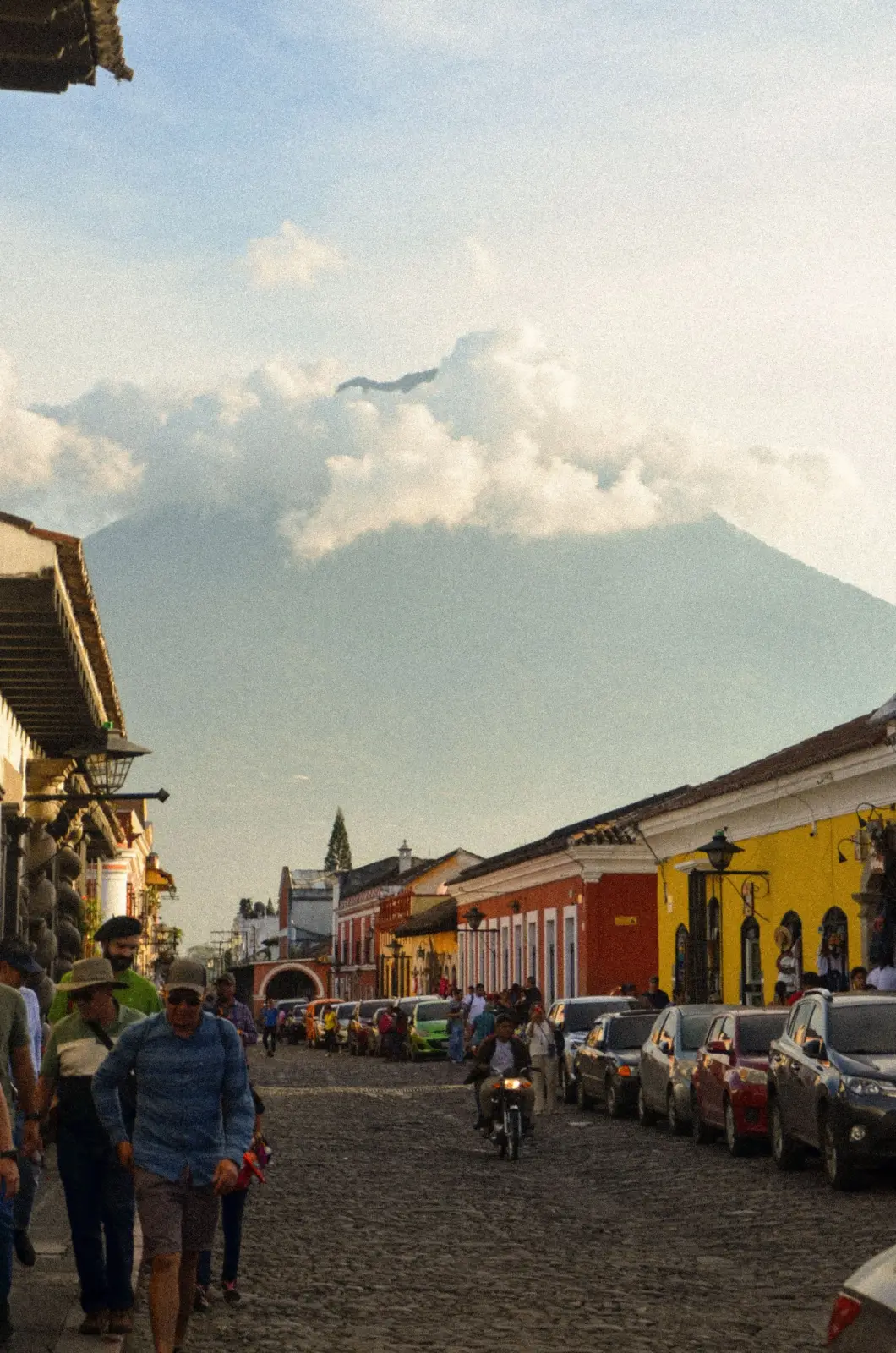
Antigua’s street grid looks straightforward, yet restored façades, active churches and ruined convents belong to different periods. An early free tour introduces Central Park, Santa Catalina Arch, La Merced and the Cathedral before the paid monuments open up the story in greater detail. It also fixes Agua Volcano on the map; the peak appears at the end of several streets when skies are clear.
This format has no fixed ticket price. Guests leave a tip at the end based on the experience. The usual guidance is €10–20 per person, rising to €50 for small groups or exceptional gurus. No credit card is needed at the booking stage, which makes it easy to secure the walk before locking in the rest of the itinerary.
This tour takes you to visit La Antigua Guatemala, this colonial gem was the capital of the Spanish kingdom that…

TOUR THEM Welcome. Please Read The intruction Carefull Before The Tour To Avoid Misunderstanding. Pl…
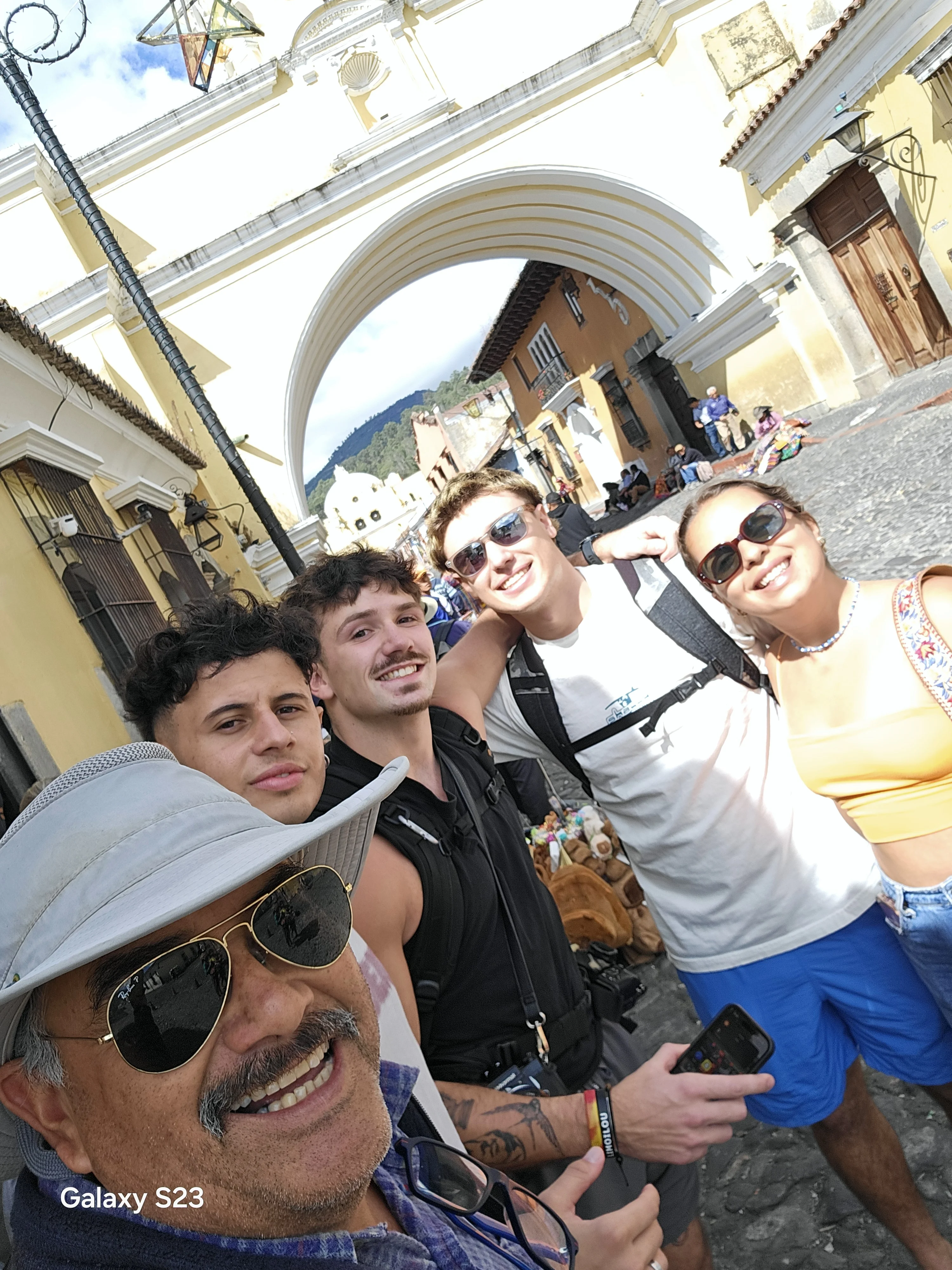
We walked through the beautiful streets of Antigua, discovering its historical sites, convents, and monasteries, iconic places…

During this incredible experience , get to know the colorful towns of Antigua Guatemala and visit the

The tour I offer is based on my 26 years of experience offering guided tours. I will visit my small…

"Discover colonial urbanism, Mayan symbolism in churches, the history of coffee, and the characters who shaped the most emblem…

"A Day in La Antigua" Visiting La Antigua Guatemala and exploring every corner becomes an unforgettable experience, …

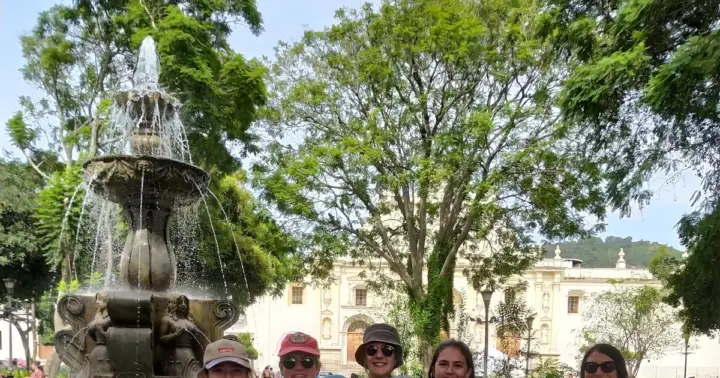
Central Park is the easiest place to get your bearings. The Cathedral of San José, City Hall and the Palace of the Captains General occupy three sides of the square. Arcades frame the space around its central fountain, making the original street grid easy to read without a map. Walk the full perimeter before choosing which interiors to enter.
MUNAG now occupies the former palace. Guatemala’s Ministry of Culture lists regular opening hours of 10:00–18:00, Tuesday to Sunday. Inside the building that once held the region’s administrative centre, its galleries trace distinct periods of Guatemalan art. Allow about 90 minutes for the collection and see the square itself at the start or end of the day.
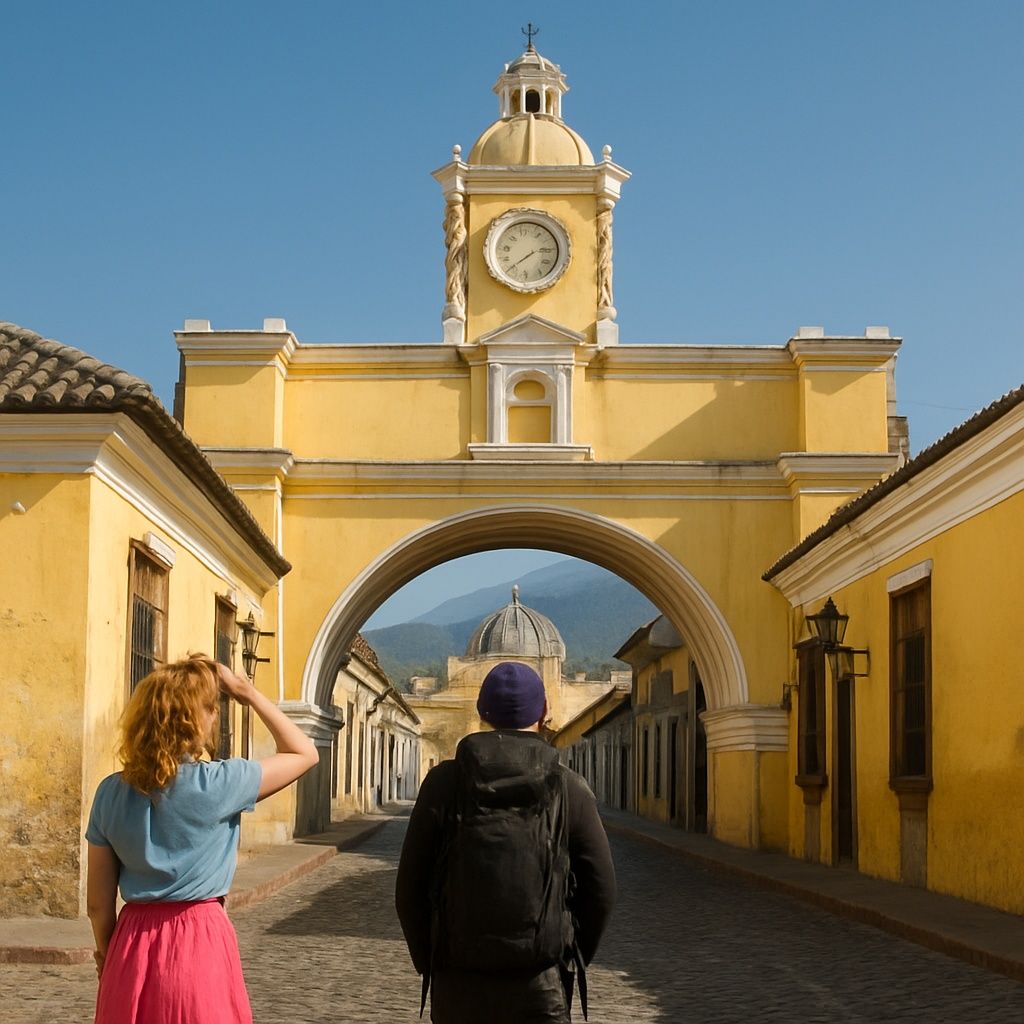
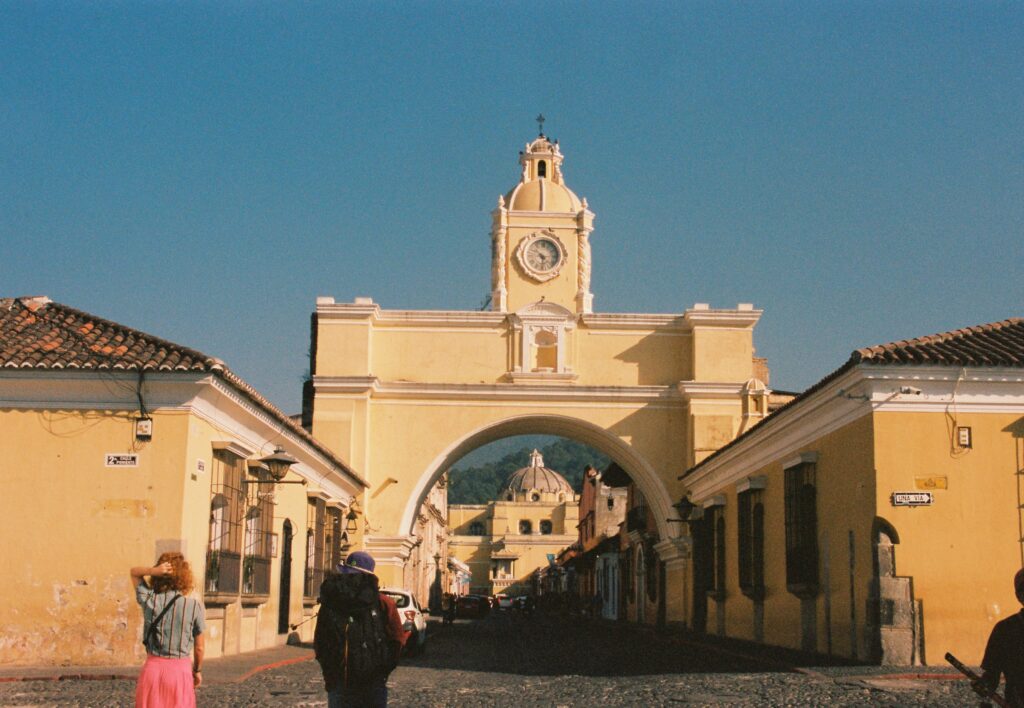
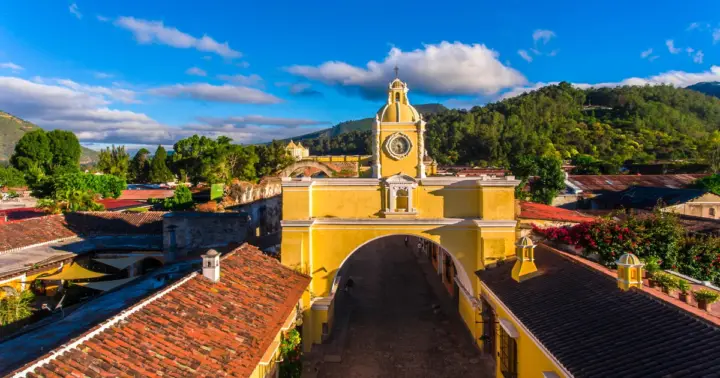
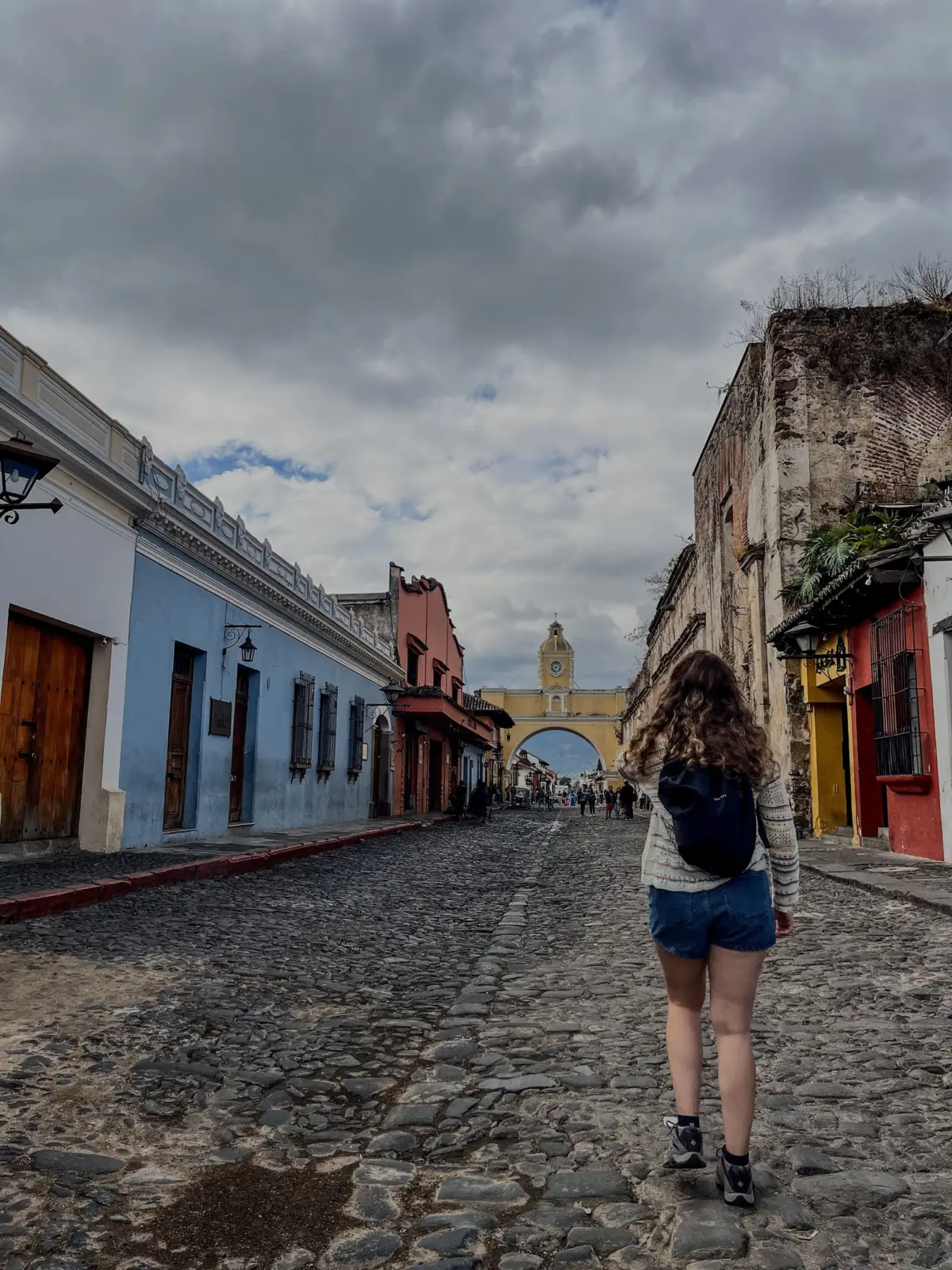
Santa Catalina Arch was built in the 17th century so nuns could pass between convent buildings without going out into the street. The clock above it was added in 1861. The cobbled street beneath frames Agua Volcano and links one of the busiest parts of the centre with La Merced.
Santa Catalina Arch does not need to be a long stop. Walk through it in both directions, take in the view towards Agua Volcano and continue north. Calle del Arco is quieter early in the morning, while late-afternoon light reaches the yellow façades. Viewing the arch from the public street costs nothing.
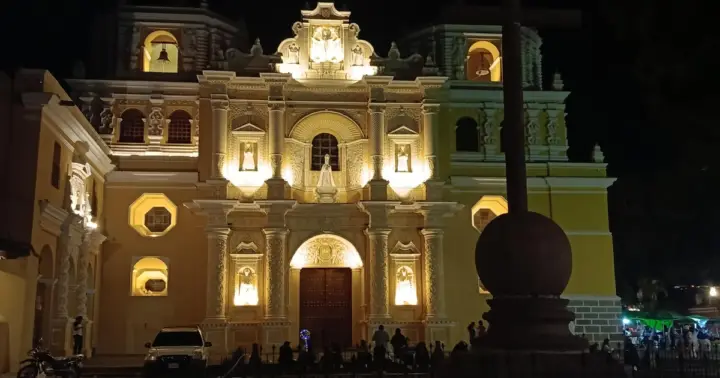
La Merced’s yellow-and-white façade shows the local Baroque style in one view: stucco decoration, low proportions and heavy walls suited to an earthquake-prone region. The current building dates from 1767. The church remains active, while the former convent complex holds a courtyard with a large octagonal fountain known as Fuente de los Pescados.
Viewing La Merced’s façade costs nothing. Access to other areas follows the operation of the religious site, so decide at the entrance whether to go inside. Santa Catalina Arch is only a few minutes away, and Central Park lies farther south on the same grid. This creates a clean route without doubling back.
San José Cathedral faces the eastern side of Central Park. Its active church occupies part of the former complex; behind it stand the remains of the much larger cathedral damaged by the 1773 earthquakes. Seeing worship and monumental ruins side by side explains Antigua better than either façade could on its own.
View the main front from the square, then walk around the block along 5a Calle Oriente. The Colonial Art Museum occupies the former University of San Carlos nearby. Together, these stops can fill half a day without using any transport.
Designed by Diego de Porres in 1731, Capuchinas was founded in 1736 and preserves cloisters, courtyards and a circular tower linked to 18th-century monastic life. Its museum displays archaeology, ceramics, stonework, stucco and colonial art, with interpretation available in Spanish and English.
CNPAG opens Capuchinas and its other visitor monuments every day from 09:00 to 17:00. In August 2026, admission costs Q5 for Guatemalan visitors, Q15 for Central American visitors, Q20 for foreign students and Q40 for other international visitors. The same tariff applies at Santa Clara, San Jerónimo, La Recolección and Santa Teresa de Jesús.
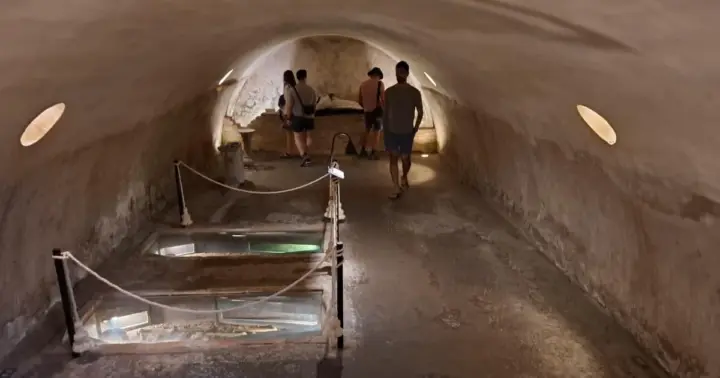

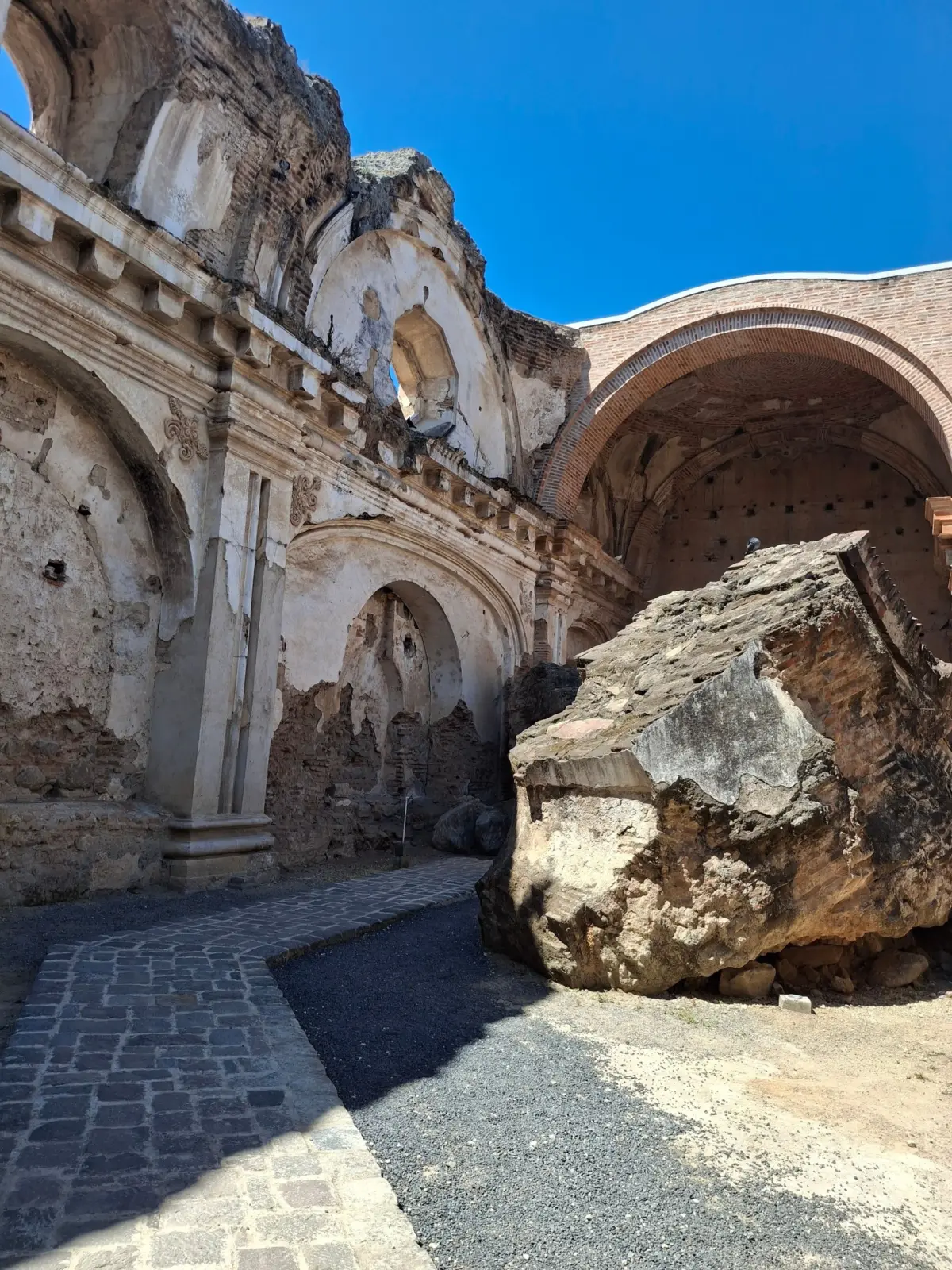
South-east of Central Park, Santa Clara preserves arches, a cloister, garden and parts of its church. The open structure reveals the scale of a religious complex left exposed by earthquakes. It fits naturally after the Cathedral and Colonial Art Museum.
La Recolección creates a different impression. Large sections of collapsed wall and vault show the force of the earthquakes that reshaped the city. It sits west of the most visited streets, so pair it with La Merced and leave Santa Clara for another section of the route. Both belong to the monument network run by the National Council for the Protection of Antigua Guatemala, whose visitor page lists current prices, hours and annual closing dates.
One block from Central Park, the Colonial Art Museum occupies the former University of San Carlos. Its permanent collection holds 156 paintings, sculptures and pieces of furniture dating from the 16th to the 19th centuries, providing a focused introduction to gilded polychrome wood and the religious art seen throughout Antigua’s churches.
Guatemala’s Ministry of Culture and Sports gives opening hours of 09:00–16:00, Tuesday to Sunday. Admission is Q5 for Guatemalan visitors and Q50 for international visitors; children under 12 enter free. Allow 60 to 90 minutes, depending on your interest in religious art.
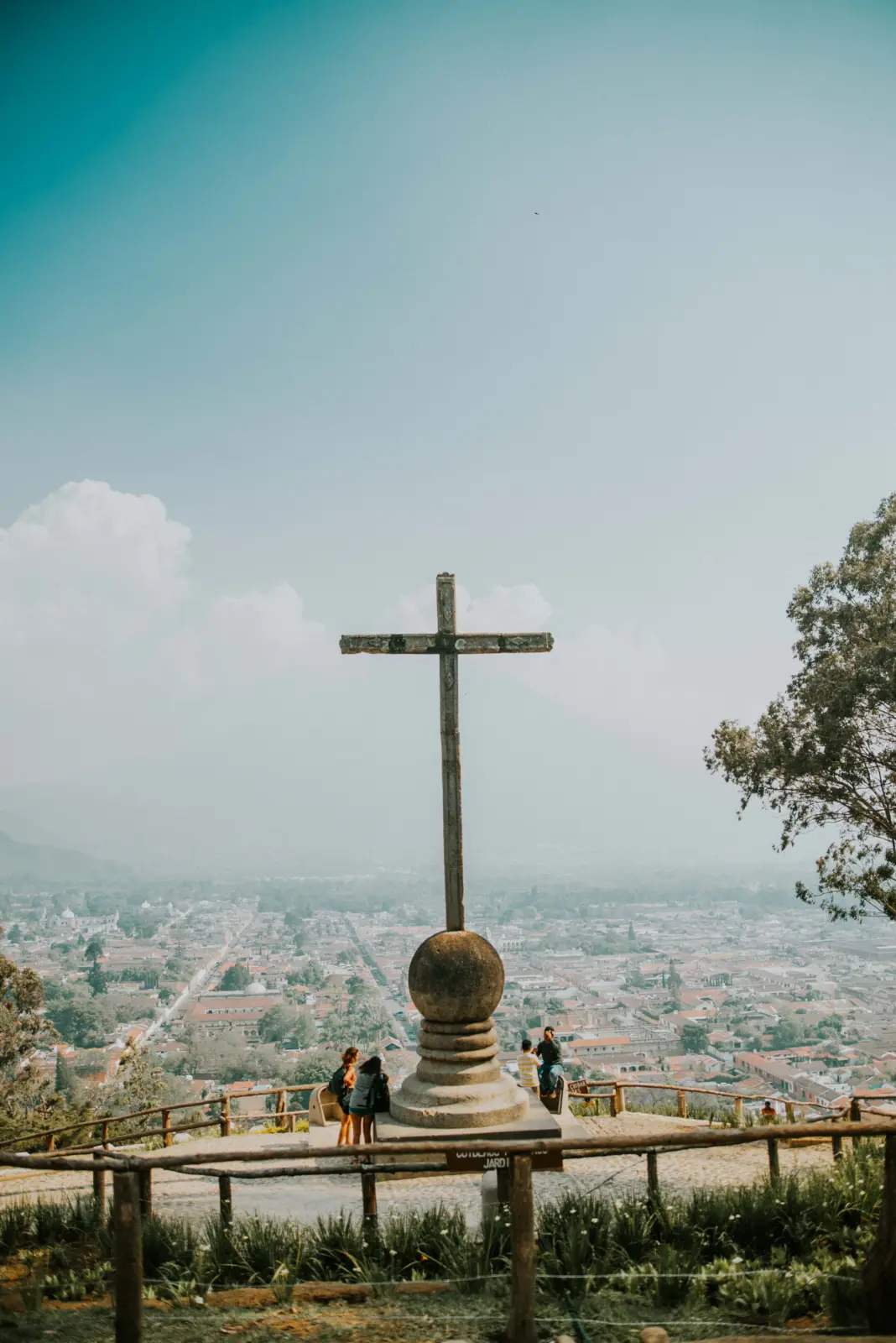
Cerro de la Cruz rises north of the city and looks across the street grid towards Agua Volcano. Visitors can reach it on foot or by vehicle. The top has a large cross, rest areas and an open-air theatre, according to INGUAT’s official 2026 guide to Sacatepéquez.
Set aside roughly two hours to go up, take in the view and return at an easy pace. The walk works well in the morning or as the last stop before the light fades. It does not replace the centre: the viewpoint explains the urban plan, while the details of the local Baroque style only become clear at street level.
At Mercado de Artesanías and nearby craft shops, you will find textiles, ceramics, carving and local produce. Give this area a separate stretch of the day instead of rushing through between monuments, leaving time to compare techniques and origins rather than treating every item as a generic souvenir.
With another day, look beyond the centre to San Juan del Obispo, San Pedro Las Huertas, San Cristóbal El Alto or El Hato. The official 2026 Sacatepéquez guide highlights San Juan del Obispo for its church, artisan chocolate and loquat plantations. These trips add a different scale to the visit, but they do not fit comfortably into a one-day city itinerary.
Begin with the free tour through the centre. Continue around Central Park, the Cathedral and the Colonial Art Museum, all within the same cluster. From there, walk to Santa Catalina Arch and finish at La Merced. If ruins matter more than a museum collection, swap the Colonial Art Museum for Capuchinas. The centre is compact. Resist the urge to enter every monument.
Keep the first day on the Central Park–Arch–La Merced axis. Start day two at Cerro de la Cruz, then visit Capuchinas, Santa Clara and the market. Putting two paid ruins on the same day makes their plans easier to compare and cuts unnecessary walking. MUNAG can fill the final hours if you return before 18:00.
On a third day, see La Recolección in the morning and choose one village in the valley for the afternoon. San Juan del Obispo works well for local heritage and craft production; El Hato and San Cristóbal El Alto offer wider valley views. Another option is a full-day organised activity from Antigua, without cutting short the time allocated to the historic centre.
Walking is the best way to explore the historic centre. Its original urban core measures about 775 metres north to south and 635 metres east to west, according to UNESCO’s Antigua Guatemala listing. Cobblestones slow the pace, so allow more time than the map distance may suggest.
Group visits by area. Central Park, the Cathedral, MUNAG and the Colonial Art Museum form one cluster; the Arch and La Merced form another; Capuchinas and Santa Clara sit east and southeast. Cerro de la Cruz needs a separate block. A car adds little inside the grid, although transport is useful for villages elsewhere in the valley.
INGUAT’s tourist information office stands at 5a Calle Oriente No. 11 and provides maps and advice in Spanish and English. Its listed hours are 08:00–17:00 Monday to Friday, with service sometimes ending at 16:00 depending on other activity, and 09:00–17:00 at weekends. It is a useful first stop when cultural events affect the normal route.
One day covers the centre’s main landmarks and one museum or convent. Two days create room for Cerro de la Cruz and several ruins. With three days, add a valley village or a longer excursion without rushing the historic streets.
Yes. Central Park, the Cathedral, Santa Catalina Arch, La Merced, Capuchinas and Santa Clara all sit within a compact grid. Cerro de la Cruz is accessible on foot or by vehicle, while the villages across the valley require transport.
Central Park, the public view of Santa Catalina Arch, La Merced’s façade and the historic streets require no ticket. CNPAG convents and ruins, the Colonial Art Museum and other interiors apply their own admission charges.
For more than two centuries, Antigua served as the regional capital. The Santa Marta earthquakes of 1773 destroyed many major buildings, and authorities moved the capital to present-day Guatemala City, while some residents remained. Preserving churches and convents as ruins is now a defining part of the city’s built heritage.
Book the walk that will explain the street grid first, then choose which ruins or museums deserve admission. GuruWalk lets you compare free tours in Antigua Guatemala with no credit card needed and browse activities and experiences in Antigua Guatemala for the second or third day. Keeping visits in geographic clusters leaves time to study the façades instead of merely passing them.
Travel marketing specialist with extensive experience in the travel sector. At companies such as Despegar and GuruWalk, she has led traveler-focused digital acquisition strategies. Now, from the GuruWalk blog, she combines her expertise with her passion for discovering and sharing unique destinations.
Local guides, pay-what-you-want and no credit card to book. That is how you understand a city.
Explore free tours on guruwalk.com