


Plan three days in Athens with the Acropolis, Plaka, the Ancient Agora, top museums, practical transport tips and realistic day-trip ideas.
 Julieta Betancor
GuruWalk
·
Updated 25 Aug 2026
Julieta Betancor
GuruWalk
·
Updated 25 Aug 2026Athens rewards a little planning. The headline sights sit close together, but heat, hills and archaeological-site opening times can make an overpacked itinerary hard work. This guide brings the essentials into a realistic three-day plan, with time for the ancient city, modern neighbourhoods and one well-chosen excursion.
A good way to get your bearings is to join a free walking tour of Athens with GuruWalk early in your stay. A local guide can put the ruins in context, explain how present-day Athens fits around them and share practical tips for the rest of your trip.
Use the links below as a simple map of the guide. Most central sights can be combined on foot or with short metro journeys; Delphi and Meteora need separate travel time.
Start early at the Acropolis, before the day becomes hotter and the busiest groups arrive. Continue to the Acropolis Museum, then slow the pace over lunch in Plaka. In the evening, wander through Anafiotika and finish around Monastiraki, where ancient remains, markets and rooftop views all meet.
Begin at the Ancient Agora and follow the pedestrian streets around the Acropolis towards the Temple of Olympian Zeus and the Panathenaic Stadium. Cross the National Garden to Syntagma Square, then choose between the National Archaeological Museum and a relaxed evening in Kolonaki.
Stay in Athens if you want more museums, neighbourhoods and viewpoints. Otherwise, devote the day to Delphi. Meteora is much farther away and is more rewarding with an overnight stay than as a rushed return trip.
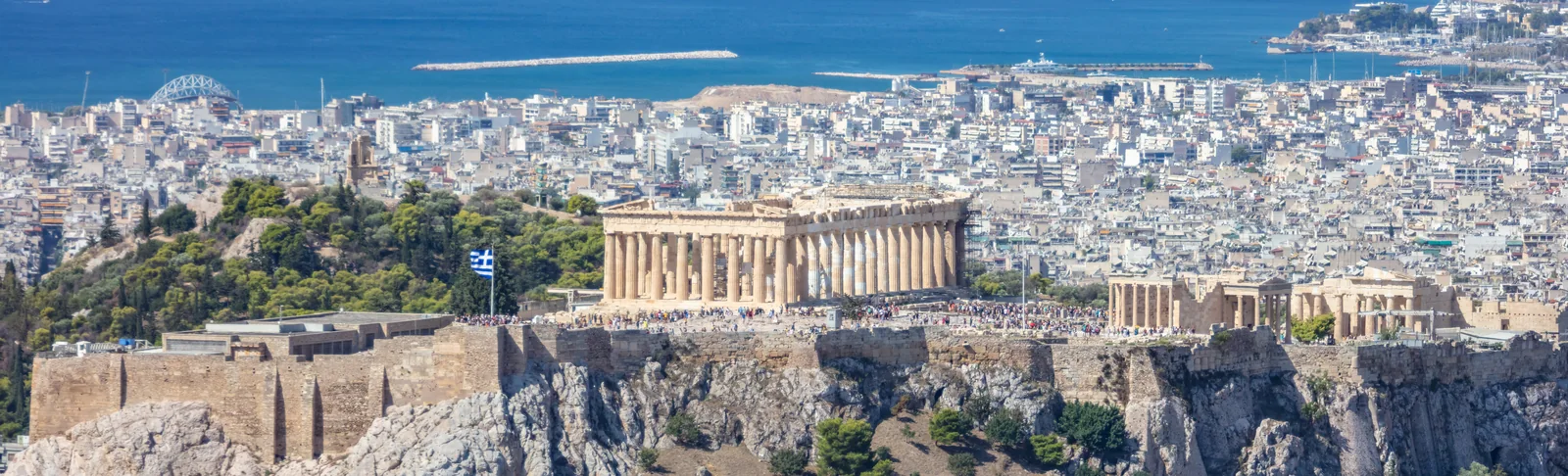
Rising 156 metres above the city, the Acropolis is Athens’ defining landmark. The hill was both a fortified high point and a sacred precinct, but the ensemble visitors recognise today was shaped above all by the building programme of the fifth century BC. The Acropolis is a UNESCO World Heritage Site, and conservation work remains an active part of any visit.
The summit is exposed, uneven and reached by a climb. Bring water, sun protection and shoes with good grip, and check the official archaeological-site information shortly before visiting because admission rules, timed-entry arrangements and opening hours can change.
Built between 447 and 432 BC, the Parthenon is the largest temple on the Acropolis and the clearest expression of the city’s classical age. The Doric building was dedicated to Athena Parthenos and once housed a monumental gold-and-ivory statue by Pheidias.
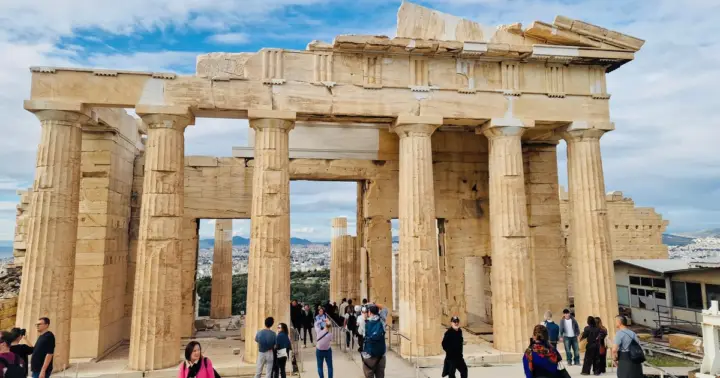
The Propylaea formed the monumental entrance to the sanctuary. Its central building and wings framed the approach so effectively that passing through it still feels like a carefully staged reveal of the monuments beyond.
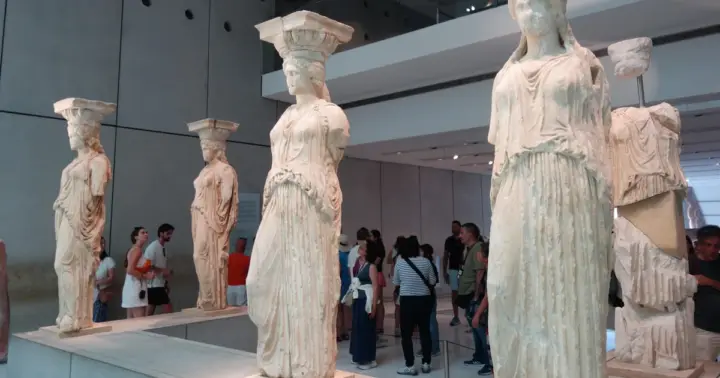
The Ionic Erechtheion was built on a site connected with several of Athens’ founding myths. Its best-known feature is the Porch of the Caryatids, where sculpted female figures serve as columns. The figures outdoors are replicas; preserved originals can be seen in the Acropolis Museum.
This compact Ionic temple stands beside the entrance and was dedicated to Athena as bringer of victory. Its position makes it easy to miss while entering, so look back towards it once you have passed through the Propylaea.

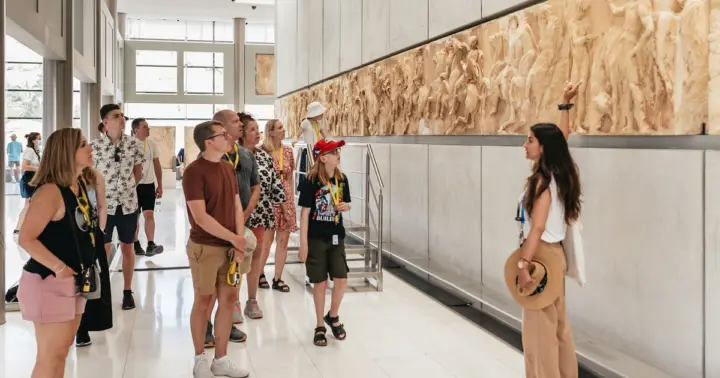
The Acropolis Museum gives the hill’s surviving sculptures and architectural fragments the context that is difficult to grasp outdoors. Glass floors reveal excavated remains beneath the building, while the top-floor Parthenon Gallery is aligned with the monument itself and presents the surviving frieze in its original sequence.
Allow at least two hours, more if you enjoy archaeology. The museum has its own ticket, separate from the Acropolis site. Consult the museum’s official visitor information for current hours, admission, closures and accessibility before you go.

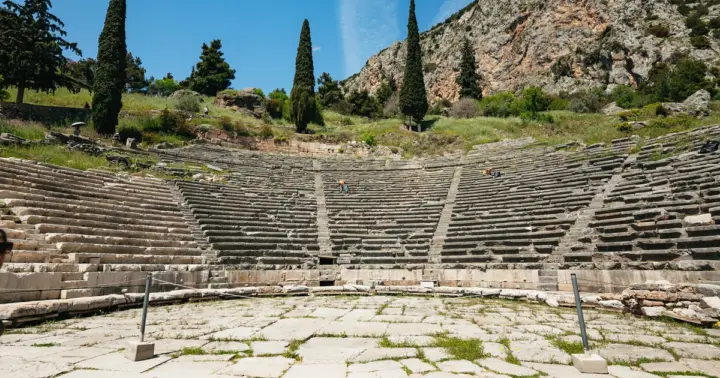
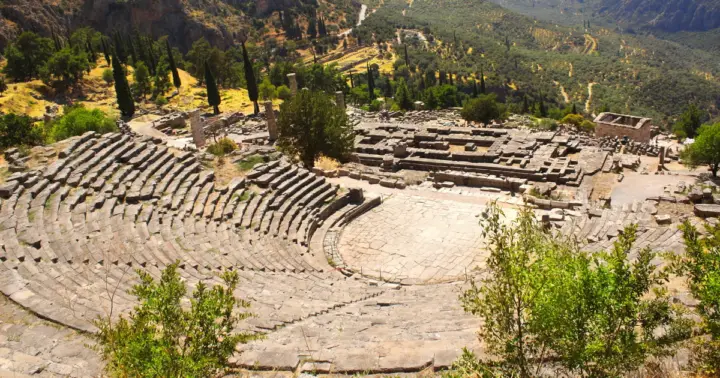
Ancient Greeks regarded Delphi as the centre of the world. Pilgrims came to the sanctuary of Apollo to consult the Pythia, whose responses shaped private decisions and affairs of state across the Greek world.
Today the mountainside archaeological site, its museum and the views across the valley make Delphi one of the strongest day trips from Athens. It is possible to visit independently or on an organised excursion, but compare current transport times and site hours before committing to a same-day return.
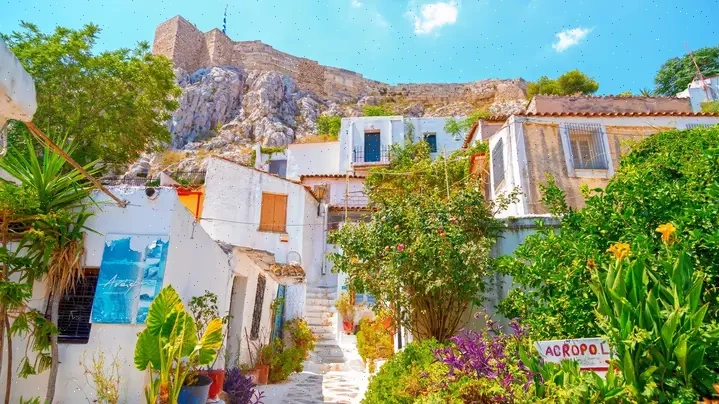
Plaka spreads along the eastern and northern slopes below the Acropolis. Its lanes mix neoclassical houses, small churches, shops and tavern terraces, making it an easy place to pause between archaeological sites.
Adrianou and Kidathineon are useful reference points, but the quieter side streets are often more memorable. Look for the Monument of Lysicrates and continue uphill into Anafiotika, a tiny whitewashed quarter whose island-style houses feel unexpectedly removed from the city around them.
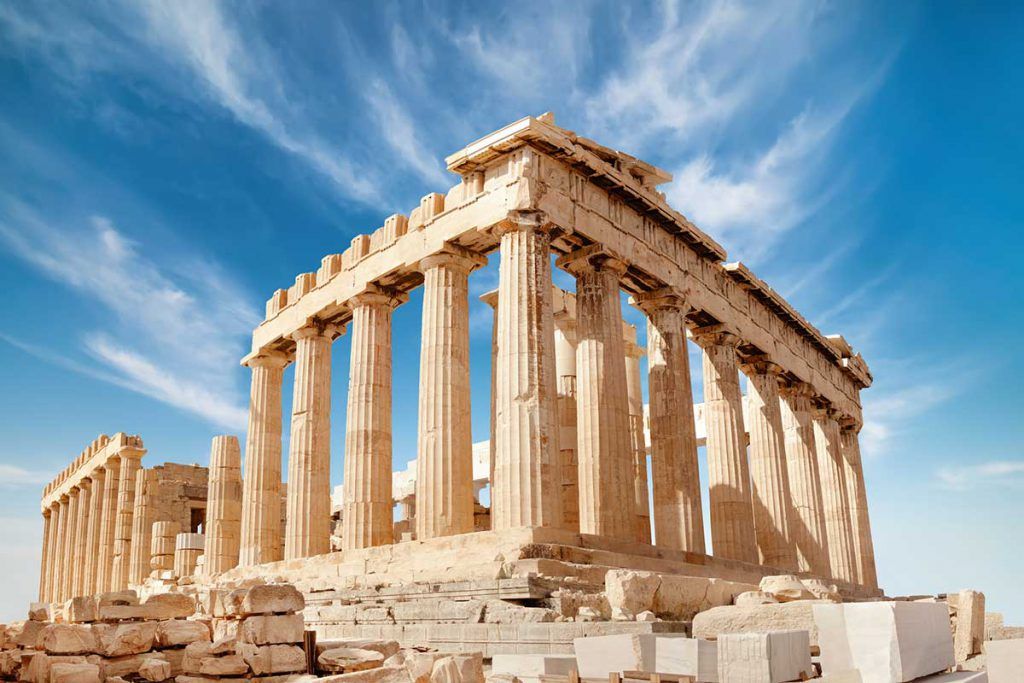
The Parthenon’s proportions, sculptural programme and subtle optical refinements made it the emblem of classical Athens. It stands on the site of an earlier temple destroyed during the Persian invasion and was built in Pentelic marble, with eight columns across each façade and seventeen along the sides.
Its later history is written into the surviving structure: it became a church, then a mosque, and suffered catastrophic damage when stored gunpowder exploded during the Venetian bombardment of 1687. Surviving sculptures are divided principally between Athens and London. Restoration and conservation continue, so scaffolding and restricted areas are normal rather than exceptional.

The Agora was the centre of civic, commercial and social life in ancient Athens. Political discussion, legal business, worship and everyday trade all unfolded across this broad area below the Acropolis.
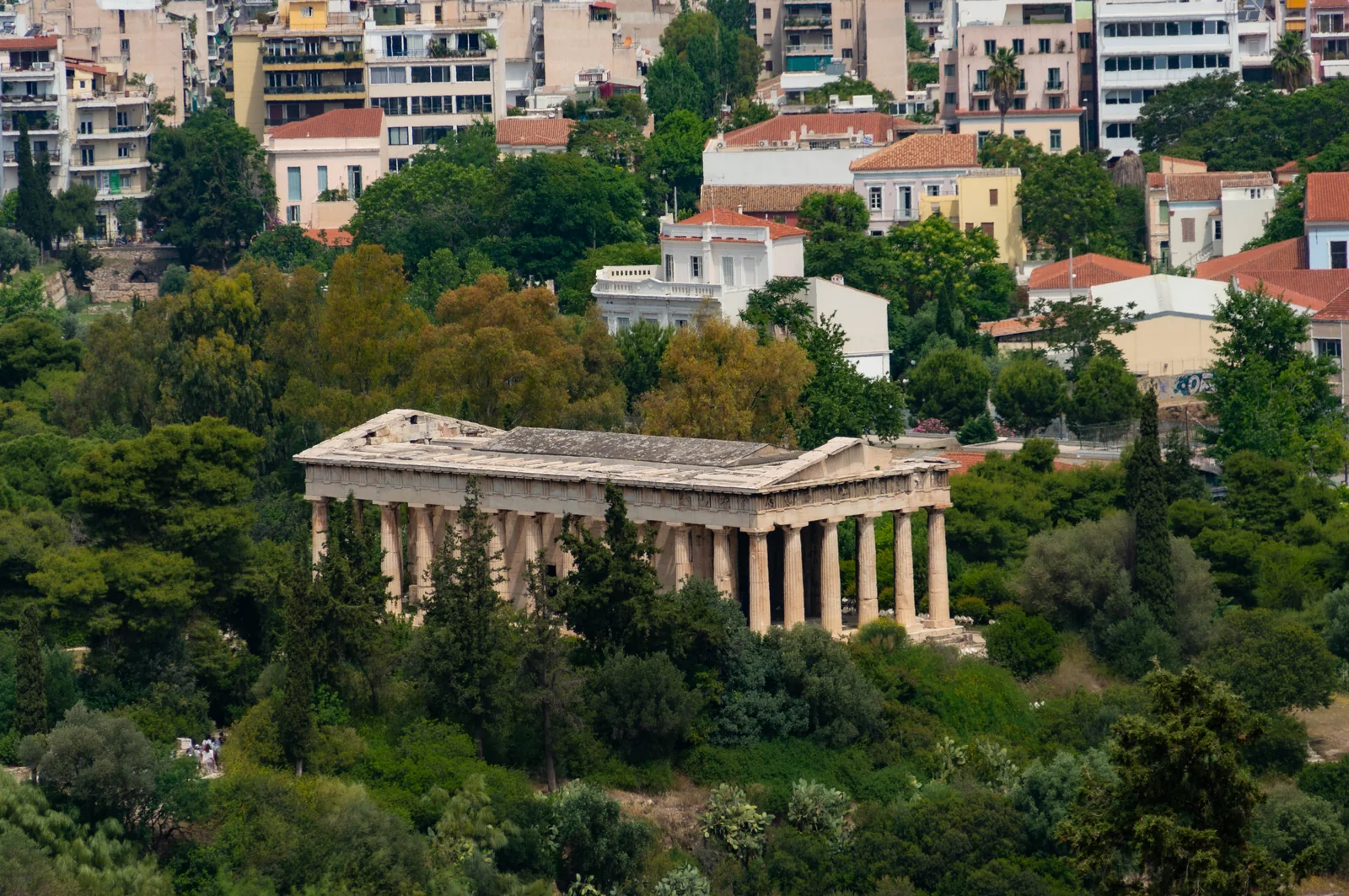
Its most complete ancient monument is the Temple of Hephaestus. The reconstructed Stoa of Attalos now houses the Agora Museum, where finds from the excavations help explain voting, public administration and daily life. Allow time to walk the open site rather than treating it as a quick photo stop.
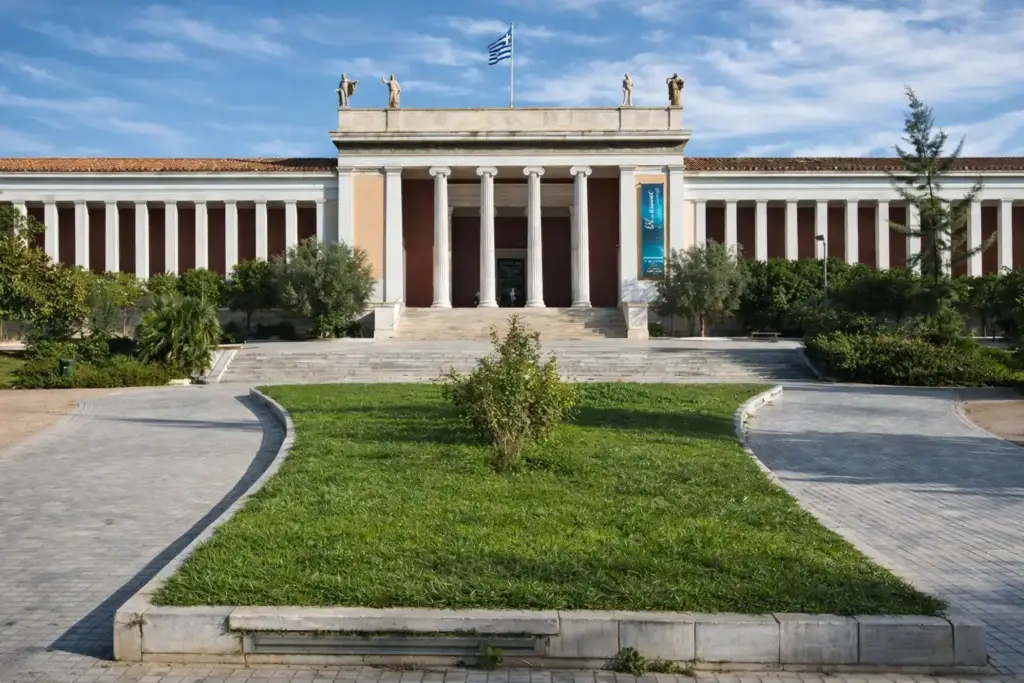
The National Archaeological Museum holds one of the world’s most important collections of ancient Greek art, spanning prehistory, sculpture, metalwork, pottery and Egyptian antiquities. Highlights are numerous enough that a selective visit usually works better than trying to cover every room.
During the Second World War, staff packed and concealed much of the collection to protect it. The museum reopened after the war and remains essential for anyone who wants to see Greek archaeology beyond the Acropolis. Check current gallery access and opening times before visiting, as large museums sometimes rotate rooms or close sections temporarily.
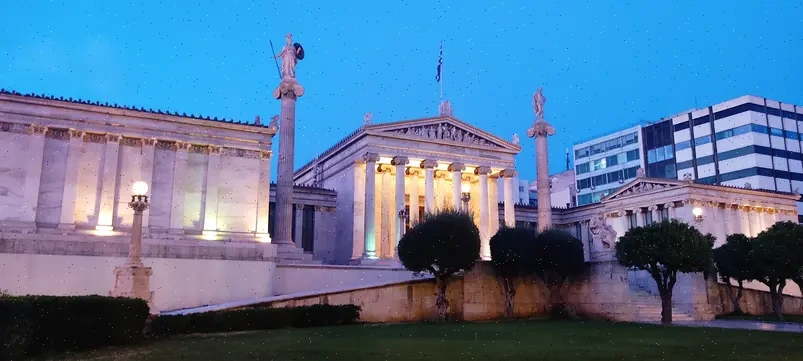
Monastiraki is one of central Athens’ liveliest crossroads. The square brings together a historic mosque, a Byzantine church, the metro and a direct view towards the Acropolis. Nearby lanes are packed with small shops, market stalls and places to eat.
Beyond the flea-market atmosphere, there is serious history close by: Hadrian’s Library and the Roman Agora are only a short walk away. The metro station also displays archaeological finds uncovered during construction.

Meteora’s monasteries stand on immense sandstone pillars above the Thessalian plain. Hermits were drawn to the landscape for seclusion, and organised monastic communities later built complexes in places that still seem almost unreachable.
Six active monasteries are normally open to visitors, but each follows its own schedule and dress requirements. Meteora is a long journey from Athens, so an overnight stay gives you a much better experience than a hurried day trip. Rail and coach arrangements can change; confirm the full route and monastery opening days immediately before travel.

The Panathenaic Stadium occupies the site of an ancient venue used for athletic contests connected with the Panathenaic festival. Rebuilt in white marble in the late nineteenth century, it hosted the first modern Olympic Games in 1896.
You can appreciate the horseshoe form from outside, while admission allows access to the track, stands and Olympic displays. Visitor hours, ticket inclusions and audio-guide availability are temporal, so verify them on the stadium’s official channels before relying on the details.

The Olympieion was begun in the sixth century BC and completed under the Roman emperor Hadrian in AD 131–132. It was one of the ancient world’s largest temples, with 104 Corinthian columns; fifteen remain standing today.
Hadrian’s Arch stands nearby, between the archaeological site and the route towards the Acropolis. The temple grounds can be affected by conservation work and temporary access restrictions, but the scale of the surviving columns is visible from several surrounding streets.

Syntagma means Constitution, a name linked to the 1843 uprising that forced King Otto to grant one. The former royal palace now houses the Hellenic Parliament, and the Tomb of the Unknown Soldier stands in front of it.
The Evzones change guard every hour, with a larger ceremonial parade traditionally held on Sundays. Ceremonial times and access around Parliament can change for official events or demonstrations, so check locally rather than planning around an old timetable. The square is also a major transport hub and the natural starting point for Ermou shopping street and the National Garden.
On the southern slope of the Acropolis, the Theatre of Dionysus marks the birthplace of Athenian drama. Performances connected with the cult of Dionysus developed here from the sixth century BC, and the venue was later rebuilt in stone.
The surviving tiers are quieter than the summit above and reward a slow look. The front-row marble seats were reserved for priests and prominent citizens, while works by Aeschylus, Sophocles, Euripides and Aristophanes formed part of the festivals that made Athenian theatre famous.

Kolonaki is a polished central neighbourhood of galleries, cafés, restaurants and boutiques, set between Syntagma and the lower slopes of Mount Lycabettus. Its neoclassical buildings and leafy side streets offer a different rhythm from the archaeological core.

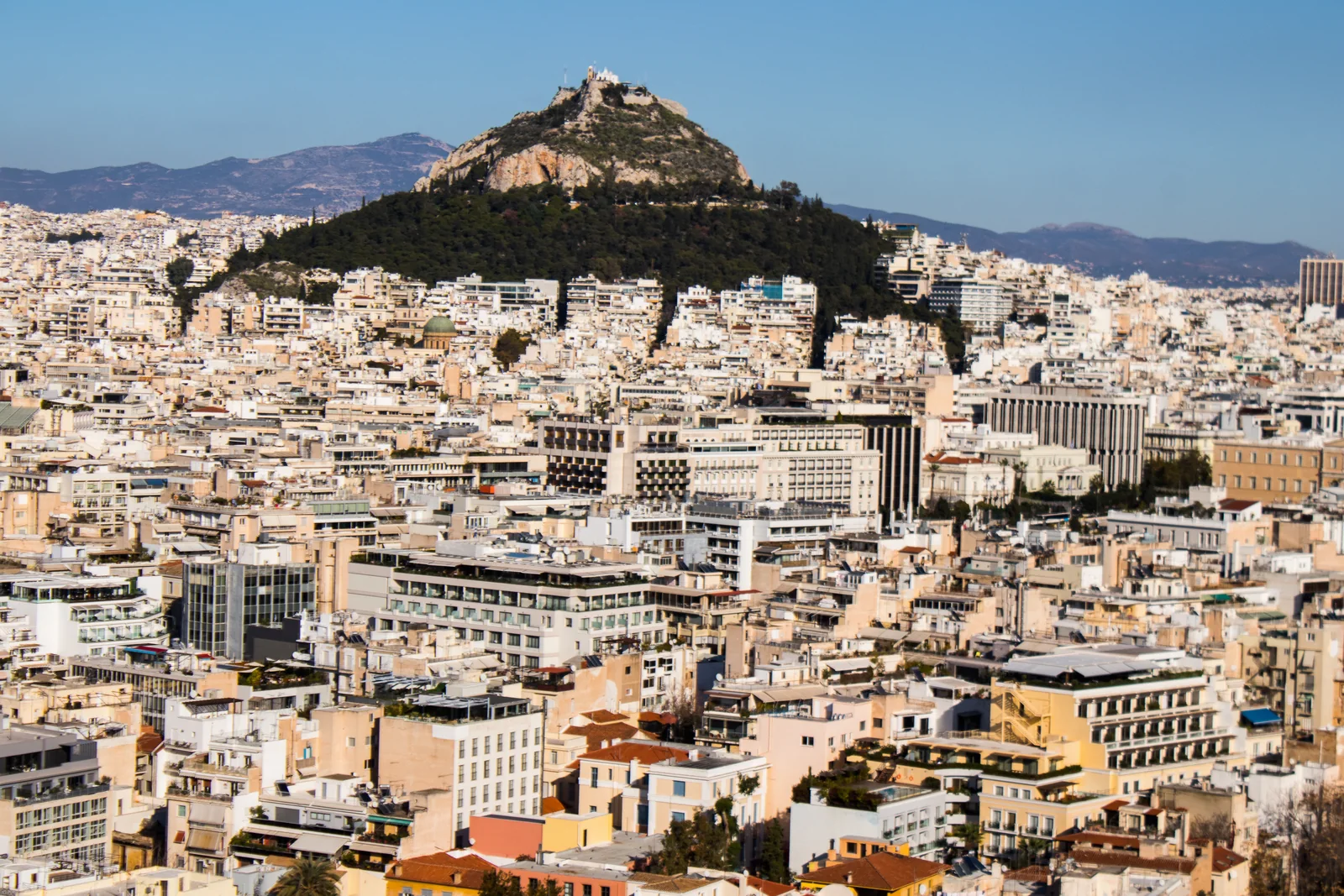
Stop for coffee around Kolonaki Square, browse the smaller museums and galleries, or continue uphill towards Lycabettus for wide views across Athens. You can walk to the summit or use the funicular, but gradients, operating hours and weather should shape your choice.

Beside Parliament, the National Garden is the centre’s most useful green refuge. Created as the royal garden in the nineteenth century, it contains shaded paths, ponds, palms, fragments of antiquity and quiet corners that feel far removed from nearby traffic.

Follow the paths past the duck pond and botanical collections, then continue to the Zappeion and the Panathenaic Stadium. Entry is generally free and gates traditionally follow daylight hours, but posted opening information is the final authority.

Athens International Airport is the main gateway. Metro Line 3 links the airport with the city centre and Piraeus, while four express bus routes serve Syntagma, Piraeus, the intercity bus stations and Elliniko. The suburban railway is another option for Piraeus and onward connections. Routes, fares and journey times change, so use the airport’s official public-transport page when planning your arrival.
Piraeus is Athens’ principal port and has direct metro connections with the centre and airport. Rafina and Lavrio serve other island routes. Travellers arriving from Italy usually land at a western Greek port such as Patras and continue overland; Patras is not the passenger port for central Athens.
Domestic rail and intercity coaches connect Athens with other Greek destinations, although engineering works and timetable changes can affect routes. International overland journeys normally require several separate legs. Driving offers flexibility for a wider road trip, but a car is rarely useful once you are staying in central Athens.
A free tour is an easy introduction to a city where ancient ruins and modern life overlap on almost every street. Compare routes, languages, accessibility and live availability, then reserve the walk that fits your itinerary.
See all current options and book without a credit card on GuruWalk’s Athens page.
Tourism and travel expert with a strong background in creating cultural content. Fluent in multiple languages and experienced as a presenter, she connects with diverse audiences to inspire the exploration of unique destinations. Her creative and dynamic approach stands out in every project, conveying the essence of each place she discovers.
Local guides, pay-what-you-want and no credit card to book. That is how you understand a city.
Explore free tours on guruwalk.com