

Explore Tbilisi in two days, from Old Town and Narikala Fortress to sulphur baths, local food, neighbourhoods and practical travel tips.
 Julieta Betancor
GuruWalk
·
Updated 25 Aug 2026
Julieta Betancor
GuruWalk
·
Updated 25 Aug 2026Tbilisi rewards travellers who slow down. Over two days, you can wander through the wooden-balconied lanes of the Old Town, look out across the city from Narikala Fortress, soak in the sulphur baths and discover a capital where medieval churches, Soviet history and bold contemporary architecture sit side by side.
Begin in Old Tbilisi, where Sioni Cathedral and the surrounding cobbled lanes reveal the city’s layered past. Continue uphill to Narikala Fortress for sweeping views, then head down to Abanotubani for the domed sulphur baths. As evening approaches, cross the illuminated Bridge of Peace and finish among the bars, studios and street art of Fabrika.
Spend your second morning along Rustaveli Avenue, with time for the Georgian National Museum or the Opera and Ballet Theatre. Later, ride the funicular to Mtatsminda Park, browse the curiosities at Dry Bridge Market and end the day at the monumental Holy Trinity Cathedral, better known as Sameba.
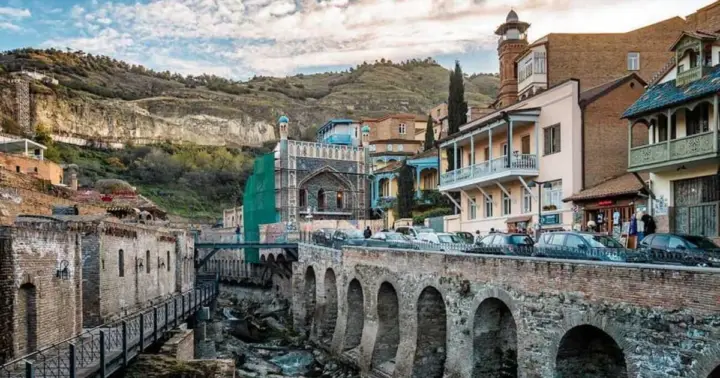
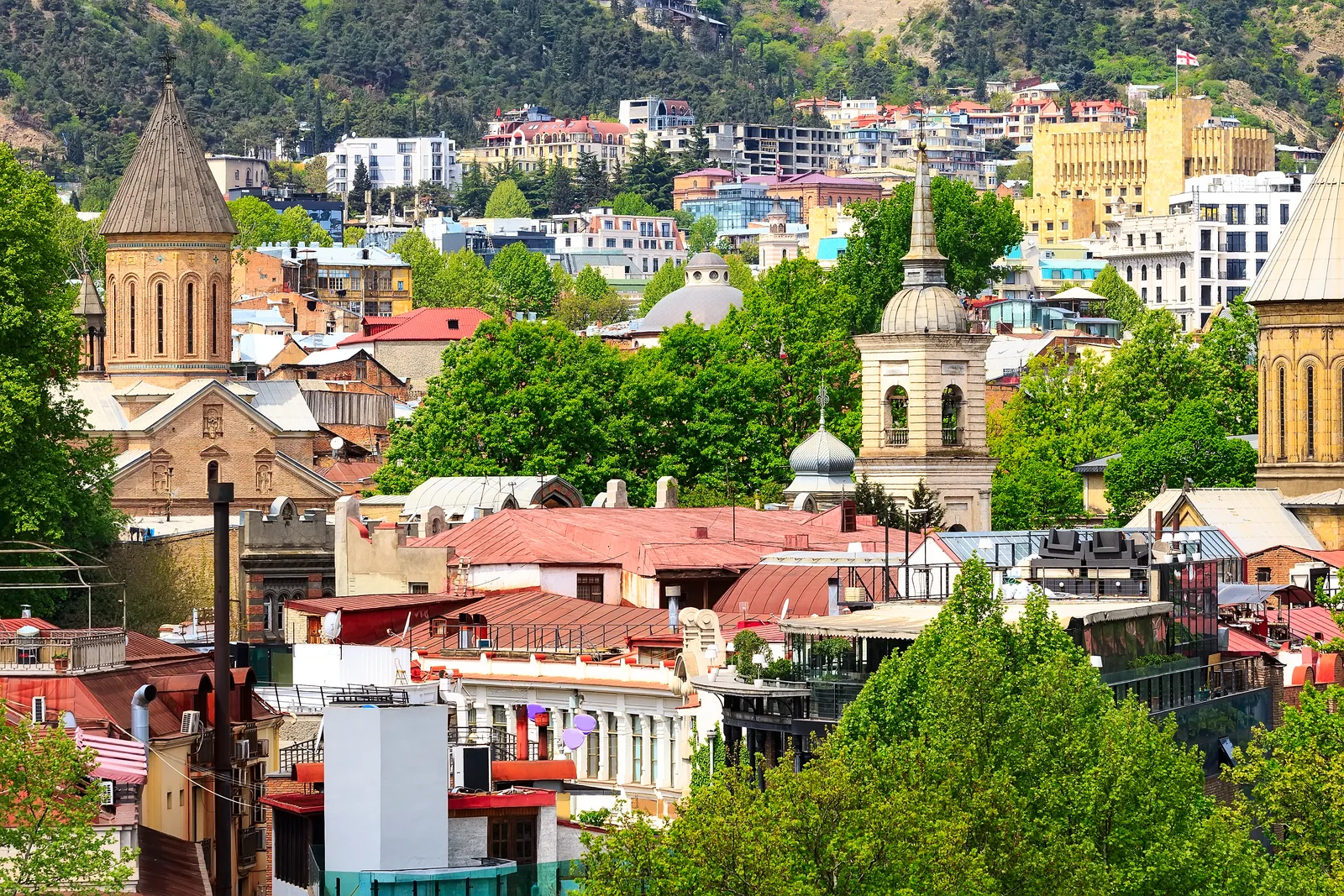
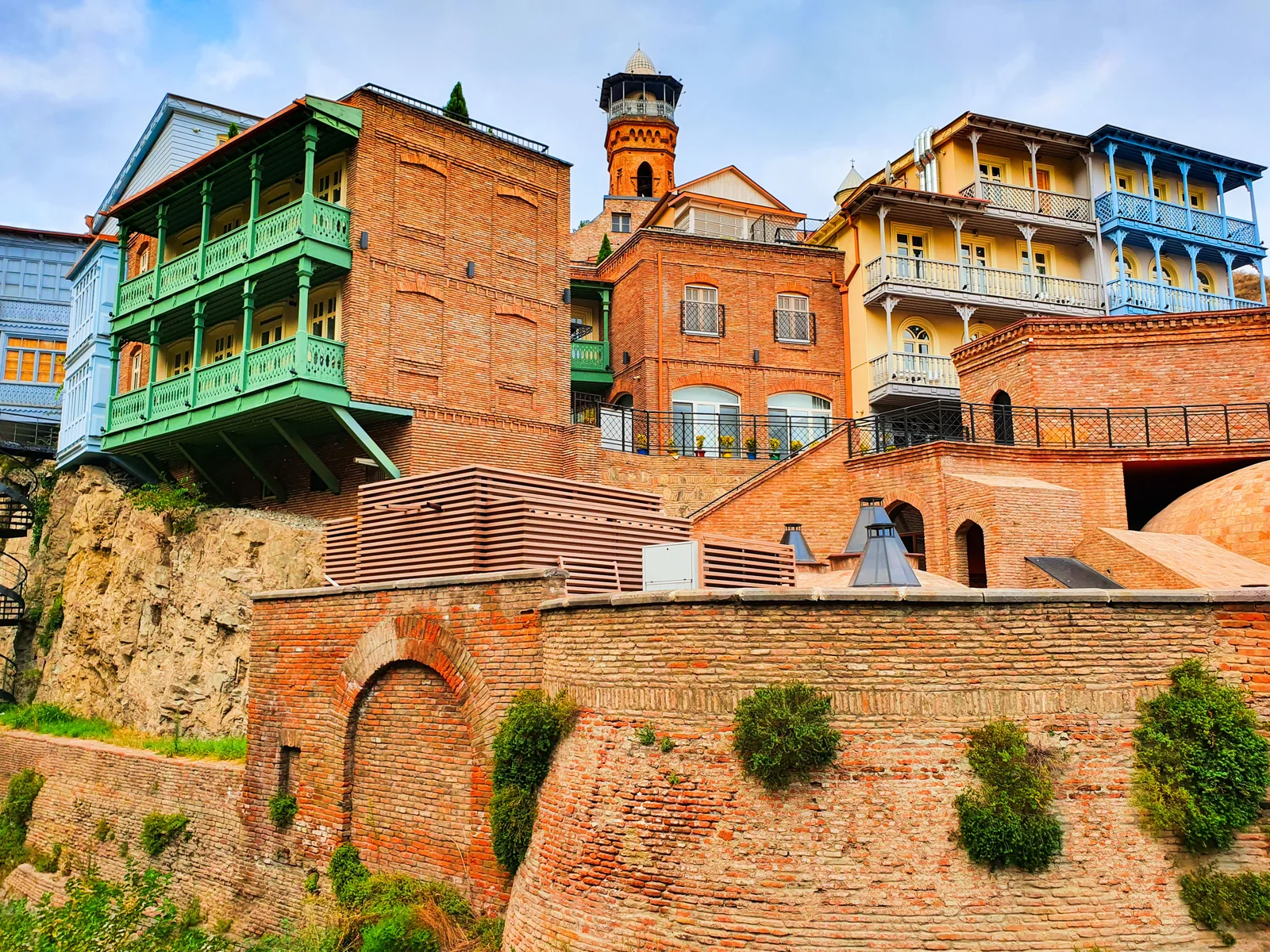
The historic heart of Tbilisi is a maze of narrow lanes, brick courtyards and colourful houses with carved wooden balconies. The architecture reflects centuries of cultural exchange, and the best way to experience it is simply to explore on foot.
Sioni Cathedral is one of the quarter’s most important landmarks. Built between the sixth and seventh centuries and rebuilt several times, it houses the Cross of Saint Nino, a deeply revered symbol in Georgia traditionally said to be made from vine branches bound with the saint’s hair.
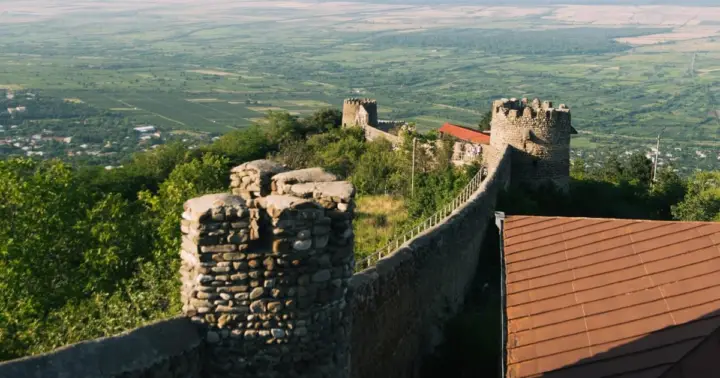
Narikala has watched over Tbilisi since the fourth century. Its surviving walls and towers trace a history of invasions, rebuilding and changing empires, while the hillside provides one of the city’s finest views over the Mtkvari River.
Inside the fortress stands Saint Nicholas Church, rebuilt in the 1990s and decorated with frescoes depicting biblical scenes and episodes from Georgian history.
The Spanish source listed the Rike–Narikala cable car at 2.5 GEL each way and said payment was possible with a Metromoney card or contactless bank card. This information was current in October 2025; check the fare and payment rules before travelling.
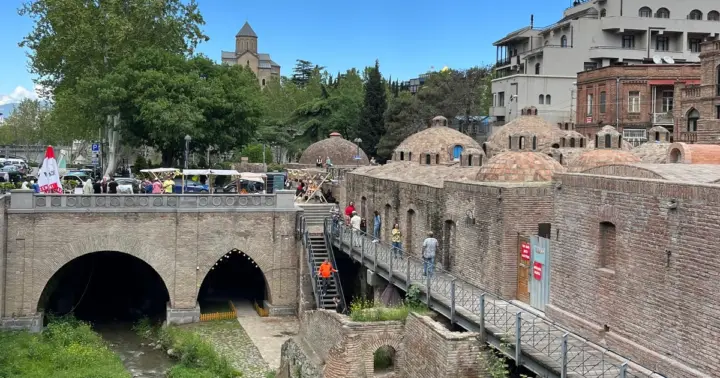
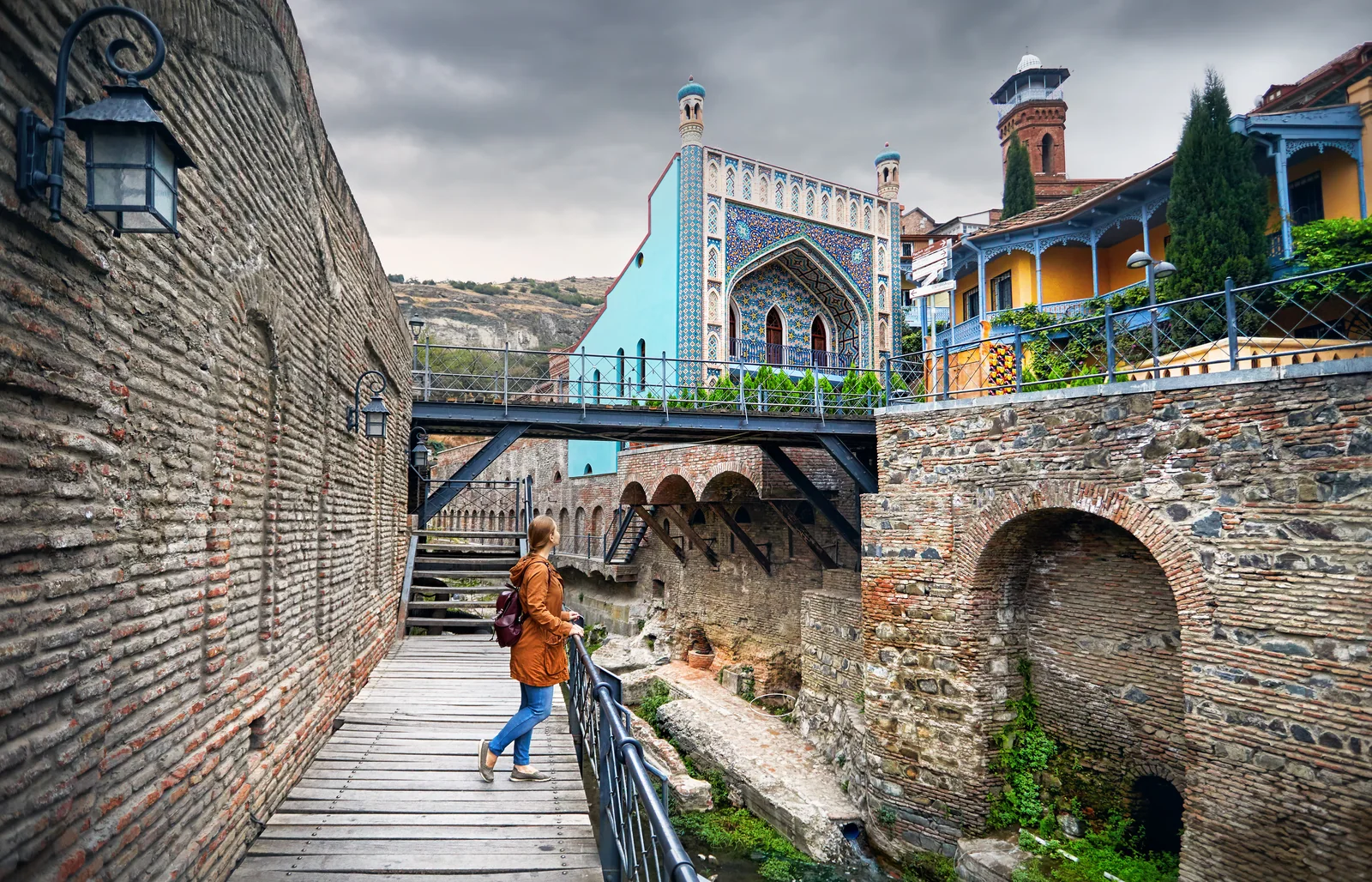
Tbilisi’s story is closely tied to the naturally hot, mineral-rich springs beneath Abanotubani. The district’s low brick domes mark subterranean bathhouses where locals and visitors have come to soak for generations.
Chreli Abano, also known as Orbeliani Baths, is the most photographed, thanks to its blue-and-turquoise tiled façade. Private rooms are generally booked by the hour, and a traditional exfoliating scrub is called a kisi.
The source listed a kisi treatment at Chreli Abano at 30 GEL in October 2025. Private-room prices vary by size and facilities, so confirm current rates before booking.
Named after the medieval poet Shota Rustaveli, this broad avenue is Tbilisi’s main civic and cultural thoroughfare. It brings together grand nineteenth-century façades, government buildings, shops and some of the capital’s leading cultural institutions.
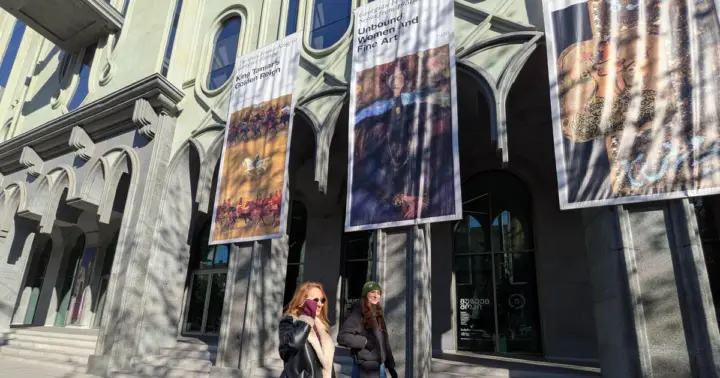
The Moorish-style Tbilisi Opera and Ballet Theatre is an architectural highlight. Nearby, the Georgian National Museum offers collections ranging from ancient Colchian gold to material from the Soviet period.
High above the city on Mount Mtatsminda, this amusement park combines panoramic viewpoints with a Ferris wheel, carousels and other rides. The journey is part of the experience: Tbilisi’s historic funicular has climbed the steep hillside since 1905.
The Spanish guide gave an indicative funicular fare of 10 GEL each way in October 2025. Prices and operating times can vary by season, so check before you set out.
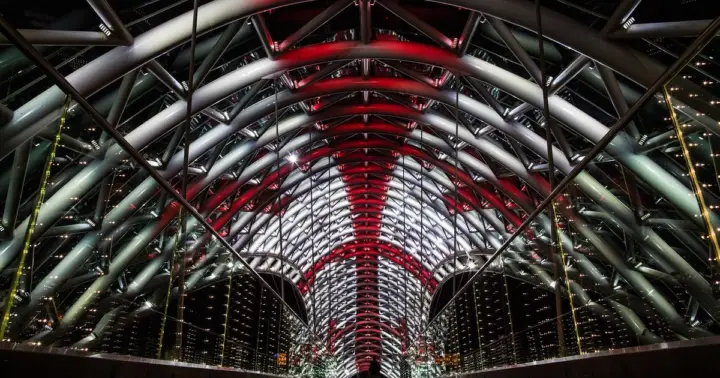
Opened in 2010, the Bridge of Peace is one of modern Tbilisi’s defining landmarks. The glass-and-steel pedestrian bridge links the Old Town with Rike Park across the Mtkvari.
Italian architect Michele De Lucchi designed its wave-like canopy. After dark, thousands of LEDs turn the bridge into a luminous ribbon over the river.
A former Soviet sewing factory has become one of Tbilisi’s liveliest creative spaces. Fabrika now brings together a hostel, cafés, bars, artists’ studios and independent shops around a large open courtyard.
Murals and street art give the complex much of its character. It is an easy place to meet other travellers, see what is happening in the local creative scene or stop for a drink after exploring the city.
This open-air flea market near Dry Bridge is a treasure hunt for anyone interested in antiques and everyday remnants of the Soviet era. Stalls may carry jewellery, old cameras, coins, paintings and all manner of unexpected objects. Selection and opening conditions vary, especially with the weather.
The Holy Trinity Cathedral of Tbilisi, commonly called Sameba, is one of the world’s largest Orthodox churches and a symbol of Georgia’s post-Soviet religious revival. Built between 1995 and 2004, it draws on traditional Georgian forms on a monumental scale.
The complex includes several religious buildings and landscaped gardens. Its elevated position also opens up broad views across the city.
Tucked into the valley below Narikala Fortress, the botanical garden offers a quieter side of central Tbilisi. Paths pass through collections of native and exotic plants, with bridges and a waterfall adding variety to the walk.
The source listed general admission at 4 GEL and daily opening from 9:00 to 18:30 in October 2025. Confirm current prices, hours and entrances on the official visitor information before going.
Founded by Georgian artist, writer and director Rezo Gabriadze, this intimate theatre is known for poetic puppet productions that appeal to adults as much as children.
Its leaning clock tower, faced with hundreds of hand-painted tiles, is an attraction in its own right. An angel appears to strike the bell each hour. The source also mentioned a short performance called The Circle of Life at 12:00 and 19:00; show times can change, so check the theatre’s current programme.
Tbilisi’s two-line metro is usually the quickest way to cover longer distances. Buses and marshrutkas reach a wider area, although minibus routes can be harder for first-time visitors to understand. Ride-hailing apps such as Bolt and Yandex Go have also been widely used in the city.
In October 2025, the Spanish source listed an integrated fare of 1 GEL with unlimited metro and bus travel for 90 minutes, a Metromoney card at 2 GEL and the Rike–Narikala cable car at 2.5 GEL each way. Treat these as dated reference prices and verify them before travel.
Avoiding the busiest commuter periods—roughly 08:00–10:00 and 17:00–19:00—can make journeys more comfortable. Current ticketing rules, app availability and timetables should be checked locally.
Choose the Old Town if you want the main sights, restaurants and evening atmosphere on your doorstep. Guesthouses and boutique hotels in historic buildings add character, but steep lanes and nightlife noise are worth considering.
The area around Rustaveli Avenue is well connected and convenient for museums, theatres and the metro. It suits travellers who prefer modern apartments or larger international hotels.
Vera has a more residential feel, with parks, cafés and a strong neighbourhood atmosphere. It is a good compromise for visitors who want to stay near the centre without sleeping in its busiest streets.
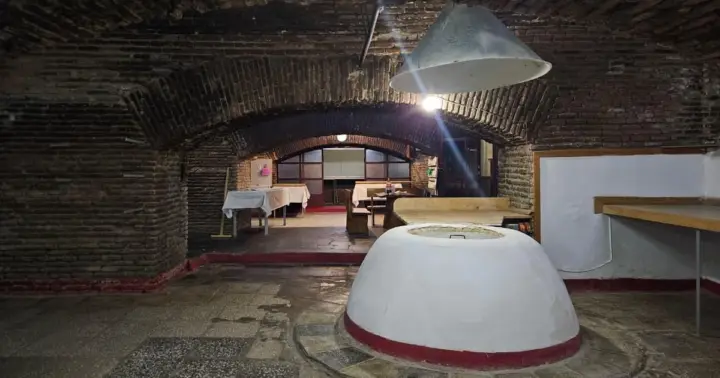
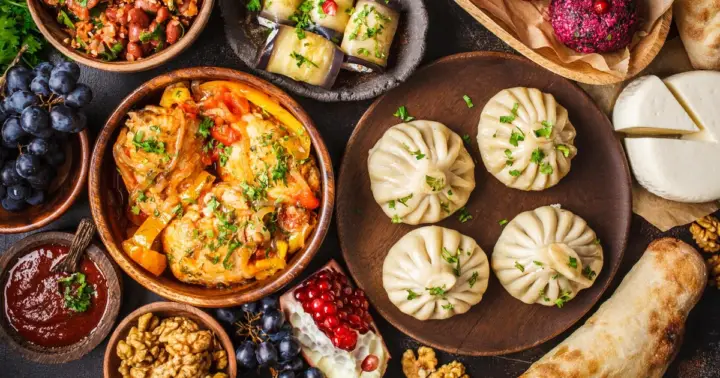
Georgian cooking is one of the strongest reasons to linger in Tbilisi. Start with khachapuri, bread filled with cheese, and khinkali, pleated dumplings traditionally eaten by hand. The Spanish guide mentioned Machakhela and Sakhachapure No. 1 for traditional food, and Barbarestan for a contemporary approach inspired by historic recipes.
For coffee or something sweet, the source recommended Linville and Café Leila. Fabrika and the Old Town have plenty of evening options, while Dezerter Bazaar is a useful stop for fruit, spices and local produce. Businesses and opening hours change, so confirm each venue before making a special journey.
Look for Georgian wines made from grapes such as saperavi and rkatsiteli, and try churchkhela, a traditional sweet made with nuts and concentrated grape juice.
On Georgia’s Black Sea coast, Batumi mixes beaches, bold modern architecture and a lively seafront. Its long boulevard is made for walking or cycling, while the Batumi Botanical Garden brings together plants from around the world. The Alphabetic Tower celebrates Georgia’s distinctive script.
One of Georgia’s oldest cities, Kutaisi makes a strong base for cultural and natural sights. Bagrati Cathedral overlooks the city, while Gelati Monastery was an important medieval spiritual and educational centre and is recognised by UNESCO. Prometheus Cave offers a very different landscape of illuminated stalactites and stalagmites.
A free walking tour is a practical way to understand Tbilisi’s complex history and get your bearings on the first day. Routes, languages, departure times, ratings and availability change frequently, so use GuruWalk’s live Tbilisi listing rather than relying on a fixed selection.
Spring, particularly April and May, and autumn, especially September and October, usually offer comfortable temperatures for walking. Summers can be very hot, while winters are cold. Weather patterns vary, so check the forecast close to your trip.
Tbilisi is generally considered a safe destination for visitors, but normal city precautions still apply, particularly at night and in crowded places. Check current official travel advice before departure because local conditions can change.
Two days cover the highlights at a lively pace. Three or four days give you more time for museums, neighbourhoods, food and the baths, while a week allows room for day trips and a slower experience of local life.
Cards are widely accepted in hotels, restaurants and modern shops. Carrying some Georgian lari is still useful for markets, small businesses and occasional transport payments.
Practical information note: the prices, opening hours and access conditions retained from the Spanish guide were last checked in October 2025. They may change because of seasonal schedules, maintenance or local rules. Verify time-sensitive details with the relevant operator or official visitor information before your trip.
Tourism and travel expert with a strong background in creating cultural content. Fluent in multiple languages and experienced as a presenter, she connects with diverse audiences to inspire the exploration of unique destinations. Her creative and dynamic approach stands out in every project, conveying the essence of each place she discovers.
Local guides, pay-what-you-want and no credit card to book. That is how you understand a city.
Explore free tours on guruwalk.com