





Plan three days in Rome around ancient sites, Vatican landmarks, Roman food, practical transport, advance bookings, and distinct neighborhoods.
 Julieta Betancor
GuruWalk
·
Updated 27 Aug 2026
Julieta Betancor
GuruWalk
·
Updated 27 Aug 2026Rome packs 28 centuries of history into a walkable city center. This guide covers what to see, what needs advance booking, how to move around, where to try Roman food, and which neighborhoods are worth exploring beyond the main monuments. Use it to plan independently or organize your days around a booked Rome free walking tour.
Last verified: August 2026 — Prices, opening hours, and reservation requirements checked against official sources. GuruWalk’s Rome gurus reviewed the practical recommendations.
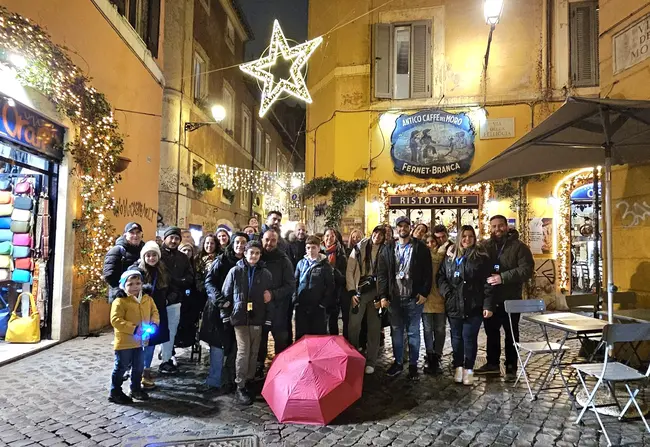
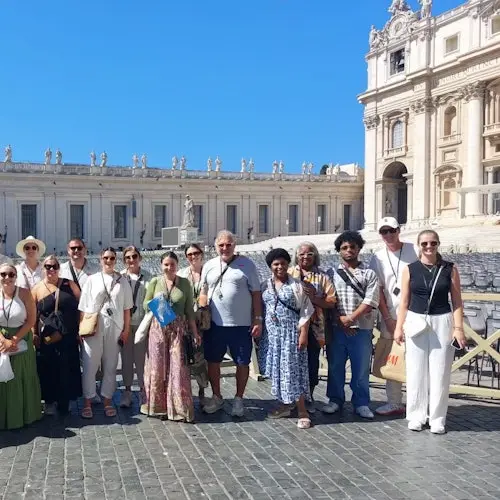
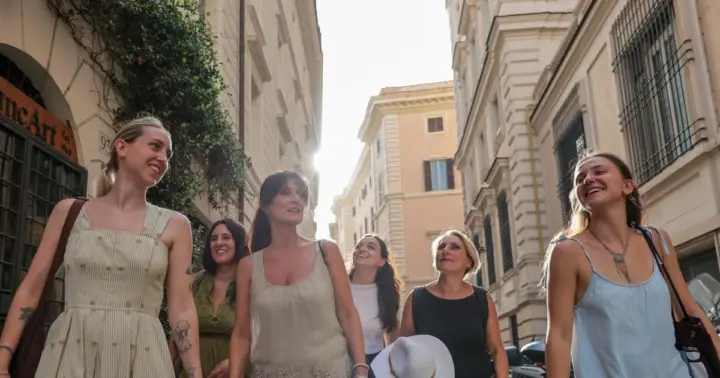
A Rome free walking tour is a practical way to get oriented before exploring the ancient sites independently. GuruWalk offers routes through the historic center, Trastevere, and the Vatican area in multiple languages; compare itineraries, schedules, and host profiles before booking. Tours use a tip-based model, with travelers typically leaving €10–€20 per person and up to €50 for a particularly strong experience.
Rules – No baby strollers allowed, no wheelchairs Church visit rules – knees and shoulders covered to visit inside…

We begin in Rome’s Jewish Ghetto , a neighborhood shaped by centuries of persecution, resilience, and …

Step into the world of Ancient Rome and discover the rise and fall of the greatest empire in history. Our…
Video in Spanish. For English subtitles, open Settings (⚙), then choose Subtitles/CC → Auto-translate → English.
A few practical details can catch visitors off guard. Knowing them in advance saves time and frustration.
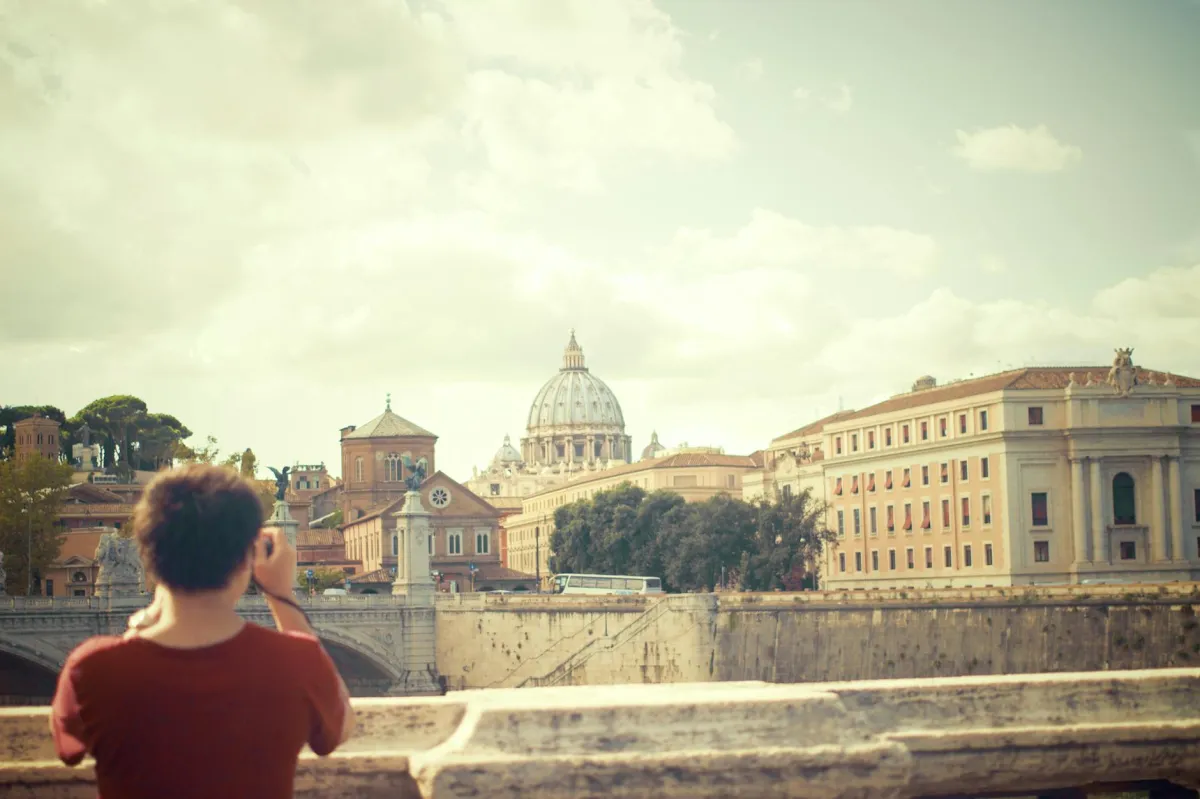
A Rome free walking tour is a practical way to get oriented before exploring the ancient sites independently. Many routes cover the historic center in about two hours, providing context for the monuments visited later.
After the walk, head to the Colosseum. Reserve admission in advance because popular slots can sell out during busy periods. Allow about 1.5 to 2 hours inside, including the underground hypogeum if your admission option covers it. Just a short walk south, the Roman Forum can be included in combined admission options. The ruins of temples, arches, and the Via Sacra spread across the valley between the Palatine and Capitoline hills.
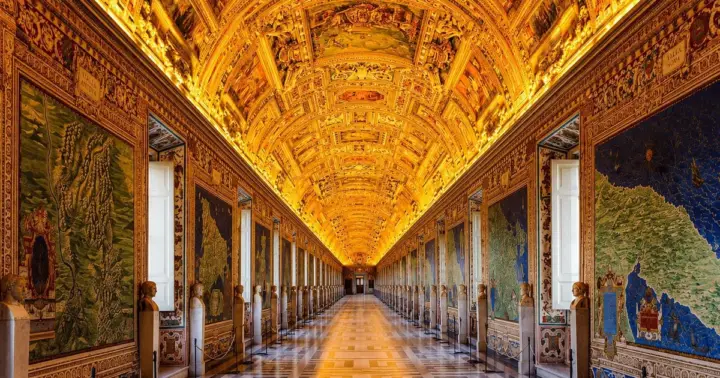
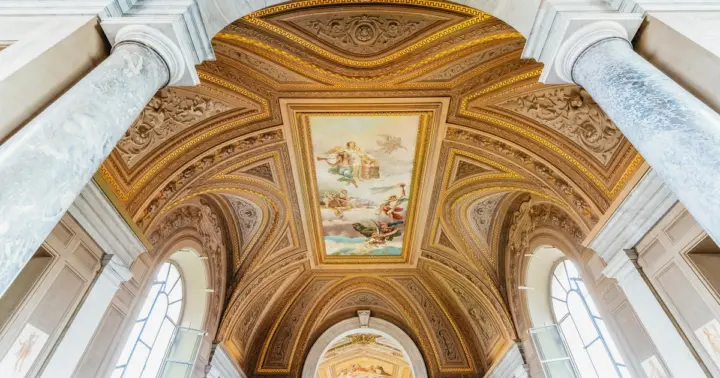
Begin at Vatican City and reserve the Vatican Museums before your visit. Inside, the route leads through galleries of maps, tapestries, and Renaissance painting before reaching the Sistine Chapel. Plan roughly 2 to 3 hours for the full Museums visit. St. Peter’s Basilica is free to enter, while access to the dome is paid and subject to current availability. A dress code applies: shoulders and knees must be covered.
In the afternoon, walk east toward the Pantheon. Admission and reservation requirements can change, so check the current options before visiting. From there, the Trevi Fountain is a short walk. The local version of the coin tradition uses the right hand to throw a coin over the left shoulder. End the day at Piazza Navona, where Bernini’s Fountain of the Four Rivers anchors one of the city’s most concentrated stretches of Baroque architecture.
Start at Castel Sant’Angelo for panoramic views over the Tiber and St. Peter’s dome. The fortress doubles as a museum; allow about an hour. Then walk south to the Spanish Steps, near Spagna station on Metro Line A. The 135 steps connect Piazza di Spagna at the base to the Trinità dei Monti church at the top.
Reserve your afternoon for the Borghese Gallery. Visits use fixed time slots and require advance reservation, so walk-in admission should not be assumed. The collection includes Bernini’s Apollo and Daphne and several Caravaggio paintings. The surrounding Villa Borghese park offers space for a walk after the museum.
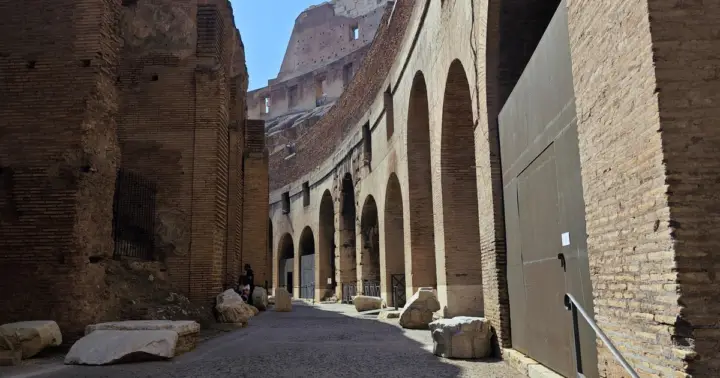
The Colosseum is the largest amphitheater ever built and one of the most visited sites in Italy. Constructed between 70 and 80 AD under emperors Vespasian and Titus, the Flavian Amphitheater held up to 50,000 spectators who came to watch gladiatorial combat, animal hunts, and public spectacles.
The building’s engineering is still studied today. Eighty arched entrances allowed the audience to be seated efficiently, a crowd-management system that influenced modern stadium design. Below the arena floor, the hypogeum is an underground network of tunnels and lifts accessible through selected admission options. Gladiators, prisoners, and animals waited here before being raised to the arena through trapdoors.
Admission options can combine the Colosseum, Roman Forum, and Palatine Hill, while enhanced tickets may include areas such as the arena or hypogeum. Check current availability and reserve an entry time before visiting. Expect 1.5 to 2 hours for the Colosseum itself.
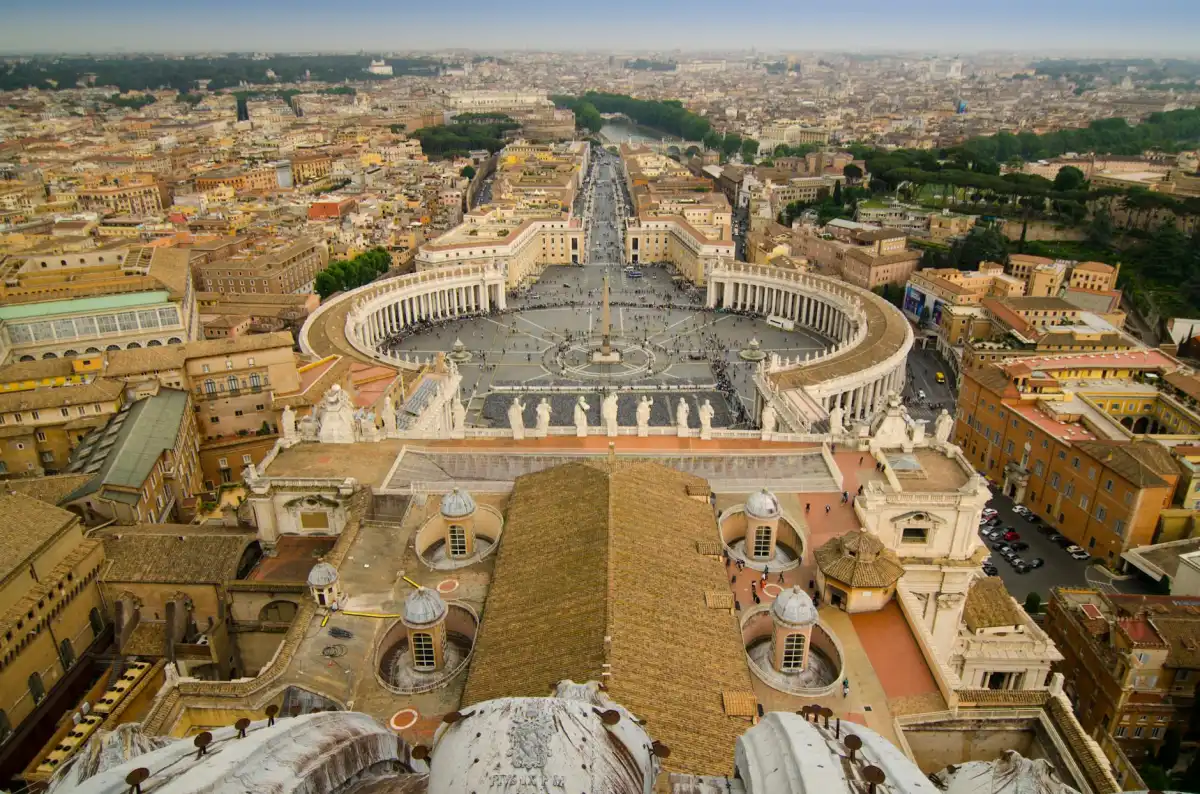
The world’s smallest independent state, covering 0.44 km², is also one of its most concentrated collections of art and architecture. Vatican City is the headquarters of the Roman Catholic Church and the residence of the Pope. Despite its size, it contains two of Rome’s most visited sites: the Vatican Museums and St. Peter’s Basilica.
The Vatican Museums house over 70,000 works spanning Egyptian antiquities, Renaissance tapestries, and modern religious art. The route through the museums culminates at the Sistine Chapel. Allow 2 to 3 hours for a full visit, or longer for the Gallery of Maps and Raphael Rooms. Reserve admission in advance and check the current opening calendar before planning your day.
St. Peter’s Square, designed by Bernini, hosts papal audiences and the Angelus according to the Vatican’s current calendar. Attendance is generally free, but access arrangements and schedules should be checked in advance.
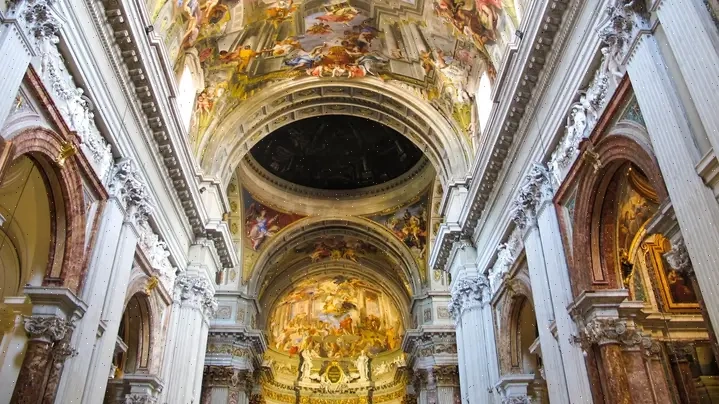
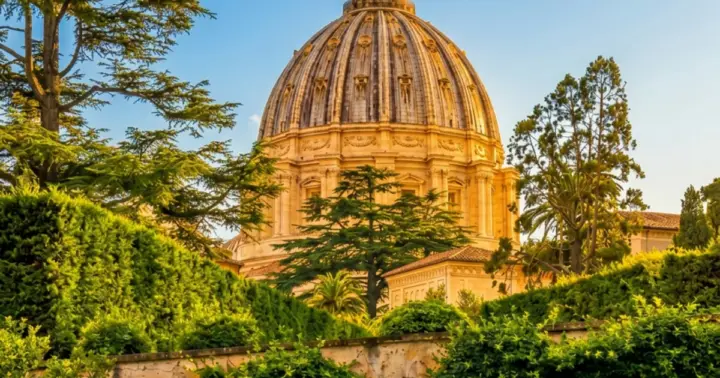
St. Peter’s Basilica is built over the traditional burial site of the apostle Peter and is the largest church in the world by interior area. Entry to the basilica is free, although visitors pass through security and waits can lengthen during busy periods.
Inside, the nave stretches 186 meters and the dome rises 136 meters from the floor. Michelangelo’s Pietà, carved when he was 24, sits in the first chapel on the right. Bernini’s bronze Baldachin, 29 meters tall, marks the papal altar directly above the tomb.
The dome climb is ticketed, with options that may combine elevator access and stairs. Check current prices, access conditions, and availability before joining the queue. The view from the top covers St. Peter’s Square, the Tiber, and the city skyline.

The Sistine Chapel is the final room in the Vatican Museums route and the site where the College of Cardinals elects each new pope. The ceiling frescoes, painted by Michelangelo between 1508 and 1512, span over 460 m² and depict nine scenes from the Book of Genesis. The Creation of Adam is near the center of the vault.
The altar wall holds The Last Judgment, completed by Michelangelo nearly three decades later. The composition includes over 300 figures and took four years to finish. Photography is not permitted inside the chapel, and guards enforce silence because the space is both a museum and an active place of worship.
Access is through the Vatican Museums rather than a separate entrance. The chapel is often one of the busiest rooms in the complex, so allow enough time to complete the prescribed museum route.
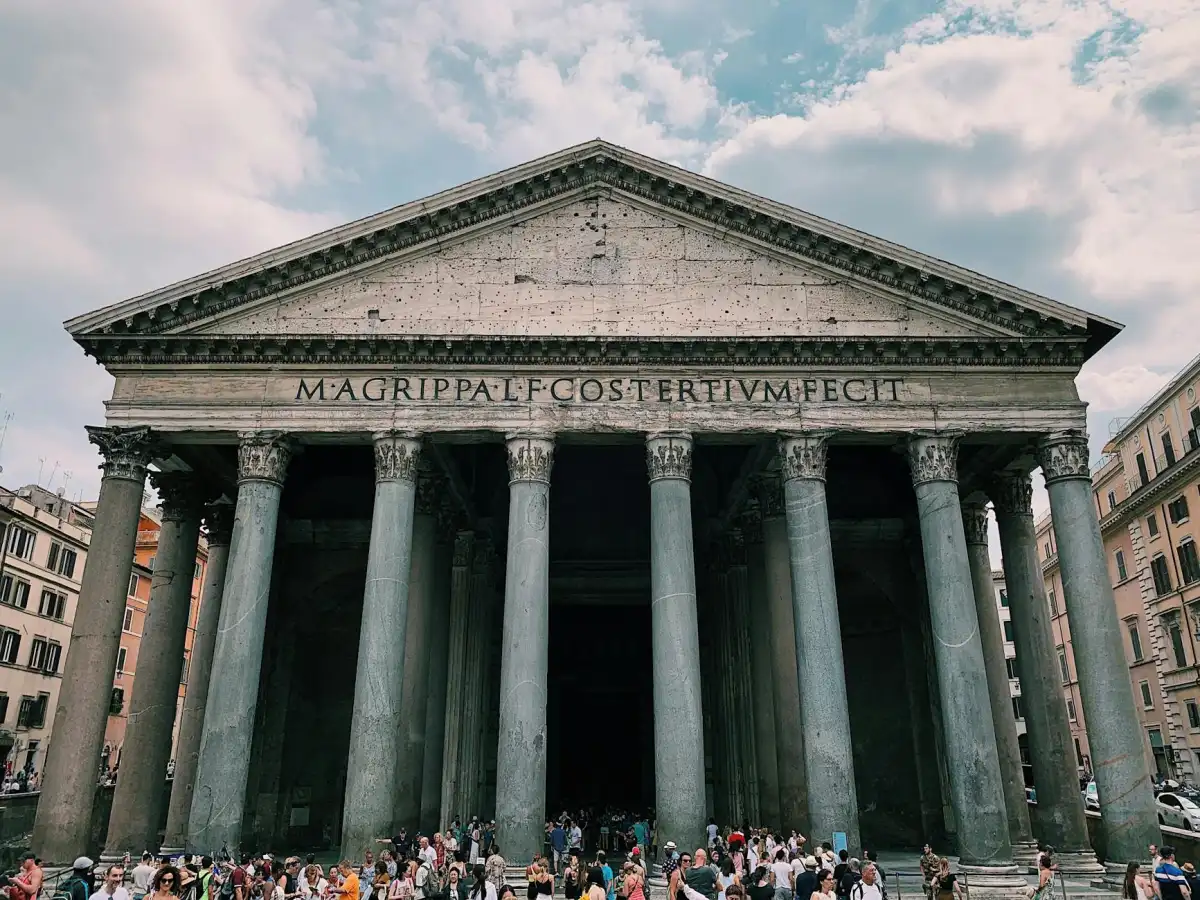
The Pantheon has stood for nearly 1,900 years, and its unreinforced concrete dome, measuring 43.3 meters in diameter, remains the largest of its kind. Emperor Hadrian rebuilt it around 125 AD as a temple to all gods; it was later consecrated as a church, which helped it survive when other Roman temples were stripped for building materials.
The oculus, a 9-meter opening at the top of the dome, is the building’s only light source. When it rains, water falls through the opening and drains through holes in the slightly convex floor. Inside, the Pantheon also serves as the tomb of the painter Raphael and two Italian kings.
The Pantheon uses paid admission and may require a timed reservation. Check current booking requirements and availability before visiting. The building is in Piazza della Rotonda, a short walk from Piazza Navona.
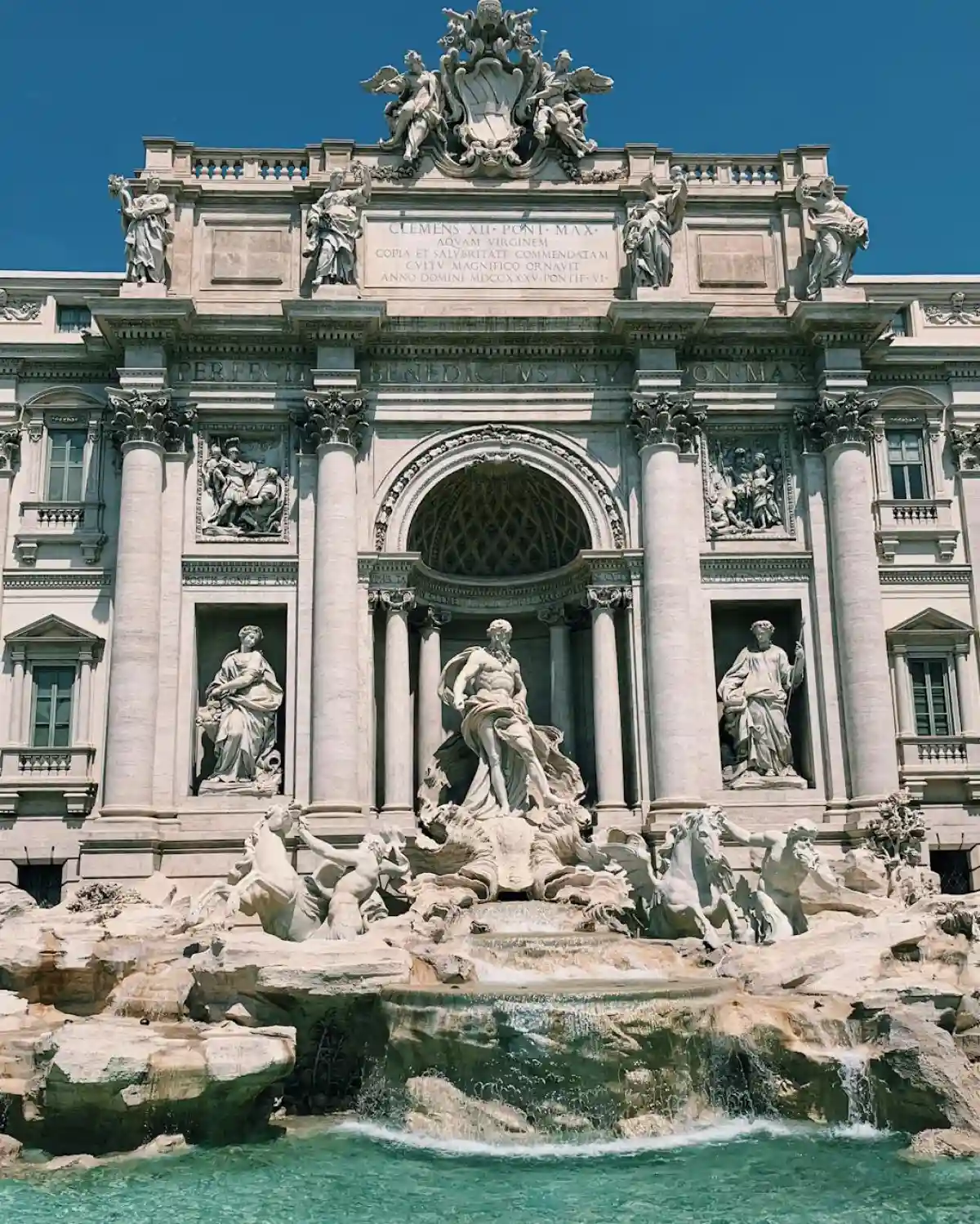
The Trevi Fountain, completed in 1762, is 26 meters high and 49 meters wide, making it the largest Baroque fountain in Rome. Designed by Nicola Salvi, it marks the terminal point of the Acqua Vergine aqueduct, which has supplied water to Rome since 19 BC.
The central figure is Oceanus, standing on a shell-shaped chariot pulled by two seahorses, one calm and one rearing, representing the sea’s contrasting moods. Coins thrown into the fountain by visitors are collected and donated to Caritas, a Catholic charity.
The sculptural details are easier to distinguish from the edges of the basin, while the evening lighting reveals the contrast between the pale stone and the water.
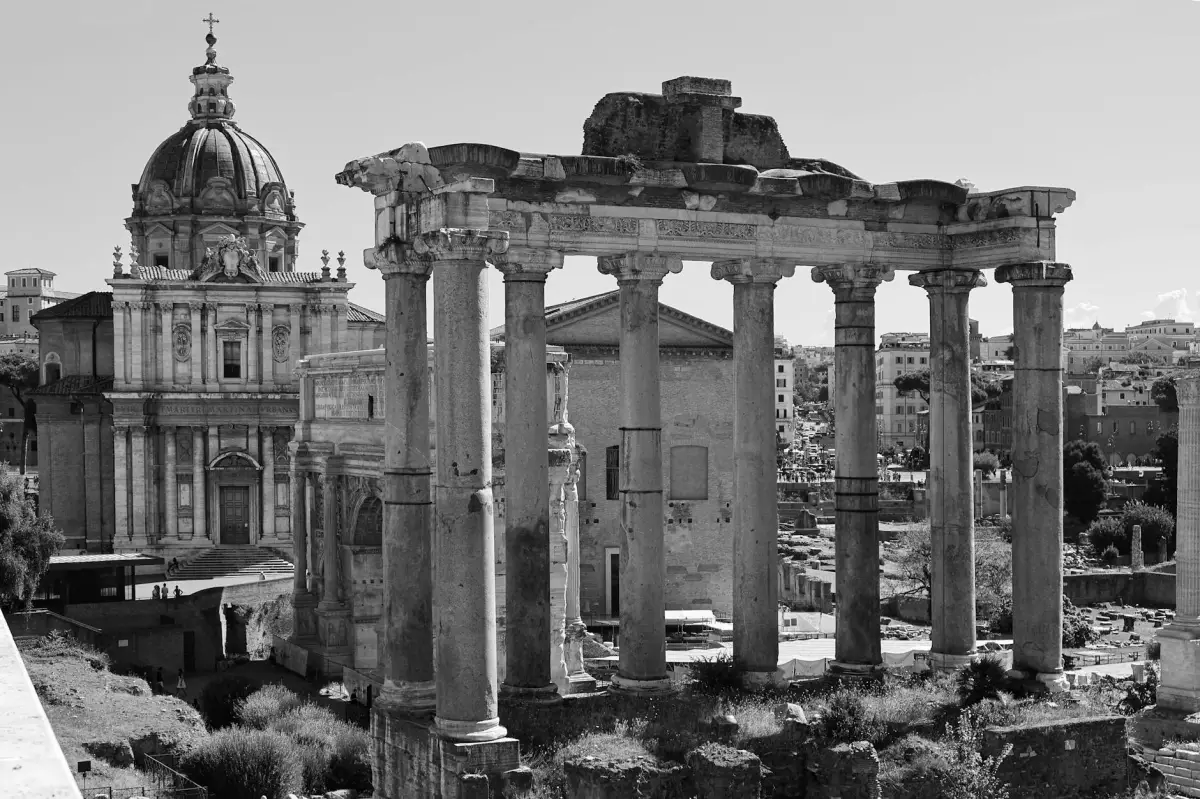
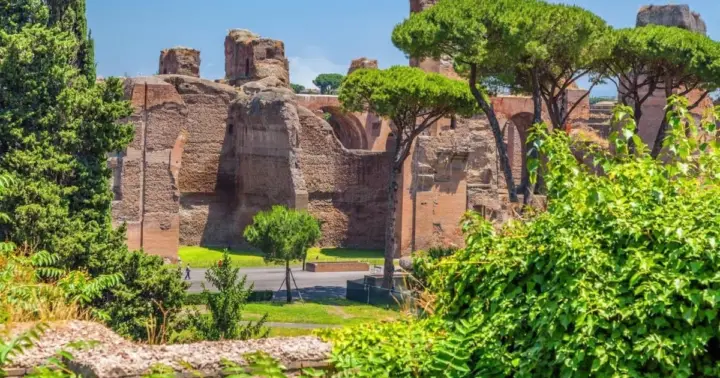
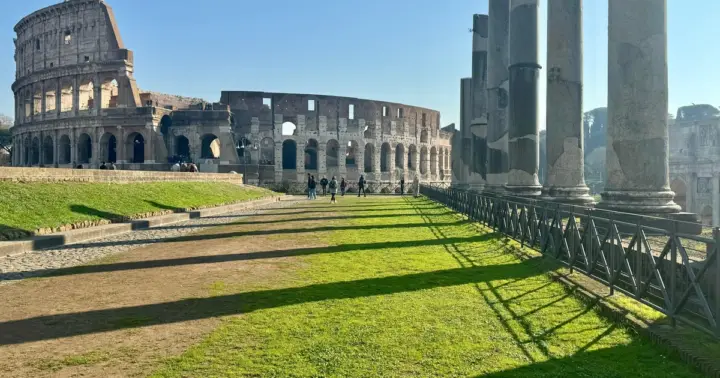
The Roman Forum was the center of public life in ancient Rome: courts, markets, temples, and the Senate all operated here. It sits in a valley between the Palatine Hill, where emperors built their palaces, and the Capitoline Hill, the seat of Rome’s government.
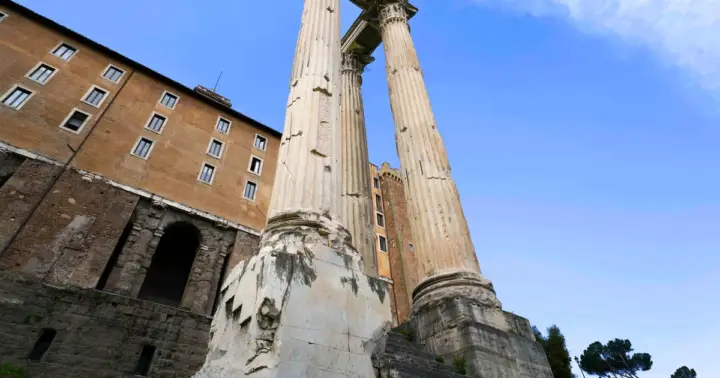
Key structures include the Temple of Saturn, whose eight remaining columns are among the most photographed ruins in Rome, the Arch of Septimius Severus, the Curia Julia, and the Temple of Vesta. The Via Sacra, the Forum’s main road, runs from the Capitoline toward the Colosseum and was the route for military triumphal processions.
The Forum is available through admission options that may also cover the Colosseum and Palatine Hill. Confirm the current validity period when booking and allow 1 to 1.5 hours for the archaeological area. Shade is scarce, so carry water and sun protection in summer.
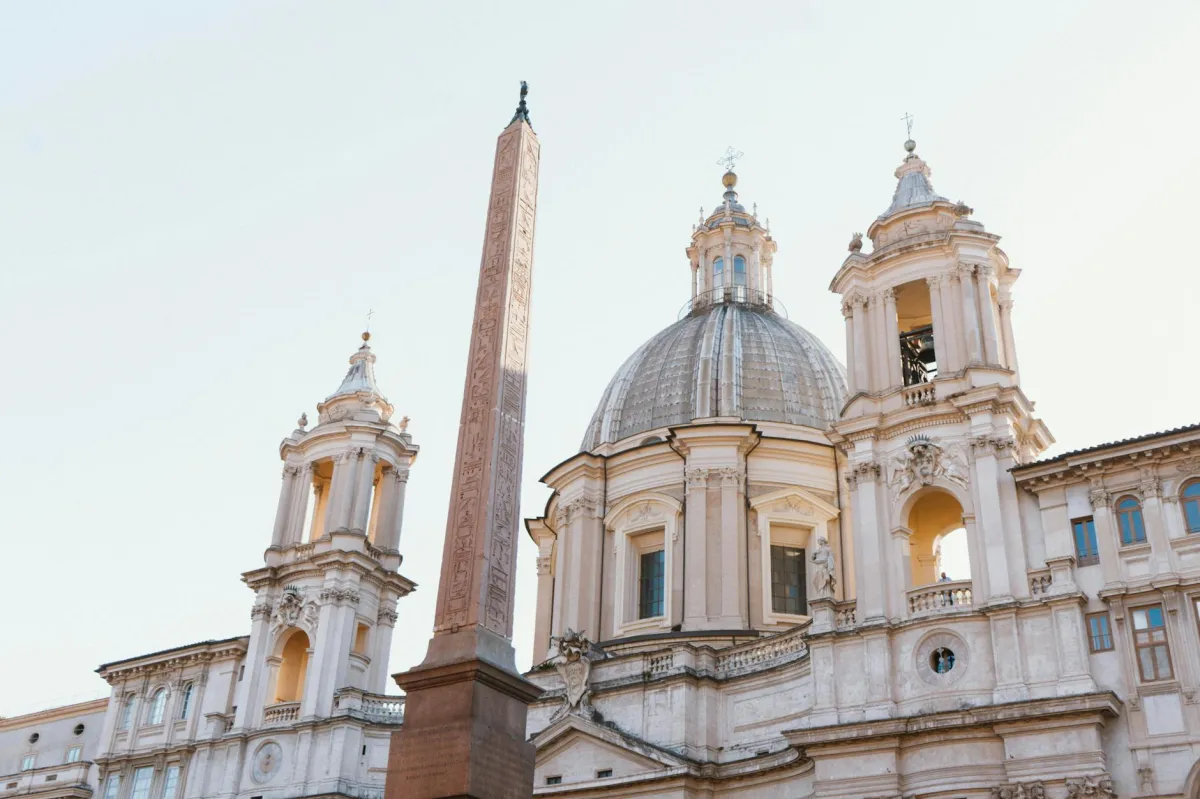
Piazza Navona follows the footprint of the Stadium of Domitian, built in the 1st century AD for athletic competitions. Remains of the stadium can still be seen beneath the square through the museum at its northern end.
The square’s centerpiece is Bernini’s Fountain of the Four Rivers, completed in 1651, where four sculpted figures represent the Nile, Danube, Ganges, and Río de la Plata. The obelisk on top was brought to Rome from the Circus of Maxentius on the Via Appia. Two additional fountains, the Fountain of Neptune and the Moor Fountain, anchor the northern and southern ends.
Borromini’s Church of Sant’Agnese in Agone faces the square directly opposite Bernini’s fountain, and local legend holds that the two architects designed their works as rival statements. The piazza is free to visit at any time and is a common starting or ending point for walking tours in the historic center.
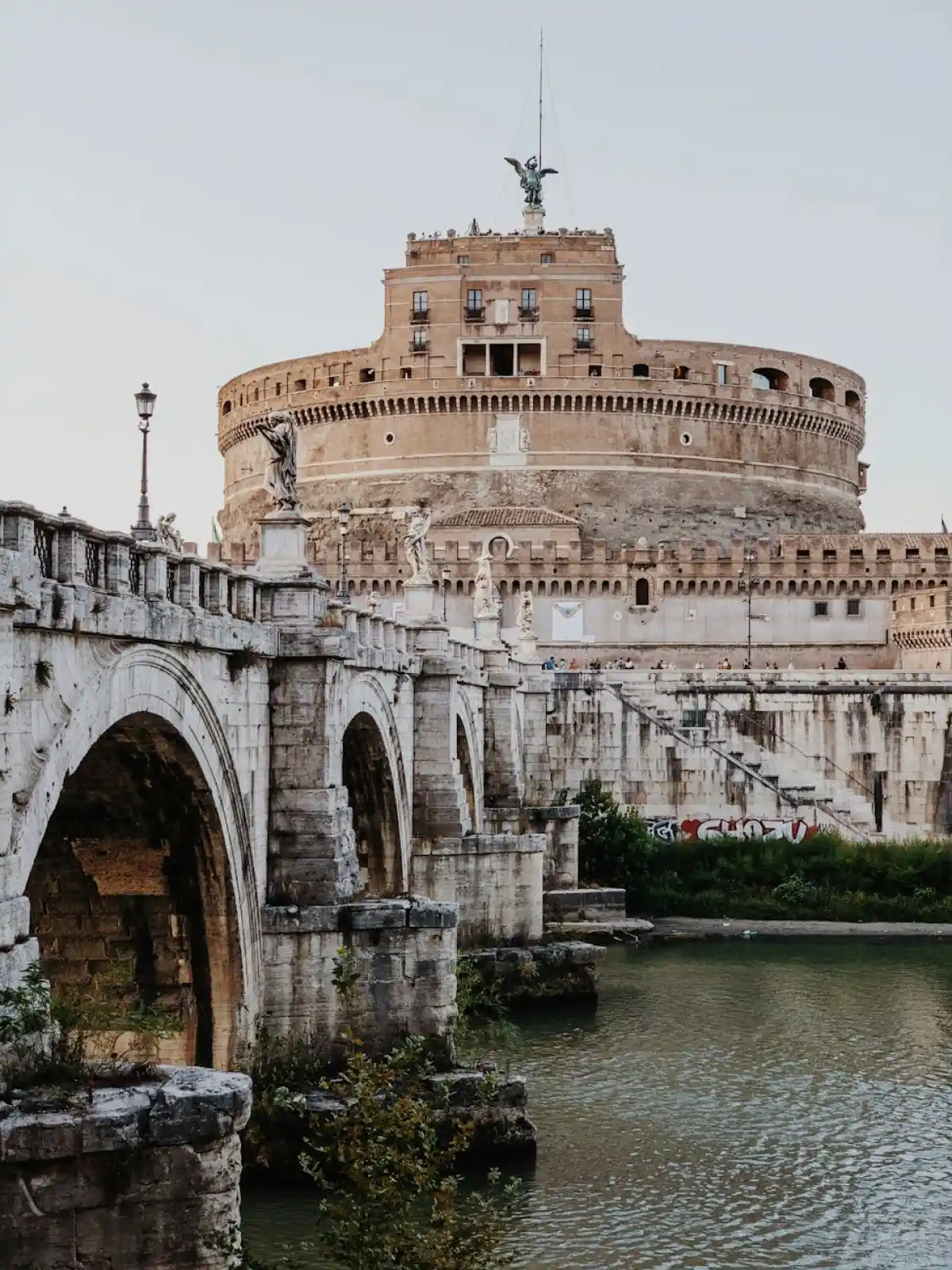
Built in 139 AD as a mausoleum for Emperor Hadrian, Castel Sant’Angelo was later converted into a fortress, a papal residence, a prison, and now a museum. The Passetto di Borgo, an 800-meter elevated corridor, connects it to Vatican City and was used by popes to escape sieges.
Inside, the museum spans five floors of decorated papal apartments, a weapons collection, and a rooftop terrace. The view from the top covers St. Peter’s dome, the Tiber, and the Ponte Sant’Angelo, a pedestrian bridge lined with ten angel statues designed by Bernini’s workshop.
Allow about one hour for the visit. The terrace café provides a place to pause above the river; check the current museum calendar and admission availability before going.
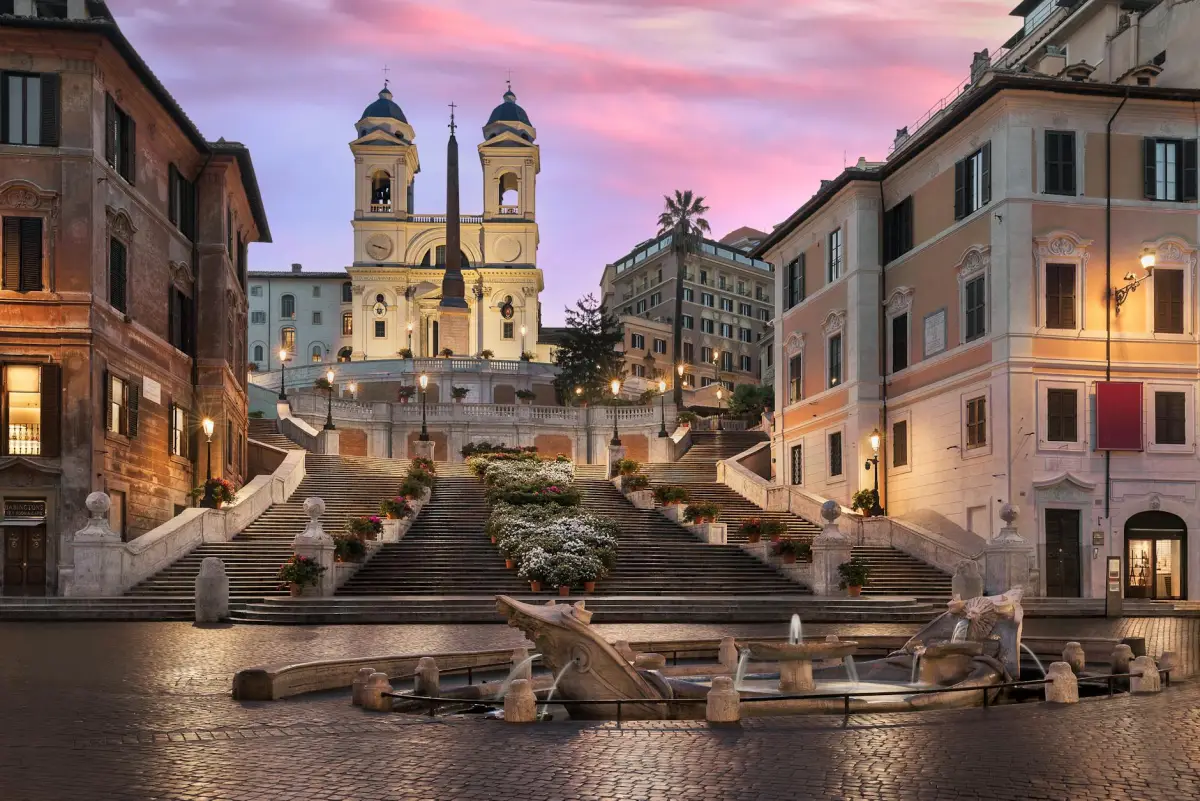
The Spanish Steps, completed in 1725, connect Piazza di Spagna at the base to the Trinità dei Monti church at the top. Designed by Francesco de Sanctis, the 135-step staircase was built to link the Spanish Embassy below with the French-sponsored church above.
At the base, the Fontana della Barcaccia, a low-profile fountain in the shape of a half-sunken boat, was designed by Pietro and Gian Lorenzo Bernini. The Keats-Shelley Memorial House, at the foot of the steps, is a small museum dedicated to the English Romantic poets who lived in Rome.
Sitting on the steps is prohibited and fines may apply, but the area remains a popular meeting point. The nearest metro stop is Spagna on Line A, making this a convenient starting point for a walk toward the Trevi Fountain or Villa Borghese park.
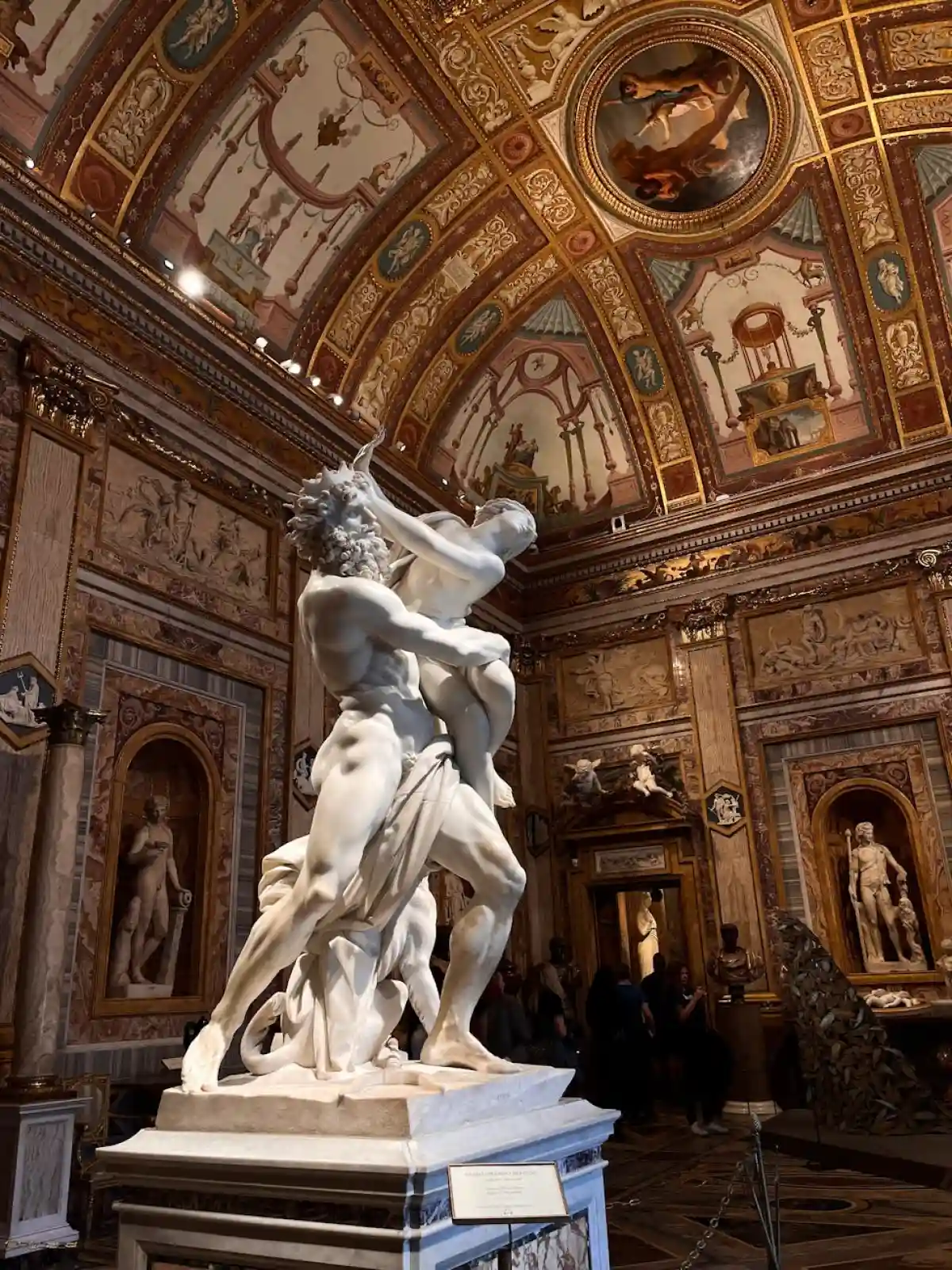
The Borghese Gallery, housed in the 17th-century Villa Borghese, contains one of Rome’s strongest collections of Baroque and Renaissance art. Cardinal Scipione Borghese assembled the core collection, and it has been a public museum since 1903.
Highlights include Bernini’s Apollo and Daphne, The Rape of Proserpina, and David, all carved before Bernini turned 25. Caravaggio’s Boy with a Basket of Fruit, David with the Head of Goliath, and Madonna dei Palafrenieri are also here. The upper floor holds works by Raphael, Titian, and Correggio.
Visits use fixed reservation windows, and walk-in admission should not be assumed. Check current prices and availability, then reserve before your trip. The gallery is inside Villa Borghese park, a short walk from the top of the Spanish Steps.
Rome’s most popular monuments are concentrated in the historic center, but several neighborhoods offer a closer look at everyday street life, local markets, and distinct layers of the city’s history.
Across the Tiber from the historic center, Trastevere has narrow cobblestone streets, residential lanes, and a dense concentration of trattorias. A dedicated Trastevere free tour can provide context on the neighborhood’s development from ancient Rome through the medieval period. Late afternoon works well for combining a walk with aperitivo or dinner.
Rome’s oldest rione, between Termini station and the Colosseum, has independent shops, vintage stores, and a quieter dining scene than the streets around the Pantheon. Piazza della Madonna dei Monti is its social anchor, where residents gather around the fountain in the evening. It pairs well with a Colosseum or Roman Forum visit because both are nearby.
Testaccio is a working-class neighborhood south of the Aventine Hill with strong links to Roman food traditions. Mercato di Testaccio is useful for a quick lunch, while the surrounding streets serve dishes associated with the city’s cucina romana. The neighborhood is also home to Rome’s non-Catholic cemetery, where Keats and Shelley are buried, and generally has less visitor traffic than Trastevere.
Food can form part of the itinerary rather than simply filling the gaps between monuments. Testaccio is a practical base for exploring market stalls and traditional Roman cooking, while Trastevere and Campo de’ Fiori work well for an evening route that combines street food with aperitivo.
Look for carbonara, cacio e pepe, amatriciana, and gricia on restaurant menus. For a quicker meal, try supplì, pizza al taglio, or a filled trapizzino. At aperitivo, the drink is usually paired with small snacks; check what is included before ordering because the format varies by venue.
Mercato di Testaccio is best approached as a working market rather than a single dining venue: compare the prepared-food counters, produce stalls, and bakeries before choosing. A structured food walk can help connect these dishes with the neighborhoods and ingredients that shaped them.
Reserve timed entries for the Colosseum, Vatican Museums, and Borghese Gallery before arrival, especially for travel during the busiest months. Group nearby sights into the same day, then use Monti, Trastevere, or Testaccio for meals and shorter walks between major visits. Browse available tours and activities in Rome to compare options that fit your dates and schedule.
Three to five days covers the main sights without rushing. Three days is enough for the Colosseum, Vatican, and historic center if you book timed entries in advance. Four or five days lets you explore Trastevere and Testaccio or add a day trip to Tivoli or Ostia Antica.
April–May and September–October usually offer milder weather than midsummer. June–August brings high temperatures and heavy demand, while winter has shorter daylight hours and generally fewer visitors outside holiday periods.
Advance booking is strongly recommended. Release schedules and admission rules can change, so consult the official attraction calendars for your dates rather than relying on a fixed booking window. Popular time slots can sell out during busy travel periods.
Rome is generally safe for visitors. The main practical risk is pickpocketing on crowded public transport and around busy stations and attractions. Use a closed cross-body bag and keep phones and wallets secure in dense crowds.
The historic center is walkable, although distances and uneven paving make comfortable shoes useful. Metro services connect several major areas, while buses and trams cover routes away from the underground network. Check current ticket types and service notices before traveling.
The four best-known Roman pastas are carbonara, cacio e pepe, amatriciana, and gricia. Street-food staples include supplì, pizza al taglio, and trapizzino. Testaccio and Trastevere are practical neighborhoods for comparing traditional dishes and market food.
Daily costs depend heavily on accommodation, how many paid attractions you visit, and whether you eat near the main monuments. Build a current budget from your hotel dates and reserved admissions, then leave room for transport, meals, and the tip for any free tour.
Free walking tours are a practical way to understand the historic center and get oriented on your first day. They use a tip-based model, with travelers typically leaving €10–€20 per person and up to €50 depending on the experience and group size.
Tourism and travel expert with a strong background in creating cultural content. Fluent in multiple languages and experienced as a presenter, she connects with diverse audiences to inspire the exploration of unique destinations. Her creative and dynamic approach stands out in every project, conveying the essence of each place she discovers.
Local guides, pay-what-you-want and no credit card to book. That is how you understand a city.
Explore free tours on guruwalk.com